
Ресурсы
Изучайте широкий спектр ценных ресурсов ВГГ, чтобы углубить своё понимание и повысить эффективность исследований, просветительской деятельности, преподавания и обучения.
Найдено: 204
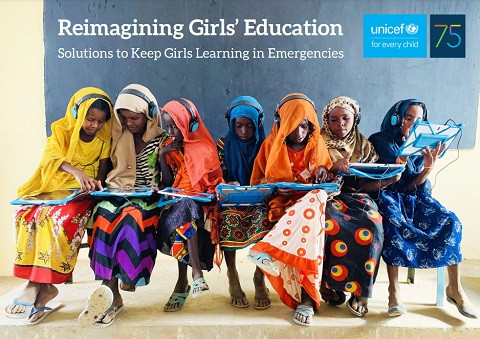 Reimagining Girls’ Education: Solutions to Keep Girls Learning in Emergencies Год публикации: 2021 Организация-автор: United Nations Children's Fund (UNICEF) Reimagining Girls’ Education: Solutions to Keep Girls Learning in Emergencies presents an empirical overview of what works to support learning outcomes for girls in emergencies. Research shows that girls in emergencies are disadvantaged at all stages of education and are more likely to be out-of-school than in non-emergency settings. Girls are also struggling to learn.This solutions book seeks to highlight promising evidence-based actions in education for decision makers who are designing and implementing interventions to support girls’ education in low and middle-income country humanitarian settings and settings where education has been interrupted by the COVID‑19 pandemic. It documents practical examples of approaches that have been or are being tested, and from which lessons can be drawn.The overarching aim is that this evidence be used to inform programming in crises and support diverse stakeholders in mitigating the impact of emergencies on girls’ education.
  Nepal: lessons from integrating peace, human rights, and civic education into social studies curricula and textbooks Год публикации: 2015 Автор: Melinda Smith Организация-автор: UNESCO International Institute for Educational Planning (IIEP) | United Nations Children's Fund (UNICEF) | Education Above All (Qatar) This case study examines the process undertaken by the Ministry of Education (MoE) in collaboration with development partners to revise the social studies curriculum in Nepal. The aim was to promote education for peace, human rights, and civic education (PHRCE) in the wake of a 10-year Maoist insurgency and the transition to a democratic republic. It provides a critical analysis of the process, synthesizing information from two assessments of the initiative, and makes recommendations for the future based on challenges and gaps identified by stakeholders. The study also provides recommendations to countries in post-conflict transition which are interested in undertaking similar curriculum reform initiatives.Information is drawn from a number of reports and programme documents developed by the implementing partners, as well as 12 interviews with individuals involved in the process of curriculum reform. Interviewees included representatives of the major agencies involved in the revision process: the MoE’s Curriculum Development Centre, the National Centre for Education Development, Save the Children, UNESCO, and UNICEF. In addition, interviews were conducted with representatives of civil society and non-governmental agencies supporting peace education and representing marginalized groups, and the external international consultant who provided technical assistance. Népal: leçons tirées de l'intégration de la paix, des droits de la personne et de l'éducation civique dans les programmes d'études et les manuels scolaires Год публикации: 2015 Автор: Melinda Smith Организация-автор: UNESCO International Institute for Educational Planning (IIEP) | United Nations Children's Fund (UNICEF) | Education Above All (Qatar) Cette étude de cas examine le processus entrepris par le Ministère de l'Éducation (MdE) en collaboration avec les partenaires au développement pour réviser le programme d'études sociales au Népal. L'objectif était de promouvoir l'éducation pour la paix, les droits humains et l'éducation civique (PDHEC) à la suite d'une insurrection maoïste de 10 ans et la transition vers une république démocratique. Il fournit une analyse critique du processus, synthétise l'information à partir de deux évaluations de l'initiative et formule des recommandations pour l'avenir en fonction des défis et des lacunes identifiés par les intervenants. L'étude fournit également des recommandations aux pays en transition post-conflit qui sont intéressés à entreprendre des initiatives de réforme du curriculum similaires. L'information provient d'un certain nombre de rapports et de documents de programme élaborés par les partenaires d'exécution, ainsi que de 12 entrevues avec des personnes impliquées dans le processus de réforme du curriculum. Les personnes interrogées comprenaient des représentants des principaux organismes impliqués dans le processus de révision: Centre de développement, le Centre national pour le développement Education Curriculum MdE, Save the Children, l'UNESCO et l'UNICEF. En outre, des entrevues ont été menées avec des représentants de la société civile et les organisations non gouvernementales qui soutiennent l'éducation de la paix et représentant des groupes marginalisés, et le consultant international externe qui a fourni une assistance technique.
  The State of the World's Children 2021 Executive Summary: ON MY MIND - Promoting, protecting and caring for children’s mental health Год публикации: 2021 Организация-автор: United Nations Children's Fund (UNICEF) This report focuses on the issue of children's mental health and appeals to wider public attention to the issue.
  Education 2030: Incheon declaration and framework for action towards inclusive and equitable quality education and lifelong learning for all Год публикации: 2015 Организация-автор: UNESCO | United Nations Development Programme (UNDP) | United Nations Population Fund (UNFPA) | UN. Office of the United Nations High Commissioner for Refugees (UNHCR) | United Nations Children's Fund (UNICEF) | United Nations Entity for Gender Equality and the Empowerment of Women (UN Women) | World Bank This framework — painstakingly drafted over many months with input from governments, international agencies, civil society and experts — provides guidance for implementing the education commitments made in the 2030 Agenda for Sustainable Development at a national, regional and global level. In particular: it aims at mobilizing all countries and partners around Sustainable Education Goal 4 and its targets;it proposes ways of implementing, coordinating, financing and monitoring the new commitments; andit proposes indicative strategies which countries may wish to draw upon in developing their plans, taking into account different national realities, capacities and levels of development and respecting national policies and priorities. 교육 2030 인천선언과 실행계획: 포용적이고 공평한 양질의 교육과 모두를 위한 평생학습을 향해 Год публикации: 2015 Организация-автор: 유네스코 | United Nations Development Programme (UNDP) | United Nations Population Fund (UNFPA) | UN. Office of the United Nations High Commissioner for Refugees (UNHCR) | United Nations Children's Fund (UNICEF) | United Nations Entity for Gender Equality and the Empowerment of Women (UN Women) | World Bank 정부, 국제기구, 시민사회와 전문가의 조언을 받아 몇 달 동안 많은 노력을 기울여 초안이 작성된 이 실행계획은 지속가능한 발전을 위한 2030 아젠다의 국가적, 지역적, 세계적 단계에서의 실현을 위한 교육의 역할에 대한 실천 가이드를 제공한다. 이는 모든 국가와 지속가능목표 4와 그 대상을 둘러싼 파트너들을 움직이도록 하는 데에 그 목적을 둔다.이 실행계획은 새로운 역할에 대한 실천, 협력, 자금조달과 관찰 방안을 제안한다.이 실행계획은 각 국가들이 서로 다른 국가적 상황과 역량, 발전 단계 및 각국의 정책과 우선순위를 존중한 계획을 세울 수 있도록 전략을 보여준다. Education 2030: Déclaration d'Incheon et Cadre d'action: vers une éducation inclusive et équitable de qualité et un apprentissage tout au long de la vie pour tous Год публикации: 2016 Организация-автор: Organisation des Nations Unies pour l'éducation, la science et la culture (UNESCO) | United Nations Development Programme (UNDP) | United Nations Children's Fund (UNICEF) | United Nations Entity for Gender Equality and the Empowerment of Women (UN Women) | World Bank | United Nations Population Fund (UNFPA) | UN. Office of the United Nations High Commissioner for Refugees (UNHCR) This framework — painstakingly drafted over many months with input from governments, international agencies, civil society and experts — provides guidance for implementing the education commitments made in the 2030 Agenda for Sustainable Development at a national, regional and global level. In particular: it aims at mobilizing all countries and partners around Sustainable Education Goal 4 and its targets; it proposes ways of implementing, coordinating, financing and monitoring the new commitments; and it proposes indicative strategies which countries may wish to draw upon in developing their plans, taking into account different national realities, capacities and levels of development and respecting national policies and priorities. Educação 2030 Declaração de Incheon Rumo a uma educação de qualidade inclusiva e equitativa e à educação ao longo da vida para todos Год публикации: 2016 Организация-автор: UNESCO | United Nations Development Programme (UNDP) | UN. Office of the United Nations High Commissioner for Refugees (UNHCR) | United Nations Children's Fund (UNICEF) | United Nations Entity for Gender Equality and the Empowerment of Women (UN Women) | United Nations Population Fund (UNFPA) This framework — painstakingly drafted over many months with input from governments, international agencies, civil society and experts — provides guidance for implementing the education commitments made in the 2030 Agenda for Sustainable Development at a national, regional and global level. In particular: it aims at mobilizing all countries and partners around Sustainable Education Goal 4 and its targets; it proposes ways of implementing, coordinating, financing and monitoring the new commitments; and it proposes indicative strategies which countries may wish to draw upon in developing their plans, taking into account different national realities, capacities and levels of development and respecting national policies and priorities.
  Framework for Reopening Schools; April, 2020 Год публикации: 2020 Организация-автор: UNESCO | United Nations Children's Fund (UNICEF) | World Bank | World Food Programme By late April, nationwide school closures were still disrupting the learning of more than 73 per cent of students, or more than 1.2 billion children and youth. When deciding whether to reopen schools, authorities should look at the benefits and risks across education, public health and socio-economic factors, in the local context, using the best available evidence. The best interest of every child should be paramount.The guidelines aim to inform the decision-making process regarding school reopening, support national preparations and guide the implementation process, as part of overall public health and education planning processes. It is designed to be a flexible tool that can be adapted to each context and updated as the situation changes. The guidelines outline six key priorities to assess the readiness of those schools and inform planning.
  Q&A: Adolescents, Youth and COVID-19 Год публикации: 2020 Организация-автор: World Health Organization (WHO) | UNESCO | United Nations Population Fund (UNFPA) | United Nations Children's Fund (UNICEF) As part of UNESCO’s work in promoting better health and well-being for all children and young people, it has contributed to the development of a practical guide in a ‘questions and answers’ (Q&A) format on children and adolescents and COVID-19. This work was led by the World Health Organization, in collaboration with the Adolescents and Youth Constituency of the Partnership for Maternal, Newborn and Child Health, UNESCO, UNFPA, and UNICEF.The Q&A provide children and adolescents with accurate, non-judgmental information and advice around COVID-19, including how to help stop the spread of the virus, what to do if they develop symptoms of the disease, and how to best manage their health and well-being during the confinement period and after. It considers children and young people as critical actors in the response to COVID-19, not as passive beneficiaries.