
Ресурсы
Изучайте широкий спектр ценных ресурсов ВГГ, чтобы углубить своё понимание и повысить эффективность исследований, просветительской деятельности, преподавания и обучения.
Найдено: 82
 塑造明天的教育:联合国可持续发展教育十年2012年报告,简写本 Год публикации: 2012 Организация-автор: UNESCO As the lead agency for the UN Decade of Education for Sustainable Development (DESD, 2005 – 2014), UNESCO is responsible for monitoring and evaluating progress during the DESD. UNESCO is publishing three reports during the DESD – in 2009, 2012 and 2014. This second report focuses specifically on processes and learning in the context of Education for Sustainable Development (ESD). What kinds of learning processes have emerged in the course of the DESD? What is the role of ESD in supporting them? What changes in ESD have occurred since the early years of the Decade? The report is informed by a broad consultation process that includes input from hundreds of policy makers, scholars and practitioners engaged in ESD around the world.
 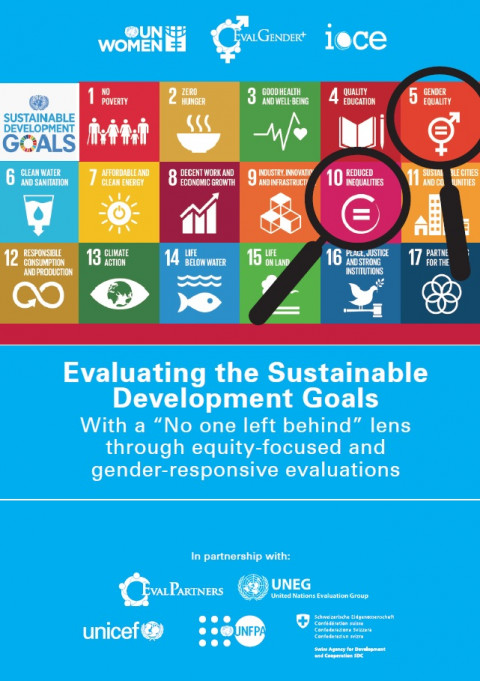 Evaluating the Sustainable Development Goals with a “No one left behind” lens through equity-focused and gender-responsive evaluation Год публикации: 2016 Автор: Michael Bamberger | Marco Segone | Florencia Tateossian The purpose of this publication is to provide guidance on how to integrate an equity-focused and gender-responsive (EFGR) approach to national evaluation systems that should inform national Sustainable Development Goal (SDG) reviews. This guidance is intended to support national evaluation systems on how to integrate EFGR evaluations to inform the national reviews of SDGs. The guidance is expected to primarily serve national evaluation systems, the UN system, multilateral and bilateral development agencies, academic institutions, including specialized research centres and think tanks, private foundations, the private sector, and voluntary organizations of professional evaluators. Оценка Целей Устойчивого Развития на основе принципа «Развитие для всех без исключения» через призму гендерного равенства и социальной справедливости Год публикации: 2016 Автор: Michael Bamberger | Marco Segone | Florencia Tateossian Цель данной публикации – предоставить рекомендации относительно возможных путей интеграции принципов социальной справедливости и гендерного равенства в национальные системы оценки, которые должны будут передавать информацию для страновых обзоров Целей в области устойчивого развития (ЦУР). Статистический анализ с учетом гендера и дезагрегированных показателей, хотя и имеет важное значение, должен дополняться оценками, проводимыми на основе принципов социальной справедливости и гендерного равенства, для того, чтобы развитие охватывало всех без исключения. Руководство в первую очередь предназначено для лиц, вовлеченных в национальные системы оценки; системы Организации Объединенных Наций; многосторонних и двусторонних агентств развития; академических институтов, в том числе специализированных исследовательских и аналитических центров; частных фондов; организаций частного сектора и добровольных объединений в области профессиональной оценки. Le Prisme de l'éducation pour le développement durable: un outil d'analyse des politiques et des pratiques Год публикации: 2010 Организация-автор: UNESCO The Education for Sustainable Development (ESD) Lens has been prepared to support UN Member States to respond to these challenges through implementation of the United Nations Decade of Education for Sustainable Development (DESD, 2005- 2014). The ESD Lens supports the goals of the DESD, and encourages policy-makers and practitioners in Member States to initiate the process of re-orienting education, particularly the formal education system, towards sustainable development. The overall goal of the UN Decade of Education for Sustainable Development (DESD) is for countries to integrate the understandings, skills and values inherent in sustainable development into all aspects of national education plans to encourage changes in lifestyles and behaviour that allow for a more sustainable and just society for all. This complements existing Education for All initiatives, and strengthens the objectives of the Millennium Development Goals. Education for Sustainable Development has the potential to improve the quality and relevance of education everywhere. Education for sustainable development lens: a policy and practice review tool Год публикации: 2010 Организация-автор: UNESCO The Education for Sustainable Development (ESD) Lens has been prepared to support UN Member States to respond to these challenges through implementation of the United Nations Decade of Education for Sustainable Development (DESD, 2005- 2014). The ESD Lens supports the goals of the DESD, and encourages policy-makers and practitioners in Member States to initiate the process of re-orienting education, particularly the formal education system, towards sustainable development. The overall goal of the UN Decade of Education for Sustainable Development (DESD) is for countries to integrate the understandings, skills and values inherent in sustainable development into all aspects of national education plans to encourage changes in lifestyles and behaviour that allow for a more sustainable and just society for all. This complements existing Education for All initiatives, and strengthens the objectives of the Millennium Development Goals. Education for Sustainable Development has the potential to improve the quality and relevance of education everywhere. Learning to live together: have we failed? A summary of the ideas and contributions arising from the forty-sixth session of UNESCO's International Conference on Education, Geneva, 5-8 September 2001 Год публикации: 2003 Организация-автор: UNESCO International Bureau of Education (IBE) | UNESCO Brasilia The present book is based mainly on the work of the forty-sixth session of the International Conference on Education (ICE), organized by UNESCO’s International Bureau of Education (IBE) and held in Geneva from 5 to 8 September 2001. The theme of the conference was ‘Education for All for Learning to Live Together: Contents and Learning Strategies - Problems and Solutions’. Unless stated otherwise, the numerous quotations chosen to illustrate the points made in this book are from ICE documents and contributions. The Conclusions and Proposals for Action adopted by the 2001 ICE are provided in Chapter V.The ICE is the only regularly occurring event during which Ministers of Education from all over the world can meet. It therefore serves as a unique and highly appreciated international forum for high-level dialogue on educational issues and their policy implications.The 2001 ICE brought together over 600 participants from 127 countries, including in particular 80 Ministers and 10 Vice-Ministers of Education, as well as representatives of intergovernmental and non-governmental organizations. The themes of the 2001 ICE were, and still are, very relevant all over the world: those in charge of education have become well aware of the necessity and complexity of living together, as well as of the role and limits of education in this respect.The ICE was inspired by abundant literature dealing with the principle issues that participants debated, including: Preparatory reports; National reports presented by the Member States; Examples of initiatives and good practice (including those presented at the conference as video case studies); Messages from Ministers of Education attending the Conference; And contributions from the numerous researchers, experts, educationists and decision makers at all levels of education who also participated in the Netforum between April and August 2001. More information and opinions on the vast issue of Education for All for Learning to Live Together were added during the Conference itself, in the form of keynote addresses, presentations and debates during the two plenary sessions, six thematic workshops and the special session devoted to partnerships with civil society.The present book draws on this wealth of experience, research, opinions, ideas and visions of the future. It seeks to contribute to bringing the debate on Education for All for Learning to Live Together closer to actors of the global educational community. By setting out ins concise way the key issues and proposed actions, and illustrating them with concrete examples, numerous quotations and a number of questions, this book is intended particularly for teacher trainers, teachers themselves and their professional organizations, as well as for all actors in civil society who endeavour to improve the quality of education, to encourage dialogue and to foster in this way the capacity for living together.Neither a ‘conference report’ nor a scientific or academic work, this book is intended to be a sort of ‘gallery of photographs’ of the forty-sixth session of the ICE – its atmosphere of dialogue, the themes of its debates, and the first-hand descriptions and experiences exchanged. Far from prescribing norms or standards, it intends to share information, ideas and practices, rather like the ICE itself, in a spirit of exchange and dialogue. Learning to live together: have we failed? A summary of the ideas and contributions arising from the forty-sixth session of UNESCO's International Conference on Education, Geneva, 5-8 September 2001 Год публикации: 2003 Организация-автор: UNESCO International Bureau of Education (IBE) | UNESCO Brasilia Le présent ouvrage repose principalement sur les travaux de la quarante-sixième session de la Conférence Internationale sur l'Éducation (CIE), organisée par le Bureau International d'Éducation (BIE) de l'UNESCO et tenue à Genève du 5 au 8 Septembre 2001. Le thème de la conférence était ‘L'éducation pour tous pour apprendre à vivre ensemble: contenus et stratégies d'apprentissage - problèmes et solutions’. Sauf indication contraire, les nombreuses citations choisies pour illustrer les points soulevés dans ce livre sont des documents de l'CIE et les contributions. Les Conclusions et Propositions d'Action adoptées par la CIE de 2001 sont présentés au Chapitre V.L'CIE est l'événement qui se produit seulement régulièrement au cours de laquelle les ministres de l'éducation de partout dans le monde peuvent se rencontrer. Il sert donc comme un forum international unique et très apprécié pour le dialogue de haut niveau sur les questions d'éducation et de leurs implications politiques.La CIE de 2001 a réuni plus de 600 participants de 127 pays, y compris en particulier 80 inistres et 10 Vice-Ministres de l'Éducation, ainsi que des représentants d'organisations intergouvernementales et non gouvernementales. Les thèmes de la CIE 2001 étaient, et sont encore, très pertinent partout dans le monde: les responsables de l'éducation ont pris conscience de la nécessité et de la complexité de vivre ensemble, ainsi que du rôle et des limites de l'éducation à cet égard .L'CIE a été inspiré par une abondante littérature portant sur les principaux points de débat, y compris:Rapports Préparatoires;Les rapports nationaux présentés par les États membres;Exemples d'initiatives et bonnes pratiques (y compris celles qui sont présentées à la conférence que des études de cas vidéo);Messages des Ministres de l'Éducation présents à la Conférence;Et les contributions des nombreux chercheurs, des experts, des éducateurs et des décideurs à tous les niveaux de l'éducation qui a également participé à l'Netforum entre Avril et Août de 2001. Plus d'informations et d'opinions sur la grande question de l'éducation pour tous pour apprendre à vivre ensemble ont été ajoutés au cours de la Conférence elle-même, sous la forme de discours d'ouverture, des présentations et des débats au cours des deux sessions plénières, six ateliers thématiques et la session extraordinaire consacrée aux partenariats avec la société civile.Le présent ouvrage se fonde sur cette richesse de l'expérience, de la recherche, des opinions, des idées et des visions de l'avenir. Elle vise à contribuer à ramener le débat sur l'éducation pour tous pour apprendre à vivre ensemble plus près des acteurs de la communauté éducative mondiale. En énonçant ins de manière concise les questions clés et les actions proposées, et en les illustrant par des exemples concrets, de nombreuses citations et un certain nombre de questions, ce livre est particulièrement destiné aux formateurs d'enseignants, les enseignants eux-mêmes et leurs organisations professionnelles, ainsi que pour tous les acteurs dans la société civile qui s'efforcent d'améliorer la qualité de l'éducation, d'encourager le dialogue et de favoriser ainsi la capacité de vivre ensemble.Ni un ‘rapport de la conférence’, ni une œuvre scientifique ou universitaire, ce livre est destiné à être une sorte de «galerie de photos» de la quarante-sixième session de la CIE - son atmosphère de dialogue, les thèmes de ses débats, et la descriptions et les expériences de première main échangées. Loin de prescrire des normes ou des normes, elle a l'intention de partager des informations, des idées et des pratiques, un peu comme l'CIE lui-même, dans un esprit d'échange et de dialogue. Currículos escolares y sus orientaciones sobre historia, sociedad y política: significados para la cohesión social en Latinoamérica Год публикации: 2009 Автор: Cristián Cox | Robinson Lira | Renato Gazmuri Организация-автор: Uqbar Editores | Elsevier The purpose of this work is to analyse the results of the curricula reform that took place from 1999 to 2000 in regards to the role of schools in providing a model for social integration or cohesion among all groups and social strata. The analysis and critical reflection is based on the assessment done on the curricula for citizenship formation in primary and secondary education in seven countries: Argentina, Brazil, Colombia, Chile, Guatemala, Mexico, and Peru. The main question being answered whether the patterns observed in the different curricula contribute to social cohesion. Currículos escolares y sus orientaciones sobre historia, sociedad y política: significados para la cohesión social en Latinoamérica Год публикации: 2009 Автор: Cristián Cox | Robinson Lira | Renato Gazmuri Организация-автор: Uqbar Editores | Elsevier The purpose of this work is to analyse the results of the curricula reform that took place from 1999 to 2000 in regards to the role of schools in providing a model for social integration or cohesion among all groups and social strata. The analysis and critical reflection is based on the assessment done on the curricula for citizenship formation in primary and secondary education in seven countries: Argentina, Brazil, Colombia, Chile, Guatemala, Mexico, and Peru. The main question being answered whether the patterns observed in the different curricula contribute to social cohesion. Les programmes scolaires et des conseils sur l'histoire, la société et la politique: significations pour la cohésion sociale en Amérique latine Год публикации: 2009 Автор: Cristián Cox | Robinson Lira | Renato Gazmuri Организация-автор: Uqbar Editores | Elsevier Le but de ce travail est d'analyser les résultats de la réforme des programmes d'études qui a eu lieu de 1999 à 2000 en ce qui concerne le rôle des écoles dans la fourniture d'un modèle d'intégration sociale ou la cohésion entre tous les groupes et les couches sociales. L'analyse et la réflexion critique est basée sur l'évaluation faite sur les programmes d'études pour la formation de la citoyenneté dans l'enseignement primaire et secondaire dans sept pays: l'Argentine, le Brésil, la Colombie, le Chili, le Guatemala, le Mexique et le Pérou. La question principale étant répondu si les tendances observées dans les différents programmes contribuent à la cohésion sociale.