
Ресурсы
Изучайте широкий спектр ценных ресурсов ВГГ, чтобы углубить своё понимание и повысить эффективность исследований, просветительской деятельности, преподавания и обучения.
Найдено: 169
 Educación para la ciudadanía y convivencia: manual de ciudadanía y convivencia desde la construcción colectiva de sentidos y redes; ambiente Год публикации: 2015 Организация-автор: Centro de Investigación y Educación Popular (CINEP) | Secretaría de Educación del Distrito (SED) Environment is one of the main themes related to education for citizenship and coexistence. For that reason, this manual identifies three areas of reflection: 1) My first territory: selfcare, caring for others, 2) Environmental territories and their cultural dimension, 3) regional and worldwide territory. Each one of these areas is accompanied by didactic tools that allow to deepening into the contents through the dialogue between the characters that have been created, proposing theoretical and practical fundamental elements, which could be useful in the pedagogical process leaded by the participants of the project.
 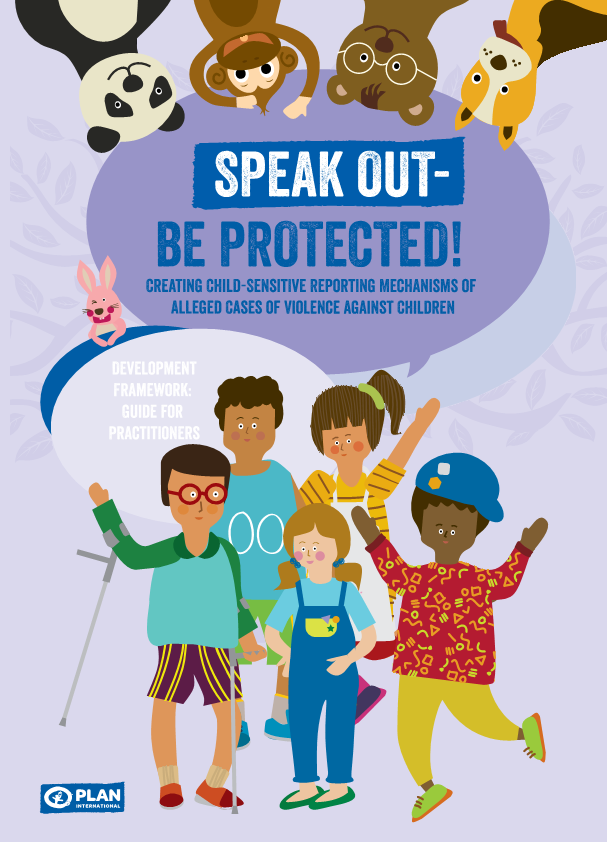 Speak Out - Be Protected! Development Framework: Guide for Practitioners; Creating Child-sensitive Reporting Mechanisms of Alleged Cases of Violence Against Children Год публикации: 2016 Автор: Raša Sekulović | Stephanie Delaney Организация-автор: Plan International Produced by Plan International, the Child-Sensitive Reporting Mechanisms toolkit “Speak Out – Be Protected!” identifies simple, user-friendly processes through which children and their peers (and families) can raise child protection concerns and report them to child protective agencies, services or trusted community groups and institutions.
  Media Literacy in the Library: A Guide for Library Practitioners Год публикации: 2020 Организация-автор: American Library Association (ALA) | Institute of Museum and Library Services As information providers and hubs for lifelong learning, libraries have always been resources for helping communities develop media literacy skills. Now, in the midst of a global pandemic, and in an age when we increasingly rely on digital media for information and communication, these critical thinking skills are more important than ever. The American Library Association (ALA), working with talented thought leaders across the library and media literacy sectors, has created Media Literacy in the Library: A Guide for Library Practitioners to help library workers prepare for day-to-day interactions like the imagined reference desk one above.In this guide, we offer resources and ideas to plan programs and activities to teach media literacy skills to adults and also to integrate these skills into programming you already offer at your library. This guide has been created for out-of-school adult audiences, who library workers will generally meet in a public library context.
 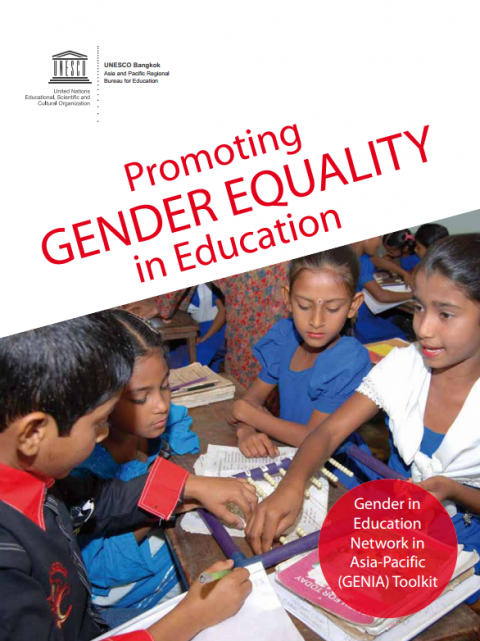 Promoting gender equality in education Год публикации: 2009 Организация-автор: UNESCO Kathmandu This publication was originally designed in 2003 when the Gender in Education Network in Asia-Pacific (GENIA) was established. Few gender in education resources were available at that time, and until the 2006 version, documents were mainly intended to be used by GENIA members, who are representatives (gender focal points) from ministries of education in the Asia-Pacific region. GENIA members have been using the Toolkit to sensitize and train their national counterparts ever since. However, the Toolkit has not only been distributed and used by gender focal points, but also by other people who have heard about GENIA, and/or who were interested in the resource materials published by UNESCO Bangkok. For this reason, the Toolkit has been accessible via the UNESCO Bangkok website1 since 2006. As a result, anyone searching the Web for information on gender equality can easily access the Toolkit. This fourth edition of the Toolkit, thus, expands the scope of the target audience. The content has likewise been adapted accordingly in order to meet the needs of all who could potentially access it. The Toolkit also integrates existing information and tools designed by other national or international organizations dedicated to promoting and providing training on gender equality in education and other sectors. Further information from these sources is obtained by consulting the references section at the end of the Toolkit. The Toolkit is designed as a user-friendly resource. As such, a matrix is provided on pages 4 and 5 to indicate each tool’s potential for use, based on its relevance to each prospective user group. Still, every tool will have relevance to many contexts or situations and, therefore, we encourage you to make use of all the materials by adapting them to your country context.
  Key Concepts: A Feminist Approach to Human Rights Education (Chapter 4) Год публикации: 2014 Автор: Julie Maia Организация-автор: Stanford Human Rights Education Initiative (SHREI) Developed for the Stanford Human Rights Education Initiative (SHREI), this curriculum project examines connections among Gender Studies, feminist theory, and human rights movements around the world. This SHREI project presents its four key concepts through four curricular units, or chapters, each with a series of activities that can easily be adapted for use in courses in many disciplines. Each chapter contains these elements: A definition of the key concept An example of the use of the concept in a human rights document A brief essay on the value of the concept for human rights education A series of activities that guide students in using gender, race/ethnicity/nation, and class as lenses for analyzing social justice issues include transnational and multicultural perspectives on gender and human rights issues use "best practices" pedagogies for teaching human rights topics in community colleges. Within each chapter, activities are orgaized from simple to complex. Most activities, however, have self-contained objectives and can be used independently of the others. Sections on “Extending the Learning” offer longer readings or in-depth material for advanced courses. The GCED Clearinghouse introduces only chapter 4, "global citizenship" of this SHERI project. How can you embed global citizenship in your curriculum? Год публикации: 2012 Организация-автор: National Committee for International Cooperation and Sustainable Development (NCDO) This handbook offers tips, guidelines and inspiration for embedding global citizenship in your curriculum. It also helps your school answer the following questions: 1. What do you want to achieve? 2. Where is your school today? 3. What needs to be done? 4. Where to start? This publication is not a blueprint for embedding global citizenship in secondary education, but hopefully it will help you on your way to achieving that goal. Comment pouvez-vous intégrer la citoyenneté mondiale dans votre curriculum? Год публикации: 2012 Организация-автор: National Committee for International Cooperation and Sustainable Development (NCDO) Ce guide propose des conseils, des orientations et des idées pour intégrer la citoyenneté mondiale dans votre curriculum. Il aide également votre école de répondre aux questions suivantes: 1. Que voulez-vous atteindre? 2. Où est votre école aujourd'hui? 3. Que faut-il faire? 4. Où commencer? Cette publication ne constitue pas un plan pour intégrer la citoyenneté mondiale dans l'enseignement secondaire, mais nous espérons qu'il vous aidera sur votre chemin pour atteindre cet objectif.
  Regional handbook on life skills programmes for non-formal education Год публикации: 2012 Организация-автор: UNESCO Bangkok The Regional Handbook on Life Skills Programme for Non-formal Education (NFE) was developed for education policy makers, experts in curriculum development, materials development and trainers of personnel in the field of NFE, NFE practitioners such as Community Learning Centres (CLCs) personnel, teachers and facilitators, and researchers. It aims to provide information about life skills programmes and to serve as a practical guide to implement educational programmes to enhance life skills. It is expected to help NFE personnel with adopting, adapting and integrating life skills programmes in NFE. This Handbook consists of two parts as follows: Part one- overview of Life Skills Programme for Non-formal Education (NFE), Part Two- Practical Guide on Integrating Life Skills Programme in NFE. Part One provides answers to various questions related to life skills and life skills progrmmes. Part Two intends to provide practical information about the systematic planning and implementation of life skills programmes for NFE. It offers suggested steps for curriculum development, development of teaching and learning materials, delivery of life skills programmes and monitoring and evaluation strategies. Details of this process are elaborated for NFE practitioners at various levels, but in particular at the community level. This Handbook was developed based on the project outputs of UNESCO Bangkok's 'Life Skills Learning through Non-formal Education" carried out in Asia and the Pacific region from 2003-2006 within the framework of Asia-Pacific Programme of Education for All (APPEAL). The project consisted of country studies, regional meetings, pilot projects and action research in selected countries in the region. A group of experts from the region consolidated the main outputs of the project and developed this Handbook through a series of workshops in 2006-2007 in coordination with UNESCO Bangkok and the office of Non-formal and Informal Education (ONIE) of Thailand Ministry of Education. In addition, resource materials of various organizations including United Nations agencies, government institutions, universities and NGOs were also collected and used for developing this Handbook. Manuel régional sur les programmes de compétences de vie pour l'éducation non formelle Год публикации: 2012 Организация-автор: UNESCO Bangkok Le manuel régional sur le programme des compétences de vie pour l'éducation non-formelle (ENF) a été développé pour les décideurs politiques de l'éducation, des experts dans l'élaboration des programmes, le développement des matériaux et formateurs de personnel dans le domaine de l'ENF, les praticiens ENF tels que les centres d'apprentissage communautaires (CJC) personnel , les enseignants et les animateurs et les chercheurs. Il vise à fournir des informations sur les programmes de compétences de vie et de servir comme un guide pratique pour mettre en œuvre des programmes éducatifs pour améliorer les compétences de la vie. Il est prévu pour aider le personnel de l'ENF à l'adoption, l'adaptation et l'intégration des programmes de compétences de vie en ENF. Ce manuel se compose de deux parties: Partie de un aperçu le programme des compétences de vie pour l'éducation non formelle (ENF), en deux parties Guide pratique sur le programme des compétences de vie de l’Intégration dans ENF. La première partie fournit des réponses aux diverses questions liées aux compétences de vie et les compétences de la vie programmes. La deuxième partie a l'intention de fournir des informations pratiques sur la planification et la mise en œuvre des programmes de compétences de vie pour ENF systématique. Il propose des étapes suggérées pour l'élaboration des programmes, le développement de matériel pédagogique et d'apprentissage, la prestation de compétences pour la vie des programmes et des stratégies de Suivi et d'évaluation. Les détails de ce processus sont élaborés pour les praticiens ENF à différents niveaux, mais en particulier au niveau de la communauté. Ce manuel a été élaboré sur la base des résultats du projet de «Life Skills de l'UNESCO Bangkok L'apprentissage par l'éducation non formelle» réalisée en Asie et dans la région du Pacifique 2003-2006 dans le cadre du Programme Asie-Pacifique d'éducation pour tous (APPEAL). le projet consistait en études de pays, des réunions régionales, des projets pilotes et la recherche-action dans certains pays de la région. un groupe d'experts de la région a regroupé les principaux résultats du projet et a développé ce manuel à travers une série d'ateliers en 2006-2007 coordination avec l'UNESCO Bangkok et le bureau de l'éducation non formelle et informelle (ONIE) de la Thaïlande Ministère de l'éducation. En outre, des ressources documentaires de diverses organisations, y compris les organismes des Nations Unies, les institutions gouvernementales, les universités et les ONG ont également été recueillies et utilisées pour le développement de cette Manuel. Educating for global citizenship: an ETFO curriculum development inquiry initiative Год публикации: 2010 Автор: Alice Assor-Chandler | Mali Bickley | Jim Carleton | Antonino Giambrone | Janice Gregg | Jennifer Hunter | Laura Inglis | Leigh-Anne Ingram | Angela MacDonald | Miyuki (Erica) Moizumi | Carol Peterson | Carrie Schoemer | Nadya Weber | Tonia Wojciechowski Организация-автор: Elementary Teachers’ Federation of Ontario (ETFO) Attention to educating for citizenship continues to expand and deepen worldwide. Many countries now include citizenship education as an important feature of their official curriculum, albeit in variant forms. Numerous research studies, policy reforms, and curriculum initiatives have been undertaken, as teachers, policy makers and researchers attempt to understand the intricate processes by which young people learn about democratic citizenship, and where and how citizenship education should be located and represented in school curricula.Educating for global citizenship has been a critical dimension of these discussions and investigations. Recent shifts in the speed and global reach of information and communication technologies, an increasingly interdependent global economy, challenges in human rights and social justice, and the impact of international tragedies and emergencies have, for example, created tensions and conditions that require more integrated, worldwide responses. Not surprisingly, understandings of global citizenship are being explored with increased intensity and, as might be expected, there has been a corresponding – and growing - interest among educators in various parts of the world to strengthen the global dimension of citizenship education in school curricula at all levels.In Canada, there has been increasing attention to what it means to educate for the global citizenship and provincial curriculum policy developments in recent years. A host of useful ideas in the form of new resource materials and websites to inform and guide teachers’ work have also emerged. The Canadian International Development Agency’s (CIDA) in the global classroom initiative, Classroom Connections’ Cultivating Peace in the 21st Century and Taking Action, Larsen’s ACT! Active Citizens Today: Global Citizenship for Local Schools, and UNICEF Canada’s Global Schoolhouse are a few examples of the many resources that have recently been developed. Despite this growing interest, there has been less attention devoted to examining practices of global citizenship education within Canadian classrooms, leaving a limited understanding of how it is applied in schools.A wide range of perspectives and practices has emerged, reflecting a considerable growth of interest in this dimension of education. In an effort to clarify the multiple dimensions of global citizenship education, below are two “working” frameworks that provide an overview of core learning goals and key teaching and learning practices associated with global citizenship education from the literature. They reveal both complexity and multidimensionality and provide a lens to analyse and reflect upon the breadth and depth of what it means to educate for global dimension of citizenship.