
Ресурсы
Изучайте широкий спектр ценных ресурсов ВГГ, чтобы углубить своё понимание и повысить эффективность исследований, просветительской деятельности, преподавания и обучения.
Найдено: 451
 Strengthening the Rule of Law Through Education: A Guide for Policymakers Год публикации: 2019 Организация-автор: UN. Office on Drugs and Crime (UNODC) | UNESCO The new joint publication by UNESCO and UNODC Strengthening the Rule of Law through Education: A Guide for Policymakers explores the role that education institutions can play in promoting the rule of law and building new forms of engagement based on global citizenship, human rights and inclusion -- all of which are vital to take forward the Sustainable Development Goal 4 on education, at the heart of the 2030 Agenda for Sustainable Development. Strengthening the Rule of Law through Education: A Guide for Policymakers is intended for education policymakers and other professionals working in the formal education sector, within and outside Ministries of Education, and who are seeking to promote the rule of law and a culture of lawfulness.The guide may also be of interest to professionals working in non-formal education settings or other sectors – namely the justice, social and health sectors - in the area of crime and violence prevention, who are seeking to work more closely with the education sector. In particular, the guide offers:An explanation of key concepts, such as the rule of law and a culture of lawfulness, as well as outlining the role of education in upholding and promoting the rule of law; Guidance on how the education sector is able to strengthen and promote the rule of law, for instance, by speaking to the real learning needs of children and youth, and by ensuring that places of learning “practice what they preach”; A map of the necessary support systems needed to strengthen the rule of law at the school and classroom levels and outside formal education settings, including curricular support, classroom pedagogies, teacher training and development and school-family-community partnerships. Fortalecimiento del estado de derecho mediante la educación: guía para los encargados de la formulación de políticas Год публикации: 2019 Организация-автор: UN. Office on Drugs and Crime (UNODC) | UNESCO La nueva publicación conjunta de la UNESCO y la Oficina de las Naciones Unidas contra la Droga y el Delito (UNODC): Fortalecimiento del estado de derecho mediante la educación: guía para los encargados de la formulación de políticas, explora el rol que pueden jugar las instituciones educativas en la promoción del estado de derecho y en la creación de nuevas formas de participación basadas en ciudadanía global, derechos humanos e inclusión – cuestiones que son vitales para promocionar el 4to Objetivo sobre educación para el Desarrollo Sostenible, en el corazón de la Agenda 2030 para el Desarrollo Sostenible. Fortalecimiento del estado de derecho mediante la educación: guía para los encargados de la formulación de políticas, está dirigido a los creadores de políticas educativas y a otros profesionales que trabajan en el sector formal de educación, dentro o fuera de los Ministerios de Educación, y que estén procurando promocionar el estado de derecho y la cultura de la legalidad.La guía también puede ser de interés para profesionales trabajando en contextos educativos no formales y otros sectores – como ser en los sectores sociales, de justicia o de salud – en las áreas de prevención de violencia y crimen, que estén buscando trabajar más cerca al área educativa. En particular, la guía ofrece: Una explicación de conceptos claves, como ser la cultura de derecho o la cultura de la legalidad, a la vez que detalla el rol de la educación en sostener y promover el estado de derecho;Orientaciones sobre cómo el sector educativo es capaz de fortalecer y promocionar el estado de derecho, por ejemplo, abordando las necesidades reales de niños y jóvenes, y asegurándose que los lugares de enseñanza “practican lo que predicen”;Un mapa de los sistemas de soporte necesarios para fortalecer el estado de derecho en la escuela, a nivel del aula y fuera de los contextos de educación formal, incluyendo soporte curricular, pedagogía de aula, desarrollo y capacitación docente y asociaciones entre la escuela, la familia y la comunidad.
  Childhood and Citizenship Год публикации: 2011 Автор: Osvaldo Torre G. This publication, Niñez y Ciudadanía, is an effort of the Postgraduate Diploma, "Childhood and Public Policies", taught by the Department of Anthropology of the Faculty of Social Sciences of the University of Chile. This course has been held for 5 years, in partnership with the Chilean Association for the United Nations, ACHNU. This first publication presents a selection of those works developed by students graduated from the Diploma in 2010, in which a subject of interest for the researcher is tested and on which a rights approach is applied, which tends to evaluate the situation of the boys and girls in a different way than traditional childhood views; these works are the product of their dissertations to approve this post-title. Also included are some brief essays on the relationship between childhood and violence, elaborated by some of the students of the 2011 generation, in the idea of making available to the interested public a sample of the different forms that acquire the uses of violence on children. It also incorporates a collaboration requested to the anthropologist Dimas Santibáñez, member of the Academic Committee of the Diploma. Niñez y Ciudadanía Год публикации: 2011 Автор: Osvaldo Torre G. Esta publicación, Niñez y Ciudadanía, es un esfuerzo del Diplomado de postítulo, “Niñez y Políticas Públicas”, que imparte el Departamento de Antropología de la Facultad de Ciencias Sociales de la Universidad de Chile. Este curso se realiza desde hace 5 años, en alianza con la Asociación Chilena pro Naciones Unidas, ACHNU. Esta primera publicación presenta una selección de aquellos trabajos desarrollados por estudiantes egresados del Diplomado en el año 2010, en los cuales se ensaya un tema de interés para el investigador y sobre el cual aplica un enfoque de derechos, que tiende a evaluar la situación de los niños y niñas de una forma distinta a como lo hacen las miradas tradicionales sobre la infancia; estos trabajos son el producto de sus tesinas para aprobar este postítulo. También se incluyen algunos breves ensayos sobre la relación entre la niñez y la violencia, elaborados por algunos de los y las estudiantes de la generación 2011, en la idea de poner a disposición del público interesado una muestra de las diversas formas que adquieren los usos de la violencia sobre los niños. También se incorpora una colaboración solicitada al antropólogo Dimas Santibáñez, miembro del Comité Académico del Diplomado.
 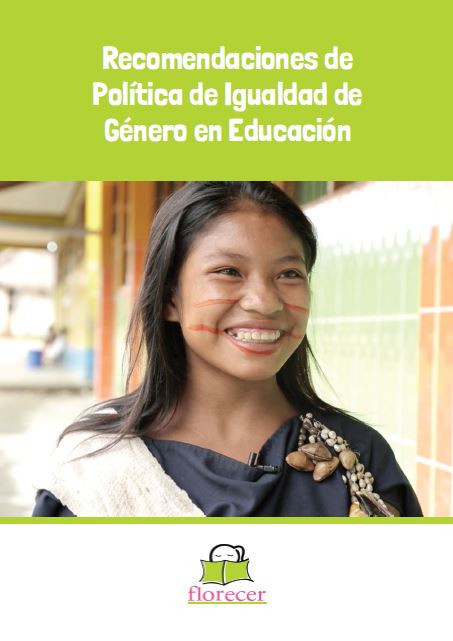 Policy Recommendations of Gender Equality in Education Год публикации: 2015 Автор: Teresa Tovar Samanez Организация-автор: United Nations Children's Fund (UNICEF) This document synthesizes the proposals of the Florecer Network to advance in gender equality, because we are convinced that the commitment to a more just and more human world necessarily implies the assumption of equality between men and women. Recomendaciones de Política de Igualdad de Género en Educación Год публикации: 2015 Автор: Teresa Tovar Samanez Организация-автор: United Nations Children's Fund (UNICEF) Este documento sintetiza las propuestas de la Red Florecer para avanzar en la igualdad de género, porque estamos convencidas y convencidos de que la apuesta por un mundo más justo y más humano implica necesariamente por la asunción de la igualdad entre hombres y mujeres.
  Citizenship and Culture of Peace in Educational Reform Год публикации: 2005 Автор: Raúl Zepeda López, María del Rosario Toj, Edgar Florencio Montúfar Организация-автор: UNESCO The concern raised by the themes and contents of civic education and the culture of peace in childhood and youth are issues that are felt in various academic sectors, in social organizations and educational authorities that sometimes translate into articles in the media, where, among other things, one speaks of "the loss of values", generally having as reference to the young generations and making invisible that this loss is mainly present in the adult generations, which are responsible for this situation. These concerns, in spite of that conscious ambiguity, are not gratuitous. They can be a starting point to become aware of the need to develop new capacities and values, the absence of which young Latin Americans identify in their political and social leaders, as has been pointed out in cited studies, carried out by UNICEF for Latin America and for Beatriz de Cazali for Guatemala. The need to respond to this concern is also present in the participants in the dialogues and municipal consensus (2000), as well as among authorities and curriculum developers of MINEDUC in the last five-years.
  Culture of Peace and Education for Democratic Citizenship Год публикации: 2006 Автор: Jose Tuvilla Rayo The Culture of Peace understood as the synthesis concept - sum of human rights, democracy, disarmament and sustainable human development - demands, as a humanizing response of globalization, important efforts of educational systems towards the achievement of four world social contracts ( Lisbon Group, 1995): the contract of basic needs aimed at suppressing inequalities, the cultural contract aimed at promoting tolerance and dialogue between cultures, the contract of democracy aimed at a system of world government; and, the Earth contract to promote stable and lasting human development. To do this - remembering Juan Carlos Tedesco (2001) - learning to live together, one of the pillars of 21st century education, can not be maintained in the exclusive domain of merely rhetorical adherence. Cultura de Paz y educación para la ciudadanía democrática Год публикации: 2006 Автор: Jose Tuvilla Rayo La Cultura de Paz entendida como el concepto síntesis --suma de derechos humanos, democracia, desarme y desarrollo humano sostenible--, demanda, como respuesta humanizadora de la globalización, importantes esfuerzos de los sistemas educativos hacia la consecución de cuatro contratos sociales mundiales (Grupo de Lisboa, 1995): el contrato de las necesidades básicas destinado a suprimir las desigualdades, el contrato cultural destinado a promover la tolerancia y el diálogo entre culturas, el contrato de la democracia encaminado hacia un sistema de gobierno mundial; y, el contrato de la Tierra para promover un desarrollo humano estable y duradero. Para ello – recordando a Juan Carlos Tedesco (2001) – aprender a vivir juntos, uno de los pilares de la educación del siglo XXI, no puede ser mantenido en el terreno exclusivo de la adhesión meramente retórica.
  The Right to Education of Migrants and Refugees Год публикации: 2014 Автор: Vernor Muñoz Villalobos The focus of this report is on those who have crossed national borders, who generally are at risk of marginalization and specifically to discrimination in the provision of education. The research addresses six core issues, the consideration of which follows an analysis of the contextual background. Attention to these issues is viewed as indispensable in meeting the educational challenges and opportunities related to migration. These core, but inevitably interrelated themes are: the legal and normative framework; social and cultural issues; language and curriculum; teachers; accreditation and lifelong learning. The preparation of the report has benefitted greatly from the active and constructive engagement of many relevant actors including Governments, international organizations, academics, non-governmental organizations and concerned individuals. Together they have offered a wealth of different perspectives and which form the basis of a number of recommendations ending the text.