
Ресурсы
Изучайте широкий спектр ценных ресурсов ВГГ, чтобы углубить своё понимание и повысить эффективность исследований, просветительской деятельности, преподавания и обучения.
Найдено: 169
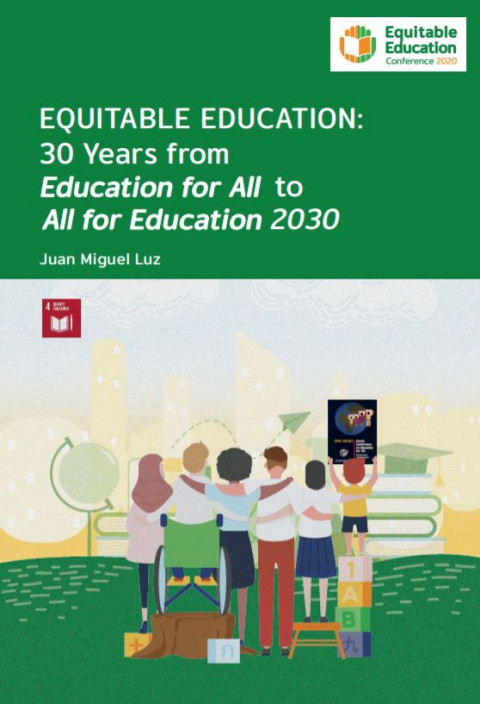 Equitable Education: 30 Years from Education for All to All for Education 2030 Год публикации: 2020 Автор: Juan Miguel Luz Организация-автор: Equitable Education Fund In the 30 years since the World Declaration on Education for All (Jomtien Declaration, Thailand), the world has made enormous strides in achieving the target of universal primary education.Total enrolment rates in developing regions reached 91 percent in 2015 and the worldwide number of children out of school has dropped by almost half. However, large disparities remain. Children from the poorest households are up to five times more likely to be out of school than those of the richest households. Disparities between rural and urban areas also remain high.As education inequality threatens to widen because of the COVID-19 pandemic, and with only 10 years to go to achieve the Sustainable Development Goals (SDGs), now, more than ever, is the time for the world to come together and accelerate change through innovative and sustainable solutions.
 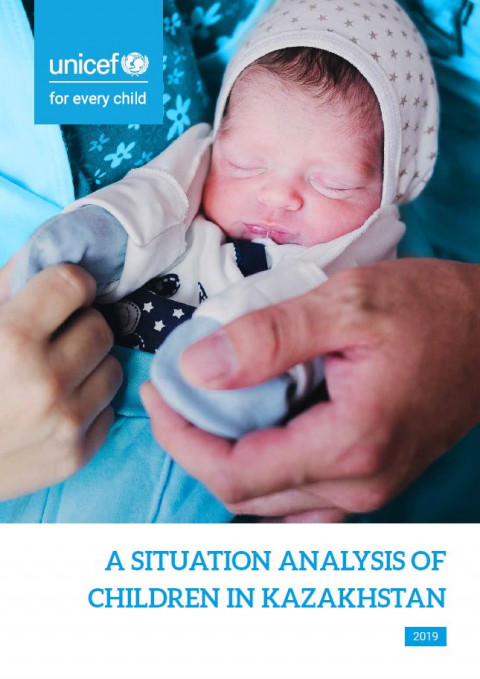 A Situation Analysis of Children in Kazakhstan Год публикации: 2019 Организация-автор: UNICEF Kazakhstan Kazakhstan has set the overarching objective of becoming one of the 30 most developed countries in the world by 2050. Children and adolescents in Kazakhstan, who constitute 31.4 per cent of the total population, should be the beneficiaries and active contributors to achieving these goals. This Situation Analysis provides analysis and recommendations to ensure that children remain at the centre of the country’s development priorities. It confirms measurable progress made in advancing the rights of children and identifies outstanding challenges. Анализ положения детей в Республике Казахстан Год публикации: 2019 Организация-автор: UNICEF Kazakhstan Казахстан поставил перед собой важную стратегическую цель – стать одной из 30 самых развитых стран мира к 2050 году. При этом нынешние дети и подростки, составляющие 31,4% от общей численности населения страны, будут теми, кто больше всех ощутит положительные изменениня и поэтому также должны стать активными участниками в реализации поставленной цели.В данном документе представлены анализ и рекомендации, направленные на то, чтобы дети оставались в центре приоритетов развития страны. Отчет подтверждает ощутимый прогресс, достигнутый в продвижении прав детей, а также выявляет факторы, влияющие на их уязвимость.
  The Game as a Fun Strategy for the Inclusive Education of Good Living Год публикации: 2017 Автор: Evelyn Fernanda Córdoba Pillajo | Fernando Lara Lara | Andrés García Umaña The discussion on the implementation of the educational political project of sumak kawsay in Ecuador demands resources and proposals that contribute to its development. In this sense it is proposed the game as a possible didactic resource that can offer spaces of educational inclusion of the different facets of the human being that demand good living demands as long as the constitutionally conceptualized the right to education in the holistic formation of the human being, the formation of consciousness, the identifycation of the ego as a barrier to dialogue and the possibilities of interculturality, humility through self-criticism among others. This paper aims to present a reflection and an idea about the game as a playful strategy in the learning of inclusive practices as well as justify the promotion as Formative medium of an educative culture of sumak kawsay. El Juego como Estrategia Lúdica para la Educación Inclusiva del Buen Vivir Год публикации: 2017 Автор: Evelyn Fernanda Córdoba Pillajo | Fernando Lara Lara | Andrés García Umaña La discusión sobre la implementación del proyecto político educativo del sumak kawsay en Ecuador demanda de recursos y propuestas que puedan contribuir a su desarrollo. En este sentido se propone lo lúdico como un posible recurso didáctico que permita ofrecer espacios de inclusión educativa de las distintas facetas del ser humano que demanda el buen vivir tanto en cuanto se conceptualiza constitucionalmente el derecho a la educación en su formación holística, de la conciencia, identificación del ego como barrera para el diálogo y las posibilidades de la interculturalidad, o la humildad mediante la autocrítica, entre otras. En este trabajo se persigue plantear una sucinta reflexión y propuesta concerniente al juego como estrategia lúdica favorecedora de prácticas inclusivas, así como justificar su promoción como medio formativo de una cultura educativa del sumak kawsay.
 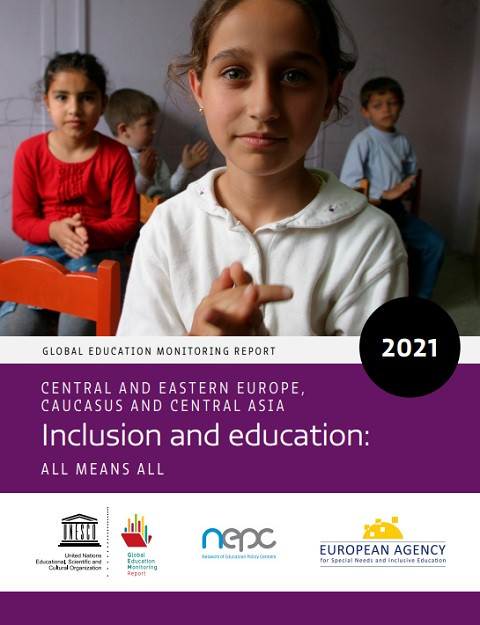 Global Education Monitoring Report, 2021, Central and Eastern Europe, Caucasus and Central Asia: Inclusion and Education; All Means All Год публикации: 2021 Организация-автор: Global Education Monitoring Report Team | European Agency for Special Needs and Inclusive Education | Network of Education Policy Centers Prepared by the Global Education Monitoring (GEM) Report, in partnership with the European Agency for Special Needs and Inclusive Education and the Network of Education Policy Centers, the regional report on inclusion and education in Central and Eastern Europe, the Caucasus and Central Asia offers a deep dive into the core challenges and key solutions. The region is working hard to overcome a legacy, whereby children with disabilities attended special schools, once wrongly regarded as an effective solution, segregated by type of disability, if not fully excluded from education.The report draws on in-depth profiles of 30 education systems in the region. It also presents the additional risks to inclusion now posed by the COVID-19 pandemic. Building on the 2020 Global Education Monitoring Report, it documents barriers facing learners, particularly where multiple disadvantages intersect. Its recommendations provide a systematic framework for identifying and dismantling these barriers, according to the principle that ‘every learner matters and matters equally’. Всемирный доклад по мониторингу образования 2021 г. : для всех означает для всех инклюзивность и образование; центральная и восточная европа,кавказ и средняя азия Год публикации: 2021 Организация-автор: Global Education Monitoring Report Team | European Agency for Special Needs and Inclusive Education | Network of Education Policy Centers В этом докладе описана огромная и географически разнородная территория, которую объединили в один регион схожие образовательные системыи подходы, сформированные во второй половине 20 века в рамках государственного социализма. Образование было доступно, гендерное неравенство и неравенство, связанное с местом проживания, было искоренено. Но образовательные системы подвергали дискриминации детей с особыми потребностями, которые посещали специальные школы. Это решение ошибочно считалось эффективным: ученики разделялись по типу инвалидности, а некоторые из них полностью исключались из системы образования.Начиная с 1989 года, регион старается преодолеть это тяжелое наследие и перейти к инклюзивному образованию, основанному на правах человека, подходу, который часто поддерживается международными организациями. В законодательство и образовательную политику было включено более широкое понимание инклюзии. Педагогическое образование и программы повышения квалификации учителей были пересмотрены и реструктурированы. Тем не менее, прогресс неравномерен. Многие изменения произошли на бумаге, в то время как глубинные убеждения и реальная практика практически не изменились. В то же время образовательные системы пытаются преодолеть негативные последствия политического и экономического кризисов, которые углубили неравенство и усилили социальную напряженность. Такие факторы как гендер, удаленное место проживания, бедность, этническая принадлежность, язык, миграция, принадлежность к числу перемещенных лиц, тюремное заключение, сексуальная ориентация, гендерная идентичность и религиозные и другие убеждения связаны с неравенством образовательных возможностей.Составленный группой по подготовке Всемирного доклада по мониторингу образования, в партнерстве с Европейским агентством по специальным потребностям и инклюзивному образованию и Сетью центров образовательной политики, этот доклад содержит подробные описания 30 образовательных систем региона. В докладе также представлены дополнительные риски для инклюзии, возникшие в результате пандемии COVID-19. Основываясь на Всемирном докладе ЮНЕСКО по мониторингу образования, этот документ фиксирует барьеры, с которыми сталкиваются учащиеся. Рекомендации, данные в докладе, предлагают систему для выявления и устранения этих барьеров, в основе которой лежит принцип «каждый ученик важен и важен одинаково».
  Review of UNESCO culture sector's work on intercultural dialogue with a specific focus on: the general and regional histories, the slave route and cultural routes projects, plan Arabia, alliance of civilizations 'International vademecum' projects Год публикации: 2011 Автор: Julie Carpenter Организация-автор: UNESCO This review was commissioned from Education for Change Ltd by Internal Oversight Services (IOS) in UNESCO during June 2011 and completed in September 2011. The purpose of the review was to generate findings and recommendations regarding the relevance and effectiveness of the following priority initiatives on intercultural dialogue: • The General and Regional Histories (and related activities) • The Slave and Cultural Route projects (and related activities) • Plan Arabia • The Alliance of Civilizations (AoC) projects funded by the Government of Spain. The majority of activities in these flagship initiatives have been HQ-led and implemented with limited or no input from the field. Intersectoral work, essential to the effective implementation of the flagship initiatives and associated activities, was constrained by structural and budgeting factors common to most cross-sectoral work in UNESCO. Dissemination of the outputs of all the projects, with the possible exception of The Slave Route Project, has been a major and continuing challenge. The conception, writing, editing and direction of the Histories over more than 50 years have been the responsibility of an individual ISC for each History collection, supported by the UNESCO Secretariat in CLT. This highly participatory but complex process has caused delays and frustrations. However, the relevance of the Histories’ approach to history has not diminished over time. The interdisciplinary Histories have also been subject to the typical constraints within UNESCO of working across sectors. The use and re-use of the content in the Histories has recently been constrained by complex issues relating to co-publication and copyright covering volumes and illustrations and authors rights. The urgency of resolving these issues has arisen because of pressure from Member States to make the content of the Histories freely available online to enable access by institutions and individuals unable to afford the high costs of the published, printed volumes. The expensive printed formats selected for the Histories were predicated on the flawed assumption that university, college and public libraries exist in all countries that could afford to purchase relevant volumes and thus make available the content to researchers and the public. Overall effectiveness of these publications to date is impossible to measure, in terms of levels of takeup and use in universities or research for example, because over the years very limited data have been consistently or systematically collected, and little research or analysis has been done to determine the influence of the content of the Histories on written or broadcast material on history, on conference presentations etc. 2 Despite these constraints, the successful end in 2009 of this massive effort of developing, writing and publishing the history collections can and should be regarded as a significant achievement in itself, in which UNESCO has been effective in overcoming many problems and set-backs to achieve the completion of a project that only UNESCO itself, unique among all the international and UN bodies, could have achieved. Examen des travaux du secteur de la culture de l'UNESCO sur le dialogue interculturel avec un aCECnt particulier sur: les histoires générales et régionales, l'itinéraire des esclaves et itinéraires culturels projets, Plan Arabia, projet d’ alliance des civilisations ‘vade-mecum International’ Год публикации: 2011 Автор: Julie Carpenter Организация-автор: UNESCO Cet avis a été chargé de l'éducation pour le changement Ltd par les services de contrôle interne (IOS) de l'UNESCO au cours de Juin 2011 et achevé en Septembre 2011. Le but de l'examen était de générer des conclusions et des recommandations concernant la pertinence et l'efficacité des initiatives prioritaires suivants sur interculturel dialogue: • les Histoires générales et régionales (et activités connexes) • les projets esclaves et Route culturelle (et les activités connexes) • plan Arabia • l'Alliance des civilisations des projets (Alliance of Civilizations, AOC) financé par le gouvernement de l'Espagne. La majorité des activités de ces initiatives phares ont été HQ-dirigé et mis en œuvre avec la participation limitée ou pas sur le terrain. Le travail intersectoriel, indispensable à la mise en œuvre effective des initiatives phares et les activités connexes, a été entravée par des facteurs structurels et budgétaires communes à la plupart des travaux intersectoriels à l'UNESCO. Diffusion des résultats de tous les projets, à l'exception possible du projet Route de l'esclave, a été un défi majeur et continue. La conception, l'écriture, l'édition et la direction des histoires depuis plus de 50 ans ont été la responsabilité d'un ISC individuel pour chaque collection Histoire, soutenue par le Secrétariat de l'UNESCO CLT. Ce processus hautement participatif mais complexe a des retards et des frustrations causées. Cependant, la pertinence de l'approche de l'histoire de l'histoire n'a pas diminué au fil du temps. Les Histoires interdisciplinaires ont également été soumis à des contraintes typiques au sein de l'UNESCO de travailler dans tous les secteurs. L'utilisation et la réutilisation du contenu dans les Histoires a été récemment contraint par des questions complexes relatives à la co-publication et droits d'auteur couvrant les volumes et les illustrations et les droits d'auteur. L'urgence de résoudre ces problèmes a surgi en raison des pressions exercées par les États membres à rendre le contenu des histoires disponibles gratuitement en ligne pour permettre l'accès par les institutions et les personnes qui ne peuvent pas se permettre les coûts élevés des volumes imprimés publiés. Les formats chers imprimés sélectionnés pour les histoires étaient fondées sur l'hypothèse erronée selon laquelle l'université, le collège et les bibliothèques publiques existent dans tous les pays qui pouvaient se permettre d'acheter des volumes concernés et ainsi mettre à disposition le contenu des chercheurs et du public. L'efficacité globale de ces publications à ce jour est impossible de mesurer, en termes de niveaux de reprise et d'utiliser dans les universités ou la recherche, par exemple, car au fil des années des données très limitées ont été régulièrement ou systématiquement collectées, et peu de recherche ou d'analyse a été fait pour déterminer l'influence du contenu des histoires sur des documents écrits ou diffusés sur l'histoire, onconférencepresentations etc. 2 en dépit de ces contraintes, la fin réussie en 2009 de cet effort massif de développement, l'écriture et la publication des collections d'histoire peut et doit être considéré comme un réalisation importante en elle-même, dans laquelle l'UNESCO a été efficace pour surmonter de nombreux problèmes et revers pour obtenir la réalisation d'un projet qui ne l'UNESCO elle-même, unique parmi toutes les instances internationales et de l'ONU, aurait pu atteindre. التعليم للجميع في أمريكا اللاتينية والكاريبي، ليما، بيرو، 30-31 تشرين الأول/أكتوبر 2014 : بيان ليما Год публикации: 2014 Организация-автор: منظمة الأمم المتحدة للتربية والعلم والثقافة (UNESCO) The Ministers of Education of Latin America and the Carribean (LAC), high-level government officials, UN agencies, representatives of civil society organizations and development partners, gathered at th meeting on "Education for All (EFA) in Latin America and the Carribean: Assessment of progress and post-2015 challenges", in Lima, Peru, from 30 to 31 October 2014. Having deliberated on progress towards EFA in the region, the Muscat Agreement adopted at the Global EFA Meeting (GEM) in Muscat, Oman, 12-14 May 2014, and the outcome document of the UN General Assembly Open Working Group for Sustainable Development Goals, and having examined the unfinished EFA tasks in the region, as well as the challenges and priorities that will configure the post-2015 education agenda for the region, the Lima Statement was adopted.