
Ресурсы
Изучайте широкий спектр ценных ресурсов ВГГ, чтобы углубить своё понимание и повысить эффективность исследований, просветительской деятельности, преподавания и обучения.
Найдено: 60
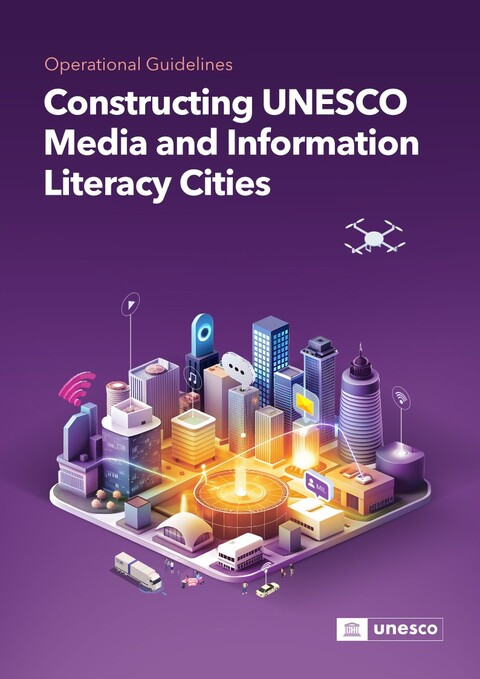 Operational Guidelines: Constructing UNESCO Media and Information Literacy Cities Год публикации: 2024 Организация-автор: UNESCO To support the integration of media and information literacy in urban spaces, UNESCO is releasing operational guidelines for city governance stakeholders. These guidelines aim to help cities align their goals with the benefits of integrating MIL into physical and virtual spaces.The guidelines offer examples of actions for cities interested in pioneering the MIL Cities. Cities are encouraged to share their progress and achievements with UNESCO for future initiatives.All cities and municipalities can participate, regardless of size, internet penetration, or technology use. The guidelines aim to foster diverse partnerships at the municipal level for implementing MIL actions and programmes. Directrices operativas: construyendo Ciudades de Alfabetización Mediatica eIinformacional de la UNESCO Год публикации: 2024 Организация-автор: UNESCO Con miras a apoyar la integración de la alfabetización mediática e informacional en los entornos urbanos, la UNESCO publica directrices operativas para las partes interesadas en la gobernanza de las ciudades. Estas directrices procuran ayudar a las ciudades a alinear sus objetivos con los beneficios de integrar la AMI en espacios físicos y virtuales.Las directrices ofrecen ejemplos de actividades a las ciudades interesadas en ser pioneras en “Ciudades AMI”. Se les alienta a compartir sus avances y logros con la UNESCO para la elaboración de iniciativas en el futuro.Todas las ciudades y municipios pueden participar, independientemente de su tamaño, penetración de Internet o utilización de tecnología. Las directrices intentan propiciar asociaciones diversas a nivel municipal con objeto de ejecutar actividades y programas AMI. Directives opérationnelles : Vers la création de villes UNESCO pour l’éducation aux médias et à l’information Год публикации: 2024 Организация-автор: UNESCO Pour soutenir l’intégration de l’éducation aux médias et à l’information dans les espaces urbains, l’UNESCO publie des lignes directrices opérationnelles à l’intention des acteurs de la gouvernance des villes.Ces lignes directrices ont pour objectif d’aider les villes à aligner leurs objectifs sur les avantages de l’intégration de l’éducation aux médias et à l’information dans les espaces physiques et virtuels.Les lignes directrices proposent des actions à titre d’exemple aux villes désireuses d’être parmi les pionnières Villes EMI. Les villes sont encouragées à partager leurs progrès et leurs réalisations avec l’UNESCO dans la perspective d’initiatives futures. Как создавать города медийной и информационной грамотности ЮНЕСКО Год публикации: 2024 Организация-автор: UNESCO Чтобы содействовать интеграции медийной и информационной грамотности в городские пространства, ЮНЕСКО выпускает практическое руководство для участников процесса управления городами. Это руководство призвано помочь городам формировать цели своего развития с учетом преимуществ интеграции МИГ в физические и виртуальные пространства.В руководстве приводятся примеры действий для населенных пунктов, которые заинтересованы в том, чтобы стать первопроходцами в деле создания городов медийной и информационной грамотности. ЮНЕСКО будет рада узнать об их успехах и достижениях для будущих проектов.К инициативе могут присоединиться любые города и населенные пункты независимо от размера, уровня проникновения интернета или использования технологий. Задача данного руководства — содействовать развитию сотрудничества на муниципальном уровне для реализации мероприятий и программ в сфере МИГ.
  Global Media and Information Literacy Assessment Framework: Country Readiness and Competencies Год публикации: 2013 Организация-автор: UNESCO The MIL Assessment Framework can foster lifelong learning initiatives by building on the relationship between information, media, digital, and ICT literacies, along with societal transformations, education, workforce, policy and decision making processes, economic growth and democracy. The overall goal of the publication is to guide UNESCO’s Member States throughout the assessment of country readiness and competencies regarding the media and information literacy of citizens, in particular teachers in service and in training. The document is particularly aimed at the following stakeholders: policy makers and decision makers; national officers responsible for statistical data collection and analysis; educational policy makers and planners working in formal and informal education settings; teacher training institutions and teachers. It is also of relevance to the professional information and communication community, and has wide applicability for civil society at large.
  UNESCO MIL CLICKS Social Media Innovation Год публикации: 2016 Организация-автор: UNESCO MIL CLICKS is a way for people to acquire media and information literacy (MIL) competencies in their normal day-to-day use of the Internet and social media and to engage peer education in an atmosphere of browsing, playing, connecting, sharing, and socializing.The acronym MIL CLICKS stands for Media and Information Literacy: Critical-thinking, Creativity, Literacy, Intercultural, Citizenship, Knowledge & Sustainability.The objectives of this social media strategy are to use social media to:1) Expose people to become more media and information literate and to2) Raise awareness about the importance of media and information literacy.
  UNESCO MIL CLICKS: Innover avec les médias sociaux Год публикации: 2016 Организация-автор: UNESCO MIL CLICKS permet non seulement aux gens d'acquérir des compétences en matière d'éducation aux médias et à l'information (MIL en anglais) dans leur utilisation quotidienne d'Internet et des médias sociaux mais également d'engager l'éducation par les pairs dans une atmosphère de navigation, de jeu, de connexion, de partage et de socialisation.
  Do You Speak MIL?: Media and Information Literacy; A Handbook for Jordanian CSOs Год публикации: 2020 Автор: Milica Pesic | Lucien Michael Steinberg | Anoud Al-Zou’bi Организация-автор: Media Diversity Institute | UNESCO | UN. Office of Counter-Terrorism (UNOCT) This publication, “Do You Speak MIL?: Media and Information Literacy – A Handbook for Jordanian CSOs,” provides civil society organizations (CSOs) with practical tools to integrate Media and Information Literacy (MIL) into their training programs. Each chapter includes a technical introduction, thought-provoking questions, and real-life examples to guide trainers. Published in 2020, this handbook is a valuable resource for promoting MIL within Arab countries, intending to empower communities to navigate the evolving media landscape.
  Overview of Information Literacy Resources Worldwide Год публикации: 2013 Автор: Forest Woody Horton Организация-автор: UNESCO This publication aims to bring together Information Literacy contributions in forty-two languages from all of the different geographic regions around the world in order to provide inclusive and multilingual Information Literacy resources for Library and Information Science professionals, teachers, researchers, and students.
  Seoul Declaration on Media and Information Literacy for Everyone and by Everyone: A Defence Against Disinfodemics Год публикации: 2020 Организация-автор: UNESCO On the 10th anniversary of Global Media and Information Literacy Week, stakeholders from all over the world gave a resounding affirmation as to the urgency to strengthen people’s media and information literacy competencies. The number of celebratory events increased from one hundred events in 2019 to over three hundred events in 2020.The outcomes of the deliberations in the Feature Conference and Youth Agenda Forum have been immortalized in the Seoul Declaration on Media and Information Literacy for Everyone and by Everyone: A Defence against Disinfodemics. This Seoul Declaration benefited from a consultation with close to one thousand registered participants.Through the Seoul Declaration, partners and participants called for media and information literacy for all. They:Emphasized that “media and information literacy (MIL) is a core competency for addressing the disinfodemic, and that MIL also contributes to access to information, freedom of expression, protection of privacy, prevention of violent extremism, promotion of digital security and combating hate speech and inequality”.Recognized “UNESCO’s effort to promote a Global MIL Cities Framework to stimulate creative learning about MIL in city spaces and the involvement of non-traditional actors in promoting MIL”.Called on duty bearers at the national to city levels to “commit to advancing ‘Media and Information Literacy for Everyone and by Everyone’ through policy and resource allocation across all relevant areas, including education, health, elections, child protection, climate, gender equality, governance and regulation, to mention some examples”.Urged technological intermediaries to “play an accountable role, through institutionalized multi-stakeholder systems, as part of the social endeavor to tackle disinformation and to build communities that are media and information literate”.Requested UNESCO, in cooperation with other UN Agencies, to “maintain a focus on inclusion of disadvantaged groups in MIL engagements, and to continue to foster gender equality in relation to MIL.”