
Ресурсы
Изучайте широкий спектр ценных ресурсов ВГГ, чтобы углубить своё понимание и повысить эффективность исследований, просветительской деятельности, преподавания и обучения.
Найдено: 96
 تقرير المياه والتنمية الثامن: أهداف التنمية المستدامة المتعلقة بالمياه في المنطقة العربية Год публикации: 2019 Организация-автор: UN. Economic and Social Commission for Western Asia (UN. ESCWA) لأهداف التنمية المستدامة ذات الصلة بالمياه دور رئيسي في تحقيق خطة التنمية المستدامة لعام 2030 وأهداف التنمية المستدامة الأخرى ومقاصدها. ويسعى الهدف المكرّس للمياه (الهدف 6) إلى ضمان توفر المياه وإتاحة خدمات الصرف الصحي للجميع وإدارتهما بشكل مستدام. وفي العمل على بلوغه ما يدعم تحقيق العديد من الأهداف الأخرى. ويساهم رصد أهداف التنمية المستدامة ذات الصلة بالمياه والإبلاغ عنها على الصعيد الإقليمي في فهم أفضل لموقع المياه في خطة التنمية المستدامة، ويعطي فكرة عما حققته المنطقة العربية من تقدم وما واجهته من تحديات في سعيها إلى تحقيق أهداف التنمية المستدامة والغايات الوطنية المرتبطة بها، في ظل ندرة المياه وزيادة الإجهاد المائي. ويبحث العدد الثامن من تقرير اللجنة الاقتصادية والاجتماعية لغربي آسيا (الإسكوا) حول تنمية المياه في أهداف التنمية المستدامة ذات الصلة بالمياه من منظور الأمن المائي وندرة المياه في المنطقة العربية. ويحدّد طرقاً لتقييم ومعالجة ندرة المياه الحالية والمتوقعة على المستويين الإقليمي والوطني على ضوء سيناريوهات مختلفة لتغيُّر المناخ. ويستعرض مدى اتساق الاستراتيجيات وخطط العمل المائية الإقليمية والوطنية مع الأهداف والمقاصد العالمية ذات الصلة بالمياه. وتبيّن الدراسة كيف يمكن الاسترشاد بمقاصد ومؤشرات أهداف التنمية المستدامة ذات الصلة بالمياه في وضع تدابير في السياسة العامة لمواجهة تحديات المياه في المنطقة العربية. وتشمل التدخلات المقترحة على صعيد السياسات العامة تدابير للحفاظ على موارد المياه وحمايتها، وتوليد موارد مائية إضافية غير تقليدية. ويتم تقدير السياسات العامة المختارة وتحليلها ضمن سيناريوهين مناخيين للفترة المستقبلية 2030-2050 بهدف توجيه التخطيط المستدام والنُظُم الداعمة لعمليات اتخاذ القرارات بما يؤدي إلى تحسين استخدام المياه وترشيده. ويستعرض التقرير الآليات المؤسسية القائمة لرصد أهداف التنمية المستدامة ذات الصلة بالمياه وتنفيذها على مستويات مختلفة.
  기후변화와 북한인권: 실태 및 협력방안 - SDGs 매개의 남북인권협력 관점에서 - Год публикации: 2022 Автор: 이규창 | 김에스라 | 나용우 | 최현아 Организация-автор: 통일연구원 글로벌 이슈인 기후변화는 생태계 및 환경뿐만 아니라 건강, 감염병, 경제, 주거, 식수 등 인간 삶의 상당한 영역에 영향을 미치고 있다. 기후변화는 재해‧ 재난의 빈도 및 강도의 증대로 이어져 최근에는 기후위기라는 용어가 회자되고 있으며 더 나아가 기후재앙이라는 용어도 사용되고 있다. 국제사회는 기후변화가 인권에 미치는 영향을 주목하고 이에 대응하기 위하여 노력을 기울이고 있다. 그 모습은 유엔인권최고대표사무소 (OHCHR)의 ‘기후변화와 인권의 관계에 관한 보고서’ 발표, 유엔 인권이사회의 ‘인권과 기후변화’ 결의 채택, ‘기후변화 맥락에서의 인권증진 및 보호에 관한 특별보고관’ 임명 등으로 나타나고 있다. 이 같은 배경에서 본 연구보고서는 기후문제가 북한인권에 미치는 영향과 실태 및 남북협력방안을 연구 내용으로 다루고 있다. 본 저작물은 통일연구원에서 2022년 작성하여 공공누리 제4유형으로 개방한 '기후변화와 북한인권: SDGs 매개의 남북인권협력 관점에서(작성자:이규창 외)'를 이용하였으며, 해당 저작물은 통일연구원 홈페이지(https://www.kinu.or.kr/)에서 무료로 내려받으실 수 있습니다.
  Building Back Better: Youth, Power and Planet Год публикации: 2020 Автор: Valerie Duffy | Leo Gilmartin | Eva Janssens | Dermot O’Brien Организация-автор: National Youth Council of Ireland (NYCI) Building Back Better: Youth, Power and Planet is about power. The understanding of power in youth work is vitally important for the development of young people as they navigate through their lives and society.The aim of this resource is to support young people and youth workers in understanding power, seeing power, claiming power, and activating power. It includes a wealth of background information on concepts around power and terminology, as well as a guide on ‘How to Use this Resource’, activities, stimulus sheets. This toolkit explores the issue of power and helps you make links to the Sustainable Development Goals.It is designed for global educators, youth workers, development education practitioners, trainers, climate activists, changemakers of all shapes and sizes but in particular those working with the current generation of young people.Building Back Better contains 4 main sections:Section 1. Defining PowerSection 2. Seeing PowerSection 3. Claiming PowerSection 4. Activating PowerIt also contains:an introduction to power in theory and in practice 10 activities with interactive exercisesaction power templates for planningstriking visuals, case studies on human development for adapting This was resource was created by the NYCI Youth 2030 programme.
 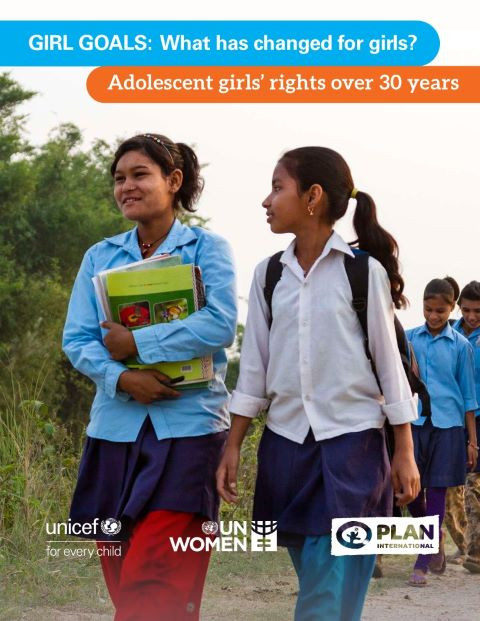 Girl Goals: What has Changed for Girls? Adolescent Girls’ Rights over 30 Years Год публикации: 2025 Организация-автор: United Nations Children's Fund (UNICEF) | United Nations Entity for Gender Equality and the Empowerment of Women (UN Women) | Plan International This report makes three key recommendations on action we can take now to advance adolescent girls’ rights at scale, in ways that account for fiscally constrained contexts and multiple competing priorities: 1. Ensure tangible and actionable support for adolescent girls’ voices, advocacy and action. The current generation of girls are raising their voices to be heard and are already at the forefront of making change around the world. With the right support, resources and seats at the table, adolescent girls can help transform the world for the better, shaping better policy outcomes for themselves and everyone. This is not about girls’ voices above all others, or endless consultation, but about specific, meaningful actions that ensure girls get the support they need and are heard on policy issues that matter to them. 2. Establish and track explicit targets for change for adolescent girls, who are too often invisible and sidelined Setting explicit targets to monitor outcomes for adolescent girls is key to making progress. Context-specific prioritization will be necessary, but there are some issues that stand out globally. Gaps in progress (such as child marriage gains accruing disproportionately to wealthier households) demonstrate the need forprogrammes that address poverty and economic realities alongside harmful social norms. The disproportionate number of adolescent girls not in education, employment or training, not entering the labour market as young women, and left behind when it comes to digital skills, is a threat to the gains made for girls and to economic growth that will benefit everyone. Stagnation on issues like underweight also stand out. Country- specific priorities supported by data- driven accountability mechanisms and investments are needed to translate policy commitments into change on the ground. 3. Resource and deliver smartly to unlock the social and economic dividend Governments and partners should invest in solutions proven to change outcomes across multiple SDGs at scale – for example, investing in education and skills, cash transfers and economic empowerment programmes designed to support girls. Existing systems, from maternal health care to school curricula, should be adapted to meet girls’ needs rather than creating small- scale, separate projects. Streamlined, evidence-based ‘add-ons’ – such as adding parenting support to existing maternal health-care programmes – can be cost effective and accelerate outcomes if well designed. Change is possible, and this report shows that great gains have been made. Smart investments now can transform the world for girls, families, communities and national economies. It is time to act.
 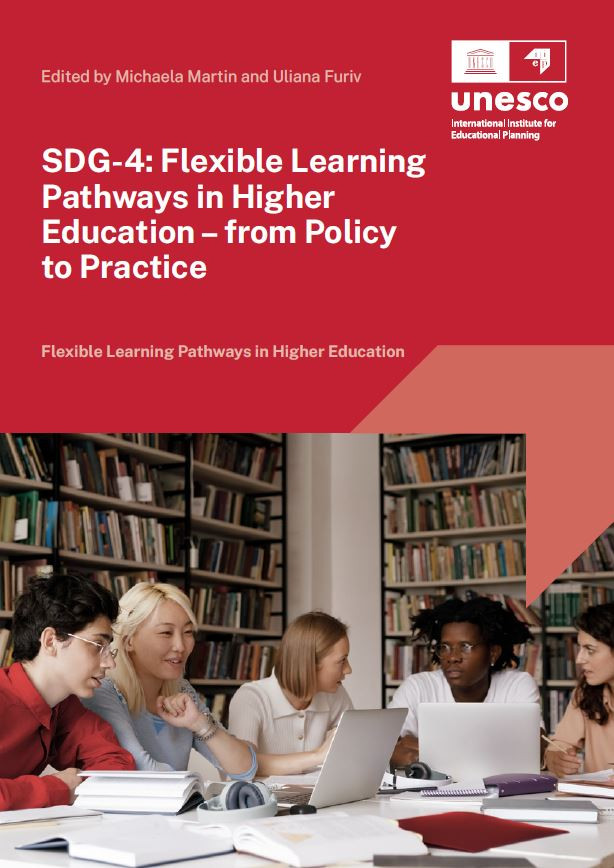 SDG-4: Flexible Learning Pathways in Higher Education – from Policy to Practice: An International Comparative Analysis Год публикации: 2022 Автор: Michaela Martin | Uliana Furiv Организация-автор: UNESCO International Institute for Educational Planning (IIEP) Higher education systems across the world are currently faced with a massive influx of learners with more diverse needs. They are expected to respond to this growing diversity through a more flexible learning offer and pathways that allow all learners, including those from disadvantaged groups, to access, progress through, and complete, higher education.To enhance knowledge on how to provide increased flexibility in higher education, IIEP–UNESCO undertook an international research project on SDG-4: Planning for Flexible Learning Pathways (FLPs) in Higher Education. The project included a stocktaking of policies, instruments, and practices, an international survey among UNESCO Member States, and eight in-depth country studies on Chile, Finland, India, Jamaica, Malaysia, Morocco, South Africa, and the UK.This book presents the findings from the research, including a cross-country analysis of available FLP policies and practices, and how they enhance equitable higher education systems. It also presents a series of country experiences with innovative approaches to alternative entry, flexible progression, and governance systems in support of FLPs.
  Учёт показателей достижения ЦУР 4: доклад о ходе достижения национальных контрольных показателей; в фокусе внимания — учителя Год публикации: 2024 Организация-автор: Global Education Monitoring Report Team | UNESCO Institute for Statistics (UIS) В настоящем издании представлена вторая оценка прогресса в достижении странами контрольных показателей, или национальных плановых ориентиров, установленных ими в отношении восьми показателей достижения ЦУР 4 в качестве вклада в реализацию глобальных целей. В этой оценке, охватывающей период с 2015 года, анализируется вероятность достижения каждой из стран национального контрольного показателя на 2025 год или (если контрольный показатель не был установлен) значения, которого они могли бы достичь в случае, если бы темпы их прогресса в истекший период (2000–2015 годы) были на уровне 25 % наиболее быстро прогрессирующих стран.В докладе об учете показателей достижения ЦУР 4 за 2024 год отмечено, что по большинству показателей темпы прогресса в достижении национальных целевых ориентиров отстают от плановых. Более того, по двум аспектам – гендерный дисбаланс (в пользу девочек) по показателю завершения полной средней школы и государственные расходы на образование в процентной доле от общего объема государственных расходов – в странах был зафиксирован регресс.Напротив, ускорился прогресс в достижении нового, восьмого показателя ЦУР 4 (доступ школ к интернету), который был добавлен с учетом приоритетного внимания, уделенного в ходе Саммита по трансформации образования 2022 года проблематике внедрения цифровых технологий. Треть стран установила в 2023 году национальные плановые ориентиры по этому показателю, в связи с чем в настоящем издании был впервые рассмотрен прогресс в этом вопросе.Наряду с этим относительно быстрыми темпами растет процентная доля учителей, имеющих минимально требуемый уровень квалификации. Этому показателю в настоящей публикации также было уделено повышенное внимание. В докладе представлены новые данные о национальных стратегиях в отношении минимальных уровней квалификации для доступа к учительской профессии, а также о правилах и стандартах, касающихся обязательного непрерывного повышения квалификации и обучения учителей навыкам применения новых технологий в сфере образования.
  سجّل الأداء بشأن تحقيق هدف التنمية المستدامة 4: التقرير المرحلي عن المؤشرات المرجعية الوطنية Год публикации: 2024 Организация-автор: Global Education Monitoring Report Team | UNESCO Institute for Statistics (UIS) يتضمن هذا التقرير نتائج عملية التقييم الثانية للتقدم المحرز على الصعيد القطري نحو تحقيق المؤشرات المرجعية، أو الأهداف الوطنية، التي حددتها البلدان المساهمة في أهداف التنمية المستدامة بهدف تحديد مساهمتها في تحقيق الأهداف العالمية في مجال التعليم. وتغطي عملية التقييم هذه الفترة منذ عام 2015، وتقيّم مدى احتمال بلوغ البلدان المؤشر المرجعي الخاص بكل بلد لعام 2025، أو القيمة التي كان باستطاعة البلدان الوصول إليها في حال واصلت وتيرة التقدم المحرز فيها خلال الفترة 2000-2015.وأظهر شكل التقييم لعام 2024 أن معظم البلدان تتقدم ببطء نحو بلوغ الأهداف الوطنية المرجوة منها. بل إن البلدان تتراجع عن تحقيق هدفين اثنين – أحدهما التفاوت بين الجنسين لمصلحة الفتيات في إتمام التعليم الثانوي الكامل، والآخر الإنفاق العام على التعليم كنسبة مئوية من الإنفاق العام الإجمالي.وعلى ذلك، سجّل البلدان تقدّمًا متسارعًا في بلوغ المؤشر المرجعي الثامن، ألا وهو الاتصال بالإنترنت في المدارس، الذي أضيف نتيجةً للأولوية التي أُعطيت للتحول الرقمي في قمة التحول في التعليم لعام 2022. وقد وضعت ثلث البلدان أهدافًا وطنية بشأن هذا المؤشر في عام ٢٠٢٣. ويجري في هذا الإصدار من التقرير تقييم التقدم في هذا المجال لأول مرة.وتستمر البلدان كذلك في تحقيق تقدّم سريع نسبيًا بالنسبة للمؤشر المتعلق بالنسبة المئوية للمعلمين الذين يستوفون الحد الأدنى من المؤهلات. وقد أولى هذا الإصدار اهتمامًا خاصًا لهذا المؤشر. ويعرض التقرير بيانات جديدة بشأن الأطر الوطنية المتعلقة بالحد الأدنى من المؤهلات المطلوبة للالتحاق بمهنة التدريس، وكذلك القواعد والمعايير الخاصة بالتطوير المهني المستمر الإلزامي للمعلمين، إضافة إلى التدريب على استخدام الوسائل التكنولوجية في مجال التعليم.
  可持续发展目标4记分卡:关于国家基准的进展报告:聚焦教师 Год публикации: 2024 Организация-автор: Global Education Monitoring Report Team | UNESCO Institute for Statistics (UIS) 这是第二份关于各国在实现基准或国家目标方面取得进展的评估报告,这些基准或国家目标是各国为八项可持续发展目标4指标而设定的,代表着其对全球目标的贡献。该评估涵盖了自2015年以来的时期,审查了每个国家实现其2025年基准的可能性;对于未设定此项基准的国家,则审查其是否有可能实现以历史上(2000–2015年)进展最快的25%国家的速度进步或将达到的数值。2024年可持续发展目标4记分卡表明,大多数指标的国家目标进展偏离轨道。在高中教育完成率方面男童处于不利地位的性别差距和公共教育支出占公共支出总额的比例这两项指标方面,各国甚至出现了倒退。相比之下,第八项基准指标——学校互联网连通性方面的进展较快,这项指标是在2022年教育变革峰会将数字变革作为优先事项后新增的。三分之一的国家在2023年制定了国家目标,本期报告首次审查了该指标的进展情况。另一个取得较快进展的指标,是具有最低必备资格的教师比例,这也是本期报告重点关注的指标。报告介绍了关于从事教师职业最低必备资格的国家政策、强制性持续专业培训政策,以及教师在教育技术方面培训政策的新证据。
  Tableau de bord pour l’ODD 4, rapport d’étape sur les points de référence nationaux: focus sur les enseignants Год публикации: 2024 Организация-автор: Global Education Monitoring Report Team | UNESCO Institute for Statistics (UIS) Il s'agit de la deuxième évaluation des progrès des pays vers les points de référence, ou objectifs nationaux, que les pays ont fixés pour huit indicateurs de l'ODD 4 afin de marquer leur contribution aux objectifs mondiaux. L’évaluation couvre la période depuis 2015 et examine la probabilité que chaque pays atteigne son point de référence pour 2025 ou – lorsqu’un tel objectif n’a pas été fixé – la valeur qu’il aurait atteinte s’il avait progressé au rythme historique (2000–15) des 25 % des pays qui s’améliorent le plus rapidement.Le tableau de bord de l’ODD 4 2024 révèle que les progrès vers les objectifs nationaux sont en retard pour la plupart des indicateurs. Dans deux cas – l’écart entre les genres au détriment des garçons dans l’achèvement du deuxième cycle du secondaire et les dépenses publiques d’éducation en proportion des dépenses publiques totales – les pays reculent même.En revanche, les progrès sont plus rapides pour le huitième indicateur de référence, la connectivité Internet dans les écoles, qui a été ajouté suite à la priorité accordée à la transformation numérique lors du Sommet sur la transformation de l’éducation en 2022. Un tiers des pays ont fixé des objectifs nationaux en 2023 et les progrès sur l’indicateur sont examinés pour la première fois dans cette édition.Les progrès sont également relativement rapides en ce qui concerne le pourcentage d'enseignants possédant les qualifications minimales requises, qui est également l'indicateur central de cette édition. De nouvelles données sont présentées sur les politiques nationales concernant les niveaux de qualification minimaux requis pour accéder à la profession enseignante, les politiques de développement professionnel continu obligatoire et les politiques de formation des enseignants sur la tec SDG 4 Scorecard: Progress Report on National Benchmarks; Focus on Teachers Год публикации: 2024 Организация-автор: Global Education Monitoring Report Team | UNESCO Institute for Statistics (UIS) This is the second assessment of country progress towards the benchmarks, or national targets, that countries have set for eight SDG 4 indicators to mark their contribution to the global targets. The assessment covers the period since 2015 and reviews the probability that each country will achieve its 2025 benchmark or – where such a benchmark was not set – the value they would have achieved if they had progressed at the historic (2000–15) rate of the fastest improving 25% of countries.The 2024 SDG 4 Scorecard finds that progress towards national targets is off track for most indicators. In two cases – the gender gap at the expense of boys in upper secondary education completion and public education expenditure as share of total public expenditure – countries are even moving backwards.In contrast, progress is faster in the eighth benchmark indicator, school internet connectivity, which was added following the priority given to digital transformation at the Transforming Education Summit in 2022. One third of countries set national targets in 2023 and progress on the indicator is being reviewed for the first time in this edition.Progress is also relatively fast in the percentage of teachers with minimum required qualifications, which is also the focus indicator of this edition. New evidence is presented on national policies for minimum required qualification levels to enter the teaching profession, compulsory continuous professional development policies, and teacher training policies on technology in education.