
Ресурсы
Изучайте широкий спектр ценных ресурсов ВГГ, чтобы углубить своё понимание и повысить эффективность исследований, просветительской деятельности, преподавания и обучения.
Найдено: 5
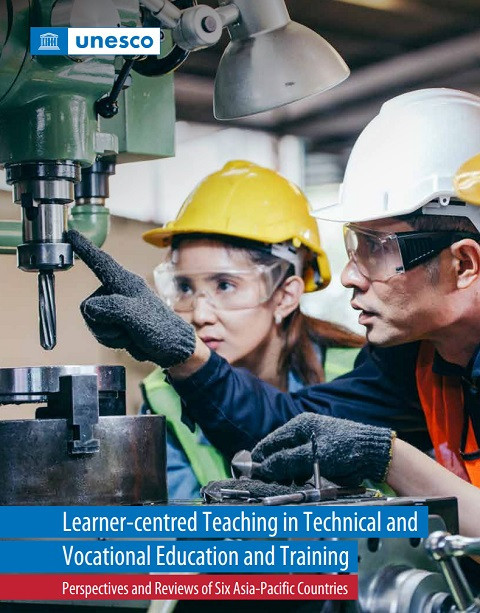 Learner-Centred Teaching in Technical and Vocational Education and Training: Perspectives and Reviews of Six Asia-Pacific Countries Год публикации: 2023 Организация-автор: UNESCO Bangkok Learner-centred Teaching in Technical and Vocational Education and Training: Perspectives and Reviews of Six Asia-Pacific Countries A learner-centred approach to teaching in Technical and Vocational Education and Training (TVET) is based on learner engagement, autonomy and outcome-based activities to support professional development. This report analyses the status of learner-centred TVET teaching in six selected countries across Asia and the Pacific, including China, Republic of Korea, Samoa, Sri Lanka, Thailand, and Uzbekistan. The countries were selected because of their geographic diversity, access to national experts, and potential around learner-centred TVET.The first part of the study is a review of the theoretical background on the learner-centred approach and TVET teaching with an international scope. A total of 25 indicators were used to assess three components of TVET teaching in the region. The analysis includes 17 examples corresponding to the selected indicators. The findings showcase lessons learned and recommendations for countries to self-assess their TVET teaching strategies. These examples will help to inform future projects and capacity building in each sub-region of Asia-Pacific.As a result, seven proposals are identified and discussed to promote the development of learner-centred TVET teaching in the region. These proposals include: 1) supporting national reform of the pedagogy based on the results of pilot projects; 2) increasing two-way communication between students and teachers; 3) producing learning materials adapted to learner-centred methods; 4) using technology in the learning process; 5) implementing competency-based learning to support the learner-centred pedagogy; 6) integrating transversal and core skills; and 7) developing teachers’ capacities by employing a learner-centred approach. These proposals (on reform, teaching method, use of materials, etc.) also address gender dimensions throughout the planning, implementation and review process. Conclusions from the study provide lessons learned as well as proposals for further research and implementation of learner-centred TVET teaching in Asia-Pacific.
  Training for Citizenship in Gender Equality at Elementary Education(Sinéctica, Revista electrónica de educación; no. 60) Год публикации: 2023 Автор: Denys Serrano Arenas | Azucena de la Concepción Ochoa Cervantes Организация-автор: Sinéctica, Revista Electrónica de Educación Gender equality is a purpose from educational policies aimed to eliminating sociocultu-ral inequalities that limit the exercise of children's rights. At present, gender stereotypes that legitimize the roles exercised by girls and boys that limit the forms of participation persist, promoting different levels of exclusion in school life. The objective of this work is to analyze the perceptions of a group of sixth grade students, about how they consider they should participate in school dynamics due to their gender condition, to detect tho-se stereotypes that influence the practice of their participation. A descriptive study was carried out using a Likert-type questionnaire to 64 students. The results show that gen-der stereotypes are reproduced that provide children with greater ease and freedom to express themselves, as well as to make decisions. Modifications in the care roles were also identified, within which, they begin to have greater interference. In parallel, it was found that these stereotypes represent structural difficulties for the self-recognition of the par-ticipatory capacities of girls. It is recommended to take participation as a fundamental element for the exercise of citizenship in gender equality. La formación para la ciudadanía en igualdad de género en educación primaria(Sinéctica, Revista electrónica de educación; núm. 60) Год публикации: 2023 Автор: Denys Serrano Arenas | Azucena de la Concepción Ochoa Cervantes Организация-автор: Sinéctica, Revista Electrónica de Educación La igualdad de género es un propósito desde las políticas educativas dirigidas a la eliminación de desigualdades socioculturales que limitan el ejercicio de derechos de la niñez. En la actualidad, perviven estereotipos de género que legitiman los roles ejercidos por niñas y niños que limitan las formas de participación y propician distintos niveles de exclusión en la convivencia escolar. El objetivo de este trabajo es analizar las percepciones de un grupo de estudiantes de sexto grado sobre la forma en que deben participar en las dinámicas escolares por su condición de género a fin de identificar los estereotipos que influyen en la práctica de su participación. Se realizó un estudio descriptivo mediante un cuestionario tipo Likert a 64 estudiantes. Los resultados muestran que se reproducen estereotipos de género que dotan a los niños de mayor facilidad y libertad para expresarse, así como para tomar decisiones. También se identificaron modificaciones en los roles de cuidado, dentro de los cuales los hombres comienzan a tener mayor injerencia. Estos estereotipos representan dificultades estructurales para el autorreconocimiento de las capacidades participativas de niñas y niños. Se recomienda tomar a la participación como elemento fundamental para el ejercicio de la ciudadanía en igualdad de género.
  Accountability in Education: Meeting our Commitments; Global Education Monitoring Report, Youth Version, 2017/8 Год публикации: 2017 Организация-автор: UNESCO This Youth Report, based on findings and conclusions from the 2017/8 Global Education Monitoring report, asks how young people are involved in the process of accountability in education. As students, what are we responsible for in our education and how are we held accountable? How can we make sure other actors – like schools, universities and governments – are held accountable for their responsibilities? These are critical questions, because we know that there’s a long way to go before all young people around the world have access to a quality education: absent teachers, overcrowded classrooms, illegitimate diplomas, unregulated private schools and truancy are all issues that education systems are struggling to overcome.It’s sometimes tempting to say that these problems aren’t ours to fix, that the responsibility lies with the government or with an older generation. But this simply isn’t true: education is a shared responsibility, and young people have an important role to play. In this Report, you’ll hear the stories of young people around the world who have stood up for the right to education in their communities and who have been integral in triggering change. You’ll also read about how you can become involved in our campaign to make sure governments can be held to account for education. This means making sure that citizens can take their governments to court if they are not meeting their education responsibilities. From creating video clips to holding awareness-raising events, there is a range of ways to make your voice heard. Your involvement is integral in making sure the world is on the right path to meeting our education goals. Rendir cuentas en el ámbito de la educación: cumplir nuestros compromisos; Informe de seguimiento de la educación en el mundo, versión para los jóvenes, 2017/8 Год публикации: 2017 Организация-автор: UNESCO Esta versión para los jóvenes del Informe GEM, que se basa en los resultados y conclusiones del Informe de Seguimiento de la Educación en el Mundo 2017-2018, se cuestiona acerca de la manera en que los jóvenes participan en el proceso de rendición de cuentas en la educación. En tanto que alumnos, ¿de qué somos responsables en nuestra educación, y cómo se nos responsabiliza? ¿Cómo podemos asegurarnos de que se responsabilice a otros interesados, como las escuelas, las universidades y los gobiernos, por lo que deben hacer? Estas son preguntas fundamentales, porque sabemos que quedan aún muchas cuestiones por resolver para que todos los jóvenes del mundo tengan acceso a una educación de calidad. El ausentismo de los docentes, el hacinamiento de las aulas, los diplomas ilícitos, las escuelas privadas no reglamentadas y el ausentismo de los alumnos son cuestiones que los sistemas educativos se esfuerzan por superar.Sería fácil afirmar que la resolución de esos problemas no está en nuestras manos, y que la responsabilidad es del gobierno o de una generación anterior. Pero esto simplemente no es cierto; la educación es una responsabilidad compartida, y los jóvenes desempeñan en ese sentido un papel importante. En este informe conocerá las historias de jóvenes de todo el mundo que han defendido el derecho a la educación en sus comunidades, y que han contribuido a motivar un cambio. También leerá sobre las maneras en que podrá participar en nuestra campaña para garantizar que se responsabilice a los gobiernos por la educación. Esto significa asegurarse de que los ciudadanos puedan llevar a sus gobiernos ante la justicia si no cumplen sus responsabilidades en materia de educación. Desde grabar vídeos hasta organizar actos de sensibilización, son muchas las maneras de hacerse escuchar. Su participación es indispensable para garantizar que el mundo transite por la vía correcta para alcanzar nuestros objetivos sobre la educación.