
Ресурсы
Изучайте широкий спектр ценных ресурсов ВГГ, чтобы углубить своё понимание и повысить эффективность исследований, просветительской деятельности, преподавания и обучения.
Найдено: 22
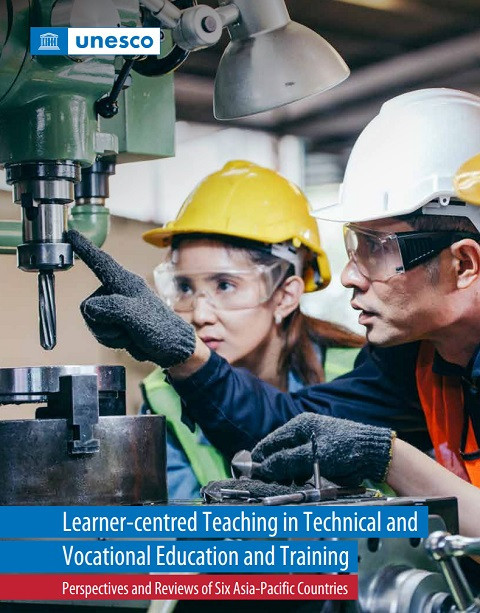 Learner-Centred Teaching in Technical and Vocational Education and Training: Perspectives and Reviews of Six Asia-Pacific Countries Год публикации: 2023 Организация-автор: UNESCO Bangkok Learner-centred Teaching in Technical and Vocational Education and Training: Perspectives and Reviews of Six Asia-Pacific Countries A learner-centred approach to teaching in Technical and Vocational Education and Training (TVET) is based on learner engagement, autonomy and outcome-based activities to support professional development. This report analyses the status of learner-centred TVET teaching in six selected countries across Asia and the Pacific, including China, Republic of Korea, Samoa, Sri Lanka, Thailand, and Uzbekistan. The countries were selected because of their geographic diversity, access to national experts, and potential around learner-centred TVET.The first part of the study is a review of the theoretical background on the learner-centred approach and TVET teaching with an international scope. A total of 25 indicators were used to assess three components of TVET teaching in the region. The analysis includes 17 examples corresponding to the selected indicators. The findings showcase lessons learned and recommendations for countries to self-assess their TVET teaching strategies. These examples will help to inform future projects and capacity building in each sub-region of Asia-Pacific.As a result, seven proposals are identified and discussed to promote the development of learner-centred TVET teaching in the region. These proposals include: 1) supporting national reform of the pedagogy based on the results of pilot projects; 2) increasing two-way communication between students and teachers; 3) producing learning materials adapted to learner-centred methods; 4) using technology in the learning process; 5) implementing competency-based learning to support the learner-centred pedagogy; 6) integrating transversal and core skills; and 7) developing teachers’ capacities by employing a learner-centred approach. These proposals (on reform, teaching method, use of materials, etc.) also address gender dimensions throughout the planning, implementation and review process. Conclusions from the study provide lessons learned as well as proposals for further research and implementation of learner-centred TVET teaching in Asia-Pacific.
  UNESCO-UNEVOC Medium-Term Strategy for 2021-2023: Strengthening TVET Capacities and Cooperation in the Member States Год публикации: 2020 Организация-автор: UNESCO International Centre for Technical and Vocational Education and Training (UNEVOC) The Medium-Term Strategy for 2021-2023 (MTS-III) sets out how UNESCO-UNEVOC will support TVET institutions to meet the demands of dynamic labour markets and provide quality skills training for a sustainable future of work. MTS-III focuses on developing the capacities of TVET leaders, supporting TVET institutions in implementing change programmes, and facilitating knowledge sharing and peer learning within the UNEVOC Network.
  UNESCO-UNEVOC regional forum: advancing TVET for youth employability and sustainable development, Latin America and the Caribbean, 27-28 August 2013, San José, Costa Rica; meeting report Год публикации: 2013 Организация-автор: UNESCO International Centre for Technical and Vocational Education and Training (UNEVOC) The Regional Forum of UNEVOC centres in Latin America and the Caribbean (LAC) presented in this report was one of a series of activities aiming to strengthen global and regional harmonization for the advancement of TVET transformation through the capacities of UNEVOC’s unique global network of specialized TVET institutions and affiliated partners, following the UNESCO Third International Congress on Technical and Vocational Education and Training (TVET) that took place in China in May 2012. The Forum also provided the opportunity to present evidence on the two priority thematic areas for UNESCO-UNEVOC for 2013, Youth and Skills and Greening TVET. This was achieved through the presentation and discussion of several promising practices in these two areas. UNESCO-UNEVOC forum régional: Promouvoir l'EFTP pour l'employabilité des jeunes et le développement durable, en Amérique latine et dans les Caraïbes, 27-28 Août 2013, San José, Costa Rica; rapport de la réunion Год публикации: 2013 Организация-автор: UNESCO International Centre for Technical and Vocational Education and Training (UNEVOC) Le Forum régional des centres UNEVOC en Amérique latine et dans les Caraïbes (ALC), présenté dans le présent rapport fait partie d'une série d'activités visant à renforcer l'harmonisation mondiale et régionale pour la promotion de la transformation de l'EFTP à travers les capacités de réseau mondial unique de UNEVOC de l'EFTP spécialisée institutions et partenaires affiliés, suite à l'UNESCO Troisième Congrès international sur l'enseignement technique et professionnel et de la formation (EFTP) qui a eu lieu en Chine en mai 2012. le Forum a également été l'occasion de présenter des preuves sur les deux domaines thématiques prioritaires pour l'UNESCO-UNEVOC pour 2013, la jeunesse et les compétences et l'écologisation de l'EFTP. Ceci a été réalisé grâce à la présentation et à la discussion de plusieurs pratiques prometteuses dans ces deux domaines.
  Advancing Innovation: UNESCO-UNEVOC in Action; Biennial Report 2018-2019 Год публикации: 2020 Организация-автор: UNESCO International Centre for Technical and Vocational Education and Training (UNEVOC) In a rapidly evolving world filled with societal, environmental and economic disruptions, technical and vocational education and training (TVET) systems need to develop innovative strategies to tackle emerging challenges while simultaneously seizing the opportunities that have arisen from the advent of 21st century technology.This Biennial Report gives a comprehensive overview of UNESCO-UNEVOC's activities in technical and vocational education and training over the biennium 2018-2019.
  Integrating sustainable development in technical and vocational education and training: six case studies from Southern and Eastern Africa Год публикации: 2010 Автор: Roland Dubois | Koontee Balgobin | Modesto Sylvester Gomani | Joy Kasandi Kelemba | Gabriel S. Konayuma | Matthews Lebogang Phiri | John W. Simiyu Организация-автор: UNESCO International Centre for Technical and Vocational Education and Training (UNEVOC) The case studies in Southern and Eastern Africa were commissioned in Botswana, Kenya, Malawi, Mauritius and Zambia. They were carried out by writers connected with the UNEVOC Network as part of capacity building and of contributing to knowledge building and sharing. They have described and have analysed experiences, practices relating to integrating ESD in TVET programmes, primarily. Also, they have identified gaps for additional action so that the integration can be satisfactorily done. Through the case studies it is intended to build a pool of resources and tools of what works as part of the UNESCO-UNEVOC International Centre’s clearinghouse. Intégration du développement durable dans l'enseignement et la formation techniques et professionnels: six études de cas en Afrique australe et orientale Год публикации: 2010 Автор: Roland Dubois | Koontee Balgobin | Modesto Sylvester Gomani | Joy Kasandi Kelemba | Gabriel S. Konayuma | Matthews Lebogang Phiri | John W. Simiyu Организация-автор: UNESCO International Centre for Technical and Vocational Education and Training (UNEVOC) Les études de cas en Afrique australe et orientale ont été commandées au Botswana, au Kenya, au Malawi, à Maurice et en Zambie. Ils ont été réalisés par des auteurs liés au Réseau UNEVOC dans le cadre du renforcement des capacités et de la contribution à la construction et au partage des connaissances. Ils ont décrit et analysé les expériences, les pratiques relatives à l'intégration de la EDD dans les programmes d'EPT, principalement. De plus, ils ont identifié des lacunes pour des actions supplémentaires afin que l'intégration puisse être effectuée de manière satisfaisante. Grâce aux études de cas, il est prévu de constituer un pool de ressources et d'outils de ce qui fonctionne dans le cadre du centre d'échange du Centre international UNESCO-UNEVOC.
 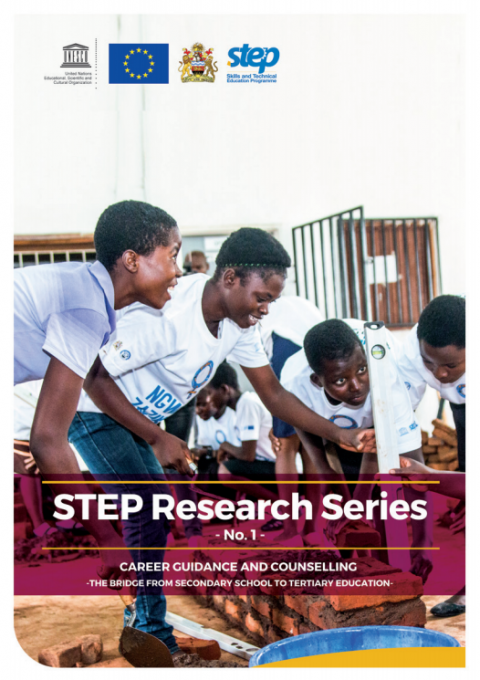 Career guidance and counselling: the bridge from secondary school to tertiary education; a review of current guidance and counselling programmes and practices in Malawi and their support in promoting technical and vocational training for girls Год публикации: 2017 Организация-автор: UNESCO The objective of this report is to identify and review existing career G&C programmes and practices in secondary schools in Malawi. The review assesses to what extent such programmes and practices create an awareness of the importance of technical careers and how graduates from the secondary schools can access TEVET. Additionally, it assesses whether any affirmative action measures or approaches are used to increase girls’ interest in and applications to enter technical colleges. Connaissances pratiques: symbiose des programmes relatifs à l'enseignement des sciences, à l'éducation concernant l'environnement et à l'enseignement technique et professionnel Год публикации: 2006 Автор: Saif R. Samady Организация-автор: UNESCO UNESCO’s work in science teaching began shortly after the Organization was established. After the Second World War, many schools in Europe were in great need of science equipment. To meet this need, the Organization sponsored the publication of a small volume entitled Suggestions for Science Teachers in Devastated Countries. The book was further developed to include a wide range of guidelines for simple equipment and science experiments and published in 1956 as the UNESCO Source Book for Science Teaching. Over the years, the Source Book was revised several times and translated into more than twenty-five languages. During five decades, the Organization promoted worldwide exchange of information and innovations in science education and assisted many Member States, especially the developing countries, in setting up science teacher training programmes, curriculum development centres, and projects for design and development of science equipment. Working knowledge: symbiosis of programmes in science teaching, environmental education, and technical and vocational education Год публикации: 2006 Автор: Saif R. Samady Организация-автор: UNESCO UNESCO’s work in science teaching began shortly after the Organization was established. After the Second World War, many schools in Europe were in great need of science equipment. To meet this need, the Organization sponsored the publication of a small volume entitled Suggestions for Science Teachers in Devastated Countries. The book was further developed to include a wide range of guidelines for simple equipment and science experiments and published in 1956 as the UNESCO Source Book for Science Teaching. Over the years, the Source Book was revised several times and translated into more than twenty-five languages. During five decades, the Organization promoted worldwide exchange of information and innovations in science education and assisted many Member States, especially the developing countries, in setting up science teacher training programmes, curriculum development centres, and projects for design and development of science equipment.