
Ресурсы
Изучайте широкий спектр ценных ресурсов ВГГ, чтобы углубить своё понимание и повысить эффективность исследований, просветительской деятельности, преподавания и обучения.
Найдено: 19
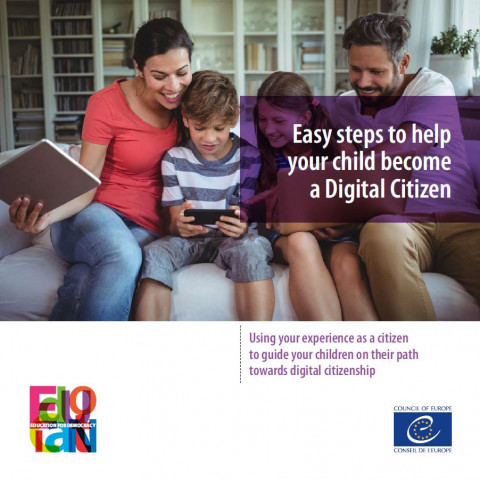 Easy Steps to Help Your Child Become a Digital Citizen Год публикации: 2020 Автор: Janice Richardson | Veronica Samara Организация-автор: Council of Europe A guide to help you use your experience as a citizen to guide your children on their path towards digital citizenship.Young people today inhabit a world that has been transformed by digital technologies, effortlessly enabling connectedness through social media and access to vast quantities of information. Making sense of this hyper rich information and engaging effectively and responsibly poses a whole set of new challenges for educators as they seek to prepare young people as citizens, exercising their rights and participating effectively in the affairs of the community.Parents, and “non-tech” grandparents too, can help children become digital citizens. In this guide, we explain some of the easy steps to follow, to help children master what it takes to act responsibly and respectfully online. Étapes simples pour aider votre enfant à devenir un citoyen numérique Год публикации: 2020 Автор: Janice Richardson | Veronica Samara Организация-автор: Conseil de l'Europe Un guide pour vous aider à utiliser votre expérience en tant que citoyen pour guider vos enfants sur la voie de la citoyenneté numérique.Les jeunes habitent aujourd'hui un monde qui a été transformé par des technologies numériques, permettant la connexion sans effort via les médias sociaux et l'accès à de vastes quantités d'informations. Etre capable de décortiquer cette information hyper riche et s’engager de manière efficace et responsable pose toute une série de nouveaux défis pour les éducateurs dans la mesure où ils cherchent à préparer les jeunes en tant que citoyens, à exercer leurs droits et à participer efficacement aux affaires de la communauté.Les parents et les grands-parents (même les profanes en technologie), peuvent aider les enfants à devenir des citoyens numériques. Dans ce guide, nous présentons quelques étapes faciles à suivre afin d’aider les enfants à maîtriser l’essentiel pour agir de façon responsable et respectueuse en ligne.
 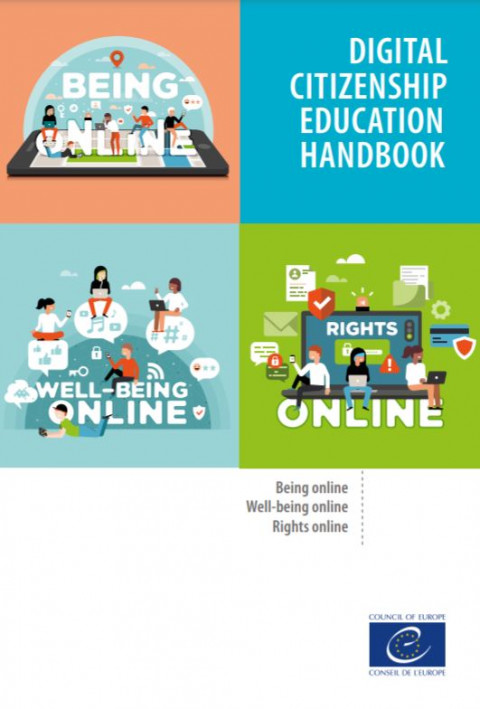 Digital Citizenship Education Handbook Год публикации: 2019 Автор: Janice Richardson | Elizabeth Milovidov Организация-автор: Council of Europe Digital citizenship and engagement involves a wide range of activities, from creating, consuming, sharing, playing and socialising, to investigating, communicating, learning and working. Competent digital citizens are able to respond to new and everyday challenges related to learning, work, employability, leisure, inclusion and participation in society, respecting human rights and intercultural differences.This Digital citizenship education handbook is designed to help educators and other interested adults understand and deal with them. It builds on the Council of Europe’s Reference Framework of Competences for Democratic Culture and the achievements of our longstanding Education for Democratic Citizenship programme, and complements the Internet literacy handbook as part of a coherent approach to educating citizens for the society of the future.
  Global Environment Outlook 4 (GEO-4): Environment for Development Год публикации: 2007 Организация-автор: United Nations Environment Programme (UNEP) The fourth Global Environment Outlook – environment for development ( GEO-4 ) places sustainable development at the core of the assessment, particularly on issues dealing with intra- and intergenerational equity. The analyses include the need and usefulness of valuation of environmental goods and services, and the role of such services in enhancing development and human well-being, and minimizing human vulnerability to environmental change. The GEO-4 temporal baseline is 1987, the year in which the World Commission on Environment and Development (WCED) published its seminal report, Our Common Future . The Brundtland Commission was established in 1983, under UN General Assembly resolution 38/161 to look at critical environment and development challenges. It was established at a time of an unprecedented rise in pressures on the global environment, and when grave predictions about the human future were becoming commonplace. تقرير التوقعات البيئية العالمية الرابع: البيئة من أجل التنمية المستدامة Год публикации: 2007 Организация-автор: United Nations Environment Programme (UNEP) تضع توقعات البيئة العالمية الرابعة - البيئة من أجل التنمية (GEO-4) التنمية المستدامة في صميم التقييم ، لا سيما فيما يتعلق بالقضايا التي تتناول المساواة بين الأجيال وبين الأجيال. تشمل التحليلات الحاجة والفائدة في تقييم السلع والخدمات البيئية ، ودور هذه الخدمات في تعزيز التنمية ورفاهية الإنسان ، وتقليل تعرض الإنسان للتغير البيئي. خط الأساس الزمني لتوقعات البيئة العالمية الرابع هو عام 1987 ، وهو العام الذي نشرت فيه اللجنة العالمية للبيئة والتنمية (WCED) تقريرها الأساسي ، مستقبلنا المشترك. تأسست لجنة برونتلاند في عام 1983 ، بموجب قرار الجمعية العامة للأمم المتحدة 38/161 للنظر في تحديات البيئة والتنمية الحرجة. تم تأسيسه في وقت ارتفاع غير مسبوق في الضغوط على البيئة العالمية ، وعندما أصبحت التنبؤات الخطيرة حول مستقبل الإنسان أمرًا شائعًا.
  A Theory of Justice (Arabic Edition) Год публикации: 2011 Автор: John Rawls Организация-автор: Syria. Ministry of Culture This is a book translated by Laila Al Taweel for the American author John Rawls, in which he reviewed justice by examining the institutions and laws that govern it. John asserts that justice is a major component of this universe and cannot be ignored in any way, or even surpassed even in the interests of society's well-being. This translated book is a reference in the Arab world for understanding justice. نظرية في العدالة Год публикации: 2011 Автор: John Rawls Организация-автор: Syria. Ministry of Culture هذا كتاب مترجم للامريكي جون رولز، والذي استعرض فيه العدالة من خلال تطرقه للمؤسسات والقوانين التي تحكمها. يؤكد جون أن العدالة مكون رئيسي من هذا الكون ولا يمكن تجاهلها بأي حال، أو تجاوزها حتى لصالح رفاهية المجتمع. يمثل هذا الكتاب المترجم مرجعا في الوطن العربي لفهم العدالة.
  Egyptian Youth Rethink the Future of Wellbeing in 2050: Report of the Futures Literacy Lab-novelty; Online, 21-24 July 2020 Год публикации: 2020 Организация-автор: UNESCO Cairo The UNESCO (Cairo Office and Research, Policy and Foresight Section) and the Egyptian Ministry of Youth and Sport, with support of Bibliotheca Alexandrina, UNFPA and UN Women, organized a Futures Literacy Laboratory - Novelty (FLL-N) entitled “Egyptian Youth Rethink the Future of Wellbeing in 2050”. Held online during 21-24 July 2020, and deploying the latest advances in anticipatory systems thinking and collective intelligence processes, the Lab brought together around 30 persons from across Egypt for 8-hours intensive work spread over a week’s time.Thirty young participants explored the topic of ‘wellbeing’ in Egypt in 2050 using a tool called the Futures Literacy Lab-Novelty (FLL-N). Wellbeing is an open concept that invites many different ways of defining what it means to ‘live well’. The participants engaged in learning-by-doing activities that exercised their imaginations, exploring questions like, how do people in 2050 in Egypt describe ‘wellbeing’? What is daily life like such that people in 2050 believe that they have achieved ‘wellbeing’? By working together to imagine the future this Lab provided an opportunity to better understand the origins of what we imagine, why and how we create the images of the future, and crucially the powerful influence such images have on our fears and hopes, perceptions and choices.
  تعزيز رفاه الشباب عبر الصحة والتعليم: رؤى وفرص Год публикации: 2019 Автор: Wing Yi Chan | Jennifer Sloan | Anita Chandra Организация-автор: RAND Corporation أضحى الرفاه، باعتباره ركيزة أساسية في عمليات التخطيط وصناعة السياسات وتخصيص الموارد، ضرورةً لا غنى عنها لتنمية المجتمعات والدول التي تسير في درب الازدهار، مما دفعنا في هذا التقرير لدراسة المؤلفات الأكاديمية وغير الأكاديمية وثيقة الصلة بالموضوع لتحديد الأطر النظرية التي تحقق التكامل بين الصحة والتعليم داخل منظومة واحدة. Promoting Youth Well-Being Through Health and Education: Insights and Opportunities Год публикации: 2019 Автор: Wing Yi Chan | Jennifer Sloan | Anita Chandra Организация-автор: RAND Corporation Putting well-being at the heart of planning, policy making, and resource allocation is emerging as critical to the development of thriving communities and nations. We examined the academic and grey literature to identify theoretical frameworks that integrate health and education. We identified and described policies and programs supporting well-being around the world, and interviewed experts from each location to gain a deeper understanding of them.The report found that although wellbeing frameworks that integrate education and health exist, few of them have been examined rigorously to reveal how both educational and health outcomes can be achieved together.