
Ресурсы
Изучайте широкий спектр ценных ресурсов ВГГ, чтобы углубить своё понимание и повысить эффективность исследований, просветительской деятельности, преподавания и обучения.
Найдено: 71
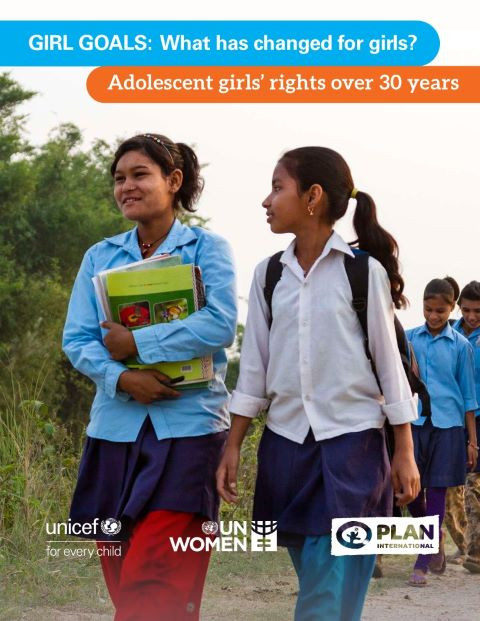 Girl Goals: What has Changed for Girls? Adolescent Girls’ Rights over 30 Years Год публикации: 2025 Организация-автор: United Nations Children's Fund (UNICEF) | United Nations Entity for Gender Equality and the Empowerment of Women (UN Women) | Plan International This report makes three key recommendations on action we can take now to advance adolescent girls’ rights at scale, in ways that account for fiscally constrained contexts and multiple competing priorities: 1. Ensure tangible and actionable support for adolescent girls’ voices, advocacy and action. The current generation of girls are raising their voices to be heard and are already at the forefront of making change around the world. With the right support, resources and seats at the table, adolescent girls can help transform the world for the better, shaping better policy outcomes for themselves and everyone. This is not about girls’ voices above all others, or endless consultation, but about specific, meaningful actions that ensure girls get the support they need and are heard on policy issues that matter to them. 2. Establish and track explicit targets for change for adolescent girls, who are too often invisible and sidelined Setting explicit targets to monitor outcomes for adolescent girls is key to making progress. Context-specific prioritization will be necessary, but there are some issues that stand out globally. Gaps in progress (such as child marriage gains accruing disproportionately to wealthier households) demonstrate the need forprogrammes that address poverty and economic realities alongside harmful social norms. The disproportionate number of adolescent girls not in education, employment or training, not entering the labour market as young women, and left behind when it comes to digital skills, is a threat to the gains made for girls and to economic growth that will benefit everyone. Stagnation on issues like underweight also stand out. Country- specific priorities supported by data- driven accountability mechanisms and investments are needed to translate policy commitments into change on the ground. 3. Resource and deliver smartly to unlock the social and economic dividend Governments and partners should invest in solutions proven to change outcomes across multiple SDGs at scale – for example, investing in education and skills, cash transfers and economic empowerment programmes designed to support girls. Existing systems, from maternal health care to school curricula, should be adapted to meet girls’ needs rather than creating small- scale, separate projects. Streamlined, evidence-based ‘add-ons’ – such as adding parenting support to existing maternal health-care programmes – can be cost effective and accelerate outcomes if well designed. Change is possible, and this report shows that great gains have been made. Smart investments now can transform the world for girls, families, communities and national economies. It is time to act.
 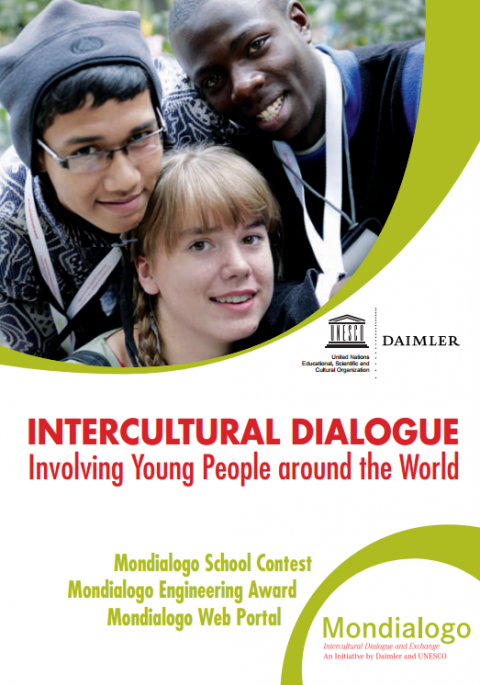 Intercultural dialogue: involving young people around the world Год публикации: 2010 Автор: Elizabeth Khawajkie Организация-автор: UNESCO | DAIMLER It is hoped that this review will help to highlight why there is a persistent call for the continuation of such endeavors, like Mondialogo, which promoted dialogue among cultures and people, mutual respect and understanding so effectively. The Mondialogo journey, begun as an exploratory exercise, ended with compelling and often moving experiences. Le dialogue interculturel: la participation des jeunes à travers le monde Год публикации: 2010 Автор: Elizabeth Khawajkie Организация-автор: UNESCO | DAIMLER Il est à espérer que cet examen permettra de mettre en évidence la raison pour laquelle il y a un appel persistant pour la poursuite de ces efforts, comme Mondialogo, qui a favorisé de manière efficace le dialogue entre les cultures et les peuples, le respect mutuel et la compréhension. Le voyage Mondialogo, commencé comme un exercice exploratoire, a pris fin avec des expériences convaincantes et souvent en mouvement.
  "Why Do We Always Have to Say We're Sorry?" A Case Study on Navigating Moral Expectations in Classroom Communication on National Socialism and the Holocaust in Germany Against the background of the pedagogization and internationalization of Holocaust memory discourse, this contribution focuses on the specific conditions of history classes on National Socialism and the Holocaust in Germany. Using a case study, this article shows both how the meanings of these subjects are communicatively negotiated in history classes and how these classroom discourses relate to the specific context of the culture of memory in Germany. Particular attention is given to the question of guilt and the concomitant moral expectations—which can be interpreted as a specific condition of the memory of the Holocaust in the successor state of the Third Reich. Within this context, the central questions of my study are: (1) How do today's youth in Germany navigate the moral expectations that are implicit within the established historical narratives on the Holocaust? (2) How do ethnically and nationally linked conceptions of memory play a role in youth's sense-making about the Holocaust? (By the author) Israeli and Diaspora Students Travel to the Holocaust Sites in Poland: The Impact on the Perceptions of the Holocaust, Jewish Identity, and Israel-Diaspora Ties The Ministry of Education encourages Israeli students to visit sites of historic Jewish communities in Poland and the sites of Nazi death camps. The trip is designed to reinforce the youngsters’ sense of belonging to the Jewish people, their connection to and identification with Jewish heritage and history, and their commitment to the future of Jewish life in Israel and its sovereignty. This study explores the impact of trips to Poland, organized by Tachlit Center, on Israeli and overseas university students. The vast majority of participants confirm that the trip emphasizes the important role of the Holocaust memory and commemoration. Findings on the impact of Holocaust education on other Israeli and Jewish values (e.g., the significance of immigration to Israel and ties to the Jewish Diaspora) are discussed, along with the implications for future Holocaust education programs. (By the author) Does vicarious experience of suffering affect empathy for an adversary? The effects of Israelis’ visits to Auschwitz on their empathy for Palestinians Empathy for the adversary is part of peace education. Does the vicarious experience of suffering affect empathy towards the suffering of an adversary? Specifically, does the visit of Israeli youth to Auschwitz affect their empathy toward the Palestinians? Three hundred and nine high school students participated in the study: One half went on the journey, while the other, comparable half, served as a control group. Findings tended to support the hypotheses. The journey increased empathy among participants with initially more positive attitudes toward the Palestinians but it also decreased empathy among those with initially more negative ones. The choice of nationalistic lessons about the holocaust affected feelings of pride and identification with the victims but not empathy. The choice of universalistic lessons affected feelings of fear and helplessness and contributed to increased empathy. Conclusions are drawn pertaining to peace education programs aiming at increasing empathy toward an adversary. (By the author)
 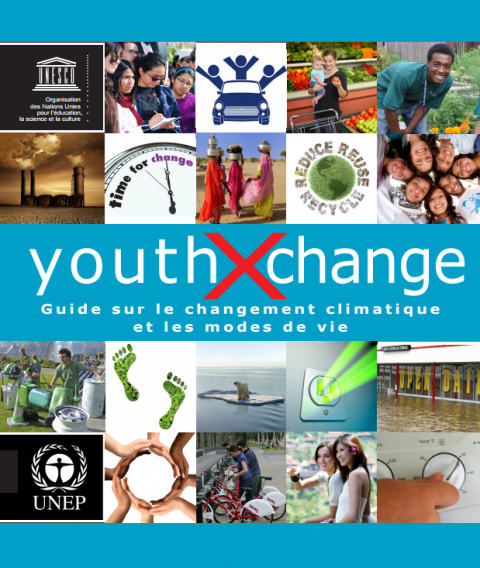 YouthXchange: guide sur le changement climatique et les modes de vie Год публикации: 2015 Автор: Adam Cade | Rob Bowden Организация-автор: UNESCO | United Nations Environment Programme (UNEP) Climate Change and Lifestyles is the first in a series of guidebooks supporting the UNESCO/ UNEP YouthXchange (YXC) Initiative, which was created in 2001 to promote sustainable lifestyles among youth (15-24 years) through education, dialogue, awareness raising and capacity building. The series is being produced for young people and people working with youth, such as educators, teachers, trainers and youth leaders in both developed and developing countries. Almost half of the world’s population is under the age of 25, and nearly 90 per cent of them live in developing countries. Youth is a critical stakeholder in the global economy and will be the main actor and motor for change in the near future. Thus, the energy, motivation and creativity of youth are essential assets to stimulating change. Aims of the YXC Guidebook on Climate Change and Lifestyles:• Explore the links between lifestyles and climate change; • Help young people consider the actions they should take towards more sustainable lifestyles;• Support courses and actions that promote greater understanding of climate change and lifestyles among youth. The guidebook:• Considers the causes and effects of climate change and its human impacts and responses, while connecting them to lifestyle choices and the technical and social infrastructures of a society;• Provides scientific, political, economic, social, ethical and cultural perspectives on climate change;• Explains complex issues in accessible language supported by facts, graphics, images, examples and web links;• Develops the critical skills young people need to make personal choices to address the challenges of climate change. Dialogue interculturel: impliquer les jeunes dans le monde entier Год публикации: 2010 Автор: Elizabeth Khawajkie Организация-автор: UNESCO | DAIMLER It is hoped that this review will help to highlight why there is a persistent call for the continuation of such endeavors, like Mondialogo, which promoted dialogue among cultures and people, mutual respect and understanding so effectively. The Mondialogo journey, begun as an exploratory exercise, ended with compelling and often moving experiences.
 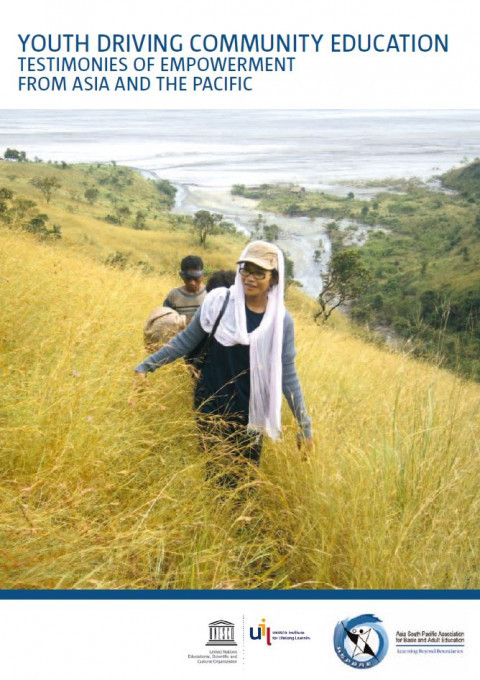 Youth Driving Community Education: Testimonies of Empowerment from Asia and the Pacific Год публикации: 2014 Организация-автор: UNESCO Institute for Lifelong Learning (UIL) | Asia South Pacific Association for Basic and Adult Education (ASPBAE) This publication presents a collection of testimonies from young women and men from vulnerable backgrounds who have transformed their lives through community education and development activities. Their testimonies describe the challenges they faced in pursuing an education, how they benefited from community education programmes, and the active roles they now play in community education and development.The publication will meet its objectives if it inspires young people and their partners to take action to:> Improve educational and learning environments for young men and women;> Improve the participation of young women in community building and democratic processes; and> Engage young men and women as active citizens working towards peace, democracy and sustainable development.
 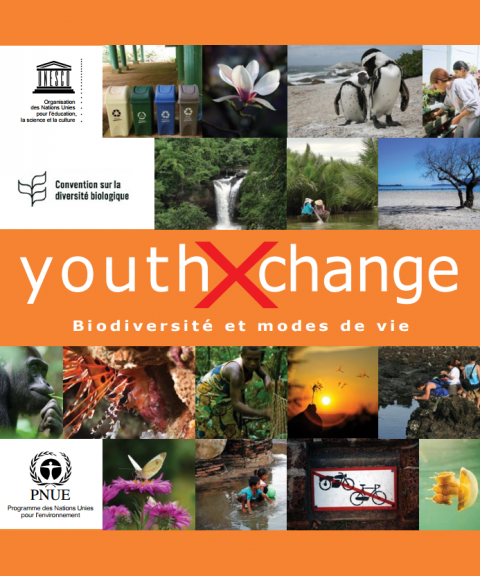 Série de guides youthXchange: biodiversité et modes de vie Год публикации: 2015 Организация-автор: UNESCO | United Nations Environment Programme (UNEP) The YouthXchange Biodiversity and LifestylesGuidebook is designed to help young people familiarize themselves with the dimensions of global biological and cultural diversity, as well as help them to develop essential skills whileengaging with biodiversity.The guidebook aims to:• Explore the interactions between biodiversity and lifestyle choices by explaining the interrelatedness of food, consumption, culture and biodiversity conservation;• Help young people familiarize themselves with the dimensions of global biological and cultural diversity, as well as help them to develop essential skills while engaging with biodiversity; and• Help young people consider how they can preserve biodiversity though responsible lifestyle choices, engagement and action.