
Ресурсы
Изучайте широкий спектр ценных ресурсов ВГГ, чтобы углубить своё понимание и повысить эффективность исследований, просветительской деятельности, преподавания и обучения.
Найдено: 66
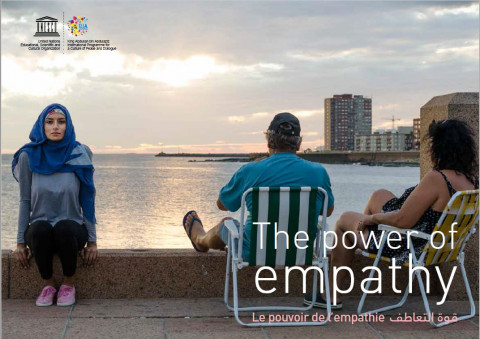 The Power of Empathy Год публикации: 2017 Организация-автор: UNESCO This photobook is a tribute to the power of empathy and solidarity felt and expressed by young people. Its photographs and stories were selected from the response to the global youth contest “If I were…”, launched by UNESCO on social media in Arabic, English, French and Spanish in early 2017. UNESCO received some 837 submissions, from 117 countries, covering a wide variety of issues and experiences.Despite the gravity of the themes addressed in these beautiful pictures, hope emerges from the testaments of the young photographers which demonstrate not only a sensitivity to the situations of “others”, but, moreover, a resolve to help people recover and protect their rights and dignity. Le Pouvoir de l'empathie Год публикации: 2017 Организация-автор: UNESCO This photobook is a tribute to the power of empathy and solidarity felt and expressed by young people. Its photographs and stories were selected from the response to the global youth contest “If I were…”, launched by UNESCO on social media in Arabic, English, French and Spanish in early 2017. UNESCO received some 837 submissions, from 117 countries, covering a wide variety of issues and experiences.Despite the gravity of the themes addressed in these beautiful pictures, hope emerges from the testaments of the young photographers which demonstrate not only a sensitivity to the situations of “others”, but, moreover, a resolve to help people recover and protect their rights and dignity. Cet ouvrage de photos rend hommage au pouvoir de l’empathie et aux sentiments de solidarité ressentis et exprimés par des jeunes. Les photographies et les textes qu’il contient ont été sélectionnés dans le cadre du concours mondial de la jeunesse « Et si j’étais… », lancé sur les réseaux sociaux de l’UNESCO en anglais, en arabe, en espagnol et en français, début 2017. L’UNESCO a reçu 837 candidatures de 117 pays, couvrant un large champ de questions et d’expériences. Malgré la gravité des thèmes abordés par chacune de ces superbes images, l’espoir se fait jour à mesure que les témoignages des jeunes photographes révèlent non seulement leur sensibilité à l’égard de la situation d’autrui, mais surtout une volonté d’aider les autres à recouvrer et à protéger leurs droits, leur dignité et la justice
  UNESCO World Heritage Education Programme Год публикации: 2013 Организация-автор: UNESCO The WORLD HERITAGE EDUCATION PROGRAMME gives young people a chance to voice their concerns and to become involved in the protection of our common cultural and natural heritage. Launched as a Special Project in 1994 by the United Nations Educational, Scientific and Cultural Organization (UNESCO), and officially called ‘Young People’s Participation in World Heritage Preservation and Promotion’, this programme seeks to encourage and enable tomorrow’s decision-makers to participate in heritage conservation and to respond to the continuing threats facing our World Heritage. Young people learn about World Heritage sites, about the history and traditions of their own and other cultures, about ecology and the importance of protecting biodiversity. They become aware of the threats facing the sites and learn how the international community works together to save our common heritage. Most importantly, they discover how they can contribute to heritage conservation and make themselves heard.
  Accountability in Education: Meeting our Commitments; Global Education Monitoring Report, Youth Version, 2017/8 Год публикации: 2017 Организация-автор: UNESCO This Youth Report, based on findings and conclusions from the 2017/8 Global Education Monitoring report, asks how young people are involved in the process of accountability in education. As students, what are we responsible for in our education and how are we held accountable? How can we make sure other actors – like schools, universities and governments – are held accountable for their responsibilities? These are critical questions, because we know that there’s a long way to go before all young people around the world have access to a quality education: absent teachers, overcrowded classrooms, illegitimate diplomas, unregulated private schools and truancy are all issues that education systems are struggling to overcome.It’s sometimes tempting to say that these problems aren’t ours to fix, that the responsibility lies with the government or with an older generation. But this simply isn’t true: education is a shared responsibility, and young people have an important role to play. In this Report, you’ll hear the stories of young people around the world who have stood up for the right to education in their communities and who have been integral in triggering change. You’ll also read about how you can become involved in our campaign to make sure governments can be held to account for education. This means making sure that citizens can take their governments to court if they are not meeting their education responsibilities. From creating video clips to holding awareness-raising events, there is a range of ways to make your voice heard. Your involvement is integral in making sure the world is on the right path to meeting our education goals. Rendir cuentas en el ámbito de la educación: cumplir nuestros compromisos; Informe de seguimiento de la educación en el mundo, versión para los jóvenes, 2017/8 Год публикации: 2017 Организация-автор: Organización de las Naciones Unidas para la Educación, la Ciencia y la Cultura (UNESCO) Esta versión para los jóvenes del Informe GEM, que se basa en los resultados y conclusiones del Informe de Seguimiento de la Educación en el Mundo 2017-2018, se cuestiona acerca de la manera en que los jóvenes participan en el proceso de rendición de cuentas en la educación. En tanto que alumnos, ¿de qué somos responsables en nuestra educación, y cómo se nos responsabiliza? ¿Cómo podemos asegurarnos de que se responsabilice a otros interesados, como las escuelas, las universidades y los gobiernos, por lo que deben hacer? Estas son preguntas fundamentales, porque sabemos que quedan aún muchas cuestiones por resolver para que todos los jóvenes del mundo tengan acceso a una educación de calidad. El ausentismo de los docentes, el hacinamiento de las aulas, los diplomas ilícitos, las escuelas privadas no reglamentadas y el ausentismo de los alumnos son cuestiones que los sistemas educativos se esfuerzan por superar.Sería fácil afirmar que la resolución de esos problemas no está en nuestras manos, y que la responsabilidad es del gobierno o de una generación anterior. Pero esto simplemente no es cierto; la educación es una responsabilidad compartida, y los jóvenes desempeñan en ese sentido un papel importante. En este informe conocerá las historias de jóvenes de todo el mundo que han defendido el derecho a la educación en sus comunidades, y que han contribuido a motivar un cambio. También leerá sobre las maneras en que podrá participar en nuestra campaña para garantizar que se responsabilice a los gobiernos por la educación. Esto significa asegurarse de que los ciudadanos puedan llevar a sus gobiernos ante la justicia si no cumplen sus responsabilidades en materia de educación. Desde grabar vídeos hasta organizar actos de sensibilización, son muchas las maneras de hacerse escuchar. Su participación es indispensable para garantizar que el mundo transite por la vía correcta para alcanzar nuestros objetivos sobre la educación.
  Universities: Increasingly Global Players Год публикации: 2015 Автор: Patrick Aebischer Организация-автор: UNESCO The role of science, technology and innovation has been explicitly recognized as a vital driver of sustainability. This paper addresses Des Universités de plus en plus tournés vers l'international Год публикации: 2015 Автор: Patrick Aebischer Организация-автор: UNESCO The role of science, technology and innovation has been explicitly recognized as a vital driver of sustainability. This paper addresses
  Guatemala: being the change they want to see Год публикации: 2016 Автор: Karina García-Ruano Организация-автор: UNESCO ESD Success Stories are showcasing compelling stories with a personal/human dimension from all five UNESCO regions (Africa, Arab States, Asia and Pacific, Europe & North America and Latin America & the Caribbean). The stories illustrate the wide diversity of ESD approaches and initiatives taking place in different parts of the world. They show how involvement with ESD has changed the lives of specific individual persons and how they have become more active in their community. Each story centers on one individual or a group of individuals.Asociación SERES, from Guatemala and El Salvador, works with youth to give them the skills needed to bring about positive change through sustainable development. Guatemala: être le changement qu'ils veulent voir Год публикации: 2016 Автор: Karina García-Ruano Организация-автор: UNESCO ESD Success Stories are showcasing compelling stories with a personal/human dimension from all five UNESCO regions (Africa, Arab States, Asia and Pacific, Europe & North America and Latin America & the Caribbean). The stories illustrate the wide diversity of ESD approaches and initiatives taking place in different parts of the world. They show how involvement with ESD has changed the lives of specific individual persons and how they have become more active in their community. Each story centers on one individual or a group of individuals.Asociación SERES, from Guatemala and El Salvador, works with youth to give them the skills needed to bring about positive change through sustainable development. Guatemala: se el cambio que quieres ver Год публикации: 2016 Автор: Karina García-Ruano Организация-автор: UNESCO ESD Success Stories are showcasing compelling stories with a personal/human dimension from all five UNESCO regions (Africa, Arab States, Asia and Pacific, Europe & North America and Latin America & the Caribbean). The stories illustrate the wide diversity of ESD approaches and initiatives taking place in different parts of the world. They show how involvement with ESD has changed the lives of specific individual persons and how they have become more active in their community. Each story centers on one individual or a group of individuals.Asociación SERES, from Guatemala and El Salvador, works with youth to give them the skills needed to bring about positive change through sustainable development.