
Ресурсы
Изучайте широкий спектр ценных ресурсов ВГГ, чтобы углубить своё понимание и повысить эффективность исследований, просветительской деятельности, преподавания и обучения.
Найдено: 1,364
 UNESCO Green Academies: Directives pour la résilience climatique des écoles Год публикации: 2019 Организация-автор: UNESCO Bangkok Cette brochure encourage le renforcement des capacités dans les communautés pour faciliter la transition vers la résilience aux changements climatiques. Comme prescrit par le programme l’Homme et la biosphère, il s’agit d’utiliser les connaissances scientifiques pour améliorer les relations entre l’Homme et l’environnement.
  A Better Start?: A Progress Check on Donor Funding for Pre-Primary Education and Early Childhood Development Год публикации: 2021 Автор: Asma Zubairi | Pauline Rose Организация-автор: Theirworld This report focuses on aid trends to pre-primary education using data reported by donors to the Organisation for Economic Cooperation and Development (OECD) as Overseas Development Assistance. It updates our analysis from our 2019 Leaving the Youngest Behind report, which ranked donors’ performance on pre-primary education and looked at data from 2002 to 2016. The new report tracks whether donors are meeting Theirworld’s recommended target of investing at least 10% of their education aid budget on pre-primary education.
  Media Literacy Education to Counter Truth Decay: An Implementation and Evaluation Framework Год публикации: 2021 Автор: Alice Huguet | John F. Pane | Garrett Baker | Laura S. Hamilton | Susannah Faxon-Mills Организация-автор: RAND Corporation Media literacy (ML) education has emerged as a promising approach to slowing the spread of Truth Decay, described as the diminishing role that facts, data, and analysis play in political and civil discourse. Several factors contribute to Truth Decay, including a rapidly evolving information ecosystem and overburdened educational institutions. Many teachers believe their students lack the complex skills that are necessary to navigate today’s information- saturated world. This gap—between students’ existing competencies and those required to engage responsibly in a fast-paced media environment— could lead to negative consequences for individuals and society writ large.However, teachers report a lack of guidance around promoting ML education in their practice, and rigorous research about what kinds of ML educationwork best, and in what conditions, remains limited. This report presents a framework for implementing and evaluating ML educational efforts. Following an introduction to the framework, the authors discuss six steps of ML implementation and evaluation: setting ML learning expectations; identifying conditions that can influence ML instructional efforts; exploring instructional resources; identifying measures of ML competencies; monitoring progress; and finally, measuring the summative impacts of ML education on student learning. By bringing this information together for implementors—such as district decisionmakers and teachers—as well as evaluators, the authors emphasize the important connections between these too often separate groups.
  School Closures and Regional Policies to Mitigate Learning Loss due to COVID-19: A Focus on the Asia-Pacific Год публикации: 2021 Организация-автор: UNESCO Institute for Statistics (UIS) Global school closures as a result of COVID-19 have caused learning losses for millions of children despite efforts to deploy remote learning options. Greater economic insecurity among families may also affect school enrolment as many struggle to pay school fees, or require children to work to supplement family income. Ultimately, this will lead to rising dropout rates, estimated to be as much as 4% in a region where 128 million children and young people were already out of school before COVID-19. The largest number of learners at risk reside in South and West Asia.Together, the education and economic fallout from the pandemic threaten progress toward the Sustainable Development Goal for education (SDG 4). Even prior to the COVID-19 disruptions, progress towards SDG 4 was lagging in many countries in the Asia-Pacific and without significant contributions to education finance, the pandemic threatens to push the region even further behind.This report breaks down the effects of school closures. It considers, for example, how many schools were closed, and when, across the Asia-Pacific, and the effects on different levels of education from early childhood education, through to primary and secondary school. The report analyses country efforts to implement remote learning, and strategies to mitigate learning losses as the proportion of students expected to fall below minimum proficiency levels is expected to rise.To achieve SDG 4, all children and young people, and especially those in marginalized groups, need support to get the education they need and deserve.
  Online Media Literacy Strategy Год публикации: 2021 Организация-автор: Government of the United Kingdom The Online Harms White Paper set out a commitment to develop an Online Media Literacy Strategy ahead of the implementation of the online harms regulator. The aim of the strategy is to educate and empower internet users across the UK to manage their online safety. Over 170 organisations are currently involved in delivering media literacy education in the UK. The Media Literacy Strategy sets out the government’s multi-year plan to bring coordination to the media literacy landscape and outlines a Media Literacy Framework of best practice principles to inform the content and delivery of media literacy education.
 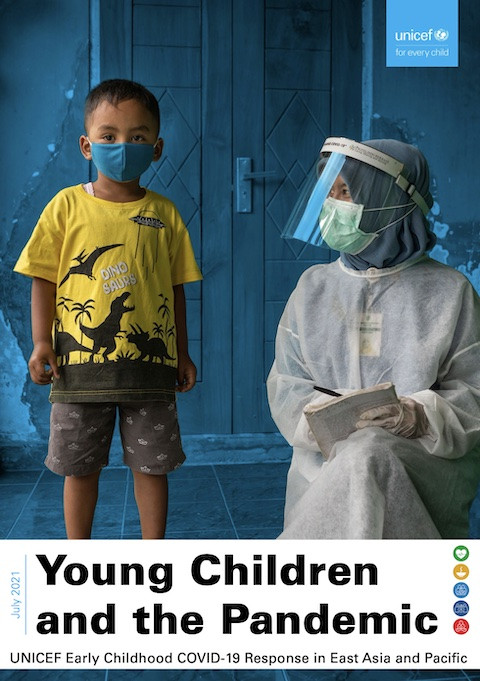 Young Children and the Pandemic: UNICEF Early Childhood COVID-19 Response in East Asia and Pacific Год публикации: 2021 Организация-автор: United Nations Children's Fund (UNICEF) This report summarizes the impact of the COVID-19 disruptions on early childhood development in countries across East Asia and the Pacific in terms of the five dimensions of the Nurturing Care Framework. It proposes priorities for stakeholders and policy-makers towards achieving the fourth Sustainable Development Goal, which is inclusive and equitable in nature. The report also highlights and analyses examples of UNICEF’s programmatic interventions geared towards supporting the development of young children during this pandemic.
 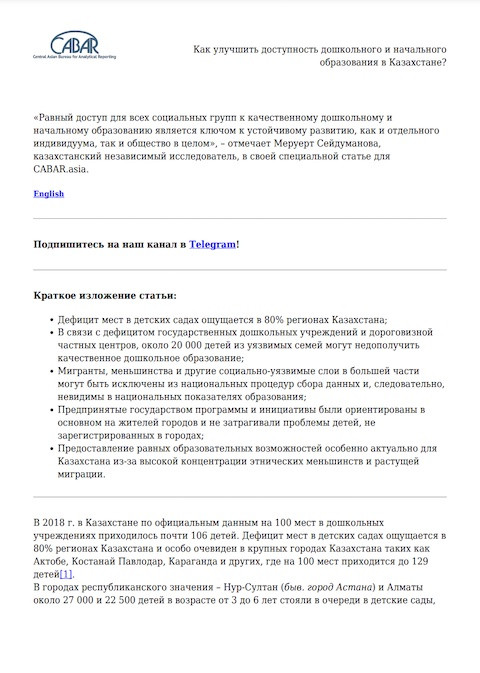 Как улучшить доступность дошкольного и начального образования в Казахстане? Год публикации: 2019 Автор: Meruert Seidumanova Организация-автор: Central Asian Bureau for Analytical Reporting (CABAR) | Institute for War and Peace Reporting (IWPR) «Равный доступ для всех социальных групп к качественному дошкольному и начальному образованию является ключом к устойчивому развитию, как и отдельного индивидуума, так и общество в целом», – отмечает Меруерт Сейдуманова, казахстанский независимый исследователь, в своей специальной статье для CABAR.asia.
 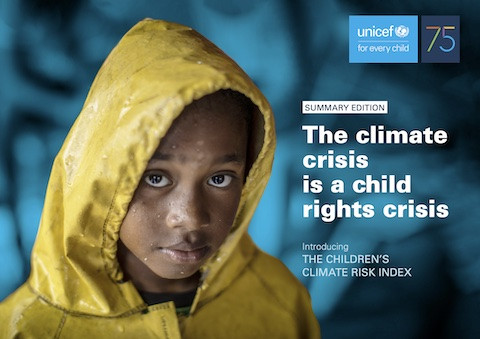 [Résumé] La crise climatique est une crise des droits de l’enfant: Présentation de l’indice des risques climatiques pour les enfants Год публикации: 2021 Автор: Nicholas Rees | Margaretha Barkhof | Jan Burdziej | Sophie Lee | Harriet Riley Организация-автор: United Nations Children's Fund (UNICEF) La crise climatique est une crise des droits de l’enfant. Les canicules, les incendies et les inondations sans précédent qui viennent de frapper plusieurs pays sont annonciateurs d’une nouvelle normalité climatique particulièrement hostile. L’impact des changements climatiques est connu de tous. Les solutions le sont également. Il est inadmissible que les enfants et les jeunes d’aujourd’hui soient confrontés à un avenir aussi incertain. Partout dans le monde, à travers des manifestations, des interventions sur les réseaux sociaux et un engagement communautaire et citoyen, les enfants et les jeunes revendiquent haut et fort le changement. Les modi operandi classiques ont fait long feu. Le présent rapport s’appuie sur l’Indice des risques climatiques pour les enfants (IRCE) pour fournir un premier aperçu de l’exposition et de la vulnérabilité des enfants aux effets des changements climatiques.
 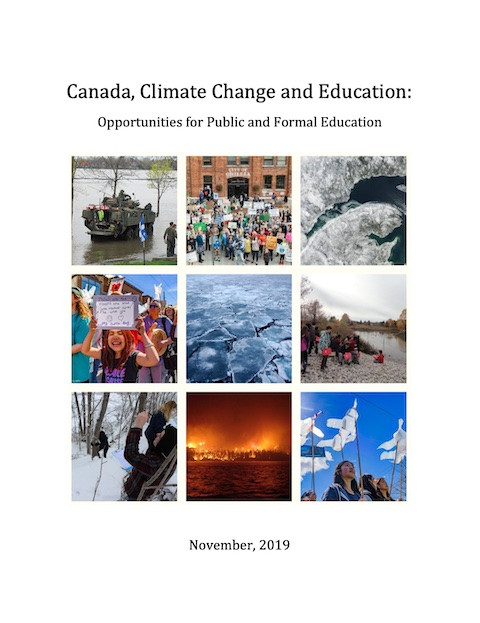 Canada, Climate Change and Education: Opportunities for Public and Formal Education Год публикации: 2019 Автор: Ellen Field | Pamela Schwartzberg | Paul Berger Организация-автор: Lakehead University | Learning for a Sustainable Future (LSF) The nationwide study of 3,196 Canadians entitled, Canada, Climate Change and Education: Opportunities for Public and Formal Education, establishes benchmarks of Canadians’ knowledge and understanding of climate change, their perspectives on the importance of climate change and its risks, and views on the role of schools and climate change education. It also provides the first comprehensive snapshot of climate change educational practice in Canada. The results are presented both nationally and from provincial/regional jurisdictions.
 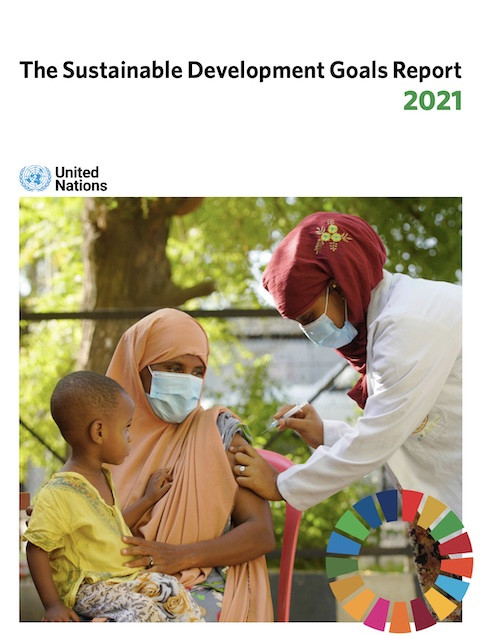 The Sustainable Development Goals Report 2021 Год публикации: 2021 Организация-автор: United Nations (UN) As the pandemic continues to unfold, The Sustainable Development Goals Report 2021 outlines some significant impacts in many areas that are already apparent. The global extreme poverty rate rose for the first time in over 20 years, and 119 to 124 million people were pushed back into extreme poverty in 2020. There is a risk of a generational catastrophe regarding schooling, where an additional 101 million children have fallen below the minimum reading proficiency level, potentially wiping out two decades of education gains. Women have faced increased domestic violence, child marriage is projected to rise after a decline in recent years, and unpaid and underpaid care work is increasingly and disproportionately falling on the shoulders of women and girls, impacting educational and income opportunities and health. Notwithstanding the global economic slowdown, concentrations of major greenhouse gases continue to increase. With the global average temperature reaching about 1.2°C above pre-industrial levels, the climate crisis has well and truly arrived, and its impacts are being felt across the world. The pandemic has also brought immense financial challenges, especially for developing countries – with a significant rise in debt distress and dramatic decreases in foreign direct investment and trade. Yet, with a surge in global solidarity and leadership from the highest political level, countries can still deliver on the 2030 Agenda and the 2015 Paris Agreement on Climate Change. A global vaccination plan, designed and implemented by the countries that can produce vaccines today or will be able to do so if properly supported, is an urgent first step in that direction. A recommitment by Governments, cities, businesses, and industries to ensure that the recovery reduces carbon emissions, conserves natural resources, creates better jobs, advances gender equality and tackles growing poverty and inequalities is a further imperative.