
Ресурсы
Изучайте широкий спектр ценных ресурсов ВГГ, чтобы углубить своё понимание и повысить эффективность исследований, просветительской деятельности, преподавания и обучения.
Найдено: 1,364
 2022 대한민국 SDG4 이행현황 보고서 Год публикации: 2023 Организация-автор: SDG4-교육2030협의체 | 유네스코한국위원회 SDG4-교육20230 협의체가 공동집필한 보고서로서, 2022년도 SDG4(교육분야 지속가능발전목표) 관련 국내외 동향을 소개하고 SDG4 세부목표별 국내 이행현황 및 과제를 분석하고 있다.
  中国的家庭政策 Год публикации: 2023 Организация-автор: UNICEF China 为更好地支持父母养育子女,我们建议• 倡导全面而系统性的家庭政策概念,支持父母和家庭以更加健康、更循证的方式养育下一代,减少 养育成本和压力,并明确家庭政策的最终目标是提高整体人口的综合素质和生活质量。• 探索多样化的家庭政策,因为其他国家的经验教训表明并不存在单一、简单而普遍有效的家庭政策 工具。• 探索全面可持续的家庭政策,从子女出生前到整个未成年时期为家庭提供支持,并兼顾年长的父母 和照料者。• 创造更加宽容和宽松的育儿环境, 更好地支持有生育意愿的父母, 调整家庭政策范畴以外的政 策和制度(例如养老金政策、教育制度、性别平等、婚姻制度和其他相关社会制度),从而减轻年 轻父母目前面临的 “ 三重压力”。• 支持工作场所及家庭内部的性别平等原则,并解决基于性别的各种形式的歧视。
  Bilingual and Intercultural Border Schools Project: A Cross-Border and Integrative Project in the Iberian Peninsula(Revista iberoamericana de educación; vol. 93, no. 1) Год публикации: 2023 Автор: María Matesanz del Barrio | Maria Helena Araújo e Sá | Vivianne Ferreira Martins Организация-автор: Revista Iberoamericana de Educación The Bilingual and Intercultural Border Schools Project / Projecto de Escuelas Bilingües e Interculturales de Frontera (PEBIF) is a proposal that seeks to promote inter-cultural education supported by the bi-/multilingualism and intercomprehension. The general objective of the project is to promote cooperation between Spain and Portugal in the educational, social and economic development of the border territories through the creation of a network of schools that pro-vides the populations knowledge and skills associated with bilingualism and interculturality relevant to citizenship, continuation of studies and employability in both countries. This article presents the PEBIF project, both its structuring theoretical principles and the implementation carried out, as well as the most relevant results obtained so far. Proyecto escuelas bilingües e interculturales de frontera (PEBIF): Un proyecto transfronterizo e integrador en la Península Ibérica (Revista iberoamericana de educación; vol. 93, núm. 1) Год публикации: 2023 Автор: María Matesanz del Barrio | Maria Helena Araújo e Sá | Vivianne Ferreira Martins Организация-автор: Revista Iberoamericana de Educación El Proyecto Escuelas Bilingües e interculturales de Frontera/ Projeto Escolas Bilingues e Interculturais de Fronteira (PEBIF) es una propuesta que busca una educación intercultural apoyada en el bi-/plu-rilingüismo y la intercomprensión. El objetivo general del proyecto es promover la cooperación entre España y Portugal en el desarrollo educativo, social y económico de los territorios de frontera a través de la creación de una red de escuelas que proporcione a las poblaciones conocimientos y habilidades asociadas al bilingüismo y la interculturalidad relevantes para la ciudadanía, la continuación de los estudios y la empleabilidad en ambos países. En este artículo se presenta el proyecto PEBIF, tantos sus principios teóricos estructurantes como la implementación realizada, así como los resultados más relevantes obtenidos hasta ahora.
 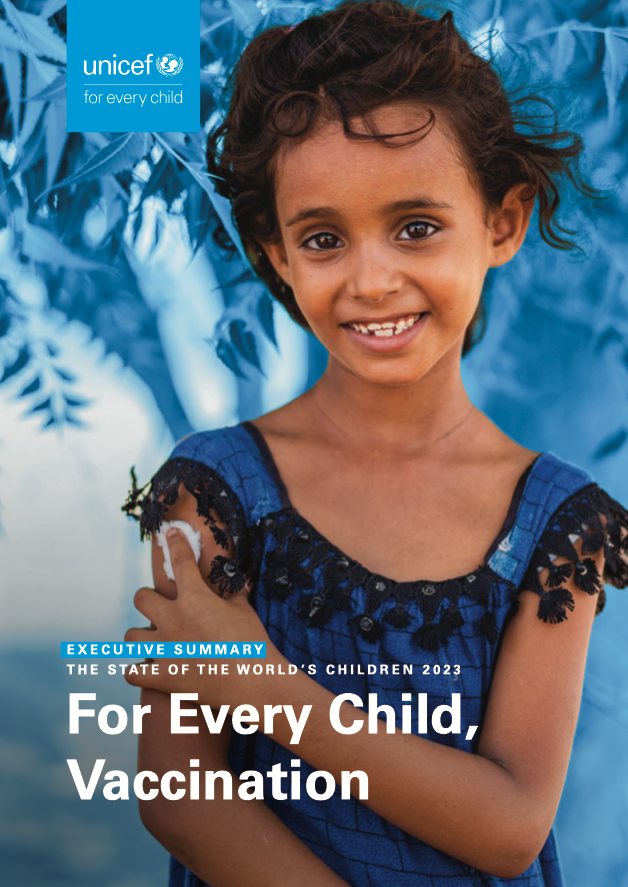 The State of the World’s Children 2023 Executive Summary Год публикации: 2023 Организация-автор: United Nations Children's Fund (UNICEF) The world is facing a red alert for children’s health: Vaccination coverage dropped sharply during the COVID-19 pandemic, leaving millions more children unprotected against some of childhood's most serious diseases. In addition, many millions of children from some of the world's most marginalized communities have long missed out on life-saving vaccination. Catch-up and recovery are needed urgently to vaccinate the children missed and to avoid further backsliding. And greater effort is needed to reach the children historically left behind.The State of the World’s Children 2023 examines what needs to happen to ensure that every child, everywhere is protected against vaccine-preventable diseases. In the wake of the COVID-19 pandemic, which set back progress in childhood immunization globally, it focuses on the role of poverty, marginalization and gender in determining whether or not children are vaccinated. Drawing on lessons learned during the pandemic and from UNICEF's decades-long expertise and experience in vaccinating children, the report examines the ways in which primary health care can be strengthened to better support immunization services. It looks, too, at concerns around trust in vaccines. And it examines a range of innovations in vaccine development and delivery and in financing. 《2023年世界儿童状况》执行摘要 Год публикации: 2023 Организация-автор: United Nations Children's Fund (UNICEF) 全球的儿童健康工作正在拉响红色警报:在2019冠状病毒病(COVID-19)大流行期间,疫苗接种率急剧下降,使大量儿童无法得到疫苗的保护,从而难以预防部分最严重的儿童疾病。此外,世界上部分最边缘化社区的大量儿童长期以来一直无法获得能挽救生命的免疫接种。因此,我们迫切需要追赶进度,为错过接种的儿童补种疫苗,并避免形势出现进一步倒退。同时,我们还需要实施更多的工作来帮助那些已掉队多时的儿童。《2023年世界儿童状况》报告探讨了需要采取哪些措施,才能确保世界各地每一名儿童都能避免患上疫苗可预防的疾病。2019冠状病毒病大流行使全球儿童免疫接种工作的进展出现倒退,本报告将重点关注贫困、边缘化和性别等因素在决定儿童是否接种疫苗方面的作用。参考2019冠状病毒病大流行期间所积累的经验教训以及联合国儿童基金会数十年来在儿童免疫接种方面所积累的专业知识和经验,本报告还探讨了如何加强初级卫生保健体系,以提供更高质量的免疫接种服务,并提升公众对疫苗的信心等问题。此外,本报告还对疫苗研发、交付以及筹资等方面所涌现出来的一系列创新举措进行了研究。 Family Policies in China Год публикации: 2023 Организация-автор: UNICEF China To further support parents in their child-rearing responsibilities there is a need to:• Establish a comprehensive and systematic concept of family policy in China to support parents and families to raise the next generation in a healthier and more evidence-informed way, and to reduce the cost and pressures of parenting, with the ultimate aim to improve the overall quality of life of the population.• Explore diverse family policy options by looking at lessons learned from other countries, because there is no single, simple, and universal solution for workplace policies, inclusive parent and child benefit policies, childcare service policies, and institutional fiscal policies.• Identify comprehensive and sustainable family policies that support families from pre-birth and throughout childhood, while also helping elderly parents and caregivers.• Address the ‘triple pressure’ that young parents are facing by creating a more tolerant and lenient parenting environment that supports people who wish to have children and by adjusting policies and institutions beyond family policy, for example, pensions, the education system, gender equality, marriage, and other social institutions.• Support gender equality in the workplace and in households and address all forms of gender-based discrimination.
  A Diverse World Год публикации: 2023 Организация-автор: Entreculturas | European Union (EU) This publication is Entreculturas' pedagogical proposal to educate everyone in global citizenship. With it we intend to contribute to the training of people capable of exercising active and committed citizenship, of transforming their environment and of assuming as their own the global challenges of our time as well as the fulfillment of the 2030 Agenda and the Sustainable Development Goals. This publication collects activities from previous publications, with the difference that it has been adapted to an easy-to-read model to make it much simpler and more accessible for people with functional diversity. The activities address three major themes: 1.) Defense of the environment, 2.) Gender equality, and 3.) Interculturality. By addressing these topics we seek to promote reflection on the different global challenges that affect us and learn about the different ways to contribute to these causes. Un mundo diverso Год публикации: 2023 Организация-автор: Entreculturas | European Union (EU) Esta publicación es la propuesta pedagógica de Entreculturas para educar en una ciudadanía global a todas y todos. Con ella pretendemos contribuir a la formación de personas capaces de ejercer una ciudadanía activa y comprometida, de transformar su entorno y de asumir como suyos los retos globales de nuestro tiempo así como el cumplimiento de la Agenda 2030 y de los Objetivos de Desarrollo Sostenible. Esta publicación recoge actividades de anteriores publicaciones, con la diferencia de que se ha adaptado a un modelo de lectura fácil para que sea mucho más sencillo y accesible para personas con diversidad funcional. Las actividades tratan tres grandes temáticas: 1.) Defensa del medio ambiente, 2.) Igualdad de género, Y 3.) Interculturalidad. Con el tratamiento de estos temas buscamos promover la reflexión sobre los diferentes retos globales que nos afectan y conocer las diferentes maneras de contribuir a estas causas.
  ESD in Teacher Education Institutions: Case Studies of Best Practices in Zambia Год публикации: 2017 Автор: Overson Shumba | Heather Munachonga Организация-автор: Zambia National Commission for UNESCO | Copperbelt University This book is a compilation of case studies on best practices in education for sustainable development in teacher education institutions in Zambia. It contributes to the dissemination of the best practices among the institutions and the wider society. It adds to examples of practices that are relevant to the UNESCO Global Action Programme on Education for Sustainable Development (GAP). The project was coordinated by Professor Overson Shumba at the Copperbelt university in Kitwe and Heather Munachonga, Programme Officer at the Zambia National Commission for UNESCO in Lusaka. The book was made possible with funding and support from UNESCO, Paris, the Ministry of General Education, the Copperbelt University, and the Zambia National Commission for UNESCO. All the institutions were supported by the teacher education institutions and their partners. The book illustrates some of the actions undertaken consistent with pursuit of the education SDG4 target 7. It is expected that this book will lead teacher educators and teachers to come up with further innovations and to integrate them in their professional work. Whole institution actions are encouraged so that best practices as found in this book can permeate and transform all aspects of the institution: the curriculum, teaching, assessment, research, extra-curricular activities, and operations, and must involve everyone, students, workers, lecturers, and the surrounding community.