
Ресурсы
Изучайте широкий спектр ценных ресурсов ВГГ, чтобы углубить своё понимание и повысить эффективность исследований, просветительской деятельности, преподавания и обучения.
Найдено: 3,158
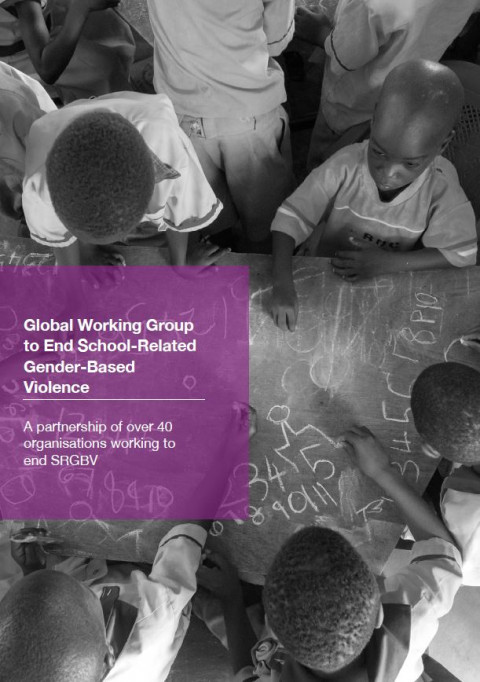 Global Working Group to End School-Related Gender-Based Violence Год публикации: 2017 Организация-автор: United Nations Girls' Education Initiative (UNGEI) In August 2014, a coalition of governments, development organizations, civil society activists, UN agencies and research institutions came together to collaborate on ending gender-based violence in and around schools.The Global Working Group to End SRGBV has been a strong advocate to ensure that schools remain safe places for learning and that girls and boys have the opportunity to acquire the knowledge, skills and resources they need to reach their potential.To learn more about the group and its members, please go here:www.ungei.org/srgbv
  [Video] SDG 4 Data to Get All Children in School and Learning by 2030 Год публикации: 2018 Организация-автор: UNESCO Institute for Statistics (UIS) This video speaks in a simple and easy to understand language about the importance of data in achieving SDG 4. It is through data that success and failure can be identified and measure to build upon the successes or tackle the failures can be developed. Go straight to the source for global education data with the UNESCO Institute for Statistics http://on.unesco.org/SDG4web
  [Video] Transforming Education for Humanity Год публикации: 2017 Организация-автор: Mahatma Gandhi Institute of Education for Peace and Sustainable Development (MGIEP) UNESCO MGIEP focuses on achieving the UN Sustainable Development Goal 4.7 towards education for building peaceful and sustainable societies across the world by developing programmes that promote socio-emotional learning, innovate digital pedagogies and empower the youth.
  Éducation à la citoyenneté 3e année (Ressources pour l’éducation à la citoyenneté : L’enseignement intentionnel et direct des compétences essentielles à la citoyenneté) Организация-автор: Concentus Fondation pour L'education a la citoyennete Les citoyens engagés remettent en question, examinent de manière critique, soutiennent et défendent les droits et responsabilités d’une démocratie sur des plans multiples. Ils travaillent à comprendre les problèmes, dissimulés ou manifestes, qui relèvent des enjeux de la citoyenneté et d’élaborer les plans d’action appropriés pour y apporter des solutions. Ils développent aussi leur compréhension des avantages et de la richesse que la diversité et le multiculturalisme apportent aux Canadiens.Les citoyens engagés s’efforcent d’aborder les questions depuis une variété de points de vue. Les élèves vont commencer à explorer les méthodes de résolution des conflits et à examiner et à pratiquer les actions qui contribuent à la paix et à l’ordre. L’exploration du raisonnement critique dans ce domaine de la citoyenneté encourage les élèves à essayer de comprendre un point de vue différent du leur.
 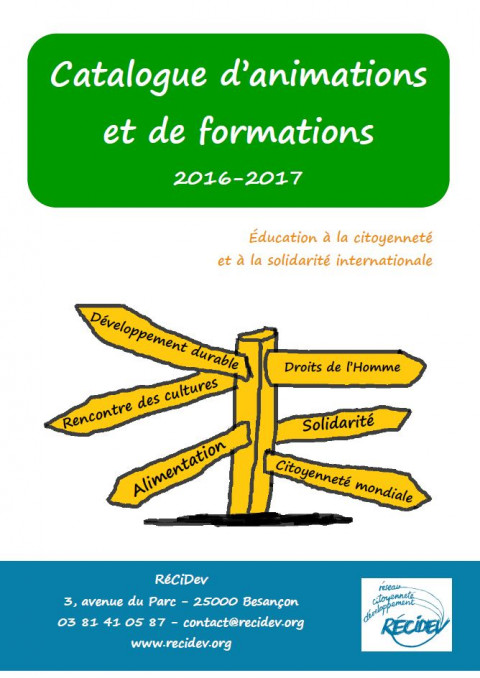 Catalogue d’animations et de formations 2016-2017 : Éducation à la citoyenneté et à la solidarité internationale Год публикации: 2016 Организация-автор: Réseau Citoyenneté Développement (RéCiDev) « L’éducation à la citoyenneté et à la solidarité internationale (ECSI) est une démarche sociale et politique dont la finalité est de favoriser la contribution individuelle et collective à la construction d’un monde juste, solidaire et durable. Elle s’appuie sur un processus pédagogique qui se déroule tout au long de la vie.Son objectif est de permettre à chacun de comprendre les mécanismes d’interdépendance et d’exclusion dans le monde ; de prendre conscience de l’importance d’une démarche citoyenne ayant pour but de favoriser une solidarité entre les territoires, les générations, les groupes sociaux… et d’agir pour la construction d’un monde solidaire. L’ECSI contribue à donner à tous des clés pour développer un esprit critique face à un modèle de développement dominant producteur d’inégalités et d’exclusions. Elle vise à une transformation sociale et à la construction collective d’autres modes de développement, respectueux des droits humains et de l’environnement. Elle valorise des alternatives en cours partout dans le monde. Elle favorise le vivre ensemble et l’épanouissement personnel.Parce qu’elle bénéficie au plus grand nombre et qu’elle répond aux enjeux du monde actuel, l’ECSI sert l’intérêt général. À ce titre, la promouvoir et la garantir est un devoir des Etats en cohérence avec l’ensemble des politiques publiques. »
  Methods of Teaching the Holocaust to Secondary Students as Implemented by Tennessee Recipients of the Belz-Lipman Holocaust Educator of the Year Awards The purpose of this qualitative study was to explore methods of teaching Holocaust education in a variety of subject areas to secondary students in grades 7 through 12, as implemented by recipients of Tennessee’s Belz-Lipman Holocaust Educator of the Year Awards. These individuals have been recognized, through an application and committee selection process, as outstanding and successful teachers in this field. The findings of this study included the importance of teacher training in this area; participants spoke of regularly attending sessions offered by reputable Holocaust organizations. This study also found commonalities in resources and materials used, such as specific titles of poetry, literature, and movie selections. Additionally, instructional methods such as group discussions, writing assignments, student project activities, and assessment strategies were frequently discussed. The importance of personalizing Holocaust history was emphasized throughout the study. The results indicate that students and teachers benefited from these lessons. While the findings of this study significantly contribute to the field of Holocaust education in Tennessee, the need for additional research is also addressed. To ensure successful, meaningful, pedagogically sound lessons, attention to this topic must be an on-going endeavour. (By the author)
  Global Citizenship in a Digital World (The MILID Yearbook, 2014) Год публикации: 2014 Автор: Sherri Hope Culver | Paulette Kerr Организация-автор: International Clearinghouse on Children, Youth and Media (Sweden) | NORDICOM | University of Gothenburg The theme of the 2014 Yearbook is Global Citizenship in a Digital World. Global citizenship assumes ease of participation in global spaces in which persons are media and information literate and are equipped with competencies and attitudes to deal with the multi-faceted nature of a mediated world in which information is no longer bound by space or time. The unprecedented access to and use of media and Internet technologies for communication and collaboration especially among youth, suggest that effective strategies must be found to enable active critical inquiry and effective media production. The proliferation of mediated spaces throughout education environments, as well as personal and professional environments, does not in itself guarantee that citizens will consider their role as global citizens as they create and consume media. This awareness must be cultivated, encouraged and taught.The 2014 MILID Yearbook brings together a range of reviewed articles, which articulate the theme of global citizenship from varied perspectives and regions of the world. The articles represent different expressions on media and information literacy from researchers and practitioners who offer bold new strategies, share research findings and best practices, and share musings and reflections.
  [فيديو] منع التطرف العنيف Год публикации: 2017 Организация-автор: INEE و لتوضيح دور التعليم في منع التطرف العنيف .ويتناول الفيديو الذي يستغرق مدته ٥ دقائق - وهو متاح باللغات الإنجليزية والعربية والفرنسية والإسبانية والبرتغالية - بعض التعريفات الخاصة ببرنامج التعليم والتدريب المهني ودور التعليم في تعزيز بيئات شاملة ومنصفة وتشجيع التفكير النقدي وتعزيز التسامح واحترام التنوع، مما يساهم في توسيع التماسك الاجتماعي والحد من العنف بجميع أشكاله.لمزيد من المعلومات حول التعليم و منع التطرف العنيف يرجى زيارة موقع الإيني، حيث يمكنكم/ن العثور على الأنشطة والموارد الرئيسية، بما في ذلك كتالوج المنسقين/ات لموارد منع التطرف العنيف. [Video] Preventing Violent Extremism (English w/subtitles) Год публикации: 2017 Организация-автор: Inter-agency Network for Education in Emergencies (INEE) The number of violent extremist attacks committed across the world has increased sharply in recent years. And there are more attacks on schools and students than ever before. So, why is this happening and what can be done to change this pattern?The Inter-Agency Network for Education in Emergencies (INEE) has developed a whiteboard video to illustrate education’s role in preventing violent extremism (PVE). The 5-minute video -- available in English, Arabic, French, Spanish, and Portuguese -- looks at some definitions of PVE and education’s role in fostering inclusive and equitable environments, encouraging critical thinking, promoting tolerance and respect for diversity, and thereby contributing to wider social cohesion and the reduction of violence in all forms.For further information on education and PVE, please visit the INEE website (www.ineesite.org/preventing-violent-extremism), where you can find key activities and resources, including a curated catalogue of PVE resources. [Vídeo] Previniendo el Extremismo Violento (subtítulos en español) Год публикации: 2017 Организация-автор: Inter-agency Network for Education in Emergencies (INEE) El número de ataques extremistas violentos cometidos en todo el mundo ha aumentado considerablemente en los últimos años. Y hay más ataques que nunca en las escuelas y hacia estudiantes. Entonces, ¿por qué está sucediendo esto y qué se puede hacer para cambiar este patrón?La Red Interinstitucional para la Educación en Situaciones de Emergencia (INEE) ha desarrollado un video de pizarra para ilustrar el papel de la educación en la prevención del extremismo violento (PVE). El video de 5 minutos - disponible con subtítulos en inglés, árabe, francés, español y portugués - examina algunas definiciones de PVE y el papel de la educación en fomentar ambientes inclusivos y equitativos, fomentar el pensamiento crítico, promover la tolerancia y el respeto a la diversidad, Contribuyendo así a una mayor cohesión social ya la reducción de la violencia en todas sus formas.Para más información sobre educación y PVE, visite el sitio web de la INEE (www.ineesite.org/preventing-violent-extremism), donde encontrará actividades clave y recursos, incluyendo un catálogo de recursos de PVE.