
Ресурсы
Изучайте широкий спектр ценных ресурсов ВГГ, чтобы углубить своё понимание и повысить эффективность исследований, просветительской деятельности, преподавания и обучения.
Найдено: 3,158
 Site du Mémorial et Musée d'Auschwitz-Birkenau La concentration d'Auschwitz-Birkenau allemand nazi et Extermination Camp a été ajouté à la Liste du patrimoine mondial de l'UNESCO en 1979. Le site du Musée d'Etat d'Auschwitz-Birkenau donne accès à l'information et à la documentation historique sur le camp et fournit aux éducateurs et aux élèves diverses ressources éducatives. Beit Lohamei Haghetaot Educational materials produced by the Ghetto Fighters’ House are available for purchase. Teachers and planners thus have access to workshops, programmes, ceremonies and exhibitions. / Les matériels pédagogiques produits par la Maison des Combattants du Ghetto sont disponibles à l'achat. Les enseignants et les planificateurs ont ainsi accès à des ateliers, des programmes, des cérémonies et des expositions. Haus der Wannsee-Konferenz The Memorial and Educational Centre of the House of the Wannsee Conference provides school teachers with diverse ways to broach the persecution and murder of European Jews, the history of National Socialism and the aftermath. A permanent exhibition under expert guidance is proposed, multi-day seminars are conducted and online or downloadable activities and advice are available for helping teachers to approach this topic in class. / Le Centre commémoratif et éducatif de la chambre de la conférence de Wannsee fournit aux enseignants des écoles avec diverses façons d'aborder la persécution et assassiner des Juifs d'Europe, l'histoire du national-socialisme et les conséquences. Une exposition permanente sous la direction d'experts est proposé, des séminaires de plusieurs jours sont menées et des activités et des conseils en ligne ou téléchargeables sont disponibles pour aider les enseignants à aborder ce sujet en classe. Teaching about the Holocaust : Major educational predicaments, proposals for reform, and change - An international perspective Год публикации: 2013 Автор: Zehavit Gross The aim of this article is to analyze the findings of a research project on how the Holocaust is taught around the world. The project analyzes central issues and educational events that occur while teaching the Holocaust "behind the classroom door," in public schools in different countries. Researchers from 10 nations participated in the project: Germany, Austria, Switzerland, Poland, Estonia, Scotland, Australia, the United States, Canada and Israel. One of the major findings of this research was that although the official establishment is very interested in teaching the subject of the Holocaust, teachers can find it hard to teach because of resistance by their students, who occasionally react in class with cynical, racist, anti-Semitic and antidemocratic remarks. In all the countries, researchers indicate three principal ways of handling the question of the Holocaust: education, teacher training, and research. (By the author) The challenges of Holocaust introduction and remembrance - particular and universal aspects in formal and informal interdisciplinary curricula in Israel and abroad Год публикации: 2011 Автор: Nitza Davidovich | Dan Soen | Anat Hezkelovich In the present framework, an attempt was made to compare Holocaust instruction in Israel and in France. The comparison between the formal and informal curricula in both countries shows that both systems share this study's basic assumption concerning the inherent potential of teaching the Holocaust to the younger generation. Nevertheless, each country has a clear goal toward which it directs its students. The State of Israel, the Jewish state, perceives the Holocaust mainly through nationalist and Zionist eyes, directing the younger generation to learn particular lessons. The French model, in contrast, represents a shortened version ... devoted to the universal lessons of the Holocaust. But in the end, both systems would benefit by adopting some of the elements of the other. (By the author)
 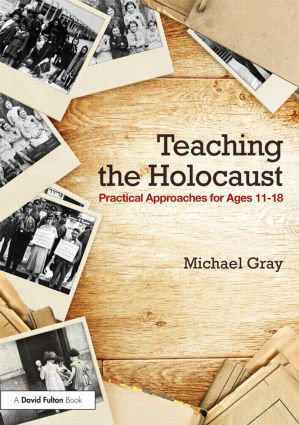 Teaching the Holocaust : Practical approaches for ages 11-18 Год публикации: 2015 Автор: Michael Gray Teaching the Holocaust is an important but often challenging task for those involved in modern Holocaust education. What content should be included and what should be left out? How can film and literature be integrated into the curriculum? What is the best way to respond to students who resist the idea of learning about it? This book, drawing upon the latest research in the field, offers practical help and advice on delivering inclusive and engaging lessons along with guidance on how to navigate through the many controversies and considerations when planning, preparing and delivering Holocaust education. Whether teaching the subject in History, Religious Education, English or even in a school assembly, there is a wealth of wisdom that will make the task easier for you and make the learning experience more beneficial for the student. (By the publisher)
  Teaching and Studying the Holocaust - Annoted version Teaching and Studying the Holocaust is comprised of thirteen chapters by some of the most noted Holocaust educators in the United States. In addition to chapters on establishing clear rationales for teaching this history and Holocaust historiography, the book includes individual chapters on incorporating primary documents, first person accounts, film, literature, art, drama, music, and technology into a study of the Holocaust. It concludes with an extensive and valuable annotated bibliography especially designed for educators. Chapter Ten instructs how to make effective use of technology in teaching and learning about the Holocaust. The final section of the book includes a bibliography especially developed for teachers that lists invaluable resources. (By the publisher)
 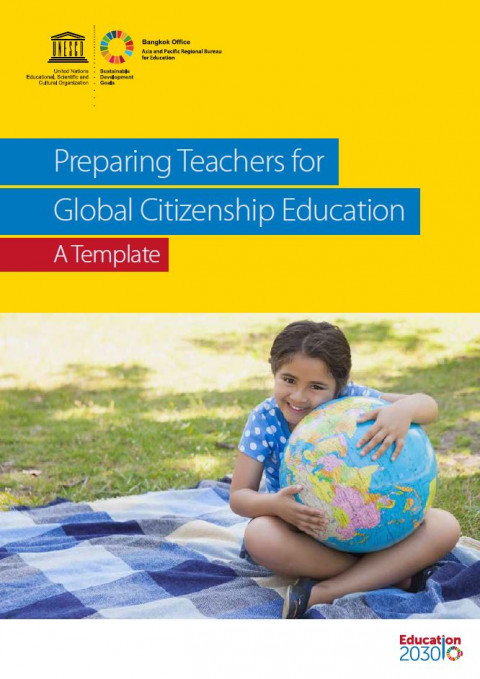 Preparing Teachers for Global Citizenship Education: A Template Год публикации: 2018 Организация-автор: UNESCO Bangkok The UNESCO Asia-Pacific Regional Bureau for Education in Bangkok, Thailand, has taken up the task to promote GCED through a project that focuses on teachers who are key players in transferring appropriate values, knowledge and skills to their students. With support from the Korean Funds-in-Trust, one output of the project is this guide: Preparing Teachers for Global Citizenship Education: A Template.This publication provides useful information on integrating GCED concepts, principles and activities into curricula and teaching practices covering a broad spectrum of issues and pedagogies. It contains exemplars illustrating how GCED can be integrated into various subject areas. Diverse resources and materials listed in the document also offer readers a wide range of references. Underscoring the pragmatic objective of this work is the need for teachers to become global citizens themselves. Подготовка учителей к образованию в духе глобальной гражданственности: Шаблон Год публикации: 2018 Организация-автор: UNESCO Bangkok Подготовка учителей к воспитанию в духе глобальной гражданственности: данный Шаблон - это ответ на вопрос преподавателей и методистов о практической информации и советом о том, как они могут внедрять воспитание в духе глобальной гражданственности (ВГГ) в свои педагогические практики. Эта публикация представляет собой концептуальную основу для трансформационного образования, иллюстрирует искусство преподавания ВГГ с примерами творческой педагогики, предоставляет примеры для демонстрации того, как ВГГ можно интегрировать в разные тематические области и отсылает читателей к богатому списку ресурсов.
  Handbuch Nationalsozialismus und Holocaust. Historisch-politisches Lernen in Schule, außerschulischer Bildung und Lehrerbildung. The educational field of National Socialism and the Holocaust is an indispensable part of historical-political learning in schools, non-formal education and teacher training. This manual gives new impetus to the theoretical discussion as well as to the practical educational work. Basic theoretical texts are complemented by methodological suggestions as well as by accounts based on personal experience and presentations of projects with national and international perspectives. The fact that today, more than sixty years after the events, adolescents have hardly any direct access to this phase of German and European history, and the question of how to deal with this challenge, are here of central importance. The contributions in the manual focus on the following themes: The fundamentals of National Socialism and the Holocaust as an educational field. School practices: Learning from classroom instruction. School practices: Learning from projects. Practices in teacher education. Practices in memorial sites and non-formal educational institutions. International approaches. (By the publisher)