
Ресурсы
Изучайте широкий спектр ценных ресурсов ВГГ, чтобы углубить своё понимание и повысить эффективность исследований, просветительской деятельности, преподавания и обучения.
Найдено: 3,158
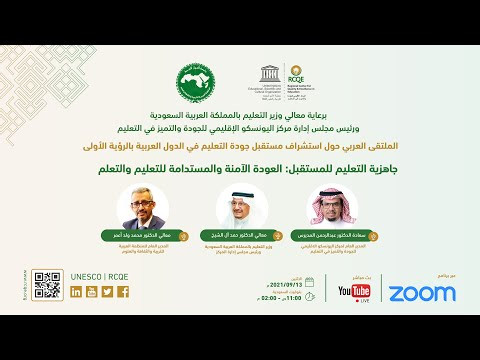 جاهزية التعليم للمستقبل: العودة الآمنة والمستدامة للتعليم والتعلم Год публикации: 2021 Организация-автор: Regional Center for Quality and Excellence in Education (RCQE) التنبؤ بمستقبل جودة التعليم عملية معقدة إلا أنها ضرورة حتمية، والتحسب والاستعداد لكل مستجد ومتغير يجب أن يكون غاية التربية في حاضرها ومستقبلها. اليوم يواجه التعليم في جميع دول العالم تحديات غير مسبوقة أبرزها جائحة كورونا Covid-19 بتزامن مع تحديات سابقة من تسارع في التطور المعرفي والتكنولوجي، وكذلك أزمات اقتصادية وصراعات في بعض الدول، سياقات غير مألوفة جعلت من عملية تستعرض هذه الندوة قضية التعليم والعودة الامنة له بعد جائحة كورونا.
  SDG 4 Midterm Review: Monitoring Implementation of SDG 4 Target 4.1. ~ 4.c. in Rep. of Korea Год публикации: 2023 Автор: Hunwoo Joo | Mikyung Kim | Mugyeong Moon | Jeongwon Hwang | Kirak Ryu | Hyeseung Cho | Yunjeong Choi | Hyosook Shin | Kyungsook Kang | Minseon Park | Eunju Lee | Nayoung Kim | Hwanbo Park | Hannah Kim | Jonghun Kim Организация-автор: National Consultative Group on Education 2030 | Korean National Commission for UNESCO This report presents the compiled work from the National Consultative Group and Working Groups on Education 2030 of the Republic of Korea regarding the midterm review on the implementation of SDG 4.
 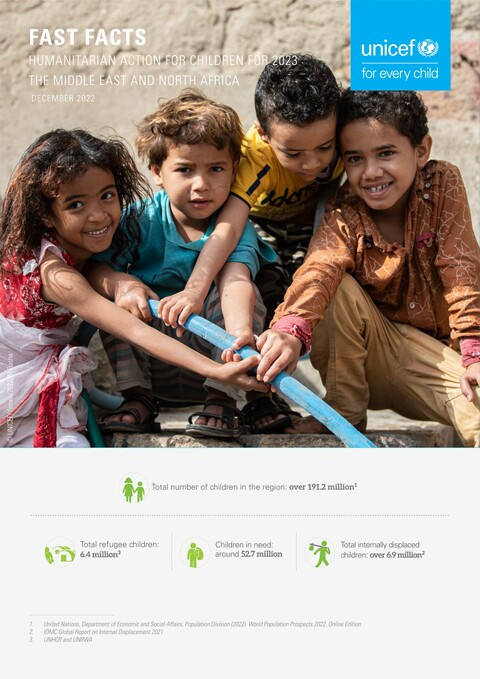 Humanitarian Action for Children in the Middle East and North Africa for 2023: Fast Facts Год публикации: 2022 Организация-автор: UNICEF Middle East and North Africa Total number of children in the region: over 191.2 million Total refugee children: 6.4 million Children in need: around 52.7 million Total internally displaced children: over 6.9 million UNICEF MENA is appealing for US$ 2.6 billion to respond to the ongoing humanitarian crises and children’s humanitarian needs around the region. العمـل الإنسـاني مـن أجـل الأطفـال في الشـرق الأوسـط وشـمال أفريقيا للعام ٢٠٢٣; حقائـق سـريعة Год публикации: 2022 Организация-автор: UNICEF Middle East and North Africa إجمالي عدد الأطفال في المنطقة: أكثر من 191.2 مليون طفلالأطفال المحتاجون: 52.7 مليون طفلمجموع النازحين من الأطفال: أكثر من 6.4 ملايين طفلمجموع اللاجئين من الأطفال: 6.4 مليون طفلتطلق اليونيسف نداءً للحصول على 2,6 مليار دولار أمريكي للاستجابة للأزمات الإنسانية المستمرة واحتياجات الأطفال الإنسانية في المنطقة.
 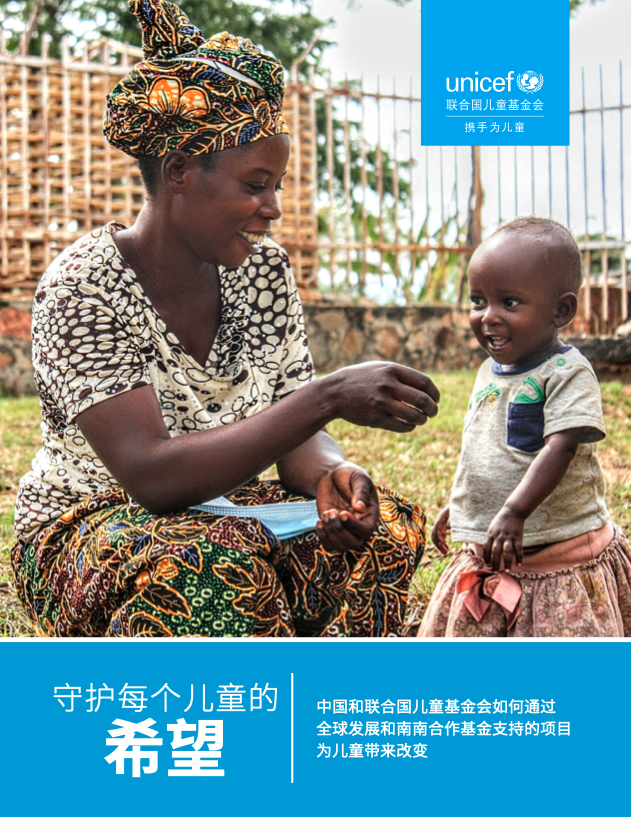 守护每个儿童的希望 Год публикации: 2023 Автор: 联合国儿童基金会驻华办事处 联合国儿童基金会和中国政府在中国建立了长期合作伙伴关系,在其他伙伴国家也已开始合作,携手促进世界各地儿童权利保护工作。双方不仅在中国通过连续实施九个国别方案开展合作,自2018年以来,双方还通过南南合作,共同援助中低收入国家最弱势的儿童群体。本案例研究汇编详细介绍了通过全球发展和南南合作基金资助的17个项目,联合国儿童基金会和15个非洲国家的政府如何为儿童的生活带来改变,凸显了中国与联合国儿童基金会在儿童事业方面取得的合作成果。我们希望通过分享相关案例促进学习交流,为合作伙伴和其他相关人士提供参考借鉴,从而为每个孩子的生存和赋权点亮新的希望。
  Developing Global Guidance for Child Rights Impact Assessments in Relation to the Digital Environment: Summary of Initial Project Findings Год публикации: 2024 Организация-автор: United Nations Development Programme (UNDP) | German Institute of Development and Sustainability (IDOS) The age of technology and the Internet have brought tremendous benefits, including for children. However, the spread of digital technologies also comes with a broad spectrum of risks and harms to which children can be particularly vulnerable. Under the UN Guiding Principles on Business and Human Rights and the Children’s Rights and Business Principles, businesses have a responsibility to identify, assess, and address relevant human rights risks, including risks to children’s rights. With respect to the digital environment, a rapidly evolving landscape and the emergence of new technologies has changed the nature and severity of actual and potential child rights risks relating to business activities. In response, UNICEF has initiated a project to assess the current child rights impact assessment (CRIA) landscape in relation to digital business activities and develop new guidance to support robust implementation going forward. A summary of initial project findings is now available here. Further project outputs including the updated guidance (currently under development) are anticipated in late 2024.
 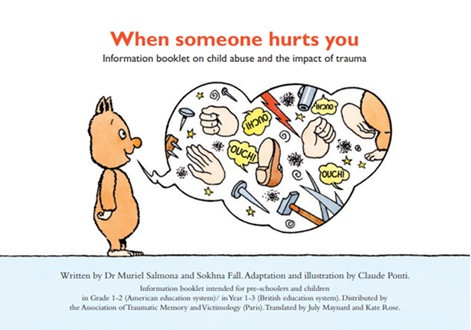 When Someone Hurts You: Information Booklet on Child Abuse and the Impact of Trauma Год публикации: 2022 Автор: Muriel Salmona | Sokhna Fall Организация-автор: UNICEF France | French Association for Traumatic Memory and Victimology This educational booklet is designed to help young children from kindergarten to Third grade to identify their feelings of unease following a situation of violence or threat of violence (physical, moral or sexual), understand the causes and consequences, and give advice on how to protect themselves and seek help. Quand on te fait du mal: Information sur les violences et leurs conséquences Год публикации: 2022 Автор: Muriel Salmona | Sokhna Fall Организация-автор: UNICEF France | French Association for Traumatic Memory and Victimology Ce livret pédagogique permet d’aider les plus petits de la maternelle au CE2, à identifier leur mal-être suite à une situation de violence ou menaces de violences (physiques, morales, sexuelles…), en comprendre les causes et les conséquences et donne des conseils pour apprendre à se protéger et demander de l’aide.
  Global Kids Online: Comparative Report Год публикации: 2019 Автор: Sonia Livingstone | Daniel Kardefelt-Winther | Marium Saeed Организация-автор: UNICEF Innocenti The internet is often celebrated for its ability to aid children’s development. But it is simultaneously criticized for reducing children’s quality of life and exposing them to unknown and unprecedented dangers. There is considerable debate about when or how children’s rights – including the rights to expression, to privacy, to information, to play and to protection from harm, as set out in the United Nations Convention on the Rights of the Child – may be realized or infringed in the digital age.With more children around the world going online every day, it is more important than ever to clarify how the internet can advance children’s opportunities in life while safeguarding them from harm or abuse. This requires evidence, from children themselves, that represents the diversity of children’s experiences at the national and global levels. By talking to children, we are better able to understand not only the barriers they face in accessing the internet, but also the opportunities they enjoy and the skills and competences they acquire by engaging in these activities.This allows us to enquire about children’s exposure to online risks and possible harms, and about the role of their parents as mediators and sources of support. In bringing children’s own voices and experiences to the centre of policy development, legislative reform and programme and service delivery, we hope the decisions made in these spheres will serve children’s best interests.
 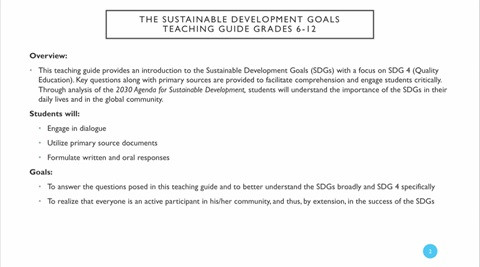 Teachers Guide on the SDGs Год публикации: 2022 Организация-автор: United Nations (UN) This teaching guide, aimed at grade level K-12, gives an introduction and historical background to the SDGs. Key questions along with primary resources are provided to facilitate comprehension and engage students critically. Through analysis of the Preamble to the 2030 Agenda for Sustainable Development, the connection will be made to the Millenium Development Goals and Human Rights, to demonstrate continuity and evolution of certain principle values held by the international community. Focus then shifts to SDG 4, quality education, so that students can ore clearly analyze the progress that has been made regarding this topic on a micro level.