
Ресурсы
Изучайте широкий спектр ценных ресурсов ВГГ, чтобы углубить своё понимание и повысить эффективность исследований, просветительской деятельности, преподавания и обучения.
Найдено: 3,158
 Teaching Controversial Issues Год публикации: 2006 Организация-автор: Oxfam GB Les jeunes sont souvent confrontés à des prises de décisions dans de nombreux domaines. Des sujets tels que la sexualité, la religion, le harcèlement scolaire et la guerre peuvent susciter des émotions compliquées, que ce soit au sein des salles de classe ou ailleurs.Il est nécessaire que les jeunes développent des compétences leur permettant d’échanger sur ces sujets et de se forger leur propre opinion. Avoir la possibilité d’échanger sur des sujets controversés dans un environnement constructif peut aider les jeunes à devenir des citoyens mondiaux ; les enseignants ont un rôle primordial à jouer dans ce processus.Ce guide s'interroge sur la nature des questions controversées et la nécessité d'en parler ; il comprend des conseils et des activités pratiques d'apprentissage.
  Découvrir le monde, apprendre la solidarité Год публикации: 2018 Организация-автор: UNICEF Belgique | Croix-Rouge Belgique | Îles de Paix | Oxfam | Plan International Belgique Destinée aux futur.e.s enseignant.e.s des Hautes Écoles pédagogiques, la brochure "Découvrir le monde, apprendre la solidarité" a été développée par sept organisations: l’UNICEF Belgique, la Croix-Rouge Belgique, les Îles de Paix, Oxfam magasin du monde, Oxfam solidarités, Quinoa et Plan International Belgique pour aborder l’éducation à la citoyenneté mondiale et solidaire en classe avec les élèves.
  NISSEM Global Briefs (Volume II): Educating for the Social, the Emotional and the Sustainable; Pedagogy, Practice and Materials Год публикации: 2020 Автор: Andy Smart | Margaret Sinclair Организация-автор: Networking to Integrate SDG Target 4.7 and SEL skills into Educational Materials (NISSEM) The timeframe for achieving the Sustainable Development Goals (SDGs) is tight, and the world also faces the consequences of Covid-19. NISSEM Global Briefs aim to show how SDG Target 4.7 themes and social and emotional learning (SEL) can be embedded in education policies, programs, curricula, materials, and practice, to help make progress towards sustainable development.
  Découvrir le monde, apprendre la solidarité : Éducation à la citoyenneté mondiale et solidaire dans l’enseignement (ECMS) ; 2020-2022 Год публикации: 2020 Организация-автор: Fédération Francophone et Germanophone des Associations de Coopération au Developpement (ACODEV) | Annoncer la Couleur (ALC) | Îles de Paix Cette publication explique ce qu’est l’ECMS et sa plus-value dans la formation de vos élèves, comment s’en emparer dans vos (futures) classes et présente les différents types d’appui que vous pouvez attendre des ONG et d’Annoncer la Couleur.
 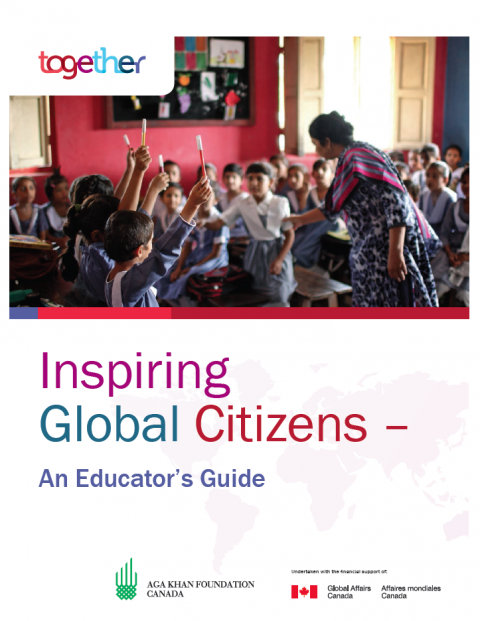 Inspiring Global Citizens - An Educator's Guide Год публикации: 2017 Организация-автор: AGA Khan Foundation Canada This resource is intended for use by teachers of intermediate and secondary school grades to support education about global development and related themes such as global citizenship. The activities included in the resource are designed to assist students in increasing their understanding of the interconnectedness of the world, of the factors contributing to global inequalities, and of some effective and sustainable ways to help reduce global poverty. It is hoped that students will be inspired to take action to make their own contribution to improving lives everywhere.
 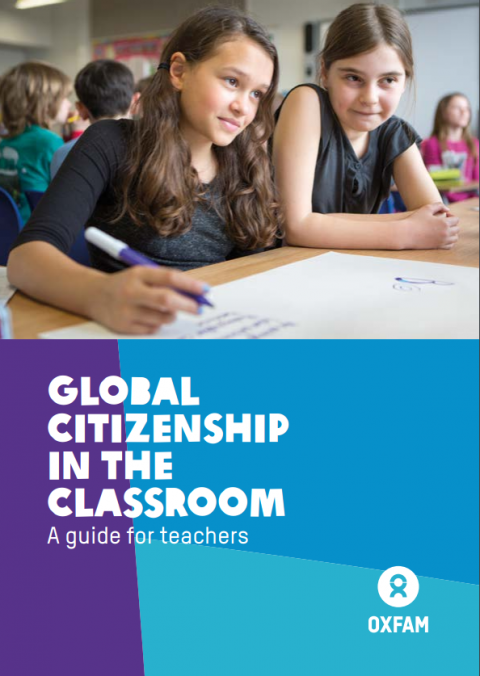 Global Citizenship in the Classroom: A guide for teachers Год публикации: 2015 Организация-автор: Oxfam GB A practical and reflective guide full of practical tools and ideas that can be applied to almost any topic to develop learner participation and global learning.
 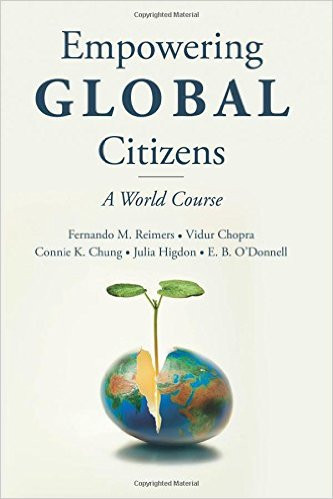 Empowering Global Citizens: A World Course Год публикации: 2016 Автор: Fernando Reimers | Vidur Chopra | Connie K. Chung | Julia Higdon | E. B. O'Donnell The world is changing rapidly and shcools must evolve to prepare young people to invent the future. Reinventing education requires thinking anew about how to help students develop competencies that will empower them as architects of their own lives and contributing members of their communities. Drawing on a synthesis of research and practice in global citizenship education, this book presents The World Course - a rigorous and coherent curriculum to foster student agency, empathy, and deep knowledge and skills to recognize the biggest global challenges and opportunities of our times, and to advance sustainability, human rights, and peace. Integrating current thinking on twenty-first-centry competencies and deeper learning, and deploying pedagogies that cultivate student responsibility, imagination, and creativity, such as project-based learning and design thinking, this book is a blueprint to reinvent education to empower global citizens.
  2022 세계시민교육 선도교사 활동 참여 교사의 세계시민교육 확산도 연구 Год публикации: 2022 Автор: 박환보 | 이인영 | 이지홍 본 연구는 유네스코 아시아태평양 국제이해교육원이 추진한 ‘세계시민교육 선도교사 사업’ 효과 분석을 목표로 한다. ‘선도교사 활동 참여를 통해 세계시민교육 실천 역량이 향상되었는지’, ‘연수 받은 내용을 학교 현장에서 얼마나 어떻게 확산시키고 있는지’, 그리고 이러한 활동을 통해 ‘학교 현장에서 세계시민교육은 얼마나 확산되고 있는지’ 등을 분석하였다. 이를 토대로 세계시민교육 선도교사 활동의 성과를 보다 종합적으로 이해하고, 향후 성과 확산을 위한 정책적 시사점을 도출하였다. 연구기관: 유네스코 아시아태평양 국제이해교육원연구책임자: 박환보 (충남대학교)공동연구원: 이인영 (한국청소년정책연구원)이지홍 (유네스코 아시아태평양 국제이해교육원)연구보조원: 정성경 (충남대학교)조유진 (유네스코 아시아태평양 국제이해교육원) 목차제1장 서론제2장 세계시민교육 선도교사 활동 성과분석 체계제3장 세계시민교육 선도교사 활동 성과분석제4장 세계시민교육 선도교사의 세계시민교육 확산 사례 분석제5장 세계시민교육 선도교사의 세계시민교육 확산 활동과 확산도 인식제6장 결론참고문헌부록
  평등교육실천론 Год публикации: 2020 Автор: 백병부 | 권순정 | 심재휘 | 윤선인 | 이혜정 Организация-автор: 경기도교육연구원 이 연구는 평등과 관련된 교육 영역에서의 논의가 가지고 있는 한계를 극복하기 위해서 수행되었다. 즉 기존의 논의는 대체로 능력주의를 전제로 교육기회의 분배 실태와 구조를 분석하는 데 집중하고 있다는 것이다. 구체적으로 이 연구에서는 독립적이고 이성적인 존재로 인간을 규정했던 근대적 인간관을 의존적이고 관계적인 존재로 전환해야 한다고 주장했다. 이 연구에서는 정의의 개념이 확장되어온 과정을 정리함으로써 평등이 적용되어야 할 영역의 다차원성을 확인하고, 앞에서 정리한 현대철학의 인간관에 근거하여 평등의 영역을 경제적 자원이나 사회적 지위뿐만 아니라 사회적 인정과 정치적 대표, 애정, 돌봄 등과 같은 정동적 영역으로 확장할 수 있음을 정리하였다. 마지막으로 이 연구에서는 기존의 평등에 대한 논의가 국민국가를 배경으로 하고 있기 때문에 여러 한계를 안고 있음을 지적하고, 세계시민교육과 평화교육의 맥락에서 평등의 적용 범위가 지구공동체 전체로 확장되어야 한다는 점을 강조하였다. 출처: 경기도교육연구원 홈페이지
 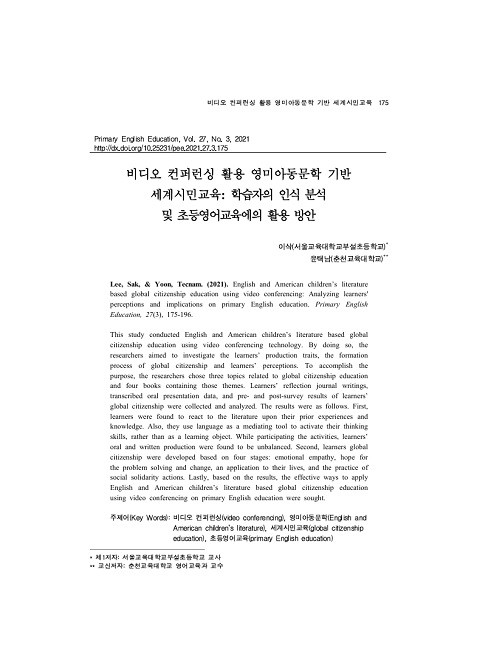 비디오 컨퍼런싱 활용 영미아동문학 기반 세계시민교육: 학습자의 인식 분석 및 초등영어교육에의 활용 방안 (초등영어교육; Vol. 27, No. 3) Год публикации: 2021 Автор: 이삭 | 윤택남 Организация-автор: 한국초등영어교육학회 본 연구는 비디오 컨퍼런싱을 활용한 원격수업 상황에서 영미아동문학 기반 세계시민교육을 실시하여 그 과정에서 나타난 학습자 발화의 특징과 세계시민성의 형성 및 발전 과정을 분석하였다. 이를 바탕으로 초등영어교육에의 활용 방안을 모색하고자 하였다. 이를 위해 제시한 연구 문제는 다음과 같다. 첫째, 비디오 컨퍼런싱 활용 영미아동문학 기반 세계시민교육이 학습자 발화 및 세계시민성 함양에 미치는 영향은 어떠한가? 둘째, 비디오 컨퍼런싱 활용 영미아동문학 기반 세계시민교육의 초등영어교육에서의 활용 방안은 무엇인가?