
Ресурсы
Изучайте широкий спектр ценных ресурсов ВГГ, чтобы углубить своё понимание и повысить эффективность исследований, просветительской деятельности, преподавания и обучения.
Найдено: 3,158
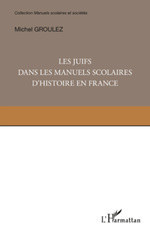 Les juifs dans les manuels scolaires d'Histoire en France This book examines the dissonance between national memory and history concerning French Jewry. From the third Republic to the present, the analysis of textbooks reveals what representations the French educational system has disseminated across the nation and how these images persist or fade through time.
  Analysing the dominant discourses on the Holocaust in grade 9 South African history textbooks The Holocaust has become a focal point in many History classrooms in recent years as a direct result of linking the teaching of the Holocaust with Human Rights Education. Whilst there may be many studies on the Holocaust as a historical event, this study has analysed how the Holocaust has been embedded as a narrative in the Grade 9 GET South African History textbooks and which dominant discourses emerge from this. This research is phenomenological in nature and was situated within an interpretivist paradigm. I employed Narrative Inquiry and Fairclough's three dimensions of discourse as the analysis methodologies. The analysis was completed through an instrument in which the various aspects that aid in the construction of a narrative were interrogated. The study concluded that the Holocaust has a deeply-rooted link to education and the History curriculum in South Africa, as there has been a shift in ideological thinking emanating from western consciousness and finding a place in African consciousness due to the former's prevalence globally. The focus of the narrative of the Holocaust ‒as seen in the four selected Grade 9 GET History textbooks which constituted the sample for this study ‒ has shifted from a purely historical perspective to a perspective which is more social in nature. (By the author)
 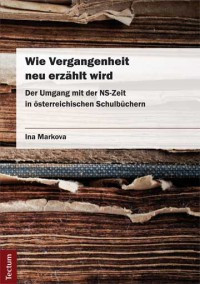 Wie Vergangenheit neu erzählt wird - Der Umgang mit der NS-Zeit in österreichischen Schulbüchern Which past should be remembered, and which is better forgotten? Ina Markova studies how the Nazi period is thematized or ignored in Austrian history textbooks. Especially the question about Austrian complicity in genocide and the war of annihilation was long ignored. Instead, positive – and thereby identity shaping – aspects of history were thematized. Ina Markova carefully analyses continuities and breaks, departures and "areas of silence", and pursues a number of larger questions: Which are the key images of Austrian memory? Do they fix authoritative perspectives on Austrian national identity? (By the publisher) National Socialism and the Holocaust in West German school books The author differentiates five phases of representation of the Holocaust in West German history books and lessons. Attempts to deal with the subject in a serious and comprehensive way in some post-war school textbooks were repressed in the 1950s. The students' movement, intensive research work and increased political attention on right-wing tendencies brought a change in the 1960s. New didactic methods such as source work and regional historical approaches were adopted, intended to give pupils greater insight into the individual areas of dictatorship and enable them to form their own opinion of the activities at that time. In the meantime, National Socialism is usually the area of German 20th century history dealt with in the most detail. The increasing distance in time to the period in question, the dissolution of the Socialist bloc, reunification and the multicultural nature of school classes have produced new teaching conditions, which on the one hand create a greater distance from the subject but on the other hand call for comparison of genocide, war and exile in the present time or from the history of other peoples. (By the author)
 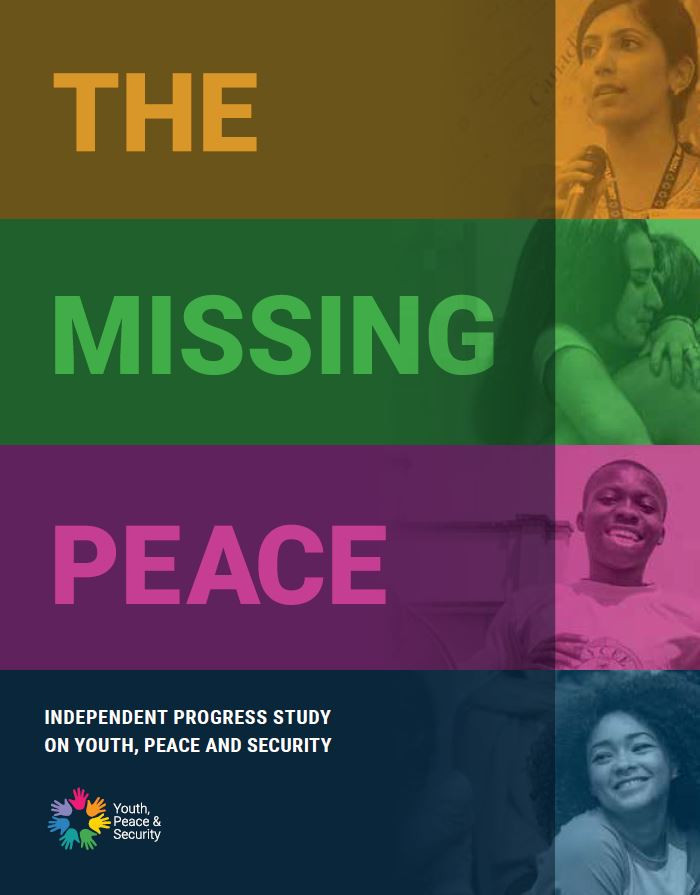 The Missing Peace: Independent Progress Study on Youth, Peace and Security Год публикации: 2018 Организация-автор: United Nations Population Fund (UNFPA) | UN. Peacebuilding Support Office (UN. PBSO) The process of how this study was undertaken is just as important as the outcomes it produced. The study used an inclusive and participatory research approach by undertaking regional, subregional and national consultations with young people across the globe; conducting and receiving country case studies; commissioning focus-group discussions with “hard to reach” youth; and drawing on a survey-based mapping of the work done by youth-led peacebuilding organizations. Particular effort was made to reach out beyond easily accessible and elite youth, to young people who would not ordinarily have a say in these sorts of global policy processes. Given the challenge of young people’s increasing distrust in their governments and the multilateral system, it was essential to work with credible civil society organizations with strong trust-based relationships with youth on the ground. السلام المفقود: دراسة مرحلية مستقلة حول الشباب والسلام والأمن Год публикации: 2018 Организация-автор: United Nations Population Fund (UNFPA) | UN. Peacebuilding Support Office (UN. PBSO) استعانت الدراسة بمنهجٍ بحثيّ شامل وتشارُكي من خلال إجراء استشارات إقليمية وشبه إقليمية ووطنية مع مجموعات من الشباب حول العالم؛ وإجراء وتلقي دراسات حالة قطُرية؛ والتكليف بعقد مناقشات جماعية مركّزة مع الشباب الذين "يصعب الوصول إليهم"؛ والاستفادة من وضع خريطة تستند إلى دراسات استقصائية في العمل الذي أجرته منظمات بناء السلام التي يقودها الشباب. وقد بُذل جهد خاص لكي تشمل الدراسة ما يتجاوز الشباب الذين يسهل الوصول إليهم والشباب النخبة، لتصل إلى الشباب الذين لا تسنح لهم الفرصة عادةً للإدلاء بآرائهم حول هذا النوع من عمليات السياسة العامة العالمية. ونظراً لما يمثّله تفاقم عدم ثقة الشباب بحكوماتهم وبالأنظمة المتعددة الأطراف من تحدٍّ، فقد كان من الضروري العمل مع منظمات المجتمع المدني ذات المصداقية التي تتمتّع بعلاقات متينة قائمة على الثقة مع الشباب على أرض الواقع. Switzerland and the Holocaust: teaching contested history This study is about a history textbook which introduces the new transnational master‐narrative of Holocaust memory into the classrooms of the German‐speaking part of Switzerland. The script of the book entails a replacement of the formerly dominant view of Switzerland as a neutral nation resisting evil in favour of an image that aligns Switzerland with other nations that accept the Holocaust as part of their national history, and combine their efforts to prevent such crimes in the future. However, this process cannot be seen as hegemonic or total since it is fragmented at various levels. On the level of state power, there is no uniform vision of the nation’s history. Therefore, the book needed to accommodate its critics to a certain extent. Furthermore, there are institutional rules of history education that restrict a direct transmission of knowledge and promote teaching youths to develop their own views. And then there are the teachers, who have their part in shaping history. (By the publisher) A ‘Curtain of Ignorance’: An Analysis of Holocaust Portrayal in Textbooks from 1943 through 1959 If textbooks are supposed to be an honest and impartial portrayal of historical events, they should remain the same over time. However, when examining one event across different editions of the same textbook, it becomes apparent that this is not the case. This study seeks to examine how the beginnings of the Cold War may have influenced how the Holocaust was discussed during the 1940s and 1950s. Results indicate that as Germany transformed from an enemy to be defeated into an ally needed to stop the advance of Communism, discussion of the Holocaust became more muted. While the beginnings of the Cold War may not be the only factor in this phenomenon, the results of this study indicate a methodological process in which textbooks could be used to create critical and historical thinking in today's classroom. (By the author)
 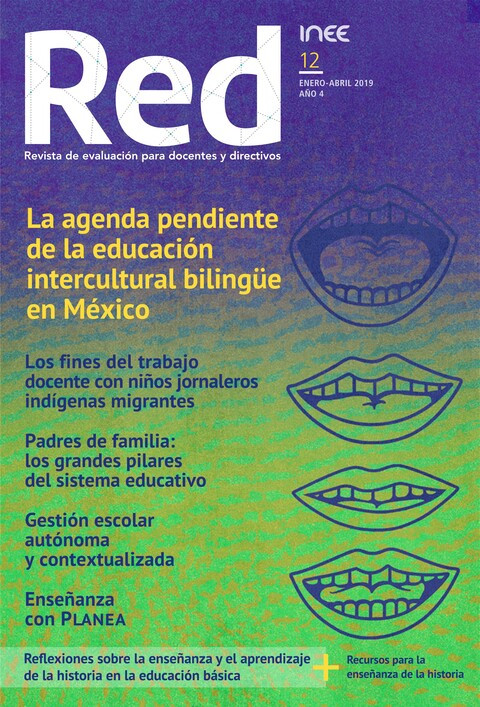 Journal of Evaluation for Teachers and Managers: The Pending Agenda of Bilingual Intercultural Education in Mexico (Red Magazine; No.4, 2019) Год публикации: 2019 Организация-автор: National Institute for the Evaluation of Education (NIEE) This journal addresses an outstanding concern within the Mexican state: indigenous, intercultural, and bilingual education in our nation. It delves into the pedagogy of history at the elementary and secondary levels, along with an exploration of the internet's resources for stimulating student interest in this subject, as presented in our inaugural issue of 2019. Equally noteworthy are inquiries into teacher professionalization and insights shared by several educators on this subject. In the direct discourse titled "From Educator to Educator," Ms. Tsut Tsuy Tamayo also imparts her experiences in the realm of mathematics education. Additionally, this issue includes substantial statistics from the PLANEA assessment, an investigative report on parental involvement in their children's academic pursuits, and an extensive evaluation course tailored for educators, elucidated through an interview with Bernardo Naranjo, a counselor at the National Institute for the Evaluation of Education (INEE). Revista de evaluación para docentes y directivos: La agenda pendiente de la educación intercultural bilingüe en México (Revista Red; No.4, 2019) Год публикации: 2019 Организация-автор: National Institute for the Evaluation of Education (NIEE) Esta revista aborda una asignatura pendiente del Estado mexicano: la educación indígena, intercultural y bilingüe en nuestro país. La enseñanza de la historia en primaria y secundaria, y los recursos que nos ofrece internet para propiciar el interés de los alumnos en esta asignatura también se plantean en nuestra primera entrega de 2019. No menos interesantes resultan la profesionalización docente y las opiniones que varias maestras nos comunican sobre este tema. En el diálogo directo “De profesor a profesor”, la maestra Tsut Tsuy Tamayo nos comparte igualmente su experiencia en la enseñanza de las matemáticas. Las significativas cifras arrojadas por PLANEA, un reportaje sobre la participación de los padres de familia en la educación académica de sus hijos, un curso masivo sobre evaluación dirigido a docentes expuesto en entrevista por Bernardo Naranjo, consejero del INEE.