
Ресурсы
Изучайте широкий спектр ценных ресурсов ВГГ, чтобы углубить своё понимание и повысить эффективность исследований, просветительской деятельности, преподавания и обучения.
Найдено: 3,126
 Building Healthy Relationships With Media: A Parent’s Guide to Media Literacy Год публикации: 2020 Организация-автор: National Association for Media Literacy Education (NAMLE) | Trend Micro This guide gives a few examples of how to incorporate questions into the conversation when discussing media and related topics with your children. It is vital for parents to model curiosity and skepticism in their discussions with their children. Teaching the next generation to be critical thinkers allows them to hone this important skill for navigating life in a digital world. Construyendo relaciones saludables con los medios de comunicación: Guía para los padres sobre la alfabetización mediática Год публикации: 2020 Организация-автор: National Association for Media Literacy Education (NAMLE) | Trend Micro Esta guía ofrece ejemplos de cómo incorporar en una conversación con sus hijos preguntas sobre los medios de comunicación y otros temas relacionados. Es vital que en conversaciones con sus hijos los padres sean modelos de curiosidad y precaución. Enseñar a la próxima generación de jóvenes a hacer preguntas y ser pensadores críticos les permite desarrollar esta importante habilidad para navegar la vida en un mundo digital.
  Media and Information Literacy: A Practical Guidebook for Trainers Год публикации: 2021 Автор: Sylvia Braesel | Thorsten Karg Организация-автор: DW Akademie Literacy is the ability to read and write. Media and information literacy (MIL) is the ability to understand how the media work and can be used to participate in public debate. MIL includes social media like Facebook, as well as traditional media like books, newspapers, radio and television.Media and information literacy - A practical guidebook for trainers provides MIL trainers with background information, training ideas, methods and worksheets. The book also provides sample training schedules to help you determine the length of time needed to teach individual aspects of media and information literacy.Download the Media and information literacy guidebook for trainers as well as the worksheets and guidelines.DW Akademie defines MIL as a composite of five core competencies:Access: The ability to find and access relevant media and information sources.Analyze: The ability to evaluate the credibility, accuracy and objectivity of media content, for example a news story.Create: The ability to create and produce media and information content, such as photos, texts, or videos.Reflect: The ability to think critically about media habits, experiences, trends, and technologies, and how they impact individuals and society.Act: The ability to use media to achieve specific goals, for example launching a social media campaign about health.Read more about DW Akademie's approach to Media and Information Literacy here.
  Citizenship and Lifelong Learning Monitor 2018 Год публикации: 2019 Автор: Sara Gharsalli Организация-автор: SOLIDAR Foundation Over the last couple of years, the world has witnessed the harsh impact of populist politics. In the European Union, this rise in nationalism and populism has translated into an old member state leaving the Union for good, and “illiberal” countries rising up against civil society which could bring a major overhaul in the European Parliament for the May 2019 elections. Struggling with how to deal with extremist parties and their leaders, the EU has nonetheless attempted to cautiously restrain possible conflicts by peaceful means and promotion of participation of its citizens to bring people together despite far-right challenges ahead of the next European Parliament elections in May 2019.To counter and prepare citizens to reinforce and strengthen core European democratic values, the Union has pledged to promote citizenship through education after ministers convened in Paris on March 2015 to set up common objectives. Having derived the 2017 report based on three thematic issues directly taken from the declaration’s objectives, this year the monitor aims to go further into understanding the processes and methods for the promotion and delivery of citizenship education in Europe by non-formal education providers.This Monitor is a contribution to further examine the relationship between citizenship and lifelong learning experiences and policy outcomes in and outside of the classroom in various European countries. Mapping the different approaches that SOLIDAR Foundation members have taken in promoting EU values in relation to citizenship education and lifelong learning for greater democratic participation of citizens, the outcomes will be disseminated towards European and national policy-makers and offers an array of best practices to collect, use and transfer among networks. The SOLIDAR Education and Lifelong Learning Forum will further work on the topic and develop a long term sustainable advocacy strategy for CSOs towards national and EU-wide authorities to influence the debate and revision of national curricula and education systems.
 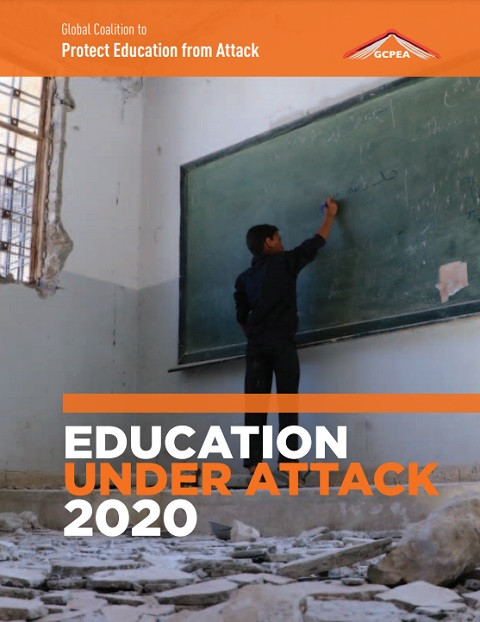 Education Under Attack 2020 Год публикации: 2020 Организация-автор: Global Coalition to Protect Education from Attack (GCPEA) This study is published by the Global Coalition to Protect Education from Attack (GCPEA), which was formed in 2010 by organisations working in the fields of education in emergencies and conflict-affected contexts, higher education, protection, and international human rights and humanitarian law that were concerned about ongoing attacks on educational institutions, their students, and staff in countries affected by conflict and insecurity.GCPEA is a coalition of organizations that includes: co-chairs Human Rights Watch and Save the Children, the Council for At-Risk Academics (Cara), the Institute of International Education (IIE), the Office of the United Nations High Commissioner for Refugees (UNHCR), the Education Above All Foundation (EAA), Plan International, the United Nations Children’s Fund (UNICEF) and the United Nations Educational, Scientific and Cultural Organization (UNESCO). GCPEA is a project of the Tides Center, a non-profit 501(c)(3) organization. Education under Attack 2020 is the result of independent research conducted by GCPEA. It is independent of the individual member organizations of the Steering Committee of GCPEA and does not necessarily reflect the views of the Steering Committee member organizations.
  Envision 4.7 Event and Roadmap Год публикации: 2021 Организация-автор: Bridge 47 Envision 4.7 took place in Helsinki in 2019, bringing together 200 education practitioners, civil society representatives and decision makes to create the Envision 4.7 Roadmap, a policy guideline to the future implementation of SDG Target 4.7 in Europe.
  Global Media and Information Literacy Assessment Framework: Country Readiness and Competencies Год публикации: 2013 Организация-автор: UNESCO The MIL Assessment Framework can foster lifelong learning initiatives by building on the relationship between information, media, digital, and ICT literacies, along with societal transformations, education, workforce, policy and decision making processes, economic growth and democracy. The overall goal of the publication is to guide UNESCO’s Member States throughout the assessment of country readiness and competencies regarding the media and information literacy of citizens, in particular teachers in service and in training. The document is particularly aimed at the following stakeholders: policy makers and decision makers; national officers responsible for statistical data collection and analysis; educational policy makers and planners working in formal and informal education settings; teacher training institutions and teachers. It is also of relevance to the professional information and communication community, and has wide applicability for civil society at large.
  Leveraging Artificial Intelligence to Enhance Early Action towards the Kunming-Montreal Global Biodiversity Framework Год публикации: 2024 Автор: Nicole DeSantis | Lea Phillips | Christina Supples | Julien Pigot | Jamison Ervin | Doley Tshering | Juan Calles Lopez | Dharshani Seneviratne | Enrique Paniagua | Monica Mora Организация-автор: United Nations Development Programme (UNDP) This publication releases the methodology behind the National Biodiversity Strategies and Action Plans (NBSAP) Target Similarity Assessments and identifies key lessons learned and opportunities for future applications.
  Accelerating Carbon Neutrality: Innovative Actions for Sustainable Development Год публикации: 2024 Автор: UNESCO Beijing Climate change is a global challenge that respects no national borders. To achieve the 2030 Sustainable Development Agenda, all nations need to take actions to address climate change and its impacts now. The Chinese government attaches great importance to addressing climate change by setting it as a strategic goal concerning economic and social development while considering green and low-carbon development as an essential aspect of ecological civilization. China pledges to achieve carbon peak before 2030 and carbon neutrality before 2060.Education for Sustainable Development (ESD) is essential to promote climate action. As the creators and builders of the future world, youth play a significant role. Youth are the future. In the spirit of “Changing the minds, not the climate”, UNESCO has been committed to empowering the young generation to tackle climate change, supported by its robust networks in education, sciences, culture, communication and information.In June 2022, the first phase (2022-2025) of the “Accelerating Carbon Neutrality: Innovative Actions for Sustainable Development” project was officially launched under the sponsorship of the China Youth Development Foundation-MercedesBenz Star Fund. This project will fill the gap of China’s carbon neutrality action through activities such as “Accelerating youth climate action”, “Forest Protection Action” and “ Tropical Rainforest biodiversity conservation action” and make a pilot for climate change education and sustainable development education in China and the world by empowering institutions and community residents, including women, children and youth, and contribute to the realization of the UN 2030 Sustainable Development Goals (SDGs) in a bottom-up manner, including SDG 1 (No Poverty), SDG 4 (Quality Education), SDG 5 (Gender Equality), SDG 10 (Reduced Inequalities), SDG 11 (Sustainable Cities and Communities), SDG 13 (Climate Action), SDG 14 (Life below Water), SDG 15 (Life on Land) and SDG 17 (Partnerships for the Goals). The project aims to promote youth capacity in innovation and communication skills. Moreover, it seeks to increase young people’s awareness on how to reduce carbon footprint, protecting the environment, conserving biodiversity and promoting man-nature harmony through education for sustainable development, climate change, environmental protection and global citizenship education. Additionally, the project aims to explore best practices that can be shared and applied internationally. 助力碳中和:可持续发展创新行动 Год публикации: 2024 Автор: UNESCO Beijing 气候变化是跨越国界的全球性挑战。为了实现2030议程,各国必须采取紧急行动来 应对气候变化及其影响。中国政府高度重视气候变化问题,将应对气候变化纳入国 家经济社会发展的重大战略,把绿色低碳发展作为生态文明建设的重要内容,并承 诺将在2030年前实现碳达峰,在2060年前实现碳中和。可持续发展教育对于促进气候行动至关重要。 青少年是未来世界的创造者与建设者,秉承着“改变思维,而非气候”的理念,联合国教科文组织教借助其在教育、 科学、文化、传播和信息领域的强大网络,一直致力于加强青少年在气候变化方面 的能力建设。2022年6月, 在中国青少年发展基金会-梅赛德斯-奔驰星愿基金资助下 “助力碳中和:可持续发展创新行动”项目第一期(2022-2025年)正 式启动。 本项目将通过基于可持续发展教育开展的“助力青少年气候行 动”“森林保护行动”和“保护热带雨林生物多样性行动”等活动内容, 填补中国碳中和行动的重要空白,在切实推进气候变化教育和为师生气候 变化赋能的同时,为中国和世界的气候变化教育以及可持续发展教育做出 示范,以自下而上的方式助力联合国2030可持续发展目标,包括SDG13 (气候变化),SDG4(优质教育),SDG11(可持续的城市与社区), SDG14(水下生态保护),SDG15 (陆地生态保护)和SDG17(伙伴 关系)等一系列目标的实现。项目 旨在促进青少年的能力建设、 知识交 流和技能创新, 通过可持续发展教 育、 气候变化教育、 环境教育和全 球公民教育, 提高青少年对减少碳 足迹、生态环境保护、生物多样性保 护、人与自然和谐共生的认知,并开 展可以在国际范围内共享和适用的良 好实践案例。