
Ресурсы
Изучайте широкий спектр ценных ресурсов ВГГ, чтобы углубить своё понимание и повысить эффективность исследований, просветительской деятельности, преподавания и обучения.
Найдено: 3,126
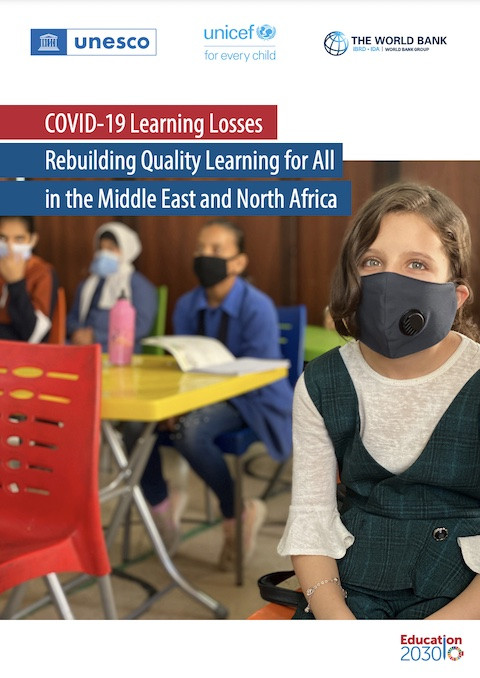 COVID-19 Learning Losses: Rebuilding Quality Learning for All in the Middle East and North Africa Год публикации: 2021 Автор: Hana Yoshimoto | Jeannette Vogelaar | Brenda Haiplik Организация-автор: UNESCO | United Nations Children's Fund (UNICEF) | World Bank An entire generation of children in the Middle East and North Africa (MENA) is estimated to be affected by the education crisis determined by the COVID-19 pandemic, with potential impacts that are going beyond the immediate/short term and also well beyond the education domain itself, with consequences on children’s socialisation, mental well-being, and future perspective of being active members of their society, including in the labor market. More information on the impact of the crisis would help countries to put in place strategies to mitigate the impacts. Timely investment and action to prevent extreme impacts of this crisis on education are of paramount importance in MENA, which already tackling a learning crisis before the COVID-19 outbreak.This publication delineates the overall education status in MENA after the breakout of COVID-19 pandemic, by presenting the education responses in MENA, and assessing the potential learning loss through a simulation analysis, recommendations are provided on how to build back better and enhance access and quality learning for all.
 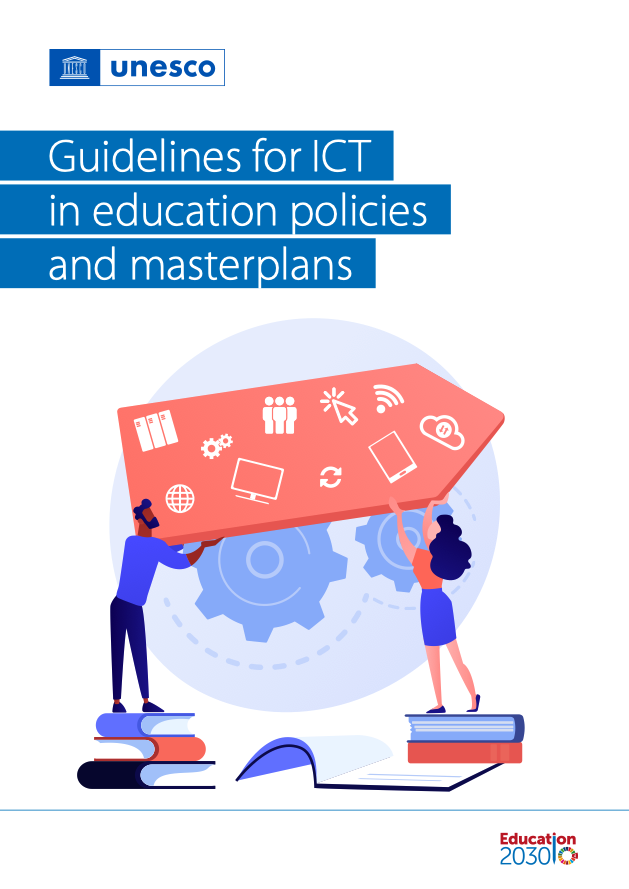 Guidelines for ICT in education policies and masterplans Год публикации: 2022 Автор: Fengchun Miao | Juan Enrique Hinostroza | Molly Lee | Shafika Isaacs | Dominic Orr | Fabio Senne | Ana-Laura Martinez | Ki-Sang Song | Alexander Uvarov | Wayne Holmes | Benjamin Vergel de Dios Организация-автор: UNESCO Countries across the world have been leveraging information and communication technologies (ICTs) to advance education for decades. These initiatives are driven by public institutions and involve commercial technology companies, and have resulted in paradoxes such as increasing digital inequalities and uneven access to high-quality digital learning opportunities. The COVID-19 crisis further exacerbated this trend: At least one third of students globally did not have access to distance learning during the peak of the COVID-19 crisis in 2020.The publication aims to guide policy-makers to ensure that when adopting technology, human rights should be defended; inclusion, equity and gender equality should be at the heart of solutions; and innovations should be considered as a common good. Based on these principles, the publication presents a human-centred view on the potentials of technologies ranging from low-bandwidth technologies to emerging technologies including Artificial Intelligence and Web 3.0 or “metaverse”. It advocates for national policies to protect the digital well-being of teachers and students, to reduce and neutralize the digital emission footprint, and to avoid ‘techno-solutionism’.This publication proposes policy planning frameworks and an iterative roadmap to examine the digital readiness of local education systems, assess needs of learners and teachers, and plan well-resourced national ICT in education programmes. This is followed by a deep dive into examples of national masterplans on the use of ICT in different types of education.
  Challenging Systematic Prejudices: An Investigation into Bias Against Women and Girls in Large Language Models Год публикации: 2024 Автор: Daniel Van Niekerk | Maria Peréz Ortiz | John Shaw-Taylor | Davor Orlic | Ivana Drobnjak | Jackie Kay | Noah Siegel | Katherine Evans | Nyalleng Moorosi | Tina Eliassi-Rad | Leone Maria Tanczer | Wayne Holmes | Marc Peter Deisenroth | Isabel Straw | Maria Fasli | Rachel Adams | Nuria Oliver | Dunja Mladenić | Urvashi Aneja | Madeleine Janicky Организация-автор: UNESCO | International Research Centre on Artificial Intelligence (IRCAI) This study explores biases in three significant large language models (LLMs): OpenAI’s GPT-2 and ChatGPT, along with Meta’s Llama 2, highlighting their role in both advanced decision-making systems and as user-facing conversational agents. Across multiple studies, the brief reveals how biases emerge in the text generated by LLMs, through gendered word associations, positive or negative regard for gendered subjects, or diversity in text generated by gender and culture. The research uncovers persistent social biases within these state-of-the-art language models, despite ongoing efforts to mitigate such issues. The findings underscore the critical need for continuous research and policy intervention to address the biases that exacerbate as these technologies are integrated across diverse societal and cultural landscapes. The emphasis on GPT-2 and Llama 2 being open-source foundational models is particularly noteworthy, as their widespread adoption underlines the urgent need for scalable, objective methods to assess and correct biases, ensuring fairness in AI systems globally.
  평화, 인권, 국제이해, 협력, 기본적 자유, 세계시민성, 지속가능발전을 위한 교육 권고: 해설서 Год публикации: 2024 Организация-автор: 유네스코 '평화, 인권, 국제이해, 협력, 기본적 자유, 세계시민성, 지속가능발전을 위한 교육 권고'를 소개하고 교육에 관심이 있는 이해관계자들 대상으로 권고의 내용과 활용을 담은 해설서.
  Рекомендация об образовании в духе мира, прав человека и устойчивого развития. Пояснительная записка Год публикации: 2024 Организация-автор: UNESCO Данная брошюра знакомит с обновленной Рекомендацией и кратко разъясняет, каким образом сформулированные в ней руководящие принципы могут быть применены на практике и в повседневной жизни различными субъектами деятельности в сфере образования.
 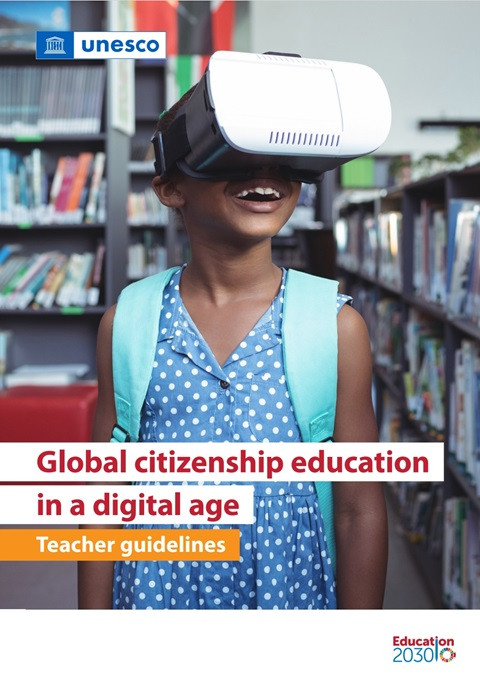 Global Citizenship Education in a Digital Age: Teacher Guidelines Год публикации: 2024 Организация-автор: UNESCO This book is an essential resource for teachers seeking to understand the critical role that digital citizenship education plays in promoting a more informed, engaged, and responsible global citizenry. While digital technologies have opened up new opportunities for life-long learning, they have also given rise to emerging concerns, notably in relation to the rise of disinformation and hate speech online. Aimed at building the capacities of teachers to prepare learners to act ethically and responsibly in physical and digital environments, these guidelines stress the importance of considering how Global Citizenship Education (GCED) and related knowledge, values, skills and attitudes can be fostered for teaching, learning and engaging for a more sustainable, inclusive, just and peaceful world.
  Revision Process of the 1974 Recommendation concerning Education for International Understanding, Co-operation and Peace and Education relating to Human Rights and Fundamental Freedoms: Compilation of Member State Comments Год публикации: 2023 Организация-автор: UNESCO Adopted in 1974, the Recommendation concerning education for international understanding, co-operation and peace and education relating to human rights and fundamental freedoms is considered a landmark legal instrument that brings together for the first time peace, international understanding, human rights, fundamental freedoms and education. As per Circular letter 4401, the preliminary report and the first draft of the revised 1974 Recommendation were transmitted to Member States for their written comments and observations. These written comments were taken into consideration by the Director-General when preparing the revised second draft of the Recommendation to be discussed at the Intergovernmental Special Committee Meeting (Category II), in view of its submission to the 42nd session of the General Conference in November 2023 and eventual adoption.
  UNESCO Futures of Education Report Explained by Members of the International Commission Год публикации: 2022 Организация-автор: UNESCO Initiated by UNESCO, the International Commission on the Futures of Education has prepared a new report on how education can best shape the future of humanity and the planet. In this video, members of the Commission and its chair explain the main recommendations and defining features of their report, Reimagining our futures together: A new social contract for education. The report is part of UNESCO’s Futures of Education initiative which aims to rethink education and shape the future. The initiative is catalyzing a global debate on how knowledge, education and learning need to be reimagined in a world of increasing complexity, uncertainty, and precarity.
 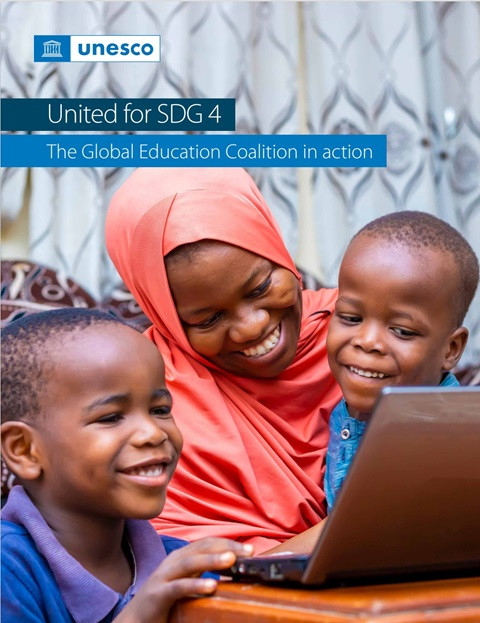 United for SDG 4: The Global Education Coalition in Action Год публикации: 2024 Организация-автор: UNESCO The Global Education Coalition, launched by UNESCO, is a platform for collaboration and exchange to protect the right to education and serves as a transformative accelerator towards SDG 4. This progress report of the Coalition builds on documents published in September 2020, March 2021, and March 2023 and covers activity between March 2023 and March 2024. Four years in and moving into its fifth, the Coalition works together to ensure all learners are empowered equally in and through education.
 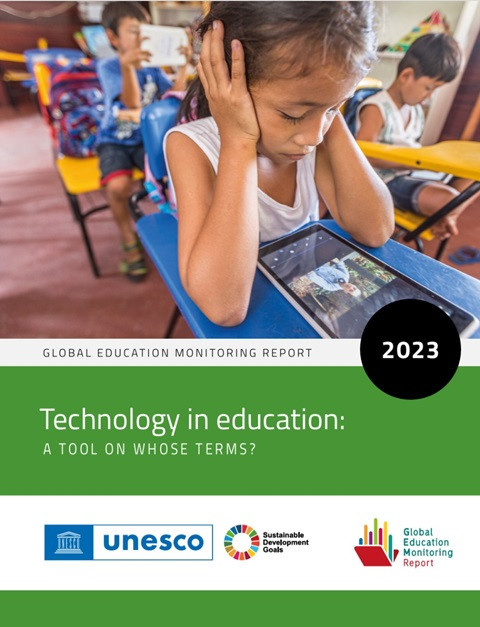 Global Education Monitoring Report 2023: Technology in Education; A Tool on Whose Terms? Год публикации: 2023 Организация-автор: UNESCO | Global Education Monitoring Report Team This report recommends that technology should be introduced into education on the basis of evidence showing that it would be appropriate, equitable, scalable and sustainable. In other words, its use should be in learners’ best interests and should complement face-to-face interaction with teachers. It should be seen as a tool to be used on these terms. Midway to the deadline, the 2023 Global Education Monitoring Report assesses the distance still to go to reach the 2030 education targets. Education is the key to unlocking the achievement of other development objectives, not least the goal of technological progress.