
Ресурсы
Изучайте широкий спектр ценных ресурсов ВГГ, чтобы углубить своё понимание и повысить эффективность исследований, просветительской деятельности, преподавания и обучения.
Найдено: 3,126
 Why Is Transformative Education a Vital Response to the Multiple Challenges of the Future? Год публикации: 2021 Автор: Tereza Čajková Организация-автор: Bridge 47 This report explores the role of transformative education as described in SDG Target 4.7 in responding to the global challenges, risks and trends of the future, and is split into three sections: Part 1 sets the context based on several foresight reports, suggesting that the physical effects of climate change are likely to intensify during the next two decades as humanity looks unlikely to meet the goal of limiting global warming to under 2°C. The burden of climate disruption and environmental decline is already felt by everyone, but disproportionately by the most vulnerable populations. Social challenges described in foresight reports reflect increasing levels of uncertainty, precarity, fragility and complexity. The future world will likely be more connected, yet more fragmented, characterised by multiple changes taking place at an unprecedented pace.Part 2 reflects on the role of education in times of social and ecological transformation. There is currently increasing momentum for questioning established education approaches in terms of whether they are able to equip future generations to cope with the multiple crises the foresight reports warn us of. Transformative education can contribute to this process given that preparing learners to address future challenges is one of its core commitments. Part 3 provides an insight into the types of learning which may be more suited to coping with these numerous challenges. Transformative learning develops the cognitive abilities to learn from the social and historical shortcomings of the dominant world-view and to address the driving forces responsible for degradation of life on the planet. It can support development of dispositions enabling learners to relate to each other and the world in a radically different way, understanding that we cannot separate humanity from the planet and all other living beings and that humanity may need to learn how to live in, and with the world, without occupying its centre.
  Imagining Transformation Otherwise: Case Studies of Learning Practices Год публикации: 2021 Автор: Rene Suša Организация-автор: Bridge 47 This publication is written by Rene Suša, on behalf the Bridge 47 project. It features ten case studies of organizations and initiatives from around the world that are committed to bringing about positive changes in society and strive to do that in different ways. Working in diverse social, cultural and political contexts, the organizations and initiatives presented in this publication seek to address the systemic inequalities, injustices and harm they perceive as important. They strive to do that in ways that correspond to their analysis of the problems, their respective theories of change and their available means and resources. Although highly diverse in the ways they approach social change, these organizations and initiatives emphasize the importance of learning and unlearning in their work. This applies in equal measure to those initiatives with an explicitly education-oriented mission and to those that work on other approaches to social change, such as different practices of (internal) organizational transformation.
  Becoming a Global Citizen: Proceedings of the International Symposium on Competencies of Global Citizens (Espoo, Finland, 5-7th October 2011) Год публикации: 2011 Автор: Liisa Jääskeläinen | Taina Kaivola | Eddie O’Loughlin | Liam Wegimont Организация-автор: Global Education Network Europe (GENE) | Finnish National Board of Education (FNBE) The international symposium on competences of global citizens, entitled Becoming a Global Citizen, was held in Espoo, Finland on 5 – 7. October, 2011. The symposium was organized by the Finnish National Board of Education (FNBE), the Finnish Ministry for Foreign Affairs, GENE (Global Education Network Europe) and the Hanasaari Swedish- Finnish Cultural Centre.The symposium focused on three main questions, namely:• what is global education?• what are key competences of global citizens in general education?• how can the priorities of global education be supported nationally?This publication contains the proceedings and main information gathered in the symposium. From Finland’s point of view the Symposium provided a substantial contribution to the publication called Schools Reaching out to a Global World. The publication comprises several articles on competencies of global citizens serving the next curricular reform of the entire general education sector for Finland, to be fully implemented by 2016. From the international perspectives the Symposium meant a most relevant input into the pan-European debate on perspectives for Global Education.
  Promoting Integration of Migrants and Refugees in and Through Education: Toolkit Год публикации: 2018 Организация-автор: Education International (EI) The past years have seen large numbers of refugees moving to Europe. This, and the rise of populist movements in Europe and North America, has led unions to develop activities engaging schools, local communities, authorities, etc. to promote the rights of migrants and build inclusive schools and communities.With the support of Education International (EI), exchange visits, information sharing and peer-learning activities allowed education unions to inspire each other and explore synergies across borders. This toolkit aims to build on these experiences and facilitate education unions to develop their work in this area. It also assists unions by exploring the issues around integrating migrants and refugees in education and sharing what others have been doing in this domain. Promouvoir l'intégration des personnes migrantes et réfugiées dans et à travers l'éducation: Boite à outils Год публикации: 2018 Организация-автор: Education International (EI) Beaucoup de personnes réfugiées se sont installées en Europe ces dernières années. Ceci et la montée des mouvements populistes en Europe et en Amérique du Nord ont conduit les syndicats à développer des activités engageant les écoles, les communautés locales, les autorités, etc. pour promouvoir les droits des migrant.e.s et développer des écoles et communautés inclusives.Avec le soutien de l’Internationale de l’Education (IE), les visites d’échange, le partage d’informations et les activités d’apprentissage avec leurs pairs ont permis aux syndicats de l’éducation de s’inspirer mutuellement et d’explorer les synergies transfrontalières. Cette boite à outils vise à tirer parti de ces expériences et à aider les syndicats de l’éducation à amplifier leur travail dans ce domaine. Elle aide également les syndicats en explorant les questions liées à l’intégration des personnes migrantes et réfugiées dans l’éducation et en partageant ce que les autres ont fait sur cette thématique.
 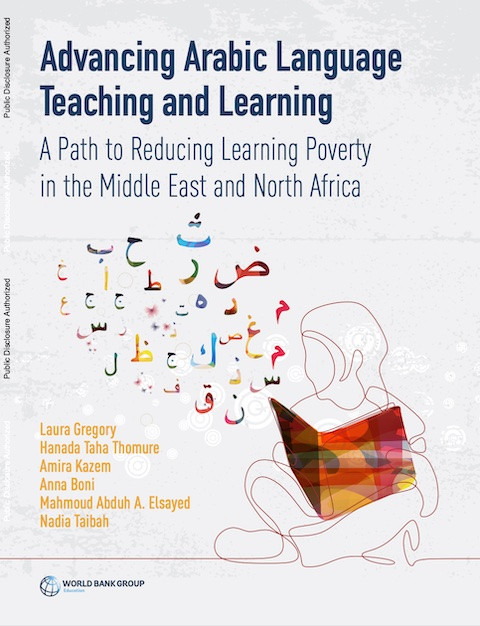 Advancing Arabic Language Teaching and Learning: A Path to Reducing Learning Poverty in the Middle East and North Africa Год публикации: 2021 Автор: Laura Gregory | Hanada Taha Thomure | Amira Kazem | Anna Boni | Mahmoud Abduh A. Elsayed | Nadia Taibah Организация-автор: World Bank The purpose of the present report is to identify and explore the evidence on factors that are leading to high rates of learning poverty in MENA countries. In addition, the report proposes a path for countries of the region to make the teaching and learning of the Arabic language—which are critical foundations for children in Arabic-speaking countries—more effective. The intended audience of the report is education stakeholders in the MENA region, including officials in ministries of education across the region, those responsible for education decision-making, teachers, academics, education administrators, parents, and nongovernmental organizations, as well as World Bank and partner organization staff tasked with supporting countries in their efforts to raise learning and human capital.The intention of the report is not to provide an Arabic literacy strategy for each country since countries of the region differ and each would need to have their own national dialogue. Instead, the report collates the relevant literature from the region and beyond, as well as local and regional initiatives, and offers guidance to countries to advance the teaching and learning of MSA. As such, the report does not focus on the broader issues of language use within each country. As part of the process of developing the report, a summary of the emerging evidence and recommendations was shared with a small group of teachers from two countries across the region in advance of a focus group discussion to explore local views. Unanimous agreement on the key findings and recommendations were expressed by these teachers. Further discussions on the topics raised in this report are expected to take place during the dissemination of this report and in the months and years to come, leading to greater consensus across stakeholders on the best ways to advance Arabic language teaching and learning.The report is structured in a way that first explores the incidence of learning poverty in the MENA region, followed by international evidence on the science of learning to read, and factors that are influencing Arabic language learning outcomes. The report then looks at some of the national strategies, policies, and initiatives already in place for Arabic language education, and proposes a path for advancing Arabic language teaching and learning, along with suggestions for regional collaboration efforts that could further support MENA countries.
  What Is Democracy? Год публикации: 2014 Организация-автор: Manthra Communication In this video, the concept of democracy is explained to the children. Later, a teacher assigns a task to her students about this topic, then each student presents the topic in a creative way. ¿Qué es la democracia? Год публикации: 2014 Организация-автор: Manthra Communication En este video se explica a los niños lo que se entiende por democracia, una profesora les deja una tarea a sus alumnos sobre este tema, luego cada alumno presenta el tema de manera creativa.
 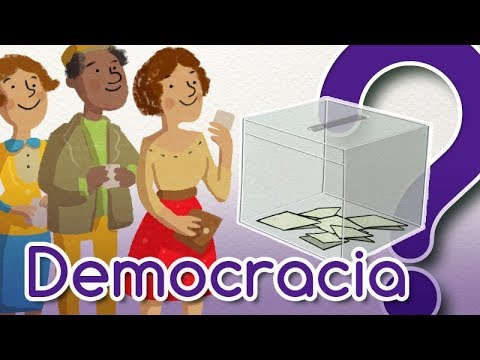 Does Democracy Exist? Год публикации: 2018 Организация-автор: CuriosaMente In this video democracy is defined from Greek as demos (people) and kratos (power) and a democratic regime as a goverment lead by the people. It talks about who created it and if voting for the governants defines a true democracy. ¿Existe la democracia? Год публикации: 2018 Организация-автор: CuriosaMente En este video se define la democracia desde el griego como demos (pueblo) y kratos (poder) y un regimen democrático como un gobierno dirigido por el pueblo. Habla de quien la creo y si votar por los gobernantes define una verdadera democracia.