
Ресурсы
Изучайте широкий спектр ценных ресурсов ВГГ, чтобы углубить своё понимание и повысить эффективность исследований, просветительской деятельности, преподавания и обучения.
Найдено: 3,126
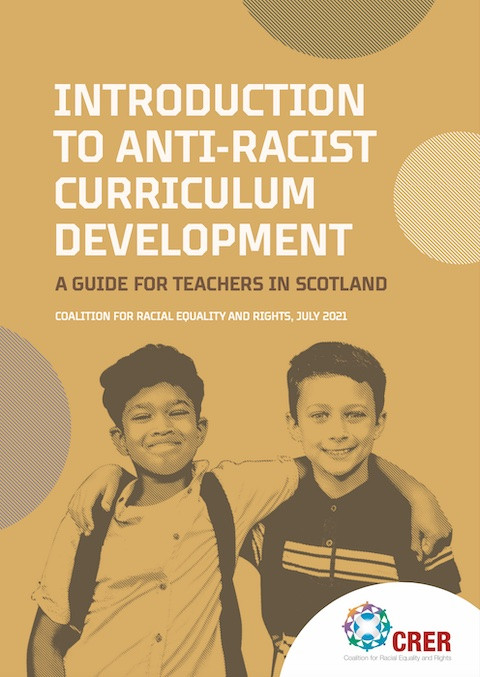 Introduction to Anti-Racist Curriculum Development: A Guide for Teachers in Scotland Год публикации: 2021 Организация-автор: Coalition for Racial Equality and Rights (CRER) This guide outlines why anti-racist approaches are important in curriculum development, and explores the barriers that have hampered race equality in education. It then goes on to explore three key components for developing anti-racist approaches to curriculum development: Decolonising the curriculum Building intercultural competence Reducing racism, prejudice and discrimination
  Achieving SDG4 Through a Human Rights Based Approach to Education: World Development Report 2018 Background Paper Год публикации: 2018 Автор: Kate Moriarty Организация-автор: World Bank Quality education is a critical dimension for the achievement of sustainable development. The renewed political commitment set out in sustainable development goal 4 (SDG4) is an opportunity to ensure strong coherence between education policy and the right to education first articulated more than 70 years ago. This paper presents the results of a desk-based study on a human rights-based approach to education (HRBAE) in the context of SDG4. It explores the ways in which such an approach can guide policy, planning, and the delivery of education in observance with agreed international frameworks providing for the right to education. The paper argues that the human rights conventions on the right to education are not passive instruments designed to remain only at the level of discourse but, as legal obligations, require action from the state and should be central in the development of education services, including in the context of large scale displacement and crisis. This paper outlines the legally binding commitments of the right to education. It considers how these can be applied practically through a HRBA-E to address the continuing barriers to access and completion of quality education and learning.
  The Impact of COVID-19 on Inclusive Education at the European Level: Literature Review Год публикации: 2021 Организация-автор: European Agency for Special Needs and Inclusive Education | European Commission The coronavirus (COVID-19) pandemic has affected learners around the world. School closures forced emergency responses from education systems, resulting in various forms of remote schooling. The crisis highlighted pre-existing inequalities in education and provided a reason for systemic change in education worldwide.This literature review aims to map evidence and identify acknowledged ways in which COVID‑19 has impacted on education in general and inclusive education in particular at European and national levels. The intention is to provide a comprehensive overview of key messages for Agency member countries. It will also inform possible future Agency work on this topic.
 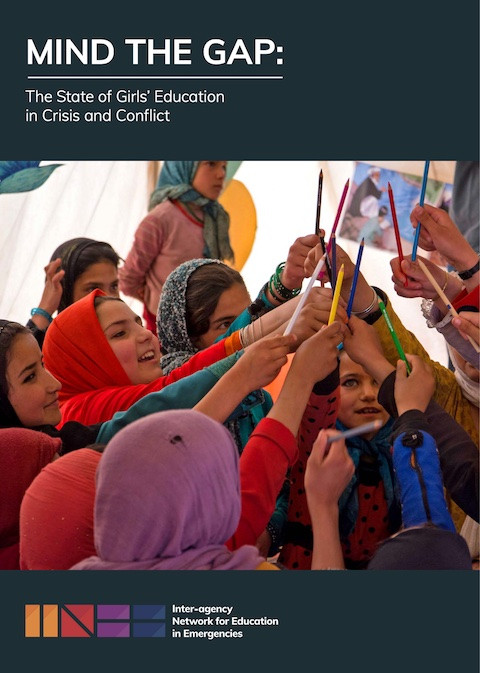 Mind the Gap: The State of Girls’ Education in Crisis and Conflict Год публикации: 2021 Организация-автор: Inter-agency Network for Education in Emergencies (INEE) This report summarizes progress, gaps, challenges and opportunities in improving education and training for girls and women affected by conflict and crisis. The report aims to support the Charlevoix Declaration on Quality Education’s commitment to enhance the evidence base and monitor progress toward gender-equitable education in crises. The report draws from data on 44 crisis-affected countries, from recent research, and from a set of case studies of interventions in a range of crisis-affected contexts.
 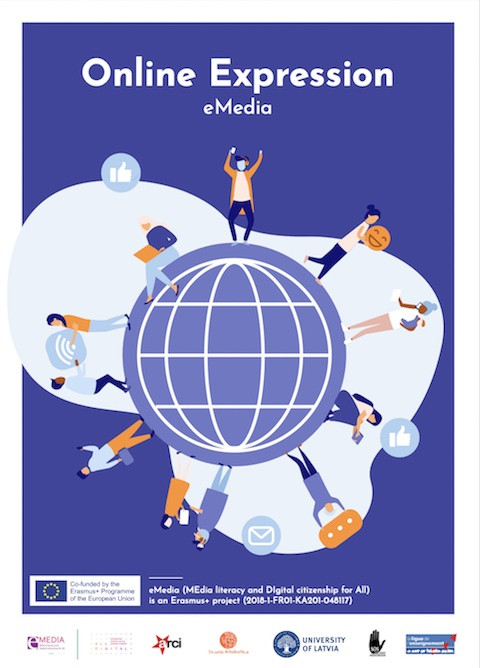 Online Expression: eMedia Год публикации: 2021 Организация-автор: e-Media project Consortium | Erasmus+ The handbook on Online Expression gives an insight on what is online expression, and intends to promote a more creative, active and wise use of the web, exploring the opportunities given not only by social media and blogs. The aim of the handbook is to help teachers guide young people to hone their online expression skills by explaining how to be proactive in their online expressions and less reactive, to become a digital prosumer and not a consumer. The hanbook focuses on the following elements that characterizes online active participation: The creation of relationships; The building of a community or the fact of representing a community; The collective interest; The intention to produce a change, to influence society.
 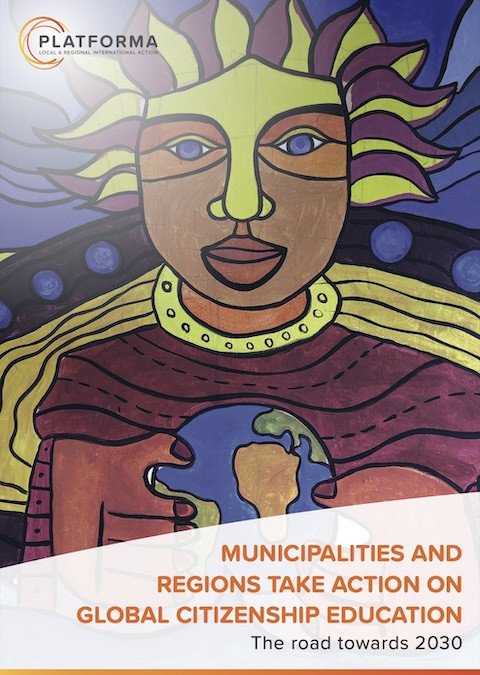 Municipalities and Regions Take Action on Global Citizenship Education: The Road Towards 2030 Год публикации: 2021 Автор: Aurèle Destrée | Tereza Čajková Организация-автор: PLATFORMA | European Union (EU) Development Education and Awareness Raising (DEAR)/Global Citizenship Education (GCE) can cultivate the spirit of the 2030 Agenda because it helps acquiring missing knowledge on global interconnections and creates spaces for enquiries.Whilst old constraints still remain and new challenges are appearing, local and regional governments continue to innovate, experiment and work hand in hand with key partners, including with their peers across the globe, to find new solutions and achieve their ambitions.Discover in this publication how local and regional governments are active in supporting learning and fostering changes in a context of socio-economic recovery plans. Actions des municipalités et des régions en faveur de l'éducation à la citoyenneté mondiale: En route vers 2030 Год публикации: 2021 Автор: Aurèle Destrée | Tereza Čajková Организация-автор: PLATFORMA | EU L’éducation au développement et la sensibilisation (DEAR) et l’éducation à la citoyenneté mondiale (ECM) soutiennent et alimentent l’esprit de l’Agenda 2030 car elles permettent d’acquérir les connaissances manquantes sur les interconnexions mondiales et de créer des espaces de recherche.Alors que d’anciennes contraintes subsistent et que de nouveaux défis apparaissent, les gouvernements locaux et régionaux continuent d’innover, d’expérimenter et de travailler de concert avec des partenaires clés, notamment avec leurs homologues du monde entier, pour trouver de nouvelles solutions et concrétiser leurs ambitions.Découvrez dans la présente publication comment les gouvernements locaux et régionaux s’emploient à soutenir l’apprentissage et à favoriser les changements dans un contexte de plans de relance socio-économique.
  On Education & Democracy: 25 Lessons from the Teaching Profession Год публикации: 2019 Автор: Susan Hopgood | Fred van Leeuwen Организация-автор: Education International (EI) On the occasion of the 25th anniversary of Education International, the authors have selected 25 lessons which educators and their organizations have learnt throughout history on education and democracy.These lessons serve as a set of recommendations to every classroom teacher working at all levels in education systems and in their education unions. These lessons are an invitation to take a stand in favour of democracy and its institutions and to consider contributions that teachers, schools, universities and representative organizations can make to solidify and progress democratic life. Sobre la educación y la democracia: 25 lecciones de la profesión docente Год публикации: 2019 Автор: Susan Hopgood | Fred van Leeuwen Организация-автор: Education International (EI) Con motivo del 25o aniversario de la Internacional de la Educación, que actualmente reúne a los sindicatos de la educación de 170 países, que representan a 32,5 millones de docentes y personal de apoyo educativo, hemos seleccionado 25 lecciones sobre la educación y la democracia que el personal docente y sus organizaciones han aprendido a lo largo de la historia. Nuestras lecciones ofrecen una serie de recomendaciones destinadas a todo el personal docente que trabaja en todos los niveles de nuestros sistemas educativos y en sus sindicatos de la educación. Estas lecciones son una invitación a posicionarse en favor de la democracia y sus instituciones y a analizar las contribuciones que el profesorado, las escuelas, las universi- dades y las organizaciones que los representan pueden aportar para consolidar y hacer progresar la vida democrática. Éducation & démocratie: 25 leçons de la profession enseignante Год публикации: 2019 Автор: Susan Hopgood | Fred van Leeuwen Организация-автор: Education International (EI) À l’occasion du 25e anniversaire de l’Internationale de l’Éducation, qui regroupe actuellement les syndicats nationaux de l’éducation de 170 pays représentant 32,5 millions d’éducateur·rice·s et de membres des personnels de soutien à l’éducation, les auteurs ont sélectionné 25 leçons que les éducateur·rice·s et leurs organisations ont tirées sur l’éducation et la démocratie au long de l’histoire. Ces leçons établissent une série de recommandations destinées à tou·te·s les enseignant·e·s travaillant à tous les niveaux de nos systèmes éducatifs et de leurs syndicats d’ensei- gnement. Les leçons sont une invitation à prendre position en faveur de la démocratie et de ses institutions et à examiner les contributions que les enseignant·e·s, les écoles, les universités et les organisations représentatives peuvent apporter pour consolider et faire avancer la vie démocratique.