
Ресурсы
Изучайте широкий спектр ценных ресурсов ВГГ, чтобы углубить своё понимание и повысить эффективность исследований, просветительской деятельности, преподавания и обучения.
Найдено: 3,128
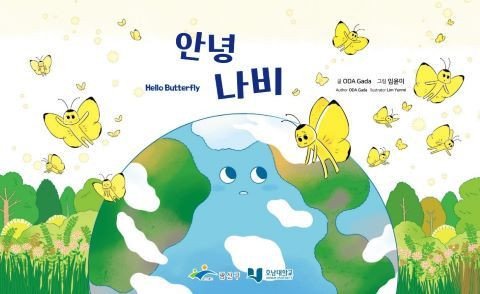 Hello Butterfly Год публикации: 2022 Автор: ODA Gada Организация-автор: ODA Gada | 광진구 | 호남대학교 <Hello Butterfly> is the fifth illustrated book in the ‘Youth Global Citizenship Education Project’ jointly published by Gwangsan-gu Office of Gwangju and Honam University. The theme is to respond to climate change. The book helps with climate change and environmental policies such as the harmful effects of 'fast fashion' (clothes manufactured and distributed by reflecting the latest trends), desirable clothing consumption methods, zero waste (removal of garbage), and green washing (disguised environmentalism). It contains specific information. The book takes the form of an accordion book that depicts the story through the butterfly's eyes, with the southern yellow butterfly, one of the climate change biomarker species, as the main character. 안녕 나비 Год публикации: 2022 Автор: ODA Gada Организация-автор: ODA Gada | 광진구 | 호남대학교 <안녕 나비>는 광주광역시 광산구와 호남대가 공동 진행하는 ‘청소년 세계 시민 교육 프로젝트’ 의 다섯번째 그림책이다. 기후변화 대응을 주제로 하고 있다. 책에는 ‘패스트 패션(최신 유행을 바로 반영해 제작‧유통하는 의류)’의 폐해와 바람직한 의류 소비법, 제로웨이스트(쓰레기 없애기), 그린워싱(위장환경주의) 등 기후변화와 환경정책에 도움이 되는 구체적인 정보들이 담겨있다. 책은 기후변화 생물지표종 중 하나인 남방노랑나비를 주인공으로 하여, 나비의 시선을 통해 이야기를 묘사하는 아코디언북 형태를 띠고 있다. 본 저작물은 광주 광산구와 호남대학교에서 2022년 작성된 공공누리 제1유형으로 광산구청 누리집(www.gwangsan.go.kr/)에서 다운로드 하실 수 있습니다. Здравствуй Бабочка Год публикации: 2022 Автор: ODA Gada Организация-автор: ODA Gada | 광진구 | 호남대학교 «Hello Butterfly» — пятая иллюстрированная книга в рамках «Молодежного образовательного проекта глобальной гражданственности», совместно изданного офисом Квансан-гу Кванджу и Университетом Хонам. Тема — реакция на изменение климата. Книга помогает с изменением климата и экологической политикой, такими как вредные последствия «быстрой моды» (одежда, производимая и распространяемая с учетом последних тенденций), желаемые методы потребления одежды, ноль отходов (удаление мусора) и стирка зелени (замаскированный энвайронментализм). ). Он содержит конкретную информацию. Книга имеет форму аккордеонной книги, которая изображает историю глазами бабочки, с южной желтой бабочкой, одним из видов биомаркеров изменения климата, в качестве главного героя.
 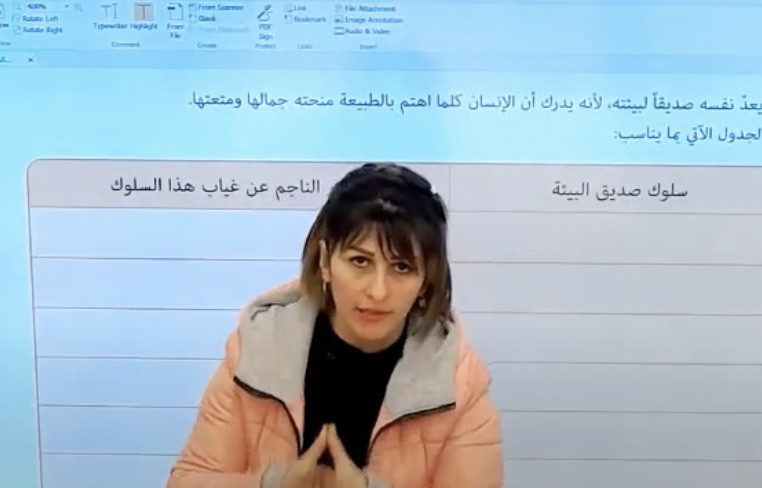 الوعي البيئي للصف الثامن Год публикации: 2020 Автор: Rima Mohessin Организация-автор: National Center for the Development of Educational Curricula الفيديو عبارة عن درس لطلبة الصف الثامن الأساسي بدولة سوريا. الدرس من كتاب التربية الوطنية وعنوانه الوعي البيئي. تبدأ المعلمة في الحديث عن الوعي البيئي كمفهوم وتتعمق في الحديث عن الملوثات البيئية.وتناقش المعلمة مع الطلبة السلوكيات البيئية الإيجابية والسلوكيات السلبية. 8th Grade Environmental Awareness Год публикации: 2020 Автор: Rima Mohessin Организация-автор: National Center for the Development of Educational Curricula The video is a lesson for eighth graders in Syria. The lesson is from the national education book, entitled Environmental Awareness. The teacher starts talking about environmental awareness as a concept and goes into depth on environmental pollutants. The teacher also discusses positive and negative environmental behaviors with students.
  Citizenship Education at Regional Conflict Zones Год публикации: 2020 Автор: Nazarii Boiarskyi | Aleksey Telichkin | Nikolay Nazarov | Yuriy Petrushenko | Alexandru Postica | Sasha Delemenchuk | Valery Balaian | Oleksandr Voitenko | Rauf Rajabov Организация-автор: Human Rights Vector This publication is prepared by ‘Human Rights Vector’ NGO (Ukraine) as part of ‘Citizenship Education at Regional Conflict Zones’ projects that is being implemented by a ‘Citizenship Education at Regional Conflict Zones’ working group within EENCE network with the support of the Federal Agency for Civic Education (Bundeszentrale für politische Bildung) using funds appropriated by the Federal Foreign Office. This publication is the result of the activities of “Citizenship Education at Regional Conflict Zones” working group within EENCE network in 2020. The manual presents an understanding of conflicts in the modern world, as well as an overview of regional conflicts in the countries of the Eastern Partnership and Russia; it contains the analysis of the condition of formal and non-formal education in the conflict-affected areas; information on the specifics of planning and implementing citizenship education programs in the conflict-affected areas and for people from such areas, examples of the best educational practices. Гражданское образование в зоне региональных конфликтов Год публикации: 2020 Автор: Nazarii Boiarskyi | Aleksey Telichkin | Nikolay Nazarov | Yuriy Petrushenko | Alexandru Postica | Sasha Delemenchuk | Valery Balaian | Oleksandr Voitenko | Rauf Rajabov Организация-автор: Human Rights Vector Данная публикация — результат деятельности рабочей группы EENCE «Гражданское образование в зоне региональных конфликтов» в 2020 году. Стоит участь, что эксперты, вовлеченные в подготовку данного издания, работали над содержанием конкретных подразделов, где они указаны как авторы материала. Поэтому они могут не разделять мнения, высказанные авторами других подразделов.Эта публикация является едва ли не первой попыткой общественности посмотреть на ситуацию с образованием (и гражданским образованием в частности) в зонах региональных конфликтов, сравнить опыт различных организаций и институций в этой сфере, предоставить практические рекомендации. Поэтому не стоит рассматривать его как исчерпывающий материал. Скорее это приглашение к диалогу и раздумьям о том, как мирным путем через гражданское образование способствовать решению конфликтов.
  초·중등학교 사이버폭력 예방 및 대응을 위한 중장기 지원 방안 연구 Год публикации: 2020 Автор: 정여주 | 신윤정 | 윤서연 | 고경희 | 김옥미 | 이도연 | 이은숙 | 김주한 Организация-автор: 한국교육학술정보원 본 연구는 오늘날 스마트기기 보급과 사이버 공간 활용 문화가 확산되고 저연령화 되면서 학교 안에서 이뤄지고 일어나는 폐해인 사이버폭력을 효과적이면서도 지속적으로 예방 및 대응하고자 실시되었다. 본 연구를 시작하는데 앞서 국내·외의 사이버폭력 관련 자료를 수집하고, 문헌분석을 실시하였다. 문헌분석에는 최근 청소년이 경험하는 사이버 세계의 특성이 어떠한지와 그로 인해 나타나는 국내외 사이버폭력의 특징은 무엇인지를 조사하였다. 본 저작물은 한국교육학술정보원에서 2020년 작성하여 공공누리 제4유형으로 개방한 '초·중등학교 사이버폭력 예방 및 대응을 위한 중장기 지원 방안 연구(작성자:정여주)'를 이용하였으며, 해당 저작물은 한국교육학술정보원 홈페이지(https://www.keris.or.kr/)에서 무료로 내려받으실 수 있습니다.
  인공지능(AI) 도구를 활용한 다문화학생 한국어 학습 활용방안 연구 Год публикации: 2023 Автор: 이태환 Организация-автор: 한국교육학술정보원 다문화학생들에게 교육기회를 보장하고 교육격차를 해소하기 위해 한국어 습득의 중요성이 날로 증가하고 있다. 언어 학습은 문화와 국경을 넘어 효과적으로 소통하고 다른 사람들과 함께 성장하는 데 필요한 기술을 개인에게 제공하는 중요한 요소이다. 언어 학습의 중요성은 아무리 강조해도 지나치지 않으며, 개인이 언어 학습 목표를 달성하기 위해 필요한 도구와 자원을 제공 받는 것은 필수적이다.교육부에서는 2021년 다문화학생들을 위해 한국어교육 프로그램 개발을 위한 정보화전략계획(ISP)을 수립하였고, 3개년에 걸쳐 다문화학생 한국어학습관리시스템 구축, 교육 콘텐츠 개발 등 다문화학생 한국어교육 프로그램을 구축 중에 있다.본 보고서에서는 이에 맞춰 다문화 학생의 한국어 학습을 돕기 위한 AI 학습 도구를 검토해 보고 학생들의 학습 효과를 향상시키기 위한 방안을 도출하는 것을 목적으로 한다. 본 저작물은 한국교육학술정보원에서 2023년 작성하여 공공누리 제4유형으로 개방한 '인공지능(AI) 도구를 활용한 다문화학생 한국어 학습 활용방안 연구(작성자:이태환)'를 이용하였으며, 해당 저작물은 한국교육학술정보원 홈페이지(https://www.keris.or.kr/)에서 무료로 내려받으실 수 있습니다.
 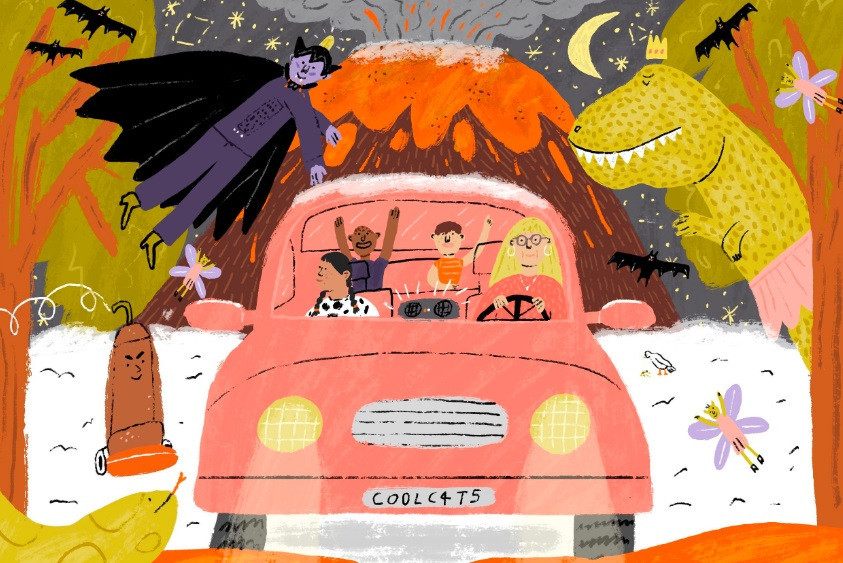 How an SEL Podcast Saved My Carpool Год публикации: 2023 Автор: Laura Wheatman Hill Организация-автор: Medicinal Media | Committee for Children The Imagine Neighborhood Podcasthttps://www.imagineneighborhood.org/ The Imagine Neighborhood™ podcast helps children and grown-ups grow their social-emotional skills, and talk about the things that matter with the people that matter most.Has your child ever been so angry that they wanted to smoosh something? Have they ever been scared of the babysitter? Have they ever had a hard time calming down? The Imagine Neighborhood is the show for your family. Each episode tells a story that’s amazing, fantastical, and maybe a little bananas, while it tackles the big feelings that come with growing up. And The Imagine Neighborhood gives you and your kids fun activities to do at home, in the car, or anywhere you talk to each other. How an SEL podcast saved my carpool 25 May 2023 (by Laura Wheatman Hill) My kids’ school is 15-20 minutes from our house and there is no bus.I drive my two kids, ages six and nine, and a neighbor, eight, to and from school three days a week and I let them rotate who picks what we listen to every ride. After I had to veto their picks several days in a row because they were testing the limits of what’s appropriate for all parties, even with a “radio edit” version (I’m sorry, but no Eminem for the kindergartner), I found a kid’s podcast that teaches social emotional learning (SEL) called The Imagine Neighborhood.After the first listen, which featured characters like a vampire robot vacuum and a princess dinosaur, and a world containing dangers such as lava, pixies, and an evil hamster, my kindergartner declared, “This is the greatest podcast of all time!” We proceeded to listen to every single episode available over the next few weeks and now play a new episode the minute it drops. Why teach social emotional learning in a podcast?According to Committee for Children, which helps create programs to assist children in developing life skills, including The Imagine Neighborhood, SEL is “the process of developing the self-awareness, self-control, and interpersonal skills that are vital for school, work, and life success.” Research over time shows that kids who have access to SEL interventions have positive developments both academically and socially in the short and long term. However, teaching these skills in a classroom or at home in an academic, abstract way isn’t shown to work to help your child integrate them into their lives. “You need to use stories for social emotional learning because it’s how a child can see another person’s point of view,” says Dr. Cindy Hovington, a neurologist who created Curious Neuron, a community for parents who want to learn more SEL tools, and co- founder of Wondergrade, an app that supports SEL in young children. She says empathy is much easier to convey in a story rather than a lesson because of the back and forth aspect of dialogue and character. “Someone else in the story has a consequence. Through a narrative, the child will understand both sides, how a certain event or action made a character feel and how it made the other person in the story feel,” she says. When it happens to someone else, a child can see it play out without the heightened emotion of being involved, and the empathy piece is easier to identify. The narratives are the magic of The Imagine Neighborhood. They have tapped into the problems of little kids in such a way that addresses many common issues kids face without being too overt, which would cause many nine-year-olds to roll their eyes and beg for Daft Punk. Mia Doces is the vice president of the Committee for Children. Doces says they have designed this balance of story and lesson very carefully. She explains, “Every episode has wild situations, very unique characters, and humor that ranges from slapstick to cultural references to your basic fart joke — all of which keep listeners hooked to the story. But our writers make sure that no matter how crazy things appear on the surface, the story is rooted in universal human experiences and the everyday social-emotional skills we use to navigate our emotions and cope with challenges.” Some episodes that resonated with my carpool, myself included, have been about big worries, boredom, disappointment, and loss. The parents are in on itThe host of the podcast frequently speaks directly to the parents and asks them to tell the child listeners about a time something happened to them like what is happening in the story. My carpool of sassy, smart kids usually avoids listening to what I have to say, but they actually lean in when Scotty asks me to contribute. Parental participation is also an intentional part of the design. Even if schools are teaching SEL skills, Doces says, “school-based SEL works best when kids are also learning these life skills at home with their families.” According to Hovington, “There is a misconception that SEL learning happens on the playground. SEL skill-building happens with the parent. Practice happens on the playground.” She says the best opportunities to learn new SEL skills are not in times of crisis or when problem solving, but on calm car rides home from school or before bed — the exact times we listen to The Imagine Neighborhood. In the future, Hovington says, “When a child comes back from school with a problem, that’s an opportunity for a parent to recreate or recall the story.” This resonates with audiences of The Imagine Neighborhood. Doces says, “We get letters from parents who tell us they refer to certain characters or use certain SEL-based catchphrases from the show as shorthand to help their kids draw parallels between something that’s happening to them in real time and a tool that a character learned on the show.”I haven’t sent a letter (yet), but I quote the show frequently. SEL is good for all of usTurns out, The Imagine Neighborhood, and the skills it teaches isn’t only for kids. SEL wasn’t taught in schools when most of us were kids and Doces says, “when adults listen along with the children, they’re also picking up the SEL techniques we’re sharing, and learning positive phrasing and other tools to empower them to have these family discussions in impactful ways.” Since the kids do have SEL in school, these stories provide a good segue for the students to become the teacher, and to tell us how they talk about their feelings. Parents can use the shared SEL language from curriculums and narratives like The Imagine Neighborhood as a vehicle to foster better communication in the family. Doces says parents don’t have to be masters of SEL, but “when they help children name and process their feelings, and acknowledge and support children’s positive behaviors, they’re teaching their family SEL and building a stronger, kinder future for their families.” We know positive reinforcement is successful and the message of The Imagine Neighborhood is one we can all agree on: be kind to those around you.We were driving a third-grader home from a playdate one day and The Imagine Neighborhood was playing. I heard the friend from the backseat ask, “What is this? Because I like it!” Got another one!