
Ресурсы
Изучайте широкий спектр ценных ресурсов ВГГ, чтобы углубить своё понимание и повысить эффективность исследований, просветительской деятельности, преподавания и обучения.
Найдено: 3,158
 منهاج التربية المدنية الفلسطيني ودوره في التنشئة الديمقراطية لدى طلاب المرحلة الأساسية في فلسطين : دراسة حالة محافظة نابلس 1994-2006 Год публикации: 2007 Автор: حسين، نذير أحمد مصطفى Организация-автор: An-Najah National University هدفت هذه الدراسة إلى استقصاء دور التربية المدنية الفلسطينية في التنشئة الديمقراطية في صفوف مرحلة التعليم الأساسي التي يدرس فيها منهاج التربية المدنية الفلسطيني والكشف عن الإشكاليات التي يعاني منها منهاج التربية المدنية كمقرر مستقل في المدارس الفلسطينية. تتمثل الإشكالية الأولى في عدم وضوح الإطار المفاهيمي والفلسفي الذي استند إليه المنهاج، ينجم عن ذلك وجود حالة من عدم الانسجام بين المدرس والمادة الدراسية والذي ينعكس أثره على الطالب. أما الإشكالية الثانية فقد فرضها المناخ الاجتماعي الفلسطيني السائد في المجتمع الفلسطيني المتأثر بتداعيات الاحتلال الإسرائيلي، والوضع السياسي الفلسطيني. إن أهم ما خلصت إليه الدراسة أن أهم ما يجب أن يراعيه منهاج التربية المدنية الفلسطيني في مجال التنشئة الديمقراطية، هو أن الديمقراطية ليست أنموذجا جاهزا يمكن تطبيقه بمفهومه الغربي في المجتمع الفلسطيني. لذلك فإن التنشئة الديمقراطية الفلسطينية يجب أن تراعي أن النموذج الديمقراطي المستهدف تطبيقه يجب أن يناسب في نظرياته وتطبيقاته قيم المجتمع الفلسطيني وعقيدته وتقاليده وتراثه وظروفه الخاصة. Palestinian Civic Education Curriculum and its Role in Democratic Upbringing of Basic Stage Students in Palestine: Case Study, Nablus Governorate 1994-2006 Год публикации: 2007 Автор: حسين، نذير أحمد مصطفى Организация-автор: An-Najah National University This study aims to investigate the role of Civic Education in the democratic upbringing of students in the basic education classes, in Palestine. Civic Education can play a major role if its topics are in line with the relevant ongoing comprehensive development plans of which political developments occupies the front seat. Civic Education is seen as a Palestinian societal necessity towards democratic transition in the unique Palestinian situation...and within the framewoork of an effective educational system that is comprehensive, systematic, and modern, where it takes into consideration the structure and nature of the Palestinian society and its Arab-Islamic roots in the aspired state of Palestine. Since its launch as an independent course in Palestinian schools, Civic Education has been suffering from two obstacles vague philosophical and conceptual framework (which leads to lack of harmony between the educator and the teaching material thus reflecting itself on the students),and the dominant social climate (which is affected by the Israeli occupation and the political situation in Palestine). those are obstacle to the democratic upbringing which might otherwise satisfy the needs of the nation. Democracy in civic education here is offered from the standpoint that it is a quest to catch up with the contemporary needs. The democratic concepts in the curriculum are parallel to those in the West, without identifying the Arab-Islamic thought in the Palestinian society. this is expected to generate conflict due to the differences between two totally different societies (religion, culture, civilization, history, ideology, regime, and others). This study concludes that Palestinian civic education should take into consideration the fact that democracy is not a ready-made model that can be applied blindly in Palestine. In other words, democratic upbringing in Palestine should adopt only what rhymes with Palestinian values, laws, history and the peculiar circumstances.
 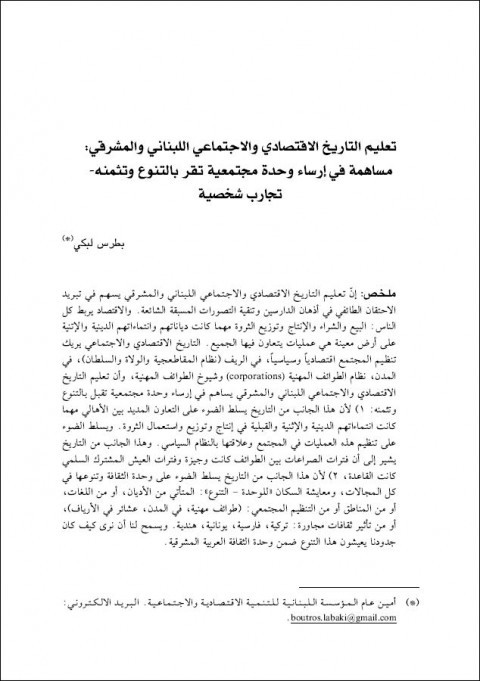 تعليم التاريخ الاقتصادي والاجتماعي اللبناني والمشرقي : مساهمة في إرساء وحدة مجتمعية تقر بالتنوع وتثمنه: تجارب شخصية Год публикации: 2012 Автор: لبكي، بطرس Организация-автор: Lebanese Association for Educational Studies (LAES) إنّ تعليم التاريخ الاقتصادي والاجتماعي اللبناني والمشرقي يسهم في تبريد الاحتقان الطائفي في أذهان الدارسين وتنقية التصورات المسبقة الشائعة. والاقتصاد يربط كل الناس: البيع والشراء والإنتاج وتوزيع الثروة مهما كانت دياناتهم وانتماءاتهم الدينية والإتنية على ارض معينة هي عمليات يتعاون فيها الجميع. التاريخ الاقتصادي والاجتماعي: يريك تنظيم المجتمع اقتصادياً وسياسياً، في الريف (نظام المقاطعجية والولاة والسلطان)، في المدن: نظام الطوائف المهنية (corporations) وشيوخ الطوائف المهنية وأن تعليم التاريخ الاقتصادي والاجتماعي اللبناني والمشرقي يساهم في إرساء وحدة مجتمعية تقبل بالتنوع وتثمنه: 1) لأن هذا الجانب من التاريخ يسلط الضوء على التعاون المديد بين الأهالي مهما كانت انتماءاتهم الدينية والإثنية والقبلية في إنتاج وتوزيع واستعمال الثروة. ويسلط الضوء على تنظيم هذه العمليات في المجتمع وعلاقتها بالنظام السياسي. وهذا الجانب من التاريخ يشير إلى أن فترات الصراعات بين الطوائف كانت وجيزة وفترات العيش المشترك السلمي كانت القاعدة، 2) لأن هذا الجانب من التاريخ يسلط الضوء على وحدة الثقافة وتنوعها في كل المجالات، ومعايشة السكان "للوحدة - التنوع": المتأتي من الأديان، أو من اللغات، أو من المناطق أو من التنظيم المجتمعي: (طوائف مهنية، في المدن، عشائر في الأرياف)، أو من تأثير ثقافات مجاورة: تركية، فارسية، يونانية، هندية. ويسمح لنا أن نرى كيف كان جدودنا يعيشون هذا التنوع ضمن وحدة الثقافة العربية المشرقية. Teaching Lebanese-Oriental Economic and Social History: Promoting a Societal Unity Which Acknowledges and Values Diversity Год публикации: 2012 Автор: لبكي، بطرس Организация-автор: Lebanese Association for Educational Studies (LAES) Teaching the economic and social history of the Lebanon and the Orient contributes towards the cooling down of sectarian tensions in the minds of learners and clears up common prejudices. Economic transactions connect everyone within a given area: Buying and selling, production and distribution of resources are operations in which everyone cooperates, regardless what their religious, confessional or ethnic affiliation might be. Economic and social history informs about the economic and political organization of society: in rural areas taxed farmers, governors and the Sultan; in the cities guilds (corporations) and the sheikhs of the guilds/corporations. Indeed, teaching the economic and social history of Lebanon and the Orient contributes to a societal unity which acknowledges and values diversity because this aspect of history highlights the longstanding cooperation among the people in the production, distribution or use of resources, no matter what their religious, ethnic or tribal affiliation might be. It also highlights the organization of these activities in society and their relation to the political system. This aspect of history also points to the fact that the intervals of conflict between the sectarian communities were short, whereas the intervals of peacefully living together were the rule. Besides, this aspect of history highlights the cultural unity and its diversity in all domains and the fact that all are shaped in their lives by this same experience of unity in diversity which comes from: religions, languages, regions, societal organization (guilds/corporations in the cities, clans in rural areas) or adjacent cultures: Turkish, Persian, Greek and Indian. It allows us to see how our ancestors lived this diversity within the unity of the Arab-Oriental culture.
  صورة الآخر في الخطاب التربوي المغربي بين طموح الأهداف ومحدودية التأثير Год публикации: 2014 Автор: حميد، عبد الإله Организация-автор: International Group for Consulting and Training (IGCT) تعالج الدراسة صورة الآخر في الكتب والبرامج المدرسية المغربية الخاصة بالمرحلة الثانوية الإعدادية، وتمثلات عينة من أساتذة هذه المرحلة التعليمية. وتحاول هذه الدراسة تشخيص طبيعة على تقنية تحليل صورة الآخر في برامج كتب التاريخ اعتمادا على المضمون، والذي يقوم على استخراج الإشارات والعبارات التي تخص الموضوع، وتبويبها في فئات موضوعاتية بقصد رسم صورة عامة للآخر. وقد تم الاعتماد أيضا على الإستبانة لرصد تمثلات عينة من مدرسي مادة التاريخ حول الآخر. وبناء على نتائج التحليل أشارت أهم التوصيات المتوصل إليها إلى ضرورة تصحيح الاختلالات والمشاكل التي تميز مقاربة البرامج الحالية لموضوع تمثل الآخر مع الدعوة إلى بناء مقاربة جديدة تقوم على مبادئ التربية على التنوع الثقافي، باعتبارها إطارا ناظما للقيم والإجراءات المعتمدة للتربية في مجتمع متعدد الثقافات كالمجتمع المغربي. The Image of the Other in Moroccan Educational Programs between Ambitious Objectives and Limited Efficiency Год публикации: 2014 Автор: حميد، عبد الإله Организация-автор: International Group for Consulting and Training (IGCT) This study aims to shed light on the image of ‘the Other’ in Moroccan schools’ curricula, at the secondary and preparatory levels, including teachers. The study addresses the image of the Other in of history books and school programs. It attempts to diagnose the nature of the image of the Other in history books using content analysis techniques that is based on the extraction of relevant signs and phrases and classifying them into thematic categories in order to draw a general picture of the Other.The study used a questionnaire to monitor a sample of among history teachers regarding their representations of the Other. The study tried to provide a set of recommendations and practical suggestions that aim to correct distortions and problems that characterize the current programs. The study advocates a new approach to teaching history that is based on the principles of education on cultural diversity and “tolerance” which should be the regulating framework for values and measures of the educational system in a multicultural society such as the Moroccan society.
 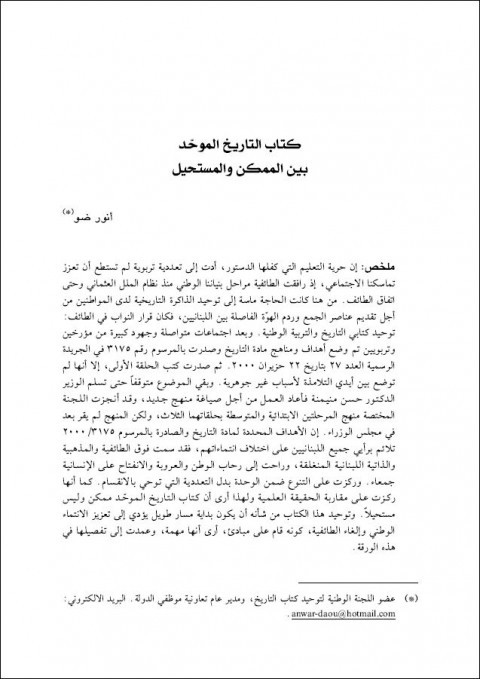 كتاب التاريخ الموحد بين الممكن والمستحيل Год публикации: 2012 Автор: ضو، أنور Организация-автор: Lebanese Association for Educational Studies (LAES) إن حرية التعليم التي كفلها الدستور، أدت إلى تعددية تربوية لم تستطع أن تعزز تماسكنا الاجتماعي، إذ قد رافقت الطائفية مراحل بنياننا الوطني منذ نظام الملل العثماني وحتى اتفاق الطائف. من هنا كانت الحاجة ماسة الى توحيد الذاكرة التاريخية لدى المواطنين من اجل تقديم عناصر الجمع وردم الهوّة الفاصلة بين اللبنانيين، فكان قرار النواب في الطائف: توحيد كتابي التاريخ والتربية الوطنية. بعد اجتماعات متواصلة وجهود كبيرة من مؤرخين وتربويين تم وضع أهداف ومناهج مادة التاريخ وصدرت بالمرسوم رقم 3175 في الجريدة الرسمية العدد 27 بتاريخ 22 حزيران 2000. ثم صدرت كتب الحلقة الأولى، إلا أنها لم توضع بين أيدي التلامذة لأسباب غير جوهرية. وبقي الموضوع متوقفاً حتى تسلم الوزير الدكتور حسن منيمنة فأعاد العمل من اجل صياغة منهج جديد، وقد أنجزت اللجنة المختصة منهج المرحلتين الابتدائية والمتوسطة بحلقاتهما الثلاث، ولكن المنهج لم يقر بعد في مجلس الوزراء. ان الأهداف المحددة لمادة التاريخ والصادرة بالمرسوم 3175/2000 تلائم برأيي جميع اللبنانيين على اختلاف انتماءاتهم، فقد سمت فوق الطائفية والمذهبية والذاتية اللبنانية المنغلقة، وراحت إلى رحاب الوطن والعروبة والانفتاح على الإنسانية جمعاء. وركزت على التنوع ضمن الوحدة بدل التعددية التي توحي بالانقسام. كما أنها ركزت على مقاربة الحقيقة العلمية ولهذا أرى ان كتاب التاريخ الموحّد ممكن وليس مستحيلاً. وتوحيد هذا الكتاب من شأنه أن يكون بداية مسار طويل يؤدي إلى تعزيز الانتماء الوطني وإلغاء الطائفية، كونه قام على مبادئ، أرى أنها مهمة، وعمدت إلى تفصيلها في هذه الورقة. The Unified History Textbook: The Possible and the Impossible Год публикации: 2012 Автор: ضو، أنور Организация-автор: Lebanese Association for Educational Studies (LAES) The freedom to educate, guaranteed by the (Lebanese) constitution, has led to an educational pluralism which has not helped in promoting our social cohesion. Indeed, sectarianism has permeated our efforts for nation building ever since the Millet system of the Ottomans and until the Taef Accord. There was thus an urgent necessity to unite the historical memory of the citizenry in order to advance the elements which join together and fill in the chasm separating the Lebanese.The members of parliament meeting in Taef took the decision: Both the textbooks of history and civics must be unified! Following continual meetings and great efforts of historians and educators, the aims and curricula of the history program were set and were published as decree number 3175 in the Official Gazette number 27 dated June 22, 2000. The books for the first cycle were subsequently published, but they were not implemented, though the reasons for that were not substantial. The matter remained stalled until Dr. Hasan Mneimneh became minister of national education and restarted the work on the new curriculum.The committee charged with the task completed the curriculum for the elementary and intermediate levels but this has not yet been adopted by the council of ministers. The aims set for the history school program and published in decree number 3175/2000 are appropriate, in my opinion, for all the Lebanese, whatever their affiliation.They remained above sectarianism and confessionalism and Lebanese chauvinism, and were at home in the wide expanses of the Lebanese and Arab perspectives, as well as open to all humanity. They emphasized diversity in unity rather than pluralism which suggested division.They also emphasized seeking historical accuracy, and that is why I believe that the unified history textbook is possible and not impossible. Unifying this book will be the start of a long process which will lead to strengthening the sense of belonging to one state, and will eliminate sectarianism. This is because it was established on principles which I believe are important, and which I have detailed in this paper.
  دور التربية الاسلامية في مواجهة العصبية في زمن العولمة الاجتماعية Год публикации: 2012 Автор: آل جحراف، عايض بن محمد بن عايض Организация-автор: Umm Al-Qura University منهج الدراسة: المنهج الوصفي. الفصل الأول:الإطار العام للدراسة. الثاني: العصبية مفهومها، أنواعها، أسبابها، آثارها السلبية. الثالث: موقف الإسلام من العصبية - لمحة تاريخية لظهور العصبية عند الأمم، موقف القرآن الكريم من العصبية وموقف السنة النبوية. الرابع: موقف العولمة الاجتماعية من العصبية - ظهور العولمة عمومًا والعولمة الاجتماعية خصوصًا، الدعوة إلى الامتزاج الاجتماعي والعوامل المؤثرة على تفعيل مؤسسات العولمة الاجتماعية وآثارها على الدول النامية والفقيرة. الخامس: المبادئ التربوية الإسلامية التي دعت إلى نبذ العصبية ومنها مبدأ المساواة، مبدأ المصير والجزاء الواحد، مبدأ حقوق الإنسان وكرامته، مبدأ التسامح والإحسان، مبدأ العدل وعدم الظلم، مبدأ الوسطية والاعتدال. السادس: دور التربية الإسلامية في مواجهة العصبية من خلال المؤسسات التربوية - الأسرة، المسجد، المدرسة، وسائل الإعلام. السابع: الاستخلاصات العامة والتوصيات والمقترحات. أهم نتائج الدراسة: 1) وجود آثار خطيرة للعصبية تؤثر على التنشئة الصالحة كالجمود وحب التقليد والحقد، والسخرية، والأنانية، وتصنيف الناس على أساس تكبر واحتقار، وما يترتب عليه من خلافات وحروب وتأثر مما يمزق جسد الأمة الإسلامية. 2) قيام مؤسسات العولمة الاجتماعية على هدف خدمة الإنسان، والدفاع عن حقوقه يتطلب احترام ثقافات وعادات وتقاليد كل بلد أو عرق أو قومية وعدم فرض مبدأ القوة والفكرة الواحدة. 3) نشر ثقافة المساواة وحقوق الإنسان والتسامح والعدل والوسطية والاعتدال والمصير والجزاء الواحد بين أفراد المجتمع منذ الصغر لكي يتربى الفرد ويشرب تلك المبادئ. 4) تلعب القدوة الحسنة والحوار الفعال في الأسرة، والمسجد، والمدرسة ووسائل الإعلام دورا فعالا في توجيه نفوس أبناء المجتمع نحو مجتمع مترابط ينبذ العصبية وآثارها السيئة. 5) تعلم مبادئ الاحترام للآخرين وتعزيزها في نفوس الأبناء يولد شخصية متوازنة تفخر بانتمائها لأمتها، وتحترم الآخرين ولا تتعدى عليهم ويمكن للمدرسة القيام بذلك من خلال التنوع في طرائق التدريس والتركيز على الأنشطة الجماعية الطلابية وتفعيلها داخل وخارج المدرسة. أهم توصيات الدراسة: 1) قيام المؤسسات الدينية، والثقافية، والإعلامية، والتربوية بدورها الفعال في تصحيح فكر المجتمع، واستخدام أساليب جذابة وفعالة لمواجهة العصبية. 2) على الدول الإسلامية القيام بعمل منظمات غير حكومية تتابع وتساعد في حل علاج مشكلات العصبية بين أفراد الأمة الإسلامية. 3) على الجامعات في المجتمعات القيام بإنشاء كراس علمية تعنى بالبحوث التي تدرس ظواهر العصبية، وتساهم في تزويد المنظمات والمؤسسات المتابعة لظاهرة العصبية بالوسائل والطرق والحلول. أهم مقترحات الدراسة: يقترح الباحث عمل دراسات عن العصبية ضد المرأة، وفي داخل المدرسة بين المعلمين أو الطلاب، وكذلك دراسة أساليب التربية النبوية في مواجهة العصبية في المجتمع المدني، ودراسة الاختلاف والتنوع البشري وربطه بالتربية الإسلامية، ودراسة لبعض المقررات المدرسة ومدى تناولها لموضوع العصبية من وجهة نظر الخبراء، وعمل دراسة عن القبلية وآثارها داخل المدرسة الثانوية في منطقة عسير باعتبارها منطقة تتميز بالتنوع القبلي. The Role of Islamic Education in Countering Tribalism in the Age of Social Globalization Год публикации: 2012 Автор: آل جحراف، عايض بن محمد بن عايض Организация-автор: Umm Al-Qura University Methodology: descriptive approach. Chapter I: A general framework. Chapter II: Tribalism: concept, types, causes and negative effects. Chapter III: Islam's position on tribalism - a Historical overview of the emergence of tribalism; Holy Quran’s and Sunnah’s positions; Chapter IV: Social Globalization’s Position on Tribalism - the emergence of Globalization in general and social globalization specifically; social globalization, calls for Social mixing and the factors affecting activation of social globalization institutions; The Effects of Social Globalization on the Developing and Poor Countries.Chapter V: Educational Principles that called for the rejection of tribalism”, including equality, determination and unified penalty, human rights and dignity, tolerance and philanthropy, justice and the rejection of injustice, moderation. Chapter VI: The role of Islamic Education in countering tribalism through educational institutions -the Family, the mosque, the school and the Media. Chapter VII: General conclusions and recommendations and proposals.Following the prime results and recommendations, the researcher proposes the following: “conducting studies on discrimination against women, and within school communities with regard to teachers or students, as well as studying Sunnah educational methods with regard to countering tribalism in the civil society, and studying human differences and diversity in addition to linking it to Islamic education.Also, there should be a study of some school curricula in order to examine the extent to which it addresses the issue of tribalism from the viewpoint of experts, as well as conducting a study of tribalism and its effects within the high school in Asir region as this region is characterized by tribal diversity”.