
Ресурсы
Изучайте широкий спектр ценных ресурсов ВГГ, чтобы углубить своё понимание и повысить эффективность исследований, просветительской деятельности, преподавания и обучения.
Найдено: 3,128
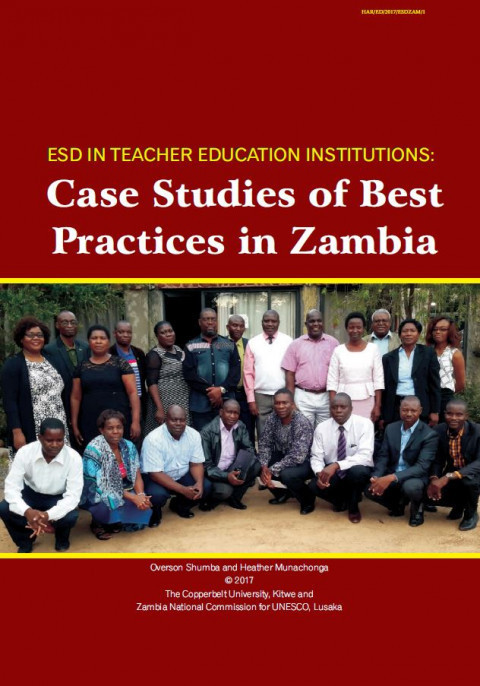 ESD in Teacher Education Institutions: Case Studies of Best Practices in Zambia Год публикации: 2017 Автор: Overson Shumba | Heather Munachonga Организация-автор: Zambia National Commission for UNESCO | Copperbelt University This book is a compilation of case studies on best practices in education for sustainable development in teacher education institutions in Zambia. It contributes to the dissemination of the best practices among the institutions and the wider society. It adds to examples of practices that are relevant to the UNESCO Global Action Programme on Education for Sustainable Development (GAP). The project was coordinated by Professor Overson Shumba at the Copperbelt university in Kitwe and Heather Munachonga, Programme Officer at the Zambia National Commission for UNESCO in Lusaka. The book was made possible with funding and support from UNESCO, Paris, the Ministry of General Education, the Copperbelt University, and the Zambia National Commission for UNESCO. All the institutions were supported by the teacher education institutions and their partners. The book illustrates some of the actions undertaken consistent with pursuit of the education SDG4 target 7. It is expected that this book will lead teacher educators and teachers to come up with further innovations and to integrate them in their professional work. Whole institution actions are encouraged so that best practices as found in this book can permeate and transform all aspects of the institution: the curriculum, teaching, assessment, research, extra-curricular activities, and operations, and must involve everyone, students, workers, lecturers, and the surrounding community.
  مقاربة بنائية-اجتماعية لتعليم/تعلم أرض لشعوب عدة ذات مذاهب مختلفة Год публикации: 2012 Организация-автор: University of Balamand نتيجة لاستطلاع للرأي، أفاد بعض الطلاب أن عملية تعليم/ تعلم مادة التاريخ في المراحل ما قبل الجامعية تعتبر فاشلة لكون التعليم سردياً والتعلم محفوظات للترداد وقت الامتحان. لذلك تعتقد الغالبية منهم أن إعادة النظر بمنهج التاريخ ضرورة وطنية وثقافية. إن تعليم التاريخ يهدف إلى تكوين كفايات أساسية لدى الطالب مثل قيامه بعمليات التحليل والتوليف والإنتاج. كما أنه توجد حاجة إلى تغيير عملية التعليم/التعلم من كونها سردية إلى عملية غائية تتوخى بناء الفكر المدني، الفكر النقدي. فالإشكالية لها ثلاثة أطر: الإطار الجغرافي-الديموغرافي الذي يتعلق بتكوين لبنان، والإطار النفسي-التعليمي الذي يتعلق بمفهوم التاريخ وكيفية بنائه من خلال الإفادة من الفكر النقدي، والإطار الاجتماعي-التربوي الذي يتعلق بالنموذج التعليمي لمادة التاريخ والنشاط الفكري للطالب. وهذا يفترض الربط بين عدة عناصر ثقافية مثل الرجوع إلى المصادر التاريخية المتعددة، ومناقشتها من حيث تسلسل الأحداث وقراءتها ونقدها، ودراسة فكر الشخصيات التي صنعت التاريخ وثقافتها. السؤال الأهم هو: لماذا نعلم مادة التاريخ في المدرسة؟ في أية مرحلة نبدأ وما هي الأهداف في كل مرحلة؟ إن الإجابات على هذا التساؤل قد تكون متعددة، ومنها: تحديد الهوية الوطنية، تعزيز فكر المواطنة، وتنمية الثقافة الوطنية، وتعريف المتعلم بالروابط التي تجمع لبنان بمحيطه، والتعرف على الإرث الحضاري للشعب، وارتباط المتعلم بأرضه، و قبول الآخر. وبعد دراسة التوجهات اللبنانية والعالمية لتعليم/تعلم التاريخ، وضعنا فرضية مفادها أن تكوين الفكر النقدي والموضوعي لدى المتعلم، من خلال دراسته للتاريخ يمكنه من ترسيخ مفهوم قبول الآخر، ذلك أن التعدد الديني والمذهبي في لبنان يعتبر مصدر غنى حضارياً وتفاعلاً اجتماعيا وعامل تماسك وطني على أساس أن التاريخ هو تاريخ أرض لشعوب عدة ذوي مذاهب مختلفة. Teaching/Learning the History of a Land with Diverse Socio-religious Groups: A Socio-constructivist Approach Год публикации: 2012 Организация-автор: University of Balamand A survey of the opinions of some students indicated that they viewed the teaching/learning of history they had undergone in pre-university levels of education as a wasted effort. The teaching consisted of narration, while the learning took the form of memorization of contents to be recited at the time of the examination. The majority considered a revision of the method of teaching history to be a national and cultural necessity. Given that the teaching of history has in view the acquisition by the student of basic skills, such as analysis, synthesis and composition, there is a need to change the teaching/learning process from narration to a targeted development of civic consciousness and critical thinking. The problem is posed within three frameworks: The geographic-demographic framework relating to the composition of the Lebanon; the psychological-educative framework relating to the understanding of history and how it is constructed. through the utilization of critical thinking; the social-educational framework relating to the educational paradigm to be used in the teaching of history and the intellectual activity of the student. This requires the intertwining of several educational elements such as the utilization of the various historical sources, discussing the sequence of events therein and reading them critically, while at the same time studying the thinking of the personalities who influenced the historical developments, and their cultural backgrounds. The main questions here is: Why do we teach history in schools? At which level do we start? What are the targets in each level? The answers to these questions can be many: Defining the national identity; strengthening civic thinking; developing a national culture; making the student aware of what ties the Lebanon to the surrounding region; acquainting ourselves with the cultural heritage of the people; strengthening the attachment with the land; teaching to learn to accept the other. Following an investigation of the Lebanese directives for the teaching of history, as well as the international ones, a hypothesis was proposed: the development of objective critical thinking through the study of history would consolidate the concept of the acceptance of the other. Indeed, the religious and sectarian pluralism of the Lebanon constitutes a source of cultural wealth. It is a factor of national cohesion. The history is a history of a land of many peoples with differing religious persuasions.
  نحو طريقة تعليمية جديدة في تعليم التاريخ Год публикации: 2012 Организация-автор: International College تنطلق هذه المداخلة من أن تعليم مادة التاريخ له أهداف أبعد من بناء ذاكرة جماعية. فالتربية في إطارها الواسع تهدف إلى بناء المواطنية والى تحضير المتعلّم للعيش والاندماج والتفاعل مع الغير والتكيّف في عالم سريع التغيّر وكثير التحديات. كثيرون من طلابنا يقولون إن التاريخ لا معنى له بالنسبة لهم وأن صفوف التاريخ لا تحثّهم على التفكير أو إبداء الرأي ولا تعطيهم الفرصة لتطوير الذات. ما تطرحه هذه الدراسة هو طريقة تعليمية جديدة ناشطة تساهم في جعل تدريس التاريخ أكثر جاذبية وقبولاً من قبل المتعلّمين، كما تعزّز دور "صف التاريخ" لتجعله شريكاً في بناء المهارات وتحفيز القدرات الأساسية عند المتعلّمين. وكلّ ذلك يصب في تأهيل مواطن قادر على التفكير النقدي والمبادرة والتحلي بالمسؤولية والتعاون والعمل بايجابية ضمن مجتمعه والتعلّم مدى الحياة. انطلاقا من تجربة ميدانية، جاءت هذه المداخلة لعرض طريقة جديدة متكاملة تجعل من تعليم التاريخ مدخلاً إلى بناء المواطنية بما تشترطه من مهارات وقدرات علينا أن ننمّيها عند المتعلّم حتى يصبح مواطناً قادراً على التفاعل والاندماج في عالم سريع التطوّر وكثير التحديات. تعرض المداخلة باختصار لثلاث نظريات أخذت حيزاً مهمّا من البحث التربوي وكان لها الأثر الكبير في التغيرات التي طالت العملية التعليمية–التعلمية في العقدين الأخيرين: التعلّم القائم على الدماغ، التعلّم البنائي، والتعلّم القائم على المشكلة. نركّز على هذه النظريات لأنها تشكل الأساس لطريقة التعليم التي نقترحها والتي بنيت أسسها انطلاقاً من هذه النظريات الثلاث. إن الطريقة التدريسية المقترحة في هذه الدراسة هي واحدة في سلّة واسعة من الطرائق التدريسية التي يمكن أن نتبعها في تدريسنا لمادة التاريخ ومن خلال هذه المداخلة نحاول أن نظهر جدواها وانعكاساتها على تعليم التاريخ عامّة. فلا بدّ لنا اليوم ونحن نخطط لمناهج جديدة أن نضع القرن الحادي والعشرين أمام أعيننا وننطلق منه لتعليم الماضي وليس العكس. Towards a New Methodology for Teaching History Год публикации: 2012 Организация-автор: International College This paper rests on the idea that the teaching of history has goals beyond that of building a collective memory and that education, in its broader context, aims at building citizenship and preparing the learner to live, integrate within a community, interact with others and adapt to a challenging to a rapidly changing world. Many of our students say that History makes no sense to them. They complain that, in history classes, they are not urged to think actively or to form opinions and that they are not given the chance to self-development. This paper proposes a new active methodology that renders the teaching of History more attractive to students and better received by them. It enhances the role of the “History class” as a partner in building learners’ skills and stimulating fundamental dispositions. The goal is to nurture a responsible citizen capable of critical thinking, taking initiatives, collaboration, working positively within one’s community, and is a life-long learner. Based on hands-on activities, this paper suggests a comprehensive model of instruction that transforms the History classroom into a gateway for building citizenship by equipping the learner with the necessary skills and dispositions. This methodology is based on three theories that had a great impact on the teaching – learning process in the last two decades: Brain-based learning, constructivism, and problem-based learning. Hence, these theories are briefly presented. Seen as one of many possible teaching methodologies in a History classroom, this model is presented and its impact on the teaching of History is highlighted. As we plan for a new History curriculum in Lebanon, it is crucial that we look ahead to the 21st century instead of looking back.
  أثر برنامج تدريبي في تنمية مبادئ المواطنة العالمية لدى معلمي التاريخ في الأردن Год публикации: 2015 Автор: Zaid Suleiman Организация-автор: University of Jordan هدفت الدارسة إلى بناء برنامج تدريبيّ لمعلمي التاريخ في ضوء مبادئ المواطنة العالميّة واختبار أثره في مستوى معرفتهم لتلك المبادئ في الأردن. تكونت عينة الد ا رسة من ( 26 ) معلمًا ومعلمة، تم اختيارهم بالطريقة العشوائية من معلمي التاريخ في المرحلة الأساسيّة العليا في مديرية التربية والتعليم لمحافظة مأدبا. ولتحقيق أهداف الدارسة تم بناء برنامج تدريبيّ في ضوء مبادئ المواطنة العالميّة، هي: السلام العالميّ، والديمقراطيّة، وحقوق الإنسان، الإنسان والبيئة، التفكير العلميّ، التكنولوجيا، الثقافات المتعددة. وتم اعداد اختبار معرفيّ لمبادئ المواطنة العالميّة. وبعد اجراء التحليلات الاحصائية المناسبة أظهرت نتائج الدرارسة أن مستوى المعرفة القبْلية عند معلمي التاريخ في المرحلة الأساسيّة العليا لمبادئ المواطنة العالميّة كان أقل من المستوى المقبول تربويًّا ( % 80)، ووجود فروق ذات دلالة إحصائيّة عند مستوى الدلالة ( α= 0.01 ) بين مستوى المعرفة البَعدية عند معلمي التاريخ في المرحلة الأساسيّة العليا لمبادئ المواطنة العالميّة والمستوى المقبول تربويًّا (80 %)، ولصالح البرنامج التدريبيّ في كلّ مجال من مبادئ المواطنة العالمية وللمجالات مجتمعة. وأوصت الدراسة بتضمين أبعاد مفاهيم المواطنة العالميّة ومبادئها في البرامج التدريبيّة للمعلمين لزيادة وعيهم بالقضايا العالميّة. The Effect of a Training Program on Developing the Global Citizenship Principles of the History Teachers in Jordan Год публикации: 2015 Автор: Zaid Suleiman Организация-автор: University of Jordan This study aimed at building a training program for the history teachers in the light of the global citizenship principles and at testing its effect on their knowledge level of those principles, in Jordan. Study sample consisted of (26) male and female teachers randomly selected from the history teachers for the higher of Basic Education, in the education Directorate of the Ma'daba Governorate.To achieve the study goals, a training program was developed in the light of the global citizenship principles, which are: global peace, democracy, human rights, humans and the environment, scientific thinking, technology, and multicultures. and a cognitive test of the global citizenship's principles was prepared. After performing the relevant statistical analysis, the results revealed that the pre-knowledge level of the history among those teachers of the global citizenship principles was lower than the educationally accepted level (80%), and the presence of differences with statistical significance (α=0.01) between the post-knowledge level among the history teachers at the higher stage of basic education about the global citizenship principles and the educationalyl accepted level (80%), in favor of the training program in each domain of the global citizenship's principles and the domains collectively. The study recommended the inclusion of the global citizenship principles and concepts in the teachers training programs in order to increase their awareness in the global issues.
 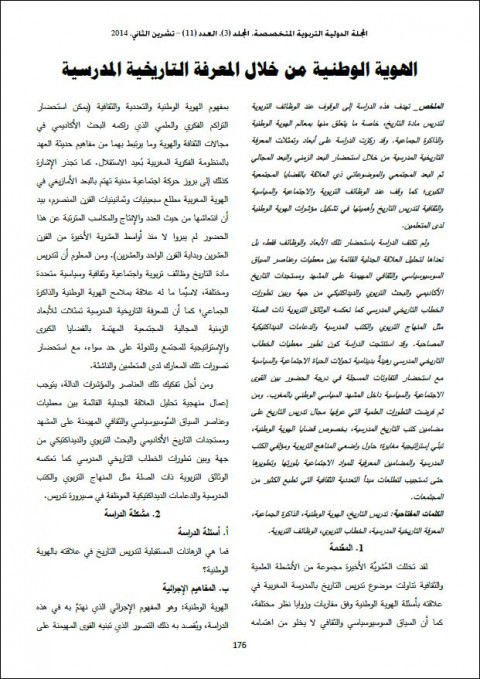 الهوية الوطنية من خلال المعرفة التاريخية المدرسية Год публикации: 2014 Автор: وريف، علي Организация-автор: International Group for Consulting and Training (IGCT) تهدف هذه الدراسة إلى الوقوف عند الوظائف التربوية لتدريس مادة التاريخ، خاصة ما يتعلق منها بمعالم الهوية الوطنية والذاكرة الجماعية. وقد ركزت الدراسة على أبعاد وتمثلات المعرفة التاريخية المدرسية من خلال استحضار البعد الزمني والبعد المجالي ثم البعد المجتمعي والموضوعاتي ذي العلاقة بالقضايا المجتمعية الكبرى؛ كما وقفت عند الوظائف التربوية والاجتماعية والسياسية والثقافية لتدريس التاريخ وأهميتها في تشكيل مؤشرات الهوية الوطنية لدى المتعلمين. لم تكتف الدراسة باستحضار تلك الأبعاد والوظائف فقط، بل تعداها لتحليل العلاقة الجدلية القائمة بين معطيات وعناصر السياق السوسيوسياسي والثقافي المهيمنة على المشهد ومستجدات التاريخ الأكاديمي والبحث التربوي والديداكتيكي من جهة وبين تطورات الخطاب التاريخي المدرسي كما تعكسه الوثائق التربوية ذات الصلة مثل المنهاج التربوي والكتب المدرسية والدعامات الديداكتيكية المصاحبة. وقد استنتجت الدراسة كون تطور معطيات الخطاب التاريخي المدرسي رهينةٌ بدينامية تحوالت الحياة االجتماعية والسياسية مع استحضار التفاوتات المسجلة في درجة الحضور بين القوى الاجتماعية والسياسية داخل المشهد السياسي الوطني بالمغرب. ومن ثم فرضت التطورات العلمية التي عرفها مجال تدريس التاريخ على مضامين كتب التاريخ المدرسية، بخصوص قضايا الهوية الوطنية، أي إستراتيجية مغايرة؛ حاول واضعو المناهج التربوية ومؤلفو الكتب المدرسية والمضامين المعرفية للمواد الاجتماعية بلورتها وتطويرها حتى تستجيب لتطلعات مبدأ التعددية الثقافية التي تطبع الكثير من المجتمعات. National Identity through Historical Knowledge of School Год публикации: 2014 Автор: وريف، علي Организация-автор: International Group for Consulting and Training (IGCT) The aim of this article is to shed light on educational functions of teaching history, especially with regard to the features of national identity and collective memory. The article focuses on the dimensions and representations of historical knowledge related to history presented in school. It makes use of time and space dimensions. It continues to cover dimensions of community and issues related to its main questions. It also tackles the educational, social, poltitical and cultural functions of teaching history and its importance in constructing learners indicators of national identity. The article tries also to analyse the dialectical relationship between two main aspects: the first one is the elements of sociopolitical and cultural context that dominate the scene, and the developments in academic history and educational and didactic research. The second one is the developments in the speech of school history declared in the educational documents, such as educational curriculum, textbooks and didactic supports. The study concluded that the school's historic speech data hostage dynamic transformations of social and political view with evoke disparities recorded in the degree of attendance between the social and political forces within the national political scene in Morocco. The scientific developments that the teaching of history field has known impose on the contents of history textbook, specifically the national identity issues, to adopt a different strategy; the curriculum makers, the textbook and cognitive contents writers of social materials have tried to elaborate and develop it to respond to the aspirations of the principle of cultural pluralism, which is printed a lot of communities.
 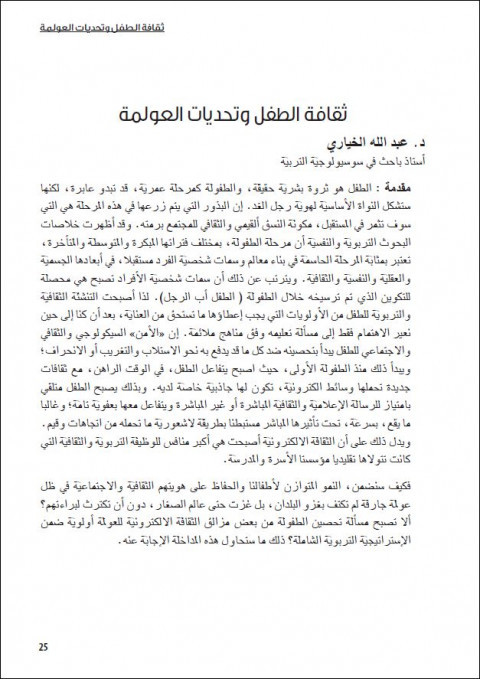 ثقافة الطفل وتحديات العولمة Год публикации: 2013 Автор: الخياري، عبدالله Организация-автор: Mohammed V University تناولت هذه المقالة مرحلة الطفولة كمرحلة عمرية تشكل النواة الأساسية لهوية رجل الغد، مع التركيز على أهمية ضمان النمو المتوازن للأطفال والحفاظ على هويتهم الثقافية والاجتماعية في ظل العولمة والتطور التكنولوجي. وانطلاقا من أن وسائط ثقافة العولمة كتكنولوجيا الإعلام والاتصال تلعب دورا كبيرا في بناء ثقافة الطفل في أبعادها الحسية الحركية والمهاراتية والقيمية، فقد بيّنت المقالة ضرورة القيام بتحليل مضمون هذه الثقافة الإعلامية المحمولة عبر التلفزيون والفيديو والألعاب الإلكترونية، أو عبر الإنترنت، وذلك لتبيان مرجعياتها وتحليل آليات اشتغالها. كما تمّ عرض آليات التنميط والتذويب في الثقافة الإعلامية والإلكترونية على مستوى: الإعلام المرئي، والوسائط الإلكترونية الموجّهة للطفل، ومواد التسلية. وقد تمّ التطرق إلى السلبيات الناتجة عن استعمالات غير متوازنة للثقافة الإلكترونية مثل: الأضرار البدنية المحتملة، شحن الأطفال بسلوك عدواني، خلل في النظام القيمي والأخلاقي. وقد خلصت المقالة إلى ضرورة أن تصبح مسألة تحصين الطفولة من بعض مزالق الثقافة الإلكترونية للعولمة أولوية ضمن الاستراتيجيات التربوية الشاملة، مع التركيز على دور الأبوين والمتخصصين ومنتجي ثقافة الطفل الوطنية في حماية الطفل من مخاطر العولمة.