
Ресурсы
Изучайте широкий спектр ценных ресурсов ВГГ, чтобы углубить своё понимание и повысить эффективность исследований, просветительской деятельности, преподавания и обучения.
Найдено: 3,158
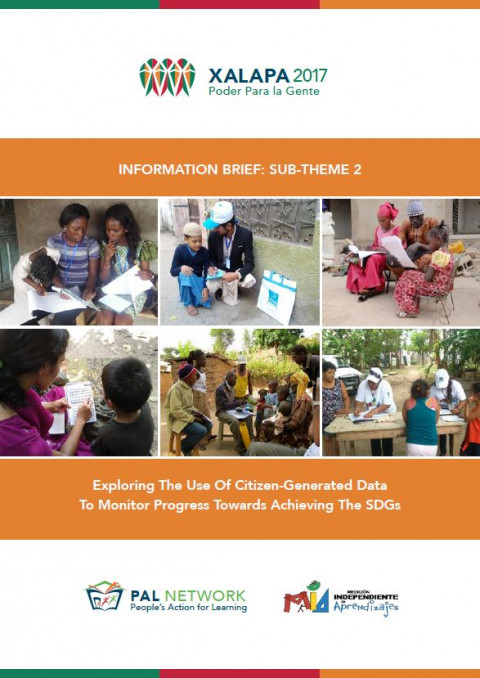 Exploring the Use of Citizen-generated Data to Monitor Progress Towards Achieving the SDGs Год публикации: 2017 Организация-автор: People's Action for Learning Network The 5th Annual PAL Network meeting was held in Xalapa, Mexico from 13th to 16th March 2017. The meeting was jointly hosted by Medición Independiente de Aprendizajes (MIA) and the PAL Network. The meeting provided structured opportunities for deep exploration of this year’ theme: ‘Power to the People’. The theme was critically explored by over 80 participants from more than 19 Global South countries in four different sub‑theme groups. Each sub-theme focused on a different aspect of citizen participation in conducting household-based learning assessments with a focus on value, potential and next steps.
 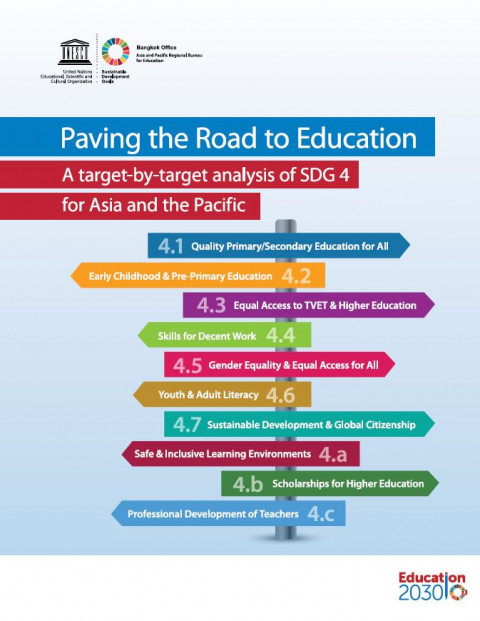 Paving the Road to Education: A Target-by-Target Analysis of SDG 4 for Asia and the Pacific Год публикации: 2018 Организация-автор: UNESCO Bangkok The globally adopted development agenda “Transforming our World: the 2030 Agenda for Sustainable Development” has established ambitious intentions that build on the past Millennium Development Goals but also expand on their achievements.The Sustainable Development Goal 4 on education propels forward the vision of ensuring inclusive and equitable quality education and to promote lifelong learning opportunities for all through a holistic, aspirational and systematic education agenda. Education monitoring is an integral part in this process.This publication delivers a data-rich snapshot of Sustainable Development Goal 4, its targets and their monitoring indicators while analyzing available data through a lens of inequality.Assessing the progress which countries have made in the recent past as well as where countries currently stand, this publication sets a baseline against which Member States from Asia and the Pacic are able to monitor progress in achieving the Goal 4 over time but at latest by 2030.Finally, after discussing emerging opportunities and remaining challenges in the region, this publication seeks to assist Member States in identifying what steps can be taken to ensure that the region will achieve the new education agenda.
 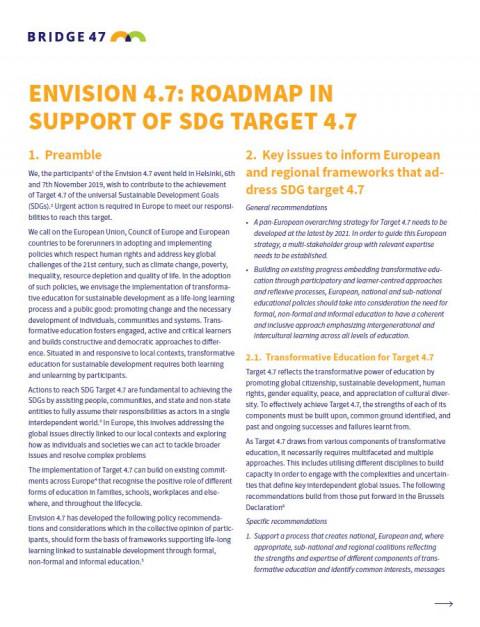 ENVISION 4.7: ROADMAP IN SUPPORT OF SDG TARGET 4.7 Год публикации: 2019 Организация-автор: Bridge 47 In November 2019, 200 policy makers, civil society members and researchers from all over the world got together in Helsinki to make a roadmap for the future implementation of SDG Target 4.7 in Europe. The participants of the Envision 4.7 event held in Helsinki, 6th and 7th November 2019, made this document to contribute to the achievement of Target 4.7 of the universal Sustainable Development Goals (SDGs). This document was shaped and influenced by the expertise and insight of everyone who came to the conference. Bridge 47 is calling on this collective knowledge and community of experts to continue moving these recommendations forward as we all aim to achieve SDG Target 4.7 and use transformative education as a mechanism for achieving all of the Sustainable Development Goals.
 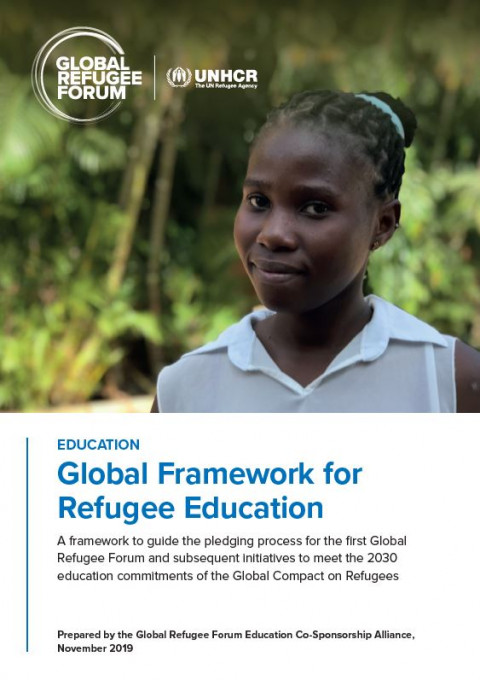 Global Framework for Refugee Education Год публикации: 2019 Организация-автор: Global Refugee Forum Education Co-Sponsorship Alliance | UN. Office of the United Nations High Commissioner for Refugees (UNHCR) This Global Framework for Refugee Education has been produced by the Global Refugee Forum’s Education Co-Sponsorship Alliance, comprising more than 60 partners. It aims to help partners to translate the Global Compact on Refugees and the Refugee Education 2030: A Strategy for Refugee Inclusion into pledges for concrete action to help achieve inclusive and equitable quality education for all by 2030.
  Building Stronger Education Systems: Stories of Change Год публикации: 2019 Организация-автор: The Global Partnership for Education (GPE) A compilation of results stories which show the progress that GPE's developing country partners are making in getting more children, especially girls, in school and learning. The brochure includes stories from Afghanistan, Benin, Burkina Faso, Djibouti, Eritrea, Ethiopia, Guyana, Kenya, Pakistan, Papua New Guinea and Sudan. Construire des systèmes éducatifs plus performants : parcours de réussite Год публикации: 2019 Организация-автор: The Global Partnership for Education (GPE) Cette brochure présente des parcours de réussite attestant des progrès accomplis par les pays en développement partenaires du PME pour que davantage d’enfants, et en particulier de filles, aillent à l’école et bénéficient d’une éducation de qualité.Elle met en évidence les cas des pays tels que l'Afghanistan, le Bénin, le Burkina Faso, Djibouti, l’Érythrée, l’Éthiopie, le Guyana, le Kenya, le Pakistan, la Papouasie-Nouvelle-Guinée et le Soudan.
  SDG 4 Data Digest: How to Produce and Use the Global and Thematic Education Indicators Год публикации: 2019 Организация-автор: UNESCO Institute for Statistics (UIS) This edition of the SDG 4 Data Digest from the UNESCO Institute for Statistics (UIS) aims to help countries develop and report the indicators needed to deliver on the promise of Sustainable Development Goal 4 – a quality education for all by 2030.It stresses the urgency: every child in the generation that should finish secondary education by the deadline should be in a primary classroom right now. Yet if current trends continue, and without a rapid shift from “business as usual”, one in six children aged 6 to 17 will still be out of school in 2030 while just six in ten youth will be completing secondary education. Moreover, there is an urgent need to improve the quality of education on offer. According to UIS estimates, 55% of children and adolescents of primary and lower secondary school age are not achieving minimum proficiency levels in reading and 60% are not acquiring critical skills in mathematics The investment case for education is clear and has been repeated time and time again: education reduces poverty, improves health and nutrition, advances equity and drives national prosperity. But education systems cannot function effectively without a clear picture of progress – or the lack of it – and without knowing who is missing out on education and why.To help ll such gaps, the Digest focuses on new methodologies to help countries build a full and accurate understanding of their own education successes and challenges while generating the internationally comparable data needed for global monitoring. Through these methodological tools, countries can track and accelerate progress on their own education priorities and contribute to the global achievement of SDG4. Compendio de Datos sobre el ODS 4: Cómo producir y utilizar los indicadores globales y temáticos sobre educación Год публикации: 2019 Организация-автор: UNESCO Institute for Statistics (UIS) La presente edición del Compendio de Datos ODS 4 publicada por el Instituto de Estadística de la UNESCO (UIS) pretende a ayudar a los países a desarrollar y reportar los indicadores que se requerirán para cumplir la promesa del Objetivo de Desarrollo Sostenible 4 – una educación de calidad para todos de aquí al 2030. Se pone énfasis en la urgencia: todo niño que forma parte de la generación que debería concluir la educación secundaria dentro del plazo, debería estar en un aula de primaria hoy. Sin embargo, si la actual tendencia continúa, y de no mediar un drástico cambio, uno de cada seis niños entre 6 y 17 años aún estará fuera de la escuela en 2030 y solo seis de cada diez jóvenes habrán completado su educación secundaria. Adicionalmente, existe la urgente necesidad de mejorar la calidad de la educación que hoy se ofrece. De acuerdo con estimaciones del UIS, el 55% de los niños y adolescentes en edad de cursar educación primaria y educación secundaria baja no están adquiriendo niveles mínimos de competencia en lectura y 60% no está adquiriendo competencias fundamentales en matemáticas. El caso de inversión para la educación es claro y se ha repetido una y otra vez: la educación reduce la pobreza, mejora la salud y la nutrición, promueve la equidad y fomenta la prosperidad nacional. Sin embargo, los sistemas educativos no pueden funcionar en forma eficiente si no cuentan con un escenario claro - o con ningún escenario - del avance y sin saber quién no está recibiendo educación y por qué. Para ayudar a cerrar estas brechas, el Compendio se centra en nuevas metodologías que ayudan a los países a desarrollar una clara y completa visión de sus propios éxitos y desafíos en materia de educación, al tiempo que genera los datos internacionalmente comparables necesarios para el monitoreo global. A través de estas herramientas metodológicas, los países podrán rastrear y acelerar el avance de sus propias prioridades de educación y contribuir al logro global del ODS 4. Rapport sur les données de l’ODD 4: Comment produire et utiliser les indicateurs mondiaux et thématiques de l’éducation Год публикации: 2019 Организация-автор: UNESCO Institute for Statistics (UIS) La présente édition du Rapport sur les données de l’ODD 4 de l’Institut de statistique de l’UNESCO (ISU) vise à aider les pays à élaborer et à fournir les indicateurs nécessaires pour respecter la promesse de l’Objectif de développement durable 4 (ODD 4) : assurer l’accès de tous à une éducation de qualité d’ici 2030. Il insiste sur l’urgence que chaque enfant de la génération qui doit achever le cycle secondaire à l’échéance 2030 soit inscrit dans le primaire dès aujourd’hui. Cependant, si la tendance actuelle et le statu quo se poursuivent, un enfant de 6 à 17 ans sur six ne sera toujours pas scolarisé en 2030, et seuls six jeunes sur dix achèveront le cycle secondaire. Par ailleurs, il est urgent d’améliorer la qualité de l’éducation offerte. Selon les estimations de l’ISU, 55 % des enfants et des adolescents en âge de fréquenter le primaire et le premier cycle du secondaire n’atteignent pas les seuils minimaux de compétence en lecture, et 60 % n’acquièrent pas ces seuils en mathématiques. Les arguments en faveur de l’investissement dans l’éducation sont clairs et ont été répétés à maintes reprises : l’éducation réduit la pauvreté, améliore la santé et la nutrition, fait avancer l’équité et stimule la prospérité nationale. Mais les systèmes éducatifs ne peuvent pas fonctionner efficacement s’ils ne disposent pas du tableau des progrès accomplis – ou de leur absence – et sans savoir ce dont manque l’éducation et pourquoi. Pour contribuer à combler ces lacunes, le Rapport se concentre sur les nouvelles méthodologies pour aider les pays à développer une compréhension précise de leurs progrès, de leurs succès et de leurs défis dans le domaine de l’éducation, tout en produisant des données comparables sur le plan international pour le suivi mondial. Ces outils méthodologiques leur donneront les moyens de suivre et d’accélérer les progrès accomplis pour atteindre leurs propres priorités éducatives et contribuer à la réalisation de l’ODD 4.
  Foro regional: Educación más allá de las Fronteras: Solidaridad Regional para la Garantía del Derecho a la Educación de Personas en Contexto de Movilidad; reporte del evento Год публикации: 2019 Организация-автор: UNESCO Santiago Resumen del encuentro en SantiagoEl Foro regional "Educación más allá de las fronteras: Solidaridad regional para la garantía del derecho a la educación de personas en contexto de movilidad" fue planteado como una instancia de diálogo de actores comprometidos en este fenómeno y para establecer un marco de colaboración y definiciones estratégicas regionales para la garantía del derecho a la educación de las personas en contexto de movilidad.En la instancia se analizaron los principales desafíos en materia de respuesta educativa a los flujos de movilidad humana contemporáneos y se intercambiaron experiencias significativas para su abordaje en América Latina y el Caribe. Durante su realización se dio a conocer el documento de la Estrategia regional de respuesta de la UNESCO a la situación de personas en contexto de movilidad en América Latina y el Caribe 2019-2021 y se identificaron modalidades de colaboración.