
Ресурсы
Изучайте широкий спектр ценных ресурсов ВГГ, чтобы углубить своё понимание и повысить эффективность исследований, просветительской деятельности, преподавания и обучения.
Найдено: 3,158
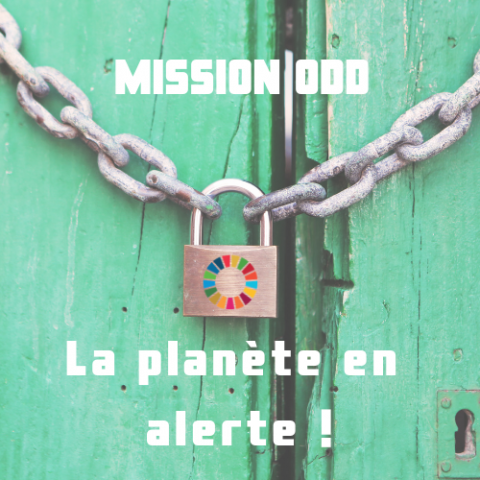 Escape Game "Mission ODD: La planète en alerte!" Год публикации: 2019 Организация-автор: Comprendre pour agir KuriOz est une association d’Éducation à la Citoyenneté et à la Solidarité Internationale (ECSI) telle que définie par le réseau EducaSol dont elle est membre. L’ECSI se fixe pour objectif de donner à tous, des clés pour comprendre les mécanismes d’interdépendance et d’exclusion dans le monde. Elle vise à une transformation sociale vers plus de respect des droits humains et encourage le vivre ensemble et l’épanouissement personnel. Elle est ainsi un vecteur d’inclusion sociale, en promouvant une citoyenneté active et ouverte. Centrée sur ces objectifs, KuriOz a pour but de contribuer à des changements de regard et de comportement afin d’encourager plus d’engagement citoyen et solidaire, à travers des actions d’éducation, de formation et de promotion d’outils pédagogiques sur les thèmes des solidarités locale et internationale, de la paix et du développement durable. Grâce à une pédagogie ludique et participative, nous interrogeons les représentations et les préjugés, éveillons la curiosité et l’esprit critique et proposons des clés de compréhension face aux défis de notre monde.Nous développons nos activités en direction des jeunes en milieu scolaire (lycée, collège, école) ou hors cadre scolaire (service civique), des adultes en formation (éducateurs sociaux, dessinateurs de presse, animateurs associatifs), des détenus en réinsertion, etc. Pour en savoir plus sur nos activités et ses différents formats (ateliers d’une ou deux heures, projet pédagogique suivi, exposition itinérante, etc.) n’hésitez pas à consulter directement le site de KuriOz.
 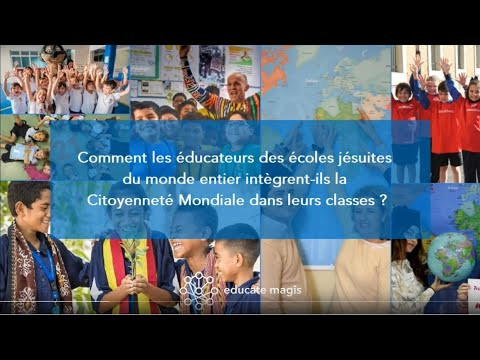 [Vidéo] Citoyenneté mondiale pour les écoles jésuites Год публикации: 2019 Организация-автор: Educate Magis Pourquoi la Citoyenneté Mondiale est-elle importante dans le monde d’aujourd’hui et dans le contexte jésuite? Le Globale a toujours fait partie du fonctionnement de la Compagnie de Jésus. Dès le début, dans les années 1500, Ignace et ses compagnons missionnaires ont parcouru le monde, se sont écrit des lettres pour parler des expériences qu’ils vivaient ainsi les écoles en ont appris davantage sur le monde qui les entourait. Bien que notre monde ait changé, cet aspect de notre mission n’a pas changé. C’est sans doute plus important que jamais, car nous vivons dans un monde de plus en plus interconnecté.(José Alberto Mesa, SJ, Secrétaire pour l’Enseignement Secondaire et Présecondaire, Compagnie de Jésus)
 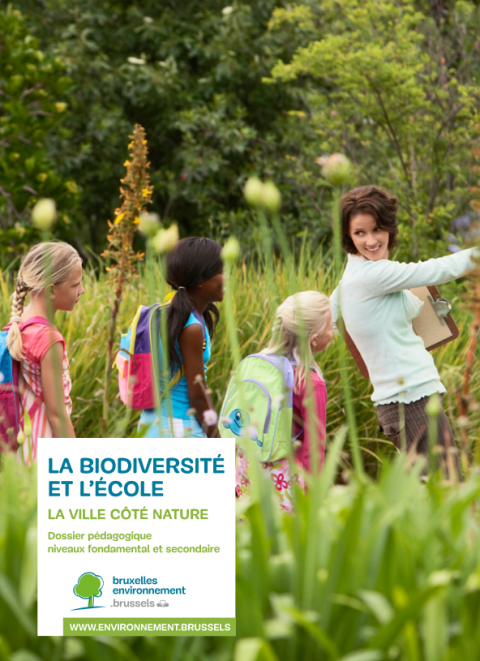 La biodiversité et l'école: la ville côté nature Год публикации: 2019 Организация-автор: Bruxelles Environnement Ce dossier pédagogique donne des infos de qualité sur la thématique et des pistes pour mener des activités concrètes au sein de l'école. Les activités proposées allient pédagogie et actions. Ce dossier vous propose divers outils et activités pédagogiques pour passer à l’action avec votre classe ou école : simple découverte de la biodiversité pour motiver vos élèves ; activités pour mieux comprendre la biodiversité à Bruxelles, son importance et les pressions qui pèsent sur elle, et actions concrètes pour la protéger ou la développer, au départ de l’école ou du quartier.
  SDG 4 on Ensuring Inclusive and Equitable Quality Education: A Toolkit of Legal & Institutional Practices Год публикации: 2019 Организация-автор: Centre for International Sustainable Development Law (CISDL) CISDL, in cooperation with the Dalhousie Schulich School of Law, Balsillie School of International Affairs/University of Waterloo, McGill University Faculty of Law/ Faculté de droit Université de Montréal, University of Victoria Peter A. Allard School of Law, and a consortium of institutional partners, held a multisite symposium on March 14, 2019 convening legal experts across Canada to discuss areas of opportunity to inform Canada’s 2030 agenda. This toolkit is a part of a series, which builds upon legal research conducted in collaboration with UN Environment. The by-projects of this research looking at legal measures for achievement of the SDGs in Canada is intended to inform policy-making moving forward.
  Accountability from a Human Rights Perspective: The Incorporation and Enforcement of the Right to Education in the Domestic Legal Order Год публикации: 2017 Организация-автор: ActionAid International | Right to Education Initiative (UK) The aim of this paper is to reframe States’ political commitment to education under Education 2030 as a legal commitment the vast majority of States have already made under international human rights law. By recasting the content of SDG Four as part of the right to education, the legal obligations owed to that content can be invoked. This renders various elements of SDG Four, ifthe State in question has legally committed to the right to education and incorporated the right to education in their domestic legal orders, amenable to adjudication by competent mechanisms, offering the possibility of legal accountability through legal enforcement.
  Accelerating Progress: An Empowered, Inclusive and Equal Asia and the Pacific Год публикации: 2019 Организация-автор: UN. Economic and Social Commission for Asia and the Pacific (UN. ESCAP) | Asian Development Bank (ADB) | United Nations Development Programme (UNDP) Accelerating progress: An empowered, inclusive and equal Asia and the Pacific responds to the theme of the 6th Asia Pacific Forum on Sustainable Development and the 2019 session of the high-level political forum on sustainable development.The report proposes a framework of four synergistic elements necessary to advance inclusion, empowerment and equality: rights and justice; norms and institutions; resources and capabilities; participation and voice. The need for action on all four fronts is illustrated by a deeper look at three pivotal challenges confronted by the region – (1) climate change and its potential to deepen inequality; (2) the urgent need to boost domestic resource mobilization; and (3) the need to strengthen social accountability and civic engagement. It draws out policy messages on how an empowerment-and-inclusion approach to policymaking can be fostered, including on addressing violence against women and girls. The report provides strong evidence that promoting empowerment and inclusion are necessary approaches to reduce inequality and accelerate progress towards a broad array of Sustainable Development Goals. It is a contribution to the ongoing national, regional and global dialogues on opportunities to empower people, ensure their inclusion and advance equality.The report is produced by the Asia-Pacific SDG partnership, comprising of the United Nations Economic and Social Commission for Asia and the Pacific (ESCAP), the Asian Development Bank, and the United Nations Development Programme.
 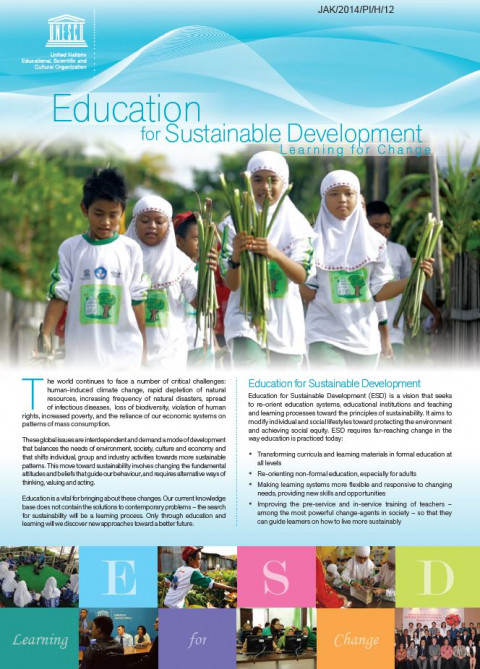 Education for Sustainable Development: Learning for Change Год публикации: 2014 Организация-автор: UNESCO Jakarta The world continues to face a number of critical challenges: human-induced climate change, rapid depletion of natural resources, increasing frequency of natural disasters, spread of infectious diseases, loss of biodiversity, violation of human rights, increased poverty, and the reliance of our economic systems on patterns of mass consumption. These global issues are interdependent and demand a mode of development that balances the needs of environment, society, culture and economy and that shifts individual, group and industry activities towards more sustainable patterns. This move toward sustainability involves changing the fundamental attitudes and beliefs that guide our behaviour, and requires alternative ways of thinking, valuing and acting. Education is a vital for bringing about these changes. Our current knowledge base does not contain the solutions to contemporary problems – the search for sustainability will be a learning process. Only through education and learning will we discover new approaches toward a better future.
 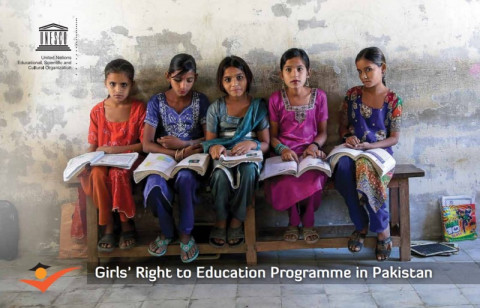 Girls' Right to Education Programme in Pakistan Год публикации: 2018 Организация-автор: UNESCO Islamabad The programme is in progress in 14 very marginalized districts of the country selected in consultation with concerned education counterparts. Basic indicators for education, such as literacy rate, enrolment and retention of girls, and level of learning outcomes in primary grades are quite low in each selected district. Each province and area based project has three integrated components: (a) improving girls’ access through social mobilization and advocacy, (b) improving retention through improvement in school physical and learning environments – activation of parents-teachers committees (PTCs), school management committees (SMCs) and teachers training in multi-grade teaching and activity-based learning and, (c) capacity building of education officials at district, provincial and national level to create an enabling environment for girls’ education. All projects are implemented through local civil society organizations (CSOs) as implementing partners in consultation with national, provincial and area education departments. The programme is making significant progress in transforming the parental and community perception towards girls' education. Over seven thousand out of school girls have been enrolled in the target areas and retention is ensured through the provision of school facilities and improvement in overall learning environment.
 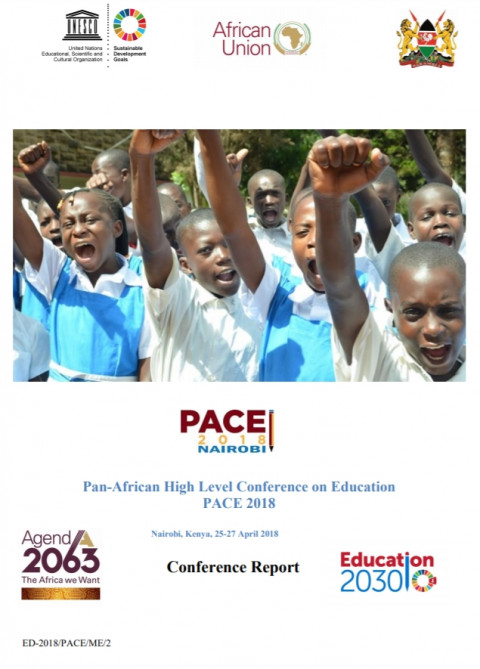 Pan-African High Level Conference on Education, PACE 2018: conference report Год публикации: 2018 Организация-автор: African Union | Government of the Republic of Kenya The Pan-African High-level Conference on Education (PACE 2018) was held in Nairobi, Kenya from 25th to 27th April 2018. PACE 2018 was convened by UNESCO, the Government of Kenya and the African Union, with the collaboration of the Association for the Development of Education in Africa (ADEA) and contributions from the Sustainable Development Goal 4 (SDG4) co-conveners. The initiative to organise the PACE 2018 came in the wake of a number of regional consultations organised in Sub Saharan Africa and the Arab states regions to focus attention on the way forward, following the adoption in 2015 of the United Nations’ Sustainable Development Goal 4 on Education (SDG 4) and of the African Union’s Continental Education Strategy for Africa 2016-2025 (CESA 16-25). Conférence panafricaine de haut niveau sur l'éducation, PACE 2018: rapport de la conférence Год публикации: 2018 Организация-автор: African Union | Government of the Republic of Kenya La Conférence panafricaine de haut niveau sur l’éducation (PACE 2018) s’est déroulée à Nairobi, au Kenya, du 25 au 27 avril 2018. Elle a été convoquée par l’UNESCO, le Gouvernement du Kenya et l’Union africaine, avec la collaboration de l’Association pour le Développement de l’Éducation en Afrique (ADEA) et des contributions des coorganisateurs de l’Objectif de développement durable 4 (ODD 4). L’initiative d’organiser la conférence PACE 2018 s’inscrit à la suite de plusieurs consultations régionales organisées dans les régions d’Afrique subsaharienne et des États arabes pour appeler l’attention sur la voie à suivre après l’adoption en 2015 de l’Objectif de développement durable 4 (ODD 4) sur l’éducation et de la Stratégie continentale de l’éducation pour l’Afrique de l’Union africaine (CESA 2016-2025) (CESA 16-25).