
Ресурсы
Изучайте широкий спектр ценных ресурсов ВГГ, чтобы углубить своё понимание и повысить эффективность исследований, просветительской деятельности, преподавания и обучения.
Найдено: 3,530
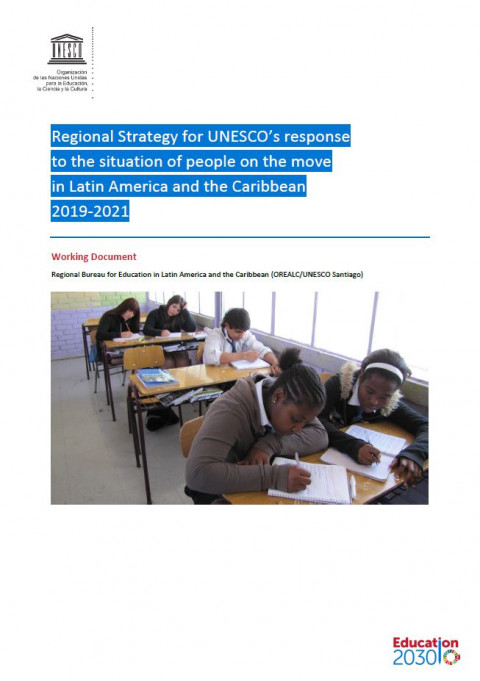 Estrategia regional de respuesta de la UNESCO a la situación de personas en contexto de movilidad en América Latina y el Caribe 2019-2021: documento de trabajo Год публикации: 2019 Организация-автор: UNESCO Santiago En este documento se presentan las tres áreas estratégicas prioritarias, definidas en coherencia con los analizado en el documento Antecedentes para una Estrategia Regional de la UNESCO, así como los componentes e iniciativas de cada una de ellas. Asimismo, se establecen las siguientes dimensiones estratégicas: mecanismos de coordinación e implementación, abogacía y comunicaciones, planificación y financiamiento y, finalmente, una consolidación de recursos, herramientas y publicaciones ya existentes de la UNESCO, resultado del proceso de consulta intersectorial antes mencionado.
 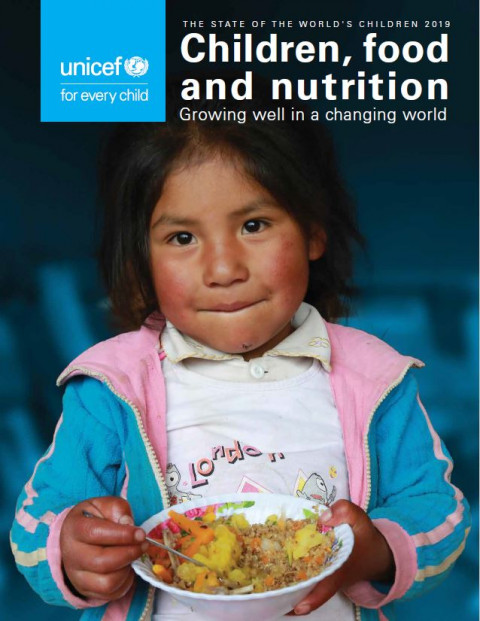 Children, Food and Nutrition: Growing Well in a Changing World Год публикации: 2019 Организация-автор: United Nations Children's Fund (UNICEF) This 2019 edition of The State of the World’s Children (SOWC) examines the issue of children, food and nutrition, providing a fresh perspective on a rapidly evolving challenge. Despite progress in the past two decades, one third of children under age 5 are malnourished – stunted, wasted or overweight – while two thirds are at risk of malnutrition and hidden hunger because of the poor quality of their diets. At the center of this challenge is a broken food system that fails to provide children with the diets they need to grow healthy. This report also provides new data and analyses of malnutrition in the 21st century and outlines recommendations to put children’s rights at the heart of food systems.
 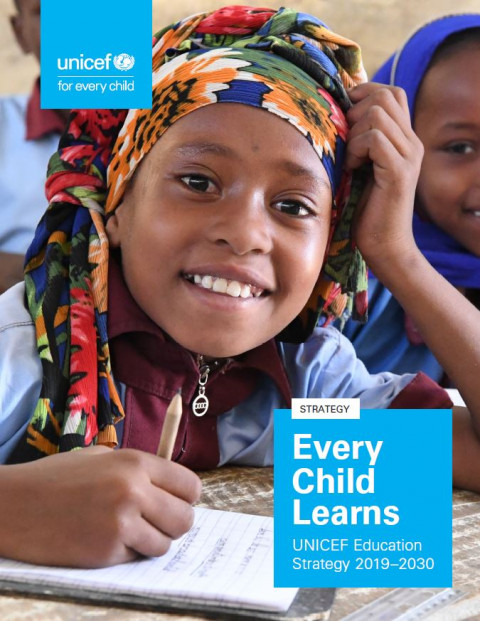 Every Child Learns: UNICEF Education Strategy 2019–2030 Год публикации: 2019 Организация-автор: United Nations Children's Fund (UNICEF) The gap between the levels of learning that education systems are providing and what children, communities and economies need, is growing. The breadth and depth of this learning crisis constitute the greatest global challenge to preparing children and adolescents for life, work and active citizenship. The lesson of the learning crisis is clear: the conventional assembly of education inputs is not improving learning outcomes. This presents a fundamental challenge to the way that governments, development partners and communities are managing and supporting education systems. A new, more radical approach that focusses on enhancing learning outcomes is long overdue and forms the basis for this strategy.The report also outlines the shift towards a greater focus on improving learning outcomes, including supporting the breadth of skills that allow young people to become agile, adaptive learners and citizens, equipped to navigate personal, social, academic, economic and environmental challenges.
 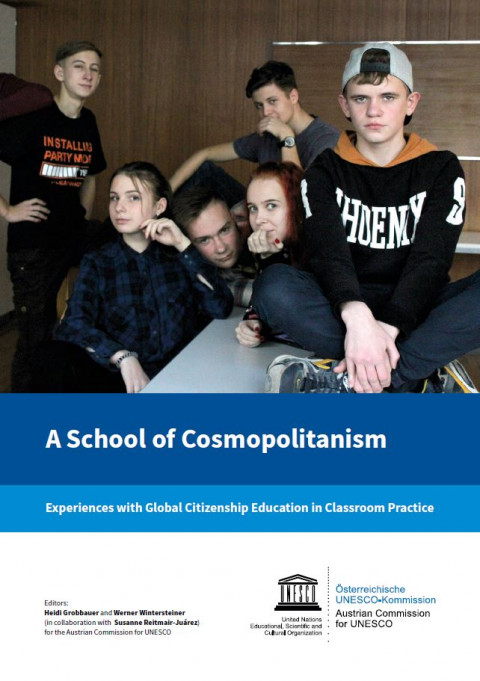 A School of Cosmopolitanism: Experiences with Global Citizenship Education in Classroom Practice Год публикации: 2019 Автор: Heidi Grobbauer | Werner Wintersteiner Организация-автор: Austrian Commission for UNESCO This publication focuses on examples from academic practice: this best practice collection demonstrates how young people can successfully be inspired to “think globally, act locally”. What is crucial is maintaining a view of the wider world; in particular, cooperation efforts with educational institutes outside of Europe (e.g. “élèves pour élèves” in Burkina Faso) provide a critical awareness of global connections. Learning to know/Learning to do/Learning to be/Learning to live together – these four pillars form the pedagogical foundation of the work carried out at more than 90 UNESCO schools throughout the whole of Austria. Since their founding in 1957, UNESCO schools have been considered model schools at which lessons are structured in a project-oriented, participative and even topic-specifc way. The unique ‘spirit’ of UNESCO schools often makes special projects possible. In the programme for the annual meetings of recent years, for example, Global Citizenship Education has been an ongoing topic of focus, accompanied by experts from various specialised institutions and NGOs. The pedagogical preparation of contents in a manner that ensures they are actually absorbed in the classroom presents a major challenge. Different types of schools have different educational goals, and the themes have to be made accessible for different age groups. The pedagogical finesse of each class team or individual teacher lies in finding the most motivating approaches.
  "It is Very Painful to Talk About”: The Impact of Attacks on Education on Women and Girls Год публикации: 2019 Автор: Holly Cartner Организация-автор: Global Coalition to Protect Education from Attack (GCPEA) This report presents the key findings of GCPEA’s multi-country study on the impact of attacks on education on women and girls.10 GCPEA’s research focuses on the types and causes of abuse most typically committed against female students in the context of attacks on education, and the long-term consequences that female students may face as a result of such attacks.11 GCPEA initiated this study to contribute to a better understanding of the implications for girls and women when education is attacked and to inform our advocacy for better strategies to protect girls and women, prevent attacks and abuse, and diminish harmful consequences against them.This report relies on previous GCPEA research, including Education Under Attack 2018 and 2014, and updates, and the organization’s field research in Nigeria and the Democratic Republic of Congo, which focused specifically on the experiences of women and girls when education is attacked. In addition, the report draws from interviews with numerous country and regional experts and an extensive review of secondary data sources, including reports by United Nations (UN) agencies, development and humanitarian non-governmental organizations (NGOs), human rights organizations, government bodies, and think tanks, including numerous contributions from GCPEA’s member organizations.
  Charlevoix Declaration on Quality Education for Girls, Adolescent Girls and Women in Developing Countries Год публикации: 2018 Организация-автор: G7 The Charlevoix Declaration is a commitment from the Leaders of the G7 to work towards inclusive, quality, equitable education for girls, adolescent girls, and women in developing countries and crisis contexts.The Charlevoix Declaration on Quality Education for Girls, Adolescent Girls and Women in Developing Countries represents a joint effort from the Leaders of G7 countries to step up for girls and women in conflict and crisis contexts. Focusing both on dismantling the barriers to education and improving the quality of education, the G7 have committed to promote and improve learning outcomes for both refugees and host communities, while also working to reduce the time children and youth, especially girls, are out of school as a result of conflict and displacement.To support the implementation of the Charlevoix Declaration, Canada also led the mobilization of CDN $3.8+ billion. With contributions from the World Bank, the European Union, Japan, Germany, and the United Kingdom, this initiative represents the single largest investment in education for girls in conflict and crisis settings.
 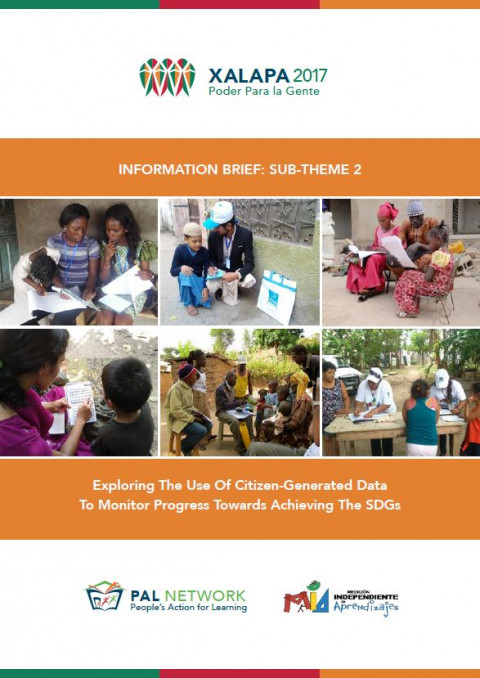 Exploring the Use of Citizen-generated Data to Monitor Progress Towards Achieving the SDGs Год публикации: 2017 Организация-автор: People's Action for Learning Network The 5th Annual PAL Network meeting was held in Xalapa, Mexico from 13th to 16th March 2017. The meeting was jointly hosted by Medición Independiente de Aprendizajes (MIA) and the PAL Network. The meeting provided structured opportunities for deep exploration of this year’ theme: ‘Power to the People’. The theme was critically explored by over 80 participants from more than 19 Global South countries in four different sub‑theme groups. Each sub-theme focused on a different aspect of citizen participation in conducting household-based learning assessments with a focus on value, potential and next steps.
 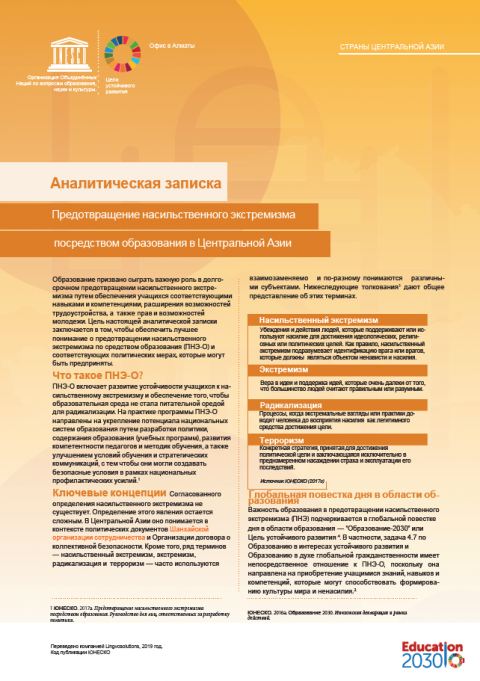 Policy Brief: Prevention of Violent Extremism Through Education in Central Asia Год публикации: 2019 Организация-автор: UNESCO Almaty Education has a powerful role to play in long-term prevention of violent extremism by equipping learners with the right skills and competencies, increasing employment opportunities and empowering youth. This policy brief aims to provide a better understanding of Preventing Violent Extremism through Education (PVE-E) and the relevant policy interventions that could be taken. Аналитическая записка: предотвращение насильственного экстремизма посредством образования в Центральной Азии Год публикации: 2019 Организация-автор: UNESCO Almaty Образование призвано сыграть важную роль в долго-срочном предотвращении насильственного экстре-мизма путем обеспечения учащихся соответствующими навыками и компетенциями, расширения возможностейтрудоустройства, а также прав и возможностеймолодежи. Цель настоящей аналитической записки заключается в том, чтобы обеспечить лучшее понимание о предотвращении насильственного экстремизма по средством образования (ПНЭ-О) и соответствующих политических мерах, которые могут быть предприняты.
 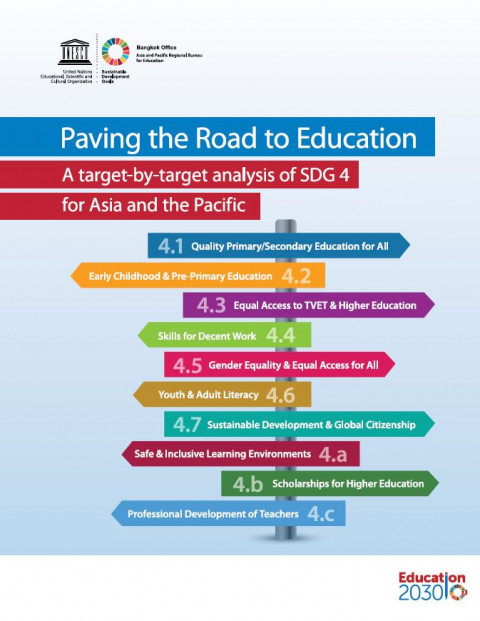 Paving the Road to Education: A Target-by-Target Analysis of SDG 4 for Asia and the Pacific Год публикации: 2018 Организация-автор: UNESCO Bangkok The globally adopted development agenda “Transforming our World: the 2030 Agenda for Sustainable Development” has established ambitious intentions that build on the past Millennium Development Goals but also expand on their achievements.The Sustainable Development Goal 4 on education propels forward the vision of ensuring inclusive and equitable quality education and to promote lifelong learning opportunities for all through a holistic, aspirational and systematic education agenda. Education monitoring is an integral part in this process.This publication delivers a data-rich snapshot of Sustainable Development Goal 4, its targets and their monitoring indicators while analyzing available data through a lens of inequality.Assessing the progress which countries have made in the recent past as well as where countries currently stand, this publication sets a baseline against which Member States from Asia and the Pacic are able to monitor progress in achieving the Goal 4 over time but at latest by 2030.Finally, after discussing emerging opportunities and remaining challenges in the region, this publication seeks to assist Member States in identifying what steps can be taken to ensure that the region will achieve the new education agenda.