
Ресурсы
Изучайте широкий спектр ценных ресурсов ВГГ, чтобы углубить своё понимание и повысить эффективность исследований, просветительской деятельности, преподавания и обучения.
Найдено: 3,530
 ´Holocaust Fatigue': Teaching it today The review "Research & Practice", established early in 2001, features educational research that is directly relevant to the work of classroom teachers. Here, I invited Simone Schweber to examine teaching and learning about the Holocaust in light of alternative approaches, current politics, and popular culture. (By the publisher)
  L'enseignement de la Shoah dans les écoles juives In this article, Katy Hazan studies the teaching of the Holocaust in Jewish schools. First, she portrays the educational systems of these specific schools and second, she establishes all the ethical, philosophical issues this theme entails. In the third part, she takes inventory of alternative ways of teaching the Holocaust, to conclude on the danger of emotional approaches. Teaching the Holocaust at a distance : reflections from the field As technology continues to improve and online learning programs continue to proliferate each year throughout the United States, it is necessary for teachers to establish a sound understanding of proper pedagogical techniques for a digital environment. This phenomenon has ushered in a new era of education, thus bringing forth a myriad of new questions and issues that must be addressed. For instance, how should online instructors properly transfer and teach traditional core subjects in an online milieu? Social studies educators are faced with additional quandaries, such as teaching democratic processes for effective citizenship and the teaching of controversial issues/topics like the Holocaust. Undeniably, controversial topics elicit strong emotions and come with a plethora of concerns that seem only possible to address in a face-to-face classroom. This current exploration draws upon the scholarship and experience of experts in the field of social studies education, distance learning, and Holocaust Studies to provide suggestions as to how teachers should approach controversial topics in a digital learning environment. An example lesson plan is also provided to showcase a successful integration of controversial issues into an online high school social studies classroom. (By the author)
  Seeing the world from today from a different viewpoint: The impact of the lessons from Auschwitz project on schools in Scotland Auschwitz remains the epitome of inhumanity and barbarism. In 2007, the Holocaust Educational Trust organised the first Lessons from Auschwitz (LFA) project for Scottish schools. Its participants were two plane-loads of Scottish pupils and teachers from 31 local authorities – typically two pupils from a school accompanied by a teacher. This research, funded by the Holocaust Educational Trust and the Pears Foundation, involved these participants being invited to complete an online questionnaire with selected follow-up interviews. The aims were to evaluate the LFA project and provide insight into the impact this project had on individuals, schools and communities. This paper will report on: Student evaluation of the LFA project ; The impact of the LFA project on individuals, schools and local communities. Conclusions as to the value of the LFA project in Scotland. (By the author)
 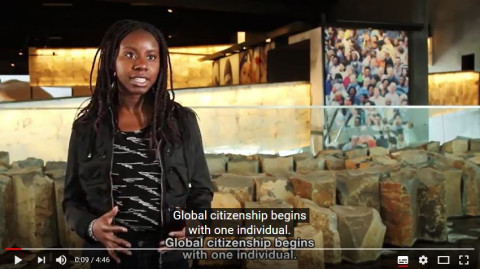 [Vidéo] Citoyenneté mondiale: citoyens du monde au 21e siècle Год публикации: 2016 Организация-автор: Canadian Commission for UNESCO Des participants de la Conférence nationale des écoles UNESCO se sont exprimés sur la définition de la citoyenneté mondiale et sur les qualités d'un citoyen du monde. L’événement avait lieu dans le cadre de la 56e Assemblée générale annuelle de la Commission canadienne pour l’UNESCO et avait pour but de promouvoir le rôle de chef de file de l'UNESCO dans l'Agenda 2030 pour l'éducation. Cette vidéo a été produite au Musée canadien pour les droits de la personne, à Winnipeg, au Manitoba.
 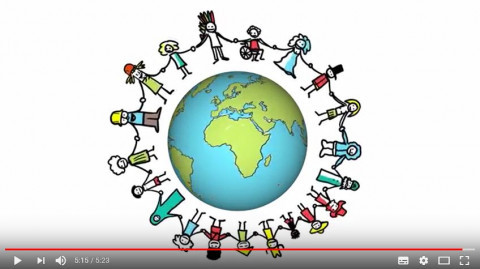 [Vidéo] L'éducation à la citoyenneté mondiale et solidaire Год публикации: 2015 Организация-автор: Îles de Paix Iles de Paix a produit ce petit film pour présenter ce qu’est l’éducation à la citoyenneté mondiale et solidaire aux futurs enseignants. Ceux-ci n’ont toutefois pas le monopole de l’action en cette matière. Chacun – qu’il soit enseignant ou non – peut en prendre connaissance avant d’agir, agir, et encore agir, sans relâche.
  Learning from genocide: a study in the failure of Holocaust education The importance of learning lessons from the Holocaust and from the mass slaughter in Rwanda was recognised in the theme underpinning Britain’s Holocaust Memorial Day in 2004. This article is principally concerned with the lessons learnt from the Holocaust by a culturally diverse group of students aged 14 to 16. They all attended schools in an outer London borough and were interviewed after taking part in a local event held to mark the 2004 commemoration. The article concludes with a discussion of the main findings of the investigation. (By the author)
  [Vidéo] L'éducation à la citoyenneté, pourquoi ? Год публикации: 2016 Организация-автор: Le Centre interdisciplinaire de recherche sur la citoyenneté et les minorités (CIRCEM) Symposium Éducation et Démocratie « Former les citoyens de demain » Educators Resources from Holocaust Memorial Day Trust The Holocaust Memorial Day Trust (HMDT) is a UK charity that promotes and supports Holocaust Memorial Day (HMD). An important range of resources for educators regarding the Holocaust are available on their website: activities, lesson components… This website also has resources concerning other genocides (Cambodia, Rwanda, Bosnia, Darfur) Éducateurs ressources de Holocaust Memorial Day confiance L'Holocauste Memorial Day Trust (HMDT) est un organisme de bienfaisance au Royaume-Uni qui promeut et soutient l'Holocauste Memorial Day (HMD). Une gamme importante de ressources pour les enseignants concernant l'Holocauste sont disponibles sur leur site web: activités, composants de leçon ... Ce site dispose également de ressources concernant d'autres génocides (Cambodge, Rwanda, Bosnie, Darfour)