
Ресурсы
Изучайте широкий спектр ценных ресурсов ВГГ, чтобы углубить своё понимание и повысить эффективность исследований, просветительской деятельности, преподавания и обучения.
Найдено: 3,500
 Trust me Год публикации: 2016 Организация-автор: Childnet International L'objectif principal de cette ressource est de mettre en garde les enfants contre les informations fausses et largement répandues qu'ils peuvent trouver en ligne. Elle a pour fonction de stimuler et de faciliter les discussions autour des risques liés à internet.Elaborée en partenariat avec le Conseil de sécurité du London Grid for Learning (LGfL), elle contient des plans de cours destinés aussi bien aux classes primaires que secondaires, afin de donner aux enseignants les outils nécessaires pour apprendre à leurs élèves comment exercer leur esprit critique, interroger les contenus et les objets de propagande pouvant chercher à les influencer.
 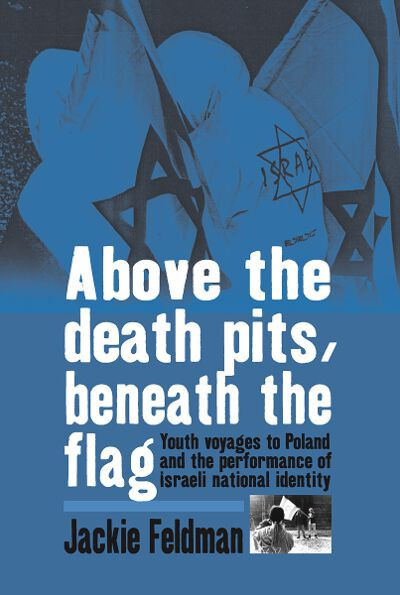 Above the Death Pits, Beneath the Flag - Youth Voyages to Poland and the Performance of Israeli National Identity Israeli youth voyages to Poland are one of the most popular and influential forms of transmission of Holocaust memory in Israeli society. Through intensive participant observation, group discussions, student diaries, and questionnaires, the author demonstrates how the State shapes Poland into a living deathscape of Diaspora Jewry. In the course of the voyage, students undergo a rite of passage, in which they are transformed into victims, victorious survivors, and finally witnesses of the witnesses. By viewing, touching and smelling Holocaust-period ruins and remains, by accompanying the survivors on the sites of their suffering and survival, crying together and performing commemorative ceremonies at the death sites, students from a wide variety of family backgrounds become carriers of Shoah memory. They come to see the State and its defense as the romanticized answer to the Shoah. These voyages are a bureaucratic response to uncertainty and fluidity of identity in an increasingly globalized and fragmented society. This study adds a measured and compassionate ethical voice to ideological debates surrounding educational and cultural forms of encountering the past in contemporary Israel, and raises further questions about the representation of the Holocaust after the demise of the last living witnesses. (By the author)
  Experiential learning of history through youth journeys to Poland Keren (1985), who examined the centrality of the Holocaust in five different periods in the history of the state of Israel, claims that the turning point for the educational system was an outcome not only of increased public awareness, but of the events 'receding' into history, which allowed an objective, and more balanced and detached, perspective. The study revealed that children whose parents were born in Europe or in Western countries were more eager to learn about the Holocaust than those of non-European origin, indicating a relationship between origin and desire to know about the Holocaust period. The journey experience had not yet matured and shaped into a deeper understanding that could be attributed to the personal identity of the participant and to examining it after the journey using accepted research tools. (By the author) Israeli and Diaspora Students Travel to the Holocaust Sites in Poland: The Impact on the Perceptions of the Holocaust, Jewish Identity, and Israel-Diaspora Ties The Ministry of Education encourages Israeli students to visit sites of historic Jewish communities in Poland and the sites of Nazi death camps. The trip is designed to reinforce the youngsters’ sense of belonging to the Jewish people, their connection to and identification with Jewish heritage and history, and their commitment to the future of Jewish life in Israel and its sovereignty. This study explores the impact of trips to Poland, organized by Tachlit Center, on Israeli and overseas university students. The vast majority of participants confirm that the trip emphasizes the important role of the Holocaust memory and commemoration. Findings on the impact of Holocaust education on other Israeli and Jewish values (e.g., the significance of immigration to Israel and ties to the Jewish Diaspora) are discussed, along with the implications for future Holocaust education programs. (By the author) Does vicarious experience of suffering affect empathy for an adversary? The effects of Israelis’ visits to Auschwitz on their empathy for Palestinians Empathy for the adversary is part of peace education. Does the vicarious experience of suffering affect empathy towards the suffering of an adversary? Specifically, does the visit of Israeli youth to Auschwitz affect their empathy toward the Palestinians? Three hundred and nine high school students participated in the study: One half went on the journey, while the other, comparable half, served as a control group. Findings tended to support the hypotheses. The journey increased empathy among participants with initially more positive attitudes toward the Palestinians but it also decreased empathy among those with initially more negative ones. The choice of nationalistic lessons about the holocaust affected feelings of pride and identification with the victims but not empathy. The choice of universalistic lessons affected feelings of fear and helplessness and contributed to increased empathy. Conclusions are drawn pertaining to peace education programs aiming at increasing empathy toward an adversary. (By the author) "Why Do We Always Have to Say We're Sorry?" A Case Study on Navigating Moral Expectations in Classroom Communication on National Socialism and the Holocaust in Germany Against the background of the pedagogization and internationalization of Holocaust memory discourse, this contribution focuses on the specific conditions of history classes on National Socialism and the Holocaust in Germany. Using a case study, this article shows both how the meanings of these subjects are communicatively negotiated in history classes and how these classroom discourses relate to the specific context of the culture of memory in Germany. Particular attention is given to the question of guilt and the concomitant moral expectations—which can be interpreted as a specific condition of the memory of the Holocaust in the successor state of the Third Reich. Within this context, the central questions of my study are: (1) How do today's youth in Germany navigate the moral expectations that are implicit within the established historical narratives on the Holocaust? (2) How do ethnically and nationally linked conceptions of memory play a role in youth's sense-making about the Holocaust? (By the author) Bilder, Gefühle, Erwartungen : Über die emotionale Dimension von Gedenkstätten und den Umgang von Jugendlichen mit dem Holocaust What role do emotions play in the way in which young people confront the history of the Holocaust? This article examines memorial sites and video interviews of survivors as interfaces of the representation and appropriation of the past. These contact zones satisfy the need for emotional participation and for information. Videos uploaded by youngsters on the internet following their visit to memorial sites, and short films extracted by pupils from survivor's video interviews, were used as examples in order to examine emotional strategies. These products of involvement point to stored images and ideas mediated by mass media. This repertoire of cultural knowledge and feelings can serve as a template for understanding how young people process the Holocaust emotionally. (By the author)
  Curriculum in Transformation Mode: Rethinking Curriculum for the Transformation of Education and Education Systems Год публикации: 2023 Автор: Renato Opertti Организация-автор: UNESCO International Bureau of Education (IBE) Through these pages, Renato Opertti shares a series of reflections that invite us to revisit the curriculum as an opportunity and lever for societies to express their visions and aspirations. Curriculum can serve to position education as the pillar of a renewed social contract grounded on the welfare of all learners as persons and supporting societies and communities give effect to sustainable and better futures for the younger generations. To do so, we need to re-conceptualize curriculum at large: from a mere specification of frequently fragmented learning contents to its understanding as both a process and product of public policy developments in which diversity of stakeholders own and take responsibility for education as a global common good. Curriculum and pedagogy, by going hand-inhand, and supported by effective teaching, learning and assessment processes, can play a key role in fulfilling the right to education for every learner equally, according to their own individual needs. Key ideas in this book help us to rethink curriculum with future-oriented approaches, entailing a stronger involvement of younger generations in the decision-making process and a careful attention to vulnerability and disadvantaged groups. A curriculum that embraces individuality and diversity within collaborative and caring learning settings, nurtures freedom and autonomous thinking, connects meaningfully the global and the local, and assumes the hybridization of education. The book also delves into perspectives for educational transformation prioritizing the development of learners’ foundational and transformative competencies as the barometer of a progressive curriculum. Crucially, this entails rethinking the mindsets and practices of education systems in light of the interconnected challenges posed by the Fourth Industrial Revolution, post COVID-19, generative AI and the sustainability of the planet and the world.
  Preventing Violent Extremism through Sport: Technical Guide; Criminal Justice Handbook Series Год публикации: 2020 Организация-автор: UN. Office on Drugs and Crime (UNODC) The Technical Guide on Preventing Violent Extremism through Sport, developed in consultation with international experts, recognizes the importance of promoting the well-being of children and youth. It applies an approach that encourages prosocial behaviour and good safeguarding and welfare practices, with particular emphasis on educational and social development measures in line with the United Nations Guidelines for the Prevention of Crime.The guide, addressed mainly to policy makers and implementing organizations, has been carefully designed to support effective integration of sport-based learning in primary prevention frameworks. By adopting a five-zone approach to prevent violent extremism namely safe space, empowerment, resilience, social inclusion and education, it supports informed policy development and a Theory of Change that can shape curriculum design and content. To further support global efforts in preventing violent extremism, UNODC is also developing an e-learning module and a practical tool for trainers that will be published soon and will complement this technical guide.
  Building Back Better: Youth, Power and Planet Год публикации: 2020 Автор: Valerie Duffy | Leo Gilmartin | Eva Janssens | Dermot O’Brien Организация-автор: National Youth Council of Ireland (NYCI) Building Back Better: Youth, Power and Planet is about power. The understanding of power in youth work is vitally important for the development of young people as they navigate through their lives and society.The aim of this resource is to support young people and youth workers in understanding power, seeing power, claiming power, and activating power. It includes a wealth of background information on concepts around power and terminology, as well as a guide on ‘How to Use this Resource’, activities, stimulus sheets. This toolkit explores the issue of power and helps you make links to the Sustainable Development Goals.It is designed for global educators, youth workers, development education practitioners, trainers, climate activists, changemakers of all shapes and sizes but in particular those working with the current generation of young people.Building Back Better contains 4 main sections:Section 1. Defining PowerSection 2. Seeing PowerSection 3. Claiming PowerSection 4. Activating PowerIt also contains:an introduction to power in theory and in practice 10 activities with interactive exercisesaction power templates for planningstriking visuals, case studies on human development for adapting This was resource was created by the NYCI Youth 2030 programme.