
Ресурсы
Изучайте широкий спектр ценных ресурсов ВГГ, чтобы углубить своё понимание и повысить эффективность исследований, просветительской деятельности, преподавания и обучения.
Найдено: 3,537
 初中英语教学中跨文化意识培养探究 (教育进展 第14卷 第6期) Год публикации: 2024 Автор: 陈铖 英语学习为学生了解世界各地文化打下坚实基础。我国初中英语教学却以学习语言符号为重心,导致西方文化和英语学习脱轨。这不利于学生运用所学的英语知识。因此在初中英语教学中,教师要着重培养学生的跨文化意识,以此提升学生的英语能力和水平。本研究基于初中英语教学阐述跨文化教学的内涵及重要性,探讨如何在初中英语教学中培养学生的跨文化意识。
  指向文化意识培养的高中英语5E阅读教学模式研究 (教育进展 第14卷 第6期) Год публикации: 2024 Автор: 陈乐乐 针对高中英语阅读课中文化意识培养“浅层化与碎片化”的教学现状,本文通过对人教版高中英语必修教材(2019) Reading and Thinking板块的文化内容分析,以必修三第1单元Festivals and Celebrations的阅读语篇“Why Do We Celebrate Festivals?”为例,设计了多层次的阅读教学活动,探讨如何利用基于学习活动观的高中英语5E阅读教学模式充分挖掘语篇包含的文化内容,从而培养学生的文化意识。
  核心素养时代初中英语教学中学生文化意识培养探究 (教育进展 第14卷 第6期) Год публикации: 2024 Автор: 谢昕芮 本文深入剖析了文化意识的深层意蕴,详尽阐释了提升学生文化意识的关键性。首先,从当前初中英语课堂教学的实际出发,我们指出,英语教师在教学过程中应格外重视对学生文化意识的培育。随后,结合人教版初中英语教材中的生动案例,我们探讨了如何有效提升学生的文化意识。具体举措包括强化阅读教学环节,深化写作训练层次,组织丰富多彩的教学活动,并设计兼具创意与多样性的课后作业。通过这一系列的策略实施,旨在全面提高学生的文化素养,使其在英语学习中获得更全面的发展。据此提出教师应当致力于将课堂教学、课后活动和社会实践活动巧妙地结合起来,以促进学生的文化意识的培养。
  初中英语教学跨文化交际意识的培养研究综述 (教育进展 第13卷 第5期) Год публикации: 2023 Автор: 黄丹 | 黄丽 全球化背景下,英语教育的使命迎来巨大转折,英语教育不再是单一获取西方文化知识,而是更加注重跨文化交流。本文首先对相关跨文化交际意识的核心概念进行界定,然后综述国内外相关外跨文化交际意识培养的研究,最后通过集中分析我国初中英语教学中跨文化交际意识研究现状,提出了三点后续研究需要注意和改进的地方。
 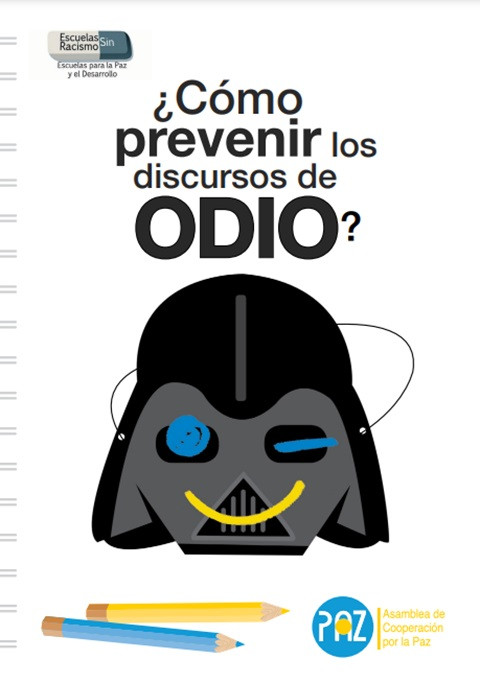 How to Prevent Hate Speech? Год публикации: 2022 Автор: Adrián Vives Организация-автор: Assembly of Cooperation for Peace The guide “How to prevent hate speech?” is aimed at teaching staff and aims to serve as a support document for working to eradicate hate speech in and through the classroom. In this guide we aim to offer some keys to working against hate speech in and through the educational field, understanding that prevention is essential to ending it. To do so, it is necessary to address it directly, as we do in the first block; but also through intercultural education that eliminates stereotypes and prejudices, as we explain in the second block; and through practical activities that we present in the last block. ¿Cómo prevenir los discursos de odio? Год публикации: 2022 Автор: Adrián Vives Организация-автор: Assembly of Cooperation for Peace La guía “¿Cómo prevenir los discursos de odio?” se dirige al personal docente y tiene el objetivo se servir como documento de apoyo para trabajar para erradicar los discursos de odio en y a través de las aulas. En esta guía pretendemos ofrecer algunas claves para trabajar contra los discursos de odio en y a través del ámbito educativo, entendiendo que la prevención es fundamental para acabar con ellos. Para ello es necesario abordarlos directamente, como hacemos en el primer bloque; pero también a través de una educación intercultural que vaya eliminando los estereotipos y prejuicios, tal y como explicamos en el segundo bloque; y a través de actividades prácticas que exponemos en el último bloque.
 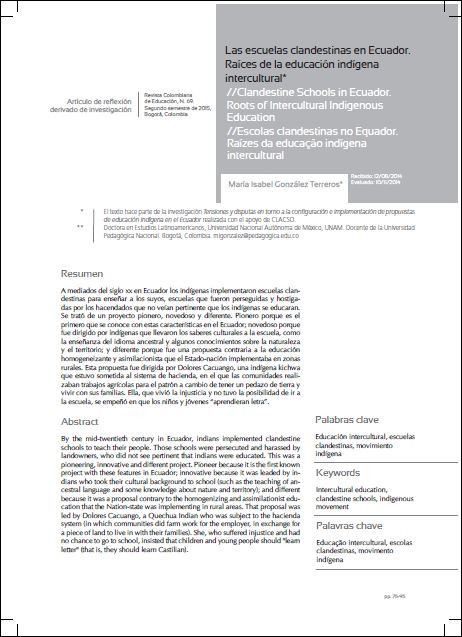 The Clandestine Schools in Ecuador. Roots of Intercultural Indigenous Education Год публикации: 2015 Автор: María Isabel González Terreros By the mid-twentieth century in Ecuador, indians implemented clandestine schools to teach their people. Those schools were persecuted and harassed by landowners, who did not see pertinent that indians were educated. This was a pioneering, innovative and different project. Pioneer because it is the first known project with these features in Ecuador; innovative because it was leaded by Indians who took their cultural background to school (such as the teaching of ancestral language and some knowledge about nature and territory); and different because it was a proposal contrary to the homogenizing and assimilationist education that the Nation-state was implementing in rural areas. That proposal was led by Dolores Cacuango, a Quechua Indian who was subject to the hacienda system (in which communities did farm work for the employer, in exchange for a piece of land to live in with their families). She, who suffered injustice and had no chance to go to school, insisted that children and young people should "learn letter" (that is, they should learn Castilian). Las Escuelas Clandestinas en Ecuador. Raíces de la Wducación Indígena Intercultural Год публикации: 2015 Автор: María Isabel González Terreros A mediados del siglo xx en Ecuador los indígenas implementaron escuelas clandestinas para enseñar a los suyos, escuelas que fueron perseguidas y hostigadas por los hacendados que no veían pertinente que los indígenas se educaran. Se trató de un proyecto pionero, novedoso y diferente. Pionero porque es el primero que se conoce con estas características en el Ecuador; novedoso porque fue dirigido por indígenas que llevaron los saberes culturales a la escuela, como la enseñanza del idioma ancestral y algunos conocimientos sobre la naturaleza y el territorio; y diferente porque fue una propuesta contraria a la educación homogeneizante y asimilacionista que el Estado-nación implementaba en zonas rurales. Esta propuesta fue dirigida por Dolores Cacuango, una indígena kichwa que estuvo sometida al sistema de hacienda, en el que las comunidades realizaban trabajos agrícolas para el patrón a cambio de tener un pedazo de tierra y vivir con sus familias. Ella, que vivió la injusticia y no tuvo la posibilidad de ir a la escuela, se empeñó en que los niños y jóvenes “aprendieran letra”.
 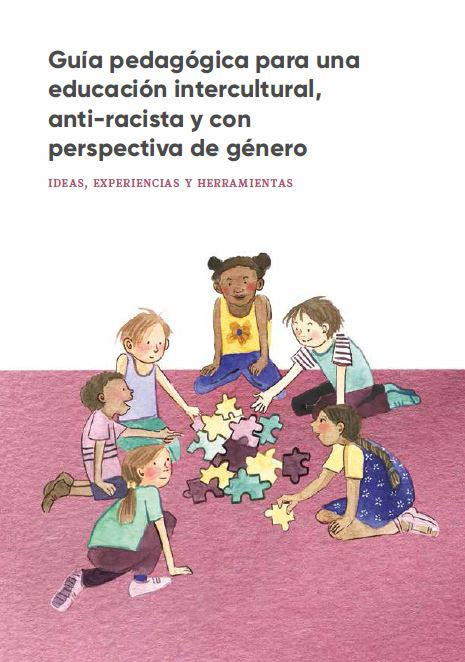 Pedagogical Guide for an Intercultural, Anti-racist and Gender Perspective Education: Ideas, Experiences and Tools Год публикации: 2017 Автор: Carolina Stefoni | Andrea Riedemann | Fernanda Stang | Andrea Guerrero | Antonia Garcés | Marta Camarena Организация-автор: Programa Interdisciplinario de Estudios Migratorios (PRIEM) | Universidad Alberto Hurtado | Fundación para la Superación de la Pobreza (FUSUPO) The main purpose of this Guide is, then, to share some ideas, tools and experiences that can help build and walk the path towards an intercultural, anti-racist and gender perspective education in various educational spaces. It is directed primarily - though not exclusively, of course - to all those people who are part of formal and informal teaching-learning processes. It is important to emphasize that the Guide does not pretend to be a recipe for a mechanical application, but a tool box that each educational community can use considering its specific context, its particular needs and its potentialities. Guía pedagógica para una educación intercultural, anti-racista y con perspectiva de género: ideas, experiencias y herramientas Год публикации: 2017 Автор: Carolina Stefoni | Andrea Riedemann | Fernanda Stang | Andrea Guerrero | Antonia Garcés | Marta Camarena Организация-автор: Programa Interdisciplinario de Estudios Migratorios (PRIEM) | Universidad Alberto Hurtado | Fundación para la Superación de la Pobreza (FUSUPO) El propósito principal de esta Guía es, entonces, compartir algunas ideas, herramientas y experiencias que puedan ayudar a construir y andar el camino hacia una educación intercultural, anti-racista y con perspectiva de género en diversos espacios educativos. Está dirigida principalmente -aunque no de manera exclusiva, por supuesto- a todas aquellas personas que sean parte de procesos de enseñanza-aprendizaje formales e informales. Es importante enfatizar que la Guía no pretende ser un recetario para una aplicación mecánica, sino una caja de herramientas que cada comunidad educativa puede usar considerando su contexto específico, sus necesidades particulares y sus potencialidades.