
Ресурсы
Изучайте широкий спектр ценных ресурсов ВГГ, чтобы углубить своё понимание и повысить эффективность исследований, просветительской деятельности, преподавания и обучения.
Найдено: 3,500
 The United Nations Matters: Teacher’s Handbook Год публикации: 2012 Организация-автор: United Nations Association - UK (UNA-UK) | United Kingdom National Commission for UNESCO This resource pack has been created to support Key Stage 3 and 4 Citizenship (England) and Education for Sustainable Development and Global Citizenship (Wales). It is also relevant to Learning for Life and Work (Northern Ireland), One Planet and Sustainable Development (Scotland), as well as Geography; History; Local and Global Citizens; Personal, Social, Health and Economic Education; Politics; and Religious and Moral Education. The pack supports the ‘Global Dimension’ in all parts of the UK.This resource aims to develop students’ awareness and understanding of the United Nations (UN) system and the global issues it tackles. It encompasses five lessons that can either be run as a full scheme of work or used independently.
  The Global Citizen's Journey: A Resource for Global Citizenship Education Год публикации: 2021 Организация-автор: GOAL Global This resource for Global Citizenship Education is designed by our Global Youth Programme for educators and leaders of 14–18-year-olds all over the world. Centring on the themes of interconnectedness, development, power and inequality this free, downloadable booklet of activities encourages critical thinking, reflection, and empower the pursuit of positive change.To find out more, watch our introductory video here.
  The White Paper of EKOME on Media & Information Literacy Год публикации: 2018 Организация-автор: EKOME S.A. EKOME is concluding 2018 Global UNESCO Media and Information Literacy Week celebrations with the launch of the White Paper on Media & Information Literacy available in Greek & English.The White Paper is EKOME’s viewpoint on the third pillar, Education, setting out a paradigm for a national infrastructure on media and information literacy. By highlighting the main priorities in the field, the White Paper of EKOME aims to contribute to a national strategic plan and build a constructive relationship with the creative industry.
  A Journey to Media Literacy Год публикации: 2013 Автор: Paolo Celot | Susie Jones Организация-автор: European Association for Viewers Interests (ENVI) “A Journey to Media Literacy” is EAVI’s seven minute cartoon, designed to explain, in a fun and simple way, what Media Literacy is all about and why it is essential in order to live freely and participate fully in society. It was born thanks to a suggestion by Paolo's 3 kids, who being unable to understand what their father did at work, came up with the idea of making an adventure cartoon to explain ML. Un voyage dans l'éducation aux médias Год публикации: 2013 Автор: Paolo Celot | Susie Jones Организация-автор: European Association for Viewers Interests (ENVI) Le dessin animé de EAVI « Un voyage dans l'éducation aux media » a été créé à fin d'expliquer de façon simple et amusante ce qu'est l'éducation aux medias, une notion importante que pour vivre plus librement et de participer pleinement à la société. Notre héro Jack est né grâce à la suggestion des enfants de Paolo, qui, ne comprenant pas ce que leur père faisait au travail, lui ont donné l'idée de créer un dessin animé pour expliquer à eux ce que c'est l'éducation aux medias. Un viaje a la Alfabetización Mediatica Год публикации: 2013 Автор: Paolo Celot | Susie Jones Организация-автор: European Association for Viewers Interests (ENVI) El videoclip "Un viaje a la Alfabetización mediática" es un dibujo animado de 7 minutos diseñado para explicar, de una manera divertida y sencilla, lo que es la alfabetización mediática y todo alrededor, y por qué es esencial para poder vivir libremente y participar plenamente en la sociedad. Nació gracias a la sugerencia de los 3 niños de Paolo, que al no poder entender lo que su padre hacia en el trabajo, se le ocurrió la idea de hacer una historieta de aventuras para explicar que es la Media Literacy.
 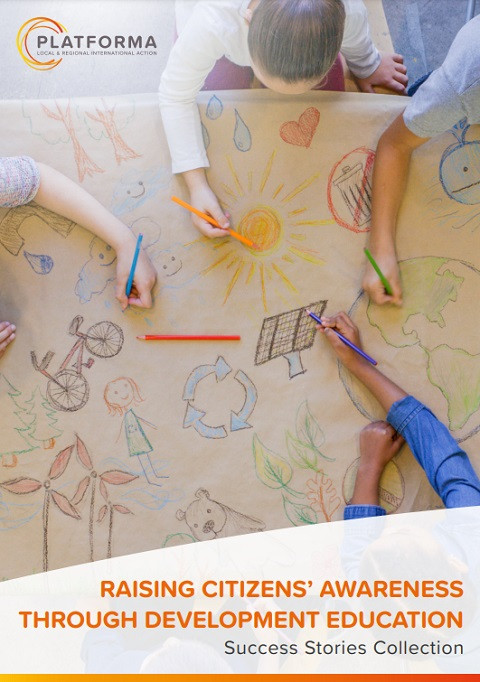 Raising Citizens' Awareness Through Development Education: Success Stories Collection Год публикации: 2020 Автор: Lur Fernandez Salinas Организация-автор: PLATFORMA Development Education and Awareness Raising (DEAR) are natural lines of action for local and regional governments active in development cooperation and tie in perfectly with their territorial strategies.Awareness-raising among citizens, through the action of municipalities and regions, remains a core component of the co-responsibility, solidarity, mutual knowledge and mutual understanding needed to mobilise and unite communities.Discover this Success Stories Collection which aims to showcase concrete, impactful and transformative experiences of local and regional governments and their associations actively engaged in DEAR projects and decentralised cooperation strategies. Sensibiliser les citoyens par l’éducation au développement : Exemples de réussites Год публикации: 2020 Автор: Lur Fernandez Salinas Организация-автор: PLATFORMA Le programme DEAR constitue une ligne d’action tout à fait naturelle pour les collectivités territoriales actives dans la coopération au développement et s’inscrit parfaitement dans leurs stratégies territoriales.La sensibilisation des citoyens, par l’action des municipalités et régions, reste une composante essentielle de la coresponsabilité, de la solidarité, de la connaissance et de la compréhension mutuelles nécessaires pour mobiliser et fédérer les communautés.Le présent recueil d’histoires de réussite vise à montrer les expériences concrètes, percutantes et transformatrices des collectivités territoriales et de leurs associations activement engagées dans des projets DEAR et des stratégies de coopération décentralisé
 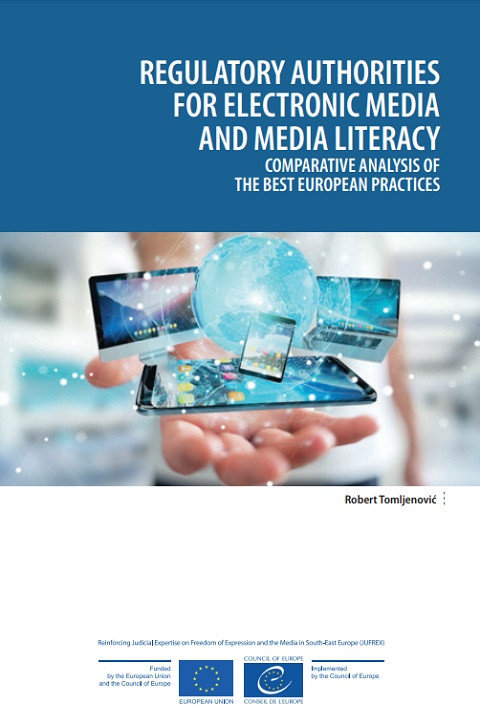 Regulatory Authorities for Electronic Media and Media Literacy: Comparative Analysis of the Best European Practices Год публикации: 2018 Автор: Robert Tomljenović Организация-автор: Council of Europe Information event for stakeholders of the media community in Serbia on presentation of the Study “Regulatory Authorities for Electronic Media and Media Literacy - Comparative analysis of the best European practices” was organized by the Council of Europe Office in Belgrade, JUFREX Programme and the Embassy of Finland in Serbia, on 20 December 2018, in order to jointly point out the importance of the development of media literacy in Serbia and the Western Balkans region.The study analyzes and indicates challenges and issues that come with living in a digitalized, hypertechnological mediated world, in which we are faced with countless information, issues of disinformation and fake news, algorithmic separation in ideological echo chambers, hate speech, clickbait journalism, and decreased trust in both mainstream media and the level of journalistic professionalism. With such a media ecosystem, it is vital to define the position of a regulatory authority for electronic media as well as its responsibilities and obligations, and stress the regulator's role in promoting and developing media literacy, one of the key skills for living in the 21st century and the answer to many questions and challenges that come with the modern era."The Council of Europe considers media literacy one of the main tools for strengthening media pluralism and the quality of media content. All media actors in Serbia have the responsibility to promote media literacy to enable understanding and critical analysis of content offered by traditional and digital media. Especially children have the right to a safe and stimulating media environment" said Head of the Council of Europe Office in Belgrade, Tobias Flesenkemper.The study emphasizes that a prerequisite for every democratic process is a well-informed citizen. The Study presents several examples of best European practices and how to engage regulatory bodies and all other relevant actors to increase media literacy, with a particular focus on the Finnish model in this area. Media education is implemented in Finland wherever there are children and youth, not only in kindergartens and schools, but also in libraries, playrooms, youth centers, even in virtual communities and digital games.As pointed out by the Ambassador of Finland in Belgrade, Perti Ikonen, the high level of media literacy of citizens is what the media in Finland forces to adhere to high professional standards, and basically the work of the institutions responsible for the promotion of media literacy. Finland took over the chairmanship of the Committee of Ministers of the Council of Europe in November this year, and during its term of office, until May 2019, the priorities of the Finnish Presidency will be to strengthen the human rights and rule of law system in Europe, support equality as well as inclusiveness with a particular focus on youth and the prevention of radicalization.The study was developed within the framework of the Joint European Union and the Council of Europe Programme "Strengthening the Judicial Expertise on Freedom of Expression and Media in South-East Europe (JUFREX)".
 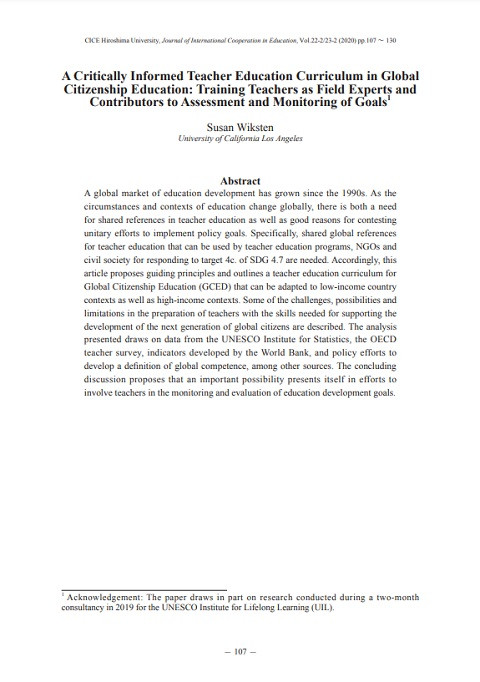 A Critically Informed Teacher Education Curriculum in Global Citizenship Education: Training Teachers as Field Experts and Contributors to Assessment and Monitoring of Goals (Journal of International Cooperation in Education; Vol.22-2/23-2) Год публикации: 2020 Автор: Susan Wiksten Организация-автор: CICE Hiroshima University A global market of education development has grown since the 1990s. As the circumstances and contexts of education change globally, there is both a need for shared references in teacher education as well as good reasons for contesting unitary efforts to implement policy goals. Specifically, shared global references for teacher education that can be used by teacher education programs, NGOs and civil society for responding to target 4c. of SDG 4.7 are needed. Accordingly, this article proposes guiding principles and outlines a teacher education curriculum for Global Citizenship Education (GCED) that can be adapted to low-income country contexts as well as high-income contexts. Some of the challenges, possibilities and limitations in the preparation of teachers with the skills needed for supporting the development of the next generation of global citizens are described. The analysis presented draws on data from the UNESCO Institute for Statistics, the OECD teacher survey, indicators developed by the World Bank, and policy efforts to develop a definition of global competence, among other sources. The concluding discussion proposes that an important possibility presents itself in efforts to involve teachers in the monitoring and evaluation of education development goals.