
Ресурсы
Изучайте широкий спектр ценных ресурсов ВГГ, чтобы углубить своё понимание и повысить эффективность исследований, просветительской деятельности, преподавания и обучения.
Найдено: 3,500
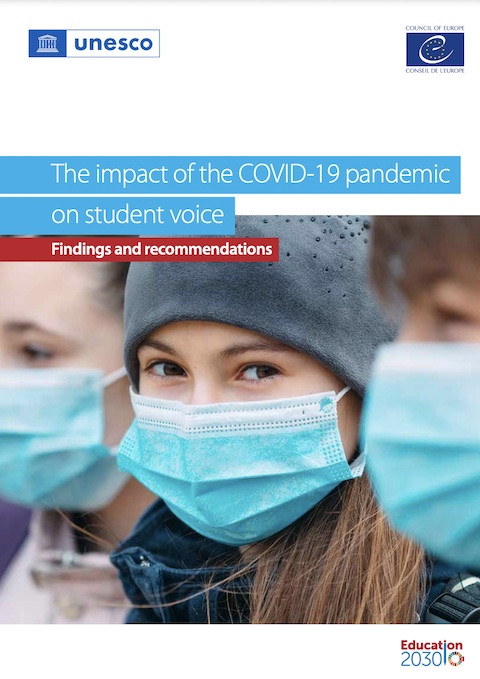 The Impact of the COVID-19 Pandemic on Student Voice: Findings and Recommendations Год публикации: 2021 Организация-автор: UNESCO | Council of Europe The COVID-19 pandemic has had serious consequences on the education of young people and their ability to engage and participate meaningfully. In 2020, UNESCO and the Council of Europe decided to collaborate on a research project with a view to examining the impact of the COVID-19 pandemic on student voice and particularly the consequences of the subsequent school closures on student voice opportunities in Europe and in the Middle East and North Africa (MENA). This publication details the findings of this study and provides recommendations for school directors and personnel, teachers, educators, policy-makers and young people to build on the lessons learned from the pandemic and help the education community work collectively towards promoting societies that are guided by human rights, with student voice and participation at the centre. It is primarily intended for policy-makers, educators, teachers working in formal school systems. It may also be of interest to professionals working in non-formal education settings or other sectors – namely the justice, social and health sectors – working with student.
 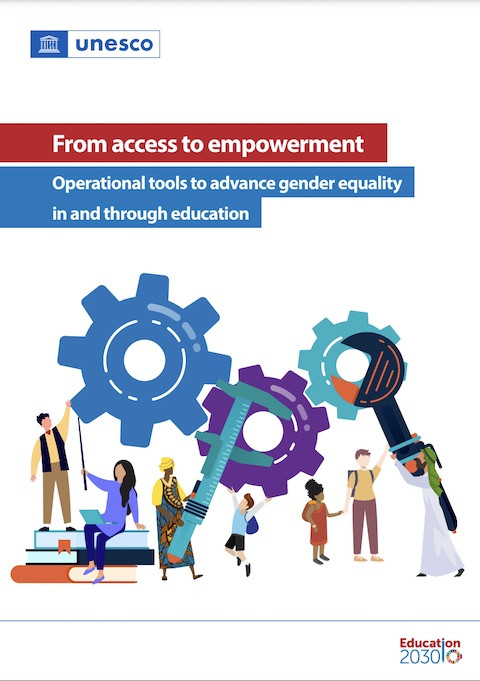 From Access to Empowerment: Operational Tools to Advance Gender Equality in and Through Education Год публикации: 2021 Организация-автор: UNESCO This toolkit has been developed to strengthen individual and institutional capacity to integrate gender equality into education programmes in an effective manner. It has been prepared for all UNESCO Education Sector staff, including those at Headquarters, in Field/Regional/Cluster Offices and in Institutes as well as for implementing partners. This toolkit provides orientation and operational tools to meaningfully integrate gender into all education programmes. The first part provides a short introduction to key concepts on gender equality in and through education and an overview on how gender equality in education links to UNESCO’s vision and internationally agreed objectives. The second part provides practical guidance on how to mainstream gender equality into an education programme, how to design gender-transformative programmes and finally, how to monitor and evaluate gender results in education programmes. Del acceso al empoderamiento: Herramientas operativas para promover la igualdad de género en y a través de la educación Год публикации: 2021 Организация-автор: UNESCO Esta guía se ha desarrollado para fortalecer la capacidad individual e institucional para integrar de forma efectiva la igualdad de género en los programas de educación. Fue elaborada para todo el personal del Sector de Educación de la UNESCO, incluyendo el personal ubicado en la Sede, en las Oficinas fuera de la Sede, regionales y multipaís, y en los Institutos, así como para los asociados en la ejecución de su trabajo. Esta guía ofrece herramientas orientativas y operativas para integrar de forma significativa la cuestión de género en todos los programas de educación. La primera parte ofrece una breve introducción a los conceptos clave de la igualdad de género en y a través de la educación y un resumen general de cómo la igualdad de género en la educación se vincula con la visión de la UNESCO y sus objetivos, aprobados a nivel internacional. La segunda parte ofrece una orientación práctica de cómo integrar la igualdad de género en los programas de educación, cómo elaborar programas transformadores en materia de género y, por último, cómo realizar el seguimiento y la evaluación de los resultados en materia de género en los programas de educación.
  The Impact of the COVID-19 Pandemic on Education: International Evidence From the Responses to Educational Disruption Survey (REDS) Год публикации: 2022 Автор: Sabine Meinck | Julian Fraillon | Rolf Strietholt Организация-автор: Организация Объединенных Наций по вопросам образования, науки и культуры (UNESCO) | International Association for the Evaluation of Educational Achievement (IEA) The COVID-19 pandemic disrupted education provision at an unprecedented scale, with education systems around the world being impacted by extended school closures and abrupt changes to normal school operations. The Responses to Educational Disruption Survey (REDS) investigated how teaching and learning were affected by the health crisis, and how education stakeholders responded to the educational disruption across and within countries. The study aimed to provide a systemic, multi-perspective, and comparative picture of the situation at the secondary education level (grade eight) in 11 countries spanning Africa, Asia, Arab region, Europe, and Latin America. While many other efforts exist that collect and provide similar information, they are mostly derived from non-representative rapid surveys and lack internationally comparable information from schools, collected in a systematic and scientific manner. The REDS International Report presents unique data, collected from countries, schools, teachers, and students for the first time, in chapters that cover several themes on which data were collected which include student and teacher well-being, students’ academic progress during the school closures, and the measures countries have implemented to keep all children learning. Initial findings provide evidence for better orienting and tailoring policy responses to crisis and provide invaluable information on what may be required to accelerate education, recover from crisis, and to strengthen the resilience of education systems in the future.
  The Journey Towards Comprehensive Sexuality Education: Global Status Report Год публикации: 2021 Организация-автор: UNESCO | Joint United Nations Programme on HIV/AIDS (UNAIDS) | United Nations Population Fund (UNFPA) | United Nations Children's Fund (UNICEF) | United Nations Entity for Gender Equality and the Empowerment of Women (UN Women) | World Health Organization (WHO) Comprehensive sexuality education (CSE) is central to children and young people’s well-being, equipping them with the knowledge and skills they need to make healthy and responsible choices in their lives. This report draws on multiple data sources to provide analysis of countries’ progress towards delivering good quality school-based CSE to all learners. 85 per cent of 155 countries surveyed have policies or laws relating to sexuality education, with considerably more countries reporting policies to mandate delivery at secondary education level than at primary level. However, the existence of policy and legal frameworks do not always equate to comprehensive content or strong implementation. Most countries report that they have some curricula in place but more detailed analysis suggests that it often lacks the breadth of topics needed to make sexuality education effective and relevant. Moreover, while efforts to scale-up teacher training are evident in a range of settings, research with teachers shows that many feel they lack confidence to deliver sexuality education. Surveys show that students frequently feel that they received information too late and would have preferred sexuality education to have started earlier in their schooling. There is evidence of opposition to CSE across a range of settings, often reflecting misinformation about the content, purpose or impact of such education. However, in many countries involvement of communities, including parents, school officials, religious leaders, media and young people themselves, has created a favourable environment for CSE. Recommendations to countries in this report include:Clear mandates and budgets to ensure implementation of policies and programmes that support the availability of good quality comprehensive sexuality education for all learners.Invest in quality curriculum reform and teacher training.Strengthen monitoring of the implementation of CSE.
  Global Education Monitoring Report 2021/2: Non-state Actors in Education; Who Chooses? Who Loses? Год публикации: 2021 Организация-автор: UNESCO Non-state actors’ role extends beyond provision of schooling to interventions at various education levels and influence spheres. Alongside its review of progress towards SDG 4, including emerging evidence on the COVID-19 pandemic’s impact, the 2021/2 Global Education Monitoring Report urges governments to see all institutions, students and teachers as part of a single system. Standards, information, incentives and accountability should help governments protect, respect and fulfill the right to education of all, without turning their eyes away from privilege or exploitation. Publicly funded education does not have to be publicly provided but disparity in education processes, student outcomes and teacher working conditions must be addressed. Efficiency and innovation, rather than being commercial secrets, should be diffused and practiced by all. To that end, transparency and integrity in the public education policy process need to be maintained to block vested interests. The report’s rallying call – Who chooses? Who loses? – invites policymakers to question relationships with non-state actors in terms of fundamental choices: between equity and freedom of choice; between encouraging initiative and setting standards; between groups of varying means and needs; between immediate commitments under SDG 4 and those to be progressively realized (e.g. post-secondary education); and between education and other social sectors. 全球教育监测报告摘要, 2021/2年: 教育领域的非国家行为体:谁能主动选择?谁将错失机会? Год публикации: 2021 Организация-автор: 联合国教科文组织 (UNESCO) 本文件是2021/2022年全球教育检测报告的摘要,主要聚焦教育领域的非国家行为体,包括私人办学、宗教办学等力量,并探讨了与非国家行为体对教育的影响与存在问题。
  L’action de l’UNESCO en faveur de l’égalité des genres dans et par l’éducation: Points majeurs de l’année 2020 Год публикации: 2022 Организация-автор: UNESCO Ce rapport présente les points majeurs de l’action menée en 2020 par l’UNESCO pour faire progresser l’égalité des genres dans et par l’éducation.L’action menée par l’UNESCO dans le domaine de l’éducation et du genre est ancrée dans la stratégie de l’UNESCO pour l’égalité des genres dans et par l’éducation 2019-2025. Cette stratégie repose aussi sur l’initiative Son éducation, notre avenir, lancée en parallèle afin de mobiliser les engagements politiques et financiers et de faciliterla coopération et l’action conjointe en faveur de l’éducation des filles et des femmes.
  Global Education Monitoring Report 2022: Gender Report; Deepening the Debate on Those Still Left Behind Год публикации: 2022 Организация-автор: Global Education Monitoring Report Team | UNESCO The 2022 Gender Report presents fresh insights on progress towards gender parity in education with respect to access, attainment and learning. It showcases the results of new models that provide coherent estimates, combining multiple sources of information, on out-of-school and completion rates. It also reviews the results of learning assessments released over the past 18 months, which present an almost global picture of the gender gap in reading, mathematics and science achievement in lower and upper primary and lower secondary grades. They provide a baseline against which to assess the impact of COVID-19 on inequality when post-pandemic data start being released next year.A companion to the 2021/2 GEM Report, it emphasizes the role of non-state actors in influencing gender inequality in and through education. Non-state actors have filled in provision gaps left by the public education system. The 2022 Gender Report presents evidence on gender gaps in the share of students enrolled in private institutions by sex and what drives these gaps in the various regions. It also provides case studies on the privatization of childcare in high-income countries, the impact of non-state faith-based schools in Asia on gender norms and the role of women’s universities around the world.Some non-state actors have pushed the gender equality agenda forward, while others have undermined progress in order to maintain the status quo. Some have been at the front line for girls’ education in emergencies. Some have lobbied against comprehensive sexuality education. Some champion inclusion of marginalized girls, while others maintain discriminatory gender norms. Depending on the context, it is important not to make assumptions but to look carefully at the data and work together to eliminate all forces that prevent anyone on the basis of gender from fulfilling their potential through education.
  Where Do We Stand on Education for Sustainable Development and Global Citizenship Education: Findings of the 7th Consultation on the Implementation of the 1974 Recommendation Concerning Education for International Understanding, Co-operation and Peace and Education Relating to Human Rights and Fundamental Freedoms Год публикации: 2022 Организация-автор: UNESCO The Recommendation concerning Education for International Understanding, Co-operation and Peace and Education relating to Human Rights and Fundamental Freedoms was adopted by the 18th session of UNESCO’s General Conference in November 1974. Every four years, Member States are invited to report on the measures they have taken to implement the Recommendation in all levels and types of education from pre-primary to tertiary, formal, non-formal and adult education. This document summarizes the results of the 7th consultation on the implementation of the 1974 Recommendation, covering the period 2017-2020. It also contains, for the first time, data for the global indicator adopted by the UN Statistical Commission and the UN General Assembly for the monitoring of Target 4.7 of Sustainable Development Goal for Education.