
Ресурсы
Изучайте широкий спектр ценных ресурсов ВГГ, чтобы углубить своё понимание и повысить эффективность исследований, просветительской деятельности, преподавания и обучения.
Найдено: 3,500
 Реформирование школьного образования в Узбекистане (Sciences of Europe; no.64) Год публикации: 2021 Автор: N. Khakimov Автор статьи исследовал инновационные аспекты реформирования школьного образования в условиях нового этапа развития Республики Узбекистан. В статье подчеркнута роль школьного образования в успешном осуществлении демократических реформ и развития гражданского общества. Автор статьи сделал попытку раскрыть миссии школьного образования в обществе, задачи средних школ, в воспитании подрастающего поколения и значение деятельности учительских кадров в процессе модернизации школьного образования.
  Investigation and Enlightenment on Right and Obligations Consciousness from the Perspective of Citizenship (Advances in Social Sciences; vol. 7, no. 9) Год публикации: 2018 Автор: Li Haiyan It is the key stage for students in high school on self-consciousness development and the forma- tion of values. It occupies the core position in the whole system of civic consciousness education. The citizenship cognition, rights and obligations consciousness and the establishment of social responsibility will affect the development of individual, society and state. This paper surveys to learn the high school students citizenship awareness, right and obligation consciousness status, deeply to analyze the current high school students’ challenges, offer the effective suggestions, help students to complete transition from students to social citizen role successfully.
  Educating Students to Improve the World Год публикации: 2021 Автор: Fernando Reimers Организация-автор: UNESCO International Bureau of Education (IBE) This book highlights the key role of global citizenship education to prepare learners for a rapidly changing world. In a probing and visionary analysis of the field of global education Fernando Reimers explains how to lead the transformation of schools and school systems in order to more effectively prepare students to address today’s most urgent challenges and to invent a better future. It discusses several global citizenship curricula that have been adopted by schools and school networks, and ties them into an approach to lead school change into the uncharted territory of the future. Former les élèves pour améliorer le monde Год публикации: 2021 Автор: Fernando Reimers Организация-автор: UNESCO International Bureau of Education (IBE) Ce livre porte sur la manière d’aider les élèves à trouver un sens à leur vie dans un monde un mutation rapide. Par une analyse approfondie et visionnaire du domaine de l’éducation à la citoyenneté mondiale, Fernando Reimers explique comment conduire la transformation des écoles et des systèmes scolaires afin de préparer plus efficacement les élèves à relever les défis actuels les plus urgents et à inventer un avenir meilleur.
  Human Rights Год публикации: 2021 Организация-автор: Argentina. Ministry of Education This material takes on the challenge of addressing Human Rights as a living territory, a collective construction, where permanent disputes take place over its meaning and scope. At school, the responsibility for the formation of new citizenships for life in democracy places each teacher at the very center of this challenge. Derechos humanos Год публикации: 2021 Организация-автор: Argentina. Ministry of Education Este material asume el desafío de abordar los Derechos Humanos como un territorio vivo, una construcción colectiva, donde acontecen disputas permanentes sobre su significado y alcance. En la escuela, la responsabilidad de la formación de las nuevas ciudadanías para la vida en democracia ubica a cada docente en el centro mismo de este desafío.
 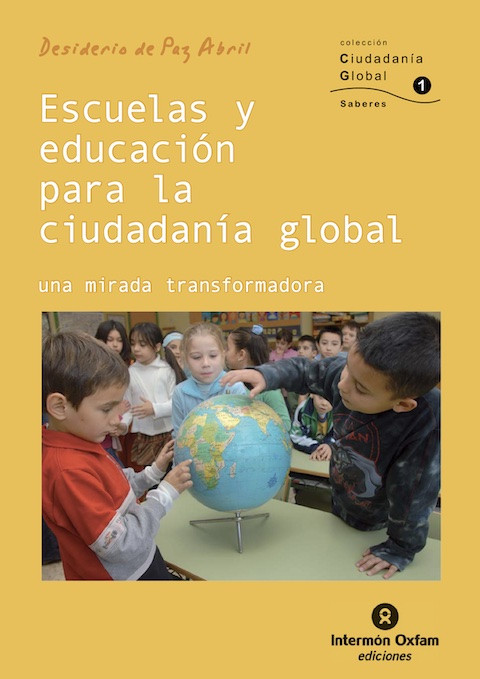 Escuelas y educación para la ciudadanía global: Una mirada transformadora Год публикации: 2013 Автор: Desiderio de Paz Abril Организация-автор: Agencia Española de Cooperación Internacional para el Desarrollo (AECID) | Oxfam Intermón Una escuela participativa es la base para alcanzar una sociedad democrática que trascienda el formalismo de las votaciones y los procesos electorales para posibilitar universos en los que sean reales la igualdad de oportunidades, la justicia y la auténtica libertad, desde una ciudadanía crítica y reflexiva. El libro se divide en 2 partes, En la primera se argumenta la necesidad de defender un nuevo modelo educativo humanista y global, y se evidencia la perspectiva esperanzadora que proporciona la fuerza de los discursos de Habermas y Freire para caminar en esta dirección. En la segunda parte del libro se profundizan diferentes enfoques de la práctica escolar, en tres maneras de aprehender la realidad educativa, tres principios organizadores y legitimadores de la acción y tres maneras de hacer la práctica educativa escolar (enfoque técnico-instrumental, enfoque práctico-signifi cativo y enfoque crítico-comunicativo).
 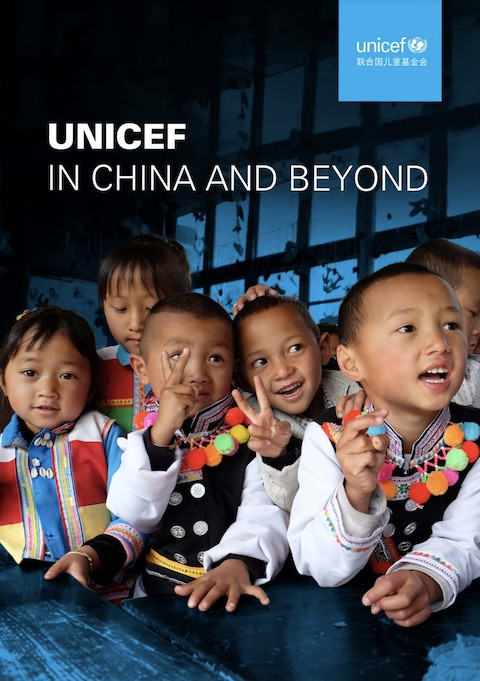 UNICEF in China and Beyond Год публикации: 2019 Организация-автор: United Nations Children's Fund (UNICEF) This report seeks to give an overview of UNICEF’s work in China and, through these experiences, provide a global perspective on the major development areas relevant to children today. This includes child-friendly spaces, poverty reduction and early childhood education. The publication presents a snapshot of the issues, challenges and accomplishments in health, education, child protection, and social policy and reform sectors in China. 中国经验 全球视角:联合国儿童基金会在华合作项目概览 Год публикации: 2019 Организация-автор: United Nations Children's Fund (UNICEF) 该报告概述了联合国儿童基金会在中国所开展的项目,并通过这些项目的经验,为关乎儿童利益的主要发展领域提供全球视角,包括儿童友好家园、减贫与儿童早期教育等。这份报告还简要介绍了合作项目在卫 生保健、教育、儿童保护、社会政策与改革等领域所关注的重点、取得的成果与面临的挑战。
  Is History Teaching in Quebec Instrumentalized by Citizenship Education? (Bulletin d'histoire politique; vol. 21, no. 3) Год публикации: 2013 Автор: Félix Bouvier | Philippe Chamberland | Marie-Line Belleville Организация-автор: Association québécoise d'histoire politique | VLB Éditeur In 2001, the Quebec Ministry of Education made the decision to formally join, for the first time, the teaching of history and education to citizenship. Logical according to many, since implicit" since the very beginning. beginnings of public schools, in Quebec as in most Western countries”, the association had to respond to the Western context encountered by democratic societies and characterized by the increase in population movements and the globalization of the economy. In secondary school since 2005, the associated teaching of the two subjects aims to promote a harmonious living together to preserve social cohesion. However, a problem remains. history with regard to civic education has long been recognized, the attribution of responsibility for political socialization and the shaping of consciousness citizen of students to history teachers risk instrumentalizing this subject? In other words, is it not dangerous to assert, as the Assistant Deputy Minister for Preschool, Elementary and Secondary Education Pierre Bergevin does, “that now history must above all serve as education for citizenship”? This association poses the question that François Audigier evokes, namely, should we proceed from history and question the latter's contribution to citizen consciousness, or proceed from the aspects of citizen consciousness that one wishes to construct and then determine the historical objects which should be studied? The experience of comparable nations on a planetary scale makes us doubt the relevance of the association of the two disciplines. In fact, some Western democracies are worried about the quality of the civic education of their young people since the waves of industrialization and the great wars of the XIXth and XXth centuries which changed manners forever: intensification of migrations, upheavals social roles, loss of influence of religions, etc. Thus, although Great Britain has for some time taken the path taken by Quebec, France clearly dissociates the teaching of history from that of civic education. In order to understand all the ins and outs of the issue, we first provide a portrait of the context at the origin of the association of history and education for citizenship. Then, we will discuss the arguments in favor of combining the two subjects, especially in Great Britain, France and Australia. Finally, our gaze will focus on the case of Quebec and the type of privileged citizenship, in order to determine whether the teaching of history is not instrumentalised for the benefit of a citizenship education valuing the concealment of conflicts and divergences and if, to use the writings of Robert Martineau, the Ministry of Education has sacrificed the history class on the altar of citizenship education.