
Ресурсы
Изучайте широкий спектр ценных ресурсов ВГГ, чтобы углубить своё понимание и повысить эффективность исследований, просветительской деятельности, преподавания и обучения.
Найдено: 3,502
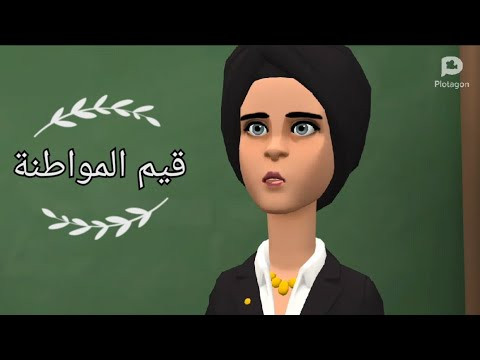 Citizenship Values: Explanation of National Education for the First Secondary Class Год публикации: 2020 Автор: Azza Elsafty The teacher tries to explain the citizen's responsibilities towards himself, his community, and his country. The teacher elaborates on explaining the values of citizenship. The lesson is for the first grade of high school in Egypt in the national education course.
  The Future of Language Education in Europe: Case Studies of Innovative Practices; Analytical Report Год публикации: 2020 Автор: Emmanuelle Le Pichon-Vorstman | Hanna Siarova | Eszter Szőnyi Организация-автор: NESET II | European Union (EU) The main purpose of this report is to inspire educators and policy makers to innovate and implement forward-looking policies and practices in language education, by exploring novel approaches and strategies for language teaching across in Europe that support learners’ plurilingualism.
  Teaching Media Literacy in Europe: Evidence of Effective School Practices in Primary and Secondary Education; Analytical Report Год публикации: 2018 Автор: Julian McDougall | Marketa Zezulkova | Barry van Driel | Dalibor Sternadel Организация-автор: NESET II | European Union (EU) This report is aimed at policymakers, practitioners and researchers in the fields of school education, media and digital policies. It reviews relevant European and international research to better understand how teaching and learning practices can support students’ media literacy in primary and secondary education. It also aims to understand how media literacy education in schools can help address the challenges related to the spread of disinformation and ‘fake news’.
 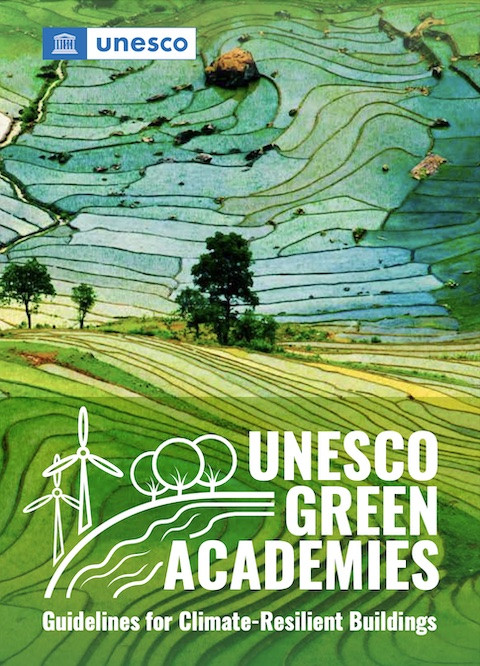 UNESCO Green Academies: Guidelines for Climate-Resilient Buildings Год публикации: 2019 Организация-автор: UNESCO Bangkok This brochure encourages capacity building in communities to transition towards climate resilience. It is based on scientific knowledge to improve the relationship between people and the environment as prescribed by the Man and Biosphere Programme. Academias verdes de la UNESCO: Pautas para Edificios Resistentes al Clima Год публикации: 2019 Организация-автор: UNESCO Bangkok Este folleto alienta el desarrollo de capacidades en las comunidades para la transición hacia la resiliencia climática. Se basa en el conocimiento científico para mejorar la relación entre las personas y el medio ambiente según lo prescrito por el Programa sobre el Hombre y la Biosfera. UNESCO Green Academies: Directives pour la résilience climatique des écoles Год публикации: 2019 Организация-автор: UNESCO Bangkok Cette brochure encourage le renforcement des capacités dans les communautés pour faciliter la transition vers la résilience aux changements climatiques. Comme prescrit par le programme l’Homme et la biosphère, il s’agit d’utiliser les connaissances scientifiques pour améliorer les relations entre l’Homme et l’environnement.
 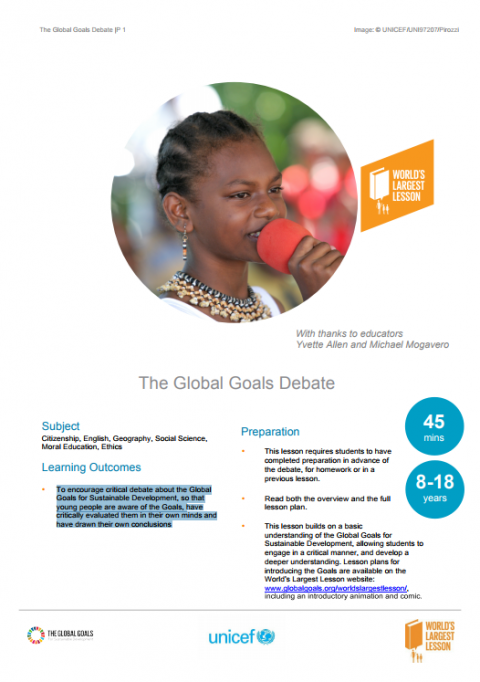 The global goals debate Организация-автор: United Nations Children's Fund (UNICEF) Learning outcomes: To encourage critical debate about the Global Goals for Sustainable Development, so that young people are aware of the Goals, have critically evaluated them in their own minds and have drawn their own conclusions
  Gender Equality and Empowerment of Women and Girls in the UK: Meeting the Challenge of the Sustainable Development Goals Год публикации: 2016 Автор: Holly Dustin | Helen Mott | Nicola Waterworth | Gillian Cowell | Janet Veitch Организация-автор: British Council This research provides the first stocktake of gender equality in the UK from the perspective of the UN’s Sustainable Development Goals (SDGs), the 17 goals adopted by world leaders in 2015 in order to end poverty, protect the planet and ensure prosperity for all.It focuses on the UK’s successes towards achieving gender equality, as well as gaps and priorities for further action in five key areas: participation, power and leadership; education; economy; justice and violence against women and girls and culture (including arts, sports and technology). There are many examples of good practice from the UK, such as strong legislation, data gathering and structures. However, the research also concludes that women and girls continue to lag behind men and boys on key rights, opportunities and well-being, with men over-represented in almost all positions of power and decision-making. It also explores the impact of international linkages and collaboration to determine whether as the UK’s cultural relations organisation, there is a role for the British Council in this.
 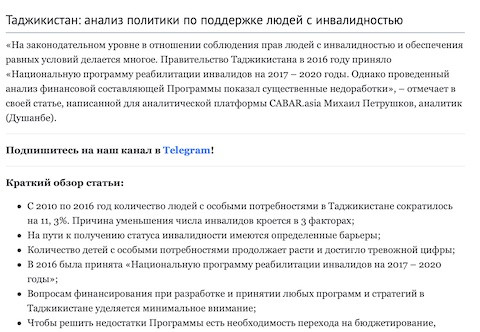 Таджикистан: Анализ политики по поддержке людей с инвалидностью Год публикации: 2018 Автор: Mikhail Petrushkov Организация-автор: Central Asian Bureau for Analytical Reporting (CABAR) | Institute for War and Peace Reporting (IWPR) «На законодательном уровне в отношении соблюдения прав людей с инвалидностью и обеспечения равных условий делается многое. Правительство Таджикистана в 2016 году приняло «Национальную программу реабилитации инвалидов на 2017 – 2020 годы. Однако проведенный анализ финансовой составляющей Программы показал существенные недоработки», – отмечает в своей статье, написанной для аналитической платформы CABAR.asia Михаил Петрушков, аналитик (Душанбе).
  Media Literacy Education to Counter Truth Decay: An Implementation and Evaluation Framework Год публикации: 2021 Автор: Alice Huguet | John F. Pane | Garrett Baker | Laura S. Hamilton | Susannah Faxon-Mills Организация-автор: RAND Corporation Media literacy (ML) education has emerged as a promising approach to slowing the spread of Truth Decay, described as the diminishing role that facts, data, and analysis play in political and civil discourse. Several factors contribute to Truth Decay, including a rapidly evolving information ecosystem and overburdened educational institutions. Many teachers believe their students lack the complex skills that are necessary to navigate today’s information- saturated world. This gap—between students’ existing competencies and those required to engage responsibly in a fast-paced media environment— could lead to negative consequences for individuals and society writ large.However, teachers report a lack of guidance around promoting ML education in their practice, and rigorous research about what kinds of ML educationwork best, and in what conditions, remains limited. This report presents a framework for implementing and evaluating ML educational efforts. Following an introduction to the framework, the authors discuss six steps of ML implementation and evaluation: setting ML learning expectations; identifying conditions that can influence ML instructional efforts; exploring instructional resources; identifying measures of ML competencies; monitoring progress; and finally, measuring the summative impacts of ML education on student learning. By bringing this information together for implementors—such as district decisionmakers and teachers—as well as evaluators, the authors emphasize the important connections between these too often separate groups.