
Ресурсы
Изучайте широкий спектр ценных ресурсов ВГГ, чтобы углубить своё понимание и повысить эффективность исследований, просветительской деятельности, преподавания и обучения.
Найдено: 2,813
 Progrès vers la réalisation des Objectifs de développement durable : Gros plan sur l’égalité des sexes 2021 Год публикации: 2021 Автор: Ginette Azcona | Antra Bhatt | Julia Brauchle | Guillem Fortuny Fillo | Yongyi Min | Heather Page | Yuxi Zhang Организация-автор: United Nations Entity for Gender Equality and the Empowerment of Women (UN Women) | UN. Department of Economic and Social Affairs (UN. DESA) La pandémie a mis à l’épreuve et même inversé les progrès dans l’élargissement des droits et des opportunités des femmes. Les femmes n’ont pas récupéré les emplois et les revenus perdus, la faim augmente et les fermetures d’écoles menacent les progrès scolaires des filles. La participation des femmes au gouvernement, à la recherche et à la gestion des ressources est loin d’être égale. Les groupes de femmes vulnérables, y compris les migrantes, les personnes handicapées et celles touchées par les conflits, sont souvent laissés pour compte. Les disparités entre les pays riches et les pays pauvres empêchent l’égalité d’accès aux vaccins et aux traitements vitaux contre la COVID-19, ce qui expose les femmes des pays les plus pauvres à un risque disproportionné.De plus, malgré le rôle central des femmes dans la réponse à la COVID-19, y compris en tant que professionnelles de santé de première ligne, elles n’ont pas les postes de direction qu’elles méritent. Pour aller de l’avant différemment et mieux, il faudra placer les femmes et les filles au centre de tous les aspects de la réponse et de la relance, notamment par le biais de lois, de politiques et d’une budgétisation sensibles au genre.Le rapport Progrès vers la réalisation des Objectifs de développement durable : Gros plan sur l’égalité des sexes 2021 présente les dernières données probantes sur l’égalité des sexes dans l’ensemble des 17 Objectifs de développement durable, soulignant les progrès réalisés depuis 2015, mais aussi l’inquiétude continue liée la pandémie de COVID-19, son effet immédiat sur le bien-être des femmes et la menace qu’elle représente pour les générations futures. El progreso en el cumplimiento de los Objetivos de Desarrollo Sostenible: Panorama de género 2021 Год публикации: 2021 Автор: Ginette Azcona | Antra Bhatt | Julia Brauchle | Guillem Fortuny Fillo | Yongyi Min | Heather Page | Yuxi Zhang Организация-автор: United Nations Entity for Gender Equality and the Empowerment of Women (UN Women) | UN. Department of Economic and Social Affairs (UN. DESA) La pandemia puso a prueba e incluso revirtió el progreso alcanzado en la expansión de los derechos y las oportunidades de las mujeres. Las mujeres no han recuperado el empleo y los ingresos perdidos, el hambre ha aumentado, y el cierre de las escuelas supone una amenaza para los logros de las niñas en la esfera educativa. La participación de las mujeres en el Gobierno, la investigación y la gestión de los recursos sigue lejos de ser igualitaria. Los grupos vulnerables de mujeres, incluidas las migrantes, aquellas con discapacidad, y las afectadas por los conflictos, con frecuencia quedan rezagadas. Las disparidades entre países ricos y pobres impiden el acceso a los tratamientos y vacunas tan vitales contra el COVID-19, lo que pone a los países más pobres frente a un riesgo desproporcionado. Por otra parte, pese al papel central de las mujeres en la respuesta al COVID-19, incluidas las trabajadoras sanitarias de la primera línea, estas no ocupan los puestos de liderazgo que merecen. En adelante, una reconstrucción mejor y diferente exigirá colocar a las mujeres y las niñas en el centro de todos los aspectos de la respuesta y la reconstrucción, entre otras cosas, a través de leyes, políticas y presupuestos con perspectiva de género.En El progreso en el cumplimiento de los Objetivos de Desarrollo Sostenible:Panorama de género 2021 se presenta la evidencia más reciente sobre igualdad de género en la totalidad de los 17 objetivos. Se destaca el progreso alcanzado desde 2015, así como la alarma continua de la pandemia del COVID-19, sus efectos inmediatos en el bienestar de las mujeres y la amenaza que supone para las generaciones futuras.
  الصحافة، «الأخبار الزائفة» و«التضليل» : دليل التدريس والتدريب في مجال الصحافة Год публикации: 2020 Автор: Julie Posetti | Cherilyn Ireton | Claire Wardle | Hossein Derakhshan | Alice Matthews | Magda Abu-Fadil | Tom Trewinnard | Fergus Bell | Alexios Mantzarlis Организация-автор: منظمة الأمم المتحدة للتربية والعلم والثقافة (UNESCO) يسعى هذا الكتيب إلى توفير مقرر نموذجي ذي صلة دولياً، ومفتوح للتصرف أو التكييف، ويستجيب لمشكلة التضليل العالمي الناشئة التي تواجه المجتمعات بشكل عام، والصحافة بشكل خاص.تم تصميم هذا المقرر الدراسي النموذجي لتزويد مدارس ومدربي الصحافة بإطار ودروس لمساعدة الطلاب والممارسين في مجال الصحافة على التغلب على المشكلات المرتبطة بـ “الأخبار الزائفة“. ونأمل أيضاً أن يكون دليلاً مفيداً للصحفيين الممارسين.ويضم هذا المقرر مدخلات من كبار المدرسين والباحثين والمفكرين في مجال الصحافة الدولية الذين يسهمون في تحديث طرائق الصحافة وممارساتها لمواجهة تحديات التضليل ومعلوماته المضللة. والدروس قائمة على السياق وذات طبيعة نظرية، ولكن في حالة التحقق عبر الإنترنت، فهي عملية للغاية. وسواء استخدمت كمقرر دراسي في الجامعة أو بشكل مستقل، فإن هذه الصفحات تساعد في تحديث الوحدات التعليمية القائمة أو إنشاء مناهج جديدة.وهي جزء من “المبادرة العالمية للتميز في تدريس الصحافة“، والتي هي محور برنامج اليونسكو الدولي لتنمية الاتصال (IPDC). وتسعى هذه المبادرة إلى الانخراط في تدريس الصحافة والبحث في هذا المجال من منظور عالمي، بما في ذلك تبادل الممارسات الدولية الجديدة.
  Journalisme, fake news & désinformation : Manuel pour l’enseignement et la formation en matière de journalisme Год публикации: 2019 Автор: Julie Posetti | Cherilyn Ireton | Claire Wardle | Hossein Derakhshan | Alice Matthews | Magda Abu-Fadil | Tom Trewinnard | Fergus Bell | Alexios Mantzarlis Организация-автор: Organisation des Nations Unies pour l'éducation, la science et la culture (UNESCO) Cette publication vise à fournir un modèle de programme applicable à l’échelle internationale, qui peut être adopté tel quel ou adapté, pour répondre au problème de la désinformation auquel sont confrontées toutes les sociétés en général, dans le monde, et le secteur du journalisme en particulier. Ce modèle de programme a été conçu pour fournir aux formateurs et aux enseignants en journalisme un cadre et une série de leçons, destinés aux étudiants et aux professionnels du journalisme, sur les questions associées aux « fake news ».Ce manuel a été rédigé avec la contribution de journalistes, enseignants, chercheurs et intellectuels internationaux de premier plan, engagés dans l’innovation des méthodes et des pratiques journalistiques face aux menaces de la mésinformation et de la désinformation. Ces leçons sont contextuelles, théoriques et, en ce qui concerne la vérification en ligne, extrêmement pratiques. Qu’elles soient utilisées dans le cadre d’un cours complet ou chacune séparément, elles peuvent contribuer à mettre à jour les modules d’enseignement existants ou à créer une nouvelle offre. Cette publication fait partie de l’« Initiative mondiale d’excellence pour l’enseignement du journalisme » qui est au centre du Programme international pour le développement de la communication (PIDC) de l’UNESCO. Cette initiative souhaite traiter l’enseignement, la pratique et la recherche en matière de journalisme dans une perspective mondiale, y compris par le partage de bonnes pratiques internationales.
  Periodismo, “Noticias Falsas” & Desinformación : Manual de Educación y Capacitación en Periodismo Год публикации: 2020 Автор: Julie Posetti | Cherilyn Ireton | Claire Wardle | Hossein Derakhshan | Alice Matthews | Magda Abu-Fadil | Tom Trewinnard | Fergus Bell | Alexios Mantzarlis Организация-автор: Organización de las Naciones Unidas para la Educación, la Ciencia y la Cultura (UNESCO) Esta guía tiene como objetivo proporcionar un plan de estudios modelo relevante a nivel internacional, abierto a la implementación y/o adaptación, que responda al problema global emergente de la desinformación que afrontan las sociedades en general y el periodismo en particular. Este plan de estudios modelo está diseñado para brindar a los educadores y formadores de periodistas un marco de referencia y lecciones, a fin de ayudar a estudiantes y profesionales del periodismo a lidiar con los problemas relativos a las “noticias falsas”.El texto reúne el aporte de los principales educadores, investigadores y pensadores internacionales del periodismo que están ayudando a actualizar el método y la práctica del periodismo para afrontar los desafíos de la desinformación y la información errónea. Las lecciones son contextuales, teóricas y, en el caso de la verificación en línea, extremadamente prácticas. Empleadas juntas como un curso, o de manera independiente, pueden ayudar a actualizar los módulos de enseñanza existentes o crear nuevas ofertas.La Guía forma parte de la “Iniciativa Mundial para la Excelencia en la Enseñanza del Periodismo”, elemento esencial del Programa Internacional para el Desarrollo de la Comunicación de la UNESCO (PIDC). La Iniciativa tiene como objetivo contribuir con la enseñanza, la práctica y la investigación del periodismo, desde una perspectiva global, incluyendo el intercambio de buenas prácticas internacionales.
  Global Citizenship Concepts in the Curricula of Four Countries Год публикации: 2017 Автор: Natalie Browes Организация-автор: UNESCO International Bureau of Education (IBE) | APCEIU This report details the presence of Global Citizenship Education (GCED) concepts in the education systems of four countries: Cambodia, Colombia, Mongolia and Uganda. It highlights the main findings of eight reports: four expert reports, which predominately analyse curriculum content, and four situational analysis reports, which take a broader view and detail some of the country-specific challenges and opportunities with regard to GCED. Findings reveal the presence of GCED concepts across the curricula of the four countries. In addition to cognitive content related to GCED, competency-based content is also found present within the curricula of these countries. However, the majority of this content can only be indirectly linked to GCED, and it is better interpreted as part of the more traditional civics or citizenship education approach. As such, it generally lacks a global perspective and does not engage with all key themes of GCED. Furthermore, this content is often concentrated at the lower and upper secondary levels, instead of being equally distributed across all grade levels. This is particularly true in the case of behaviour-based competencies. Findings also reveal challenges beyond the curriculum. These include lack of teacher training and lack of support to implement GCED, which are concerns expressed by stakeholders in all four countries. A lack of GCED content in textbooks and lack of supplementary materials were also found to be issues. The report concludes with recommendations regarding the effective implementation of GCED within curricula. Among others, the report suggests the transversal integration of GCED - across the curriculum at all grade levels, while at the same time, actors from all levels of the education system, ranging from central government to teachers, should be engaged to ensure the use of complementary learning materials, pedagogies and assessment techniques.
 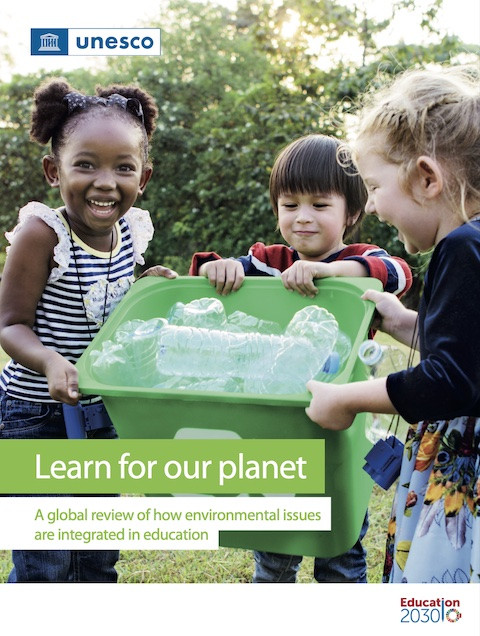 Learn for Our Planet: A Global Review of How Environmental Issues Are Integrated in Education Год публикации: 2021 Организация-автор: UNESCO 2020 was the equal hottest year on record. One million species are at risk of extinction. We use more resources than the planet can generate each year - if we continue to live the way we do today, we will need three earths by 2050. The way we currently live is not sustainable. Urgent change is needed, but lasting change is impossible without education.This publication presents the extent to which environmental issues are integrated in primary and secondary education policies and curricula across 46 UNESCO Member States. Over half of education policies and curricula studied made no mention of climate change. Only 19 per cent made reference to biodiversity. Countries have made progress: 83 per cent of education policies and curricula studied addressed the environment at least once, and 69 per cent mentioned sustainability - but it is clear that more needs to be done to prepare learners with the knowledge, skills, values and attitudes to act for our planet. Governments, education policy-makers, academics, and education and environmental stakeholders need to further commit to Education for Sustainable Development.
  Global Security, Religion and Education Development: a Crisis for the Field of Comparative Education? Год публикации: 2011 Автор: Yusuf Sayed | Lynn Davies | Mike Hardy | Abbas Madandar Arani | Lida Kakia | Masooda Bano Организация-автор: Taylor & Francis Building common ground on shared values should be a high priority for a diverse and devout society in an era of religious conflict. Otherwise we might fall into the equally false and far more dangerous illusion that we agree on nothing at all – and perhaps we tend to assume that education helps to do this, which is not necessarily the case. There is a greater concern that education is not just failing to step up effectively to the task of contesting undifferentiated and negative views of religions, but that it might not always be a force for good at all. It may in some cases help reinforce difference and create the conditions for conflict.The relationship, therefore, between religious difference, security and the assumed supportive role of education is far from a simple one. Global security, religion and education development: a crisis for the field of comparative education? Год публикации: 2011 Автор: Yusuf Sayed | Lynn Davies | Mike Hardy | Abbas Madandar Arani | Lida Kakia | Masooda Bano Организация-автор: Taylor & Francis Partager des valeurs communes devrait être une priorité absolue dans une société diversifiée et dévote en cette période de conflits religieux. Autrement, on pourrait tomber dans l’illusion, fausse et dangereuse, que nous sommes d’accord en rien - et on pense, probablement que l'éducation contribue à cet état de choses, alors que ce n’est pas forcément le cas. On est de plus en plus préoccupé par la question suivante : celle de considérer que non seulement l'éducation échoue quand il s’agit de contester d’une manière solide et efficace les points de vues non nuancés et négatifs en matière de religions, mais aussi que l’éducation n’est finalement pas une bonne chose. Dans certains cas, elle peut contribuer à renforcer la différence et créer les conditions d'un conflit. La relation, donc, entre la différence religieuse, la sécurité et le rôle présumé de soutien de l'éducation est loin d'être simple.
 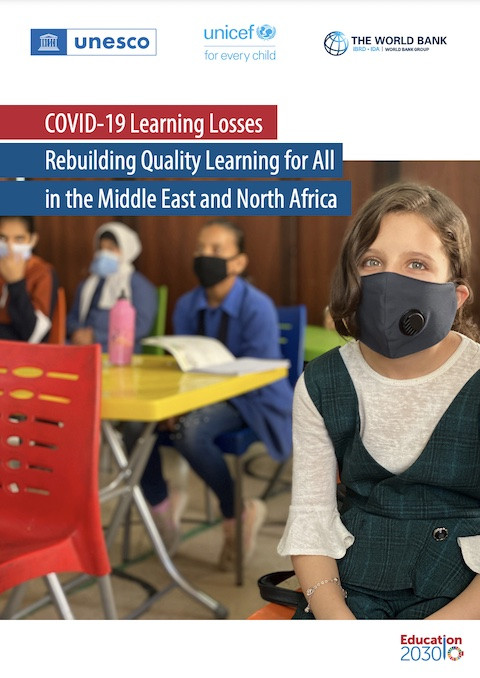 COVID-19 Learning Losses: Rebuilding Quality Learning for All in the Middle East and North Africa Год публикации: 2021 Автор: Hana Yoshimoto | Jeannette Vogelaar | Brenda Haiplik Организация-автор: UNESCO | United Nations Children's Fund (UNICEF) | World Bank An entire generation of children in the Middle East and North Africa (MENA) is estimated to be affected by the education crisis determined by the COVID-19 pandemic, with potential impacts that are going beyond the immediate/short term and also well beyond the education domain itself, with consequences on children’s socialisation, mental well-being, and future perspective of being active members of their society, including in the labor market. More information on the impact of the crisis would help countries to put in place strategies to mitigate the impacts. Timely investment and action to prevent extreme impacts of this crisis on education are of paramount importance in MENA, which already tackling a learning crisis before the COVID-19 outbreak.This publication delineates the overall education status in MENA after the breakout of COVID-19 pandemic, by presenting the education responses in MENA, and assessing the potential learning loss through a simulation analysis, recommendations are provided on how to build back better and enhance access and quality learning for all.