
Ресурсы
Изучайте широкий спектр ценных ресурсов ВГГ, чтобы углубить своё понимание и повысить эффективность исследований, просветительской деятельности, преподавания и обучения.
Найдено: 1,983
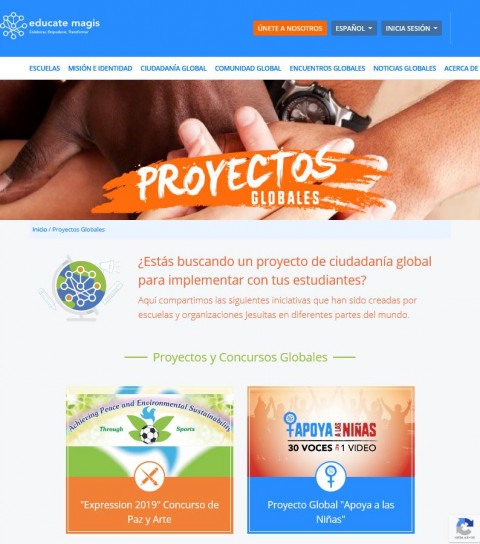 ¿Estás buscando un proyecto de ciudadanía global para implementar con tus estudiantes?: Proyectos y Concursos Globales Год публикации: 2019 Организация-автор: Educate Magis En este espacio de la página web de Educate Magis de la Comunidad de Jesús se accede a un calendario de actividades y eventos a nivel global y a información sobre iniciativas que han sido creadas por escuelas y organizaciones Jesuitas en diferentes partes del mundo. Se accede a distintos proyectos educatiovs para fomentar una ciudadanía mundial como "La silla roja global", "Camina una milla en mis zapatos", o "Únete a las niñas".
  International Education Course Год публикации: 2019 Автор: Juan Ignacio Martínez de Morentin | Concepción Medrano Организация-автор: UNESCO Chair in Communication and Educational Values UNESCO understands international education as a process resulting from international understanding, cooperation, peace and global citizenship education. This results from combining three perspectives: the first, human rights--in a strict sense--the second, fundamental liberties--stressing its possibilities and requirements--and the third, the United Nations system--understanding the way in which it is committed to achieving peace.International education is education for international understanding. This understanding must impregnate all of its educational systems, actions and materials. It is not a separate course. Instead, it must be present in all courses. International education or education for international understanding is the entire programme, the motivation behind any teaching & learning process. This course explains ideas and models that UNESCO has worked with in order to clarify what it aims for in education. This is seen through the resolutions of the general conferences and the Executive Board decisions, which are UNESCO´s framework in defining international education. Curso de Educación Internacional Год публикации: 2019 Автор: Juan Ignacio Martínez de Morentin | Concepción Medrano Организация-автор: UNESCO Chair in Communication and Educational Values Para la UNESCO, la educación internacional es un proceso que desemboca en comprensión, educación para la ciudadanía, cooperación y paz internacionales.Este resultado depende de conjugar tres perspectivas: derechos humanos -sumergiéndose en su significado-, libertades fundamentales -ejercitando sus posibilidades y exigencias- y sistema de las Naciones Unidas -conociendo esa forma de comprometerse en el logro de la paz. La educación internacional es educación para la comprensión internacional.Y ha de impregnar todas las acciones y materias del sistema educativo. No es una asignatura aparte; ha de articularse con todas ellas. La educación internacional o educación para la comprensión internacional es el programa, la motivación de cualquier proceso de enseñanza/aprendizaje.Este curso muestra ideas y diseños que la UNESCO ha ido trabajando para llegar a clarificar lo que persigue en el ámbito educativo. Las resoluciones de las conferencias generales y las decisiones del Consejo Ejecutivo son mimbres utilizados por la UNESCO para definir la educación internacional.
 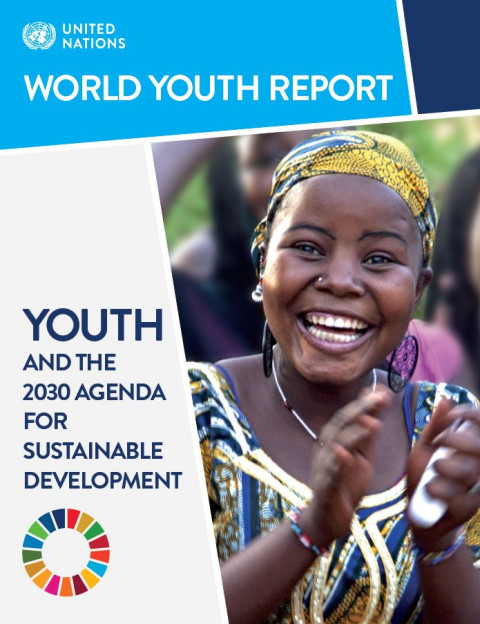 [Summary] World Youth Report: Youth and the 2030 Agenda for Sustainable Development Год публикации: 2019 Организация-автор: United Nations (UN) The World Youth Report on “Youth and the 2030 Agenda for Sustainable Development”, prepared by the United Nations Department of Economic and Social Affairs (UN DESA), examines the mutually supportive roles of the new agenda and current youth development efforts. The report provides insight into the role of young people in sustainable development in the context of the implementation of the 2030 Agenda for Sustainable Development and related frameworks, in particular, the Addis Ababa Action Agenda of the Third International Conference on Financing for Development and the World Programme of Action for Youth.The Report considers the role the 2030 Agenda can play in enhancing youth development efforts and examines how evidence-based youth policies can help accelerate youth-related objectives. It explores the critical role young people have in the implementation of sustainable development efforts at all levels. This publication is a summary of the World Youth Report on “Youth and the 2030 Agenda for Sustainable Development”. [요약문] 세계청소년보고서: 청소년과 2030 지속가능발전 의제 Год публикации: 2019 Организация-автор: United Nations (UN) UN 경제사회국이 작성한 『세계청소년보고서: 청소년과 2030 지속가능발전 의제(World Youth Report: Youth and the 2030 Agenda for Sustainable Development)』는 청소년 개발에 대한 현재의 노력과 새로운 의제 간의 상호 보완적인 역할을 다루고 있습니다. UN 경제사회국은 경제, 사회 및 환경 분야 글로벌 정책과 국가적 실천 사이의 연결고리를 제공하고 있습니다. 2년마다 발간되는 본 보고서는 회원국 및 기타 이해관계자들이 청소년 문제 해결에 대한 진전 사항을 파악하고, 정책과 현실의 격차를 평가하고, 가능한 정책 대안을 마련하기 위한 정보와 분석 결과를 제공합니다.본 보고서는 2030 지속가능발전 의제 및 관련 프레임워크 이행의 맥락, 특히 제3차 개발재원총회 아디스아바바 행동의제 (Ababa Action Agenda of the Third International Conference on Financing for Development) 및 세계청소년행동계획 (World Programme of Action for Youth) 의 이행과 관련하여 지속가능발전을 위한 청소년의 역할에 대한 통찰을 제시합니다. 2030 의제는 청소년개발 노력을 증진하고 증거기반(evidence ― based) 청소년정책이 청소년 목표 증진에 이바지하는 바를 검토하는 데 있어 중요한 역할을 할 수 있습니다. 본 보고서는 이를 통해 모든 수준에서의 지속가능발전 이행에 있어 결정적으로 중요한 청소년의 역할을 살펴봅니다. 이 간행물은 『세계청소년보고서: 청소년과 2030 지속가능발전 의제(World Youth Report: Youth and the 2030 Agenda for Sustainable Development)』의 요약본입니다.
 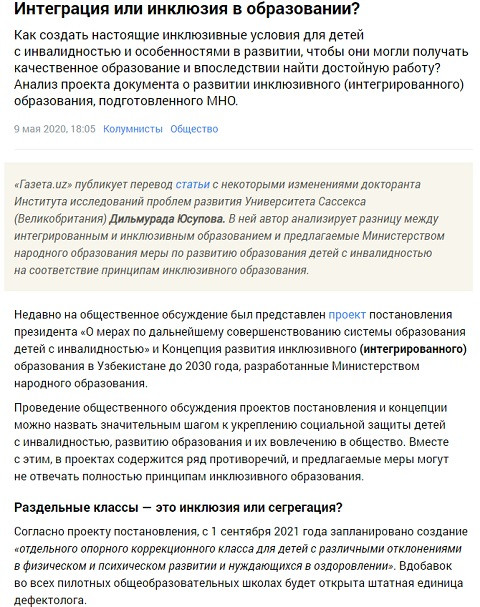 Integration or Inclusion in Education? Год публикации: 2020 Автор: Dilmurod Yusupov How to create true inclusive conditions for children with disabilities and developmental disabilities so that they can receive a quality education and subsequently find decent work? Analysis of a draft document on the development of inclusive (integrated) education prepared by INR. Интеграция или инклюзия в образовании? Год публикации: 2020 Автор: Dilmurod Yusupov Как создать настоящие инклюзивные условия для детей с инвалидностью и особенностями в развитии, чтобы они могли получать качественное образование и впоследствии найти достойную работу? Анализ проекта документа о развитии инклюзивного (интегрированного) образования, подготовленного МНО.
 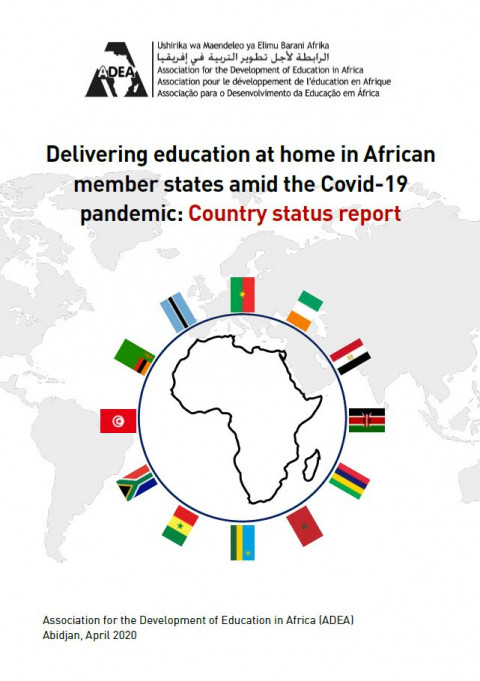 Assurer l’éducation à domicile dans les États membres africains dans le contexte de la pandémie de COVID-19 : rapport sur la situation dans les pays Год публикации: 2020 Организация-автор: Association for the Development of Education in Africa (ADEA) Depuis son émergence à la fin de 2019, la maladie à coronavirus 2019 (COVID-19) est devenue une pandémie, affectant fortement la vie de milliards de personnes à travers le monde, avec un impact énorme prévu sur l'économie mondiale et l'Afrique en particulier. L'éducation est l'un des secteurs les plus touchés, la fermeture des établissements d'enseignement dans de nombreux pays africains risquant d'affecter négativement la qualité de l'éducation.Afin d'obtenir une vision plus claire de l'état de l'apprentissage au cours de cette période et de mieux soutenir les pays dans l'immédiat, à court et à long terme, l'ADEA a engagé en mars 2020 certains des pays africains les plus touchés pour schématiser la situation nationale du secteur de l'éducation. Ce qui précède est un résumé des commentaires reçus par l'Afrique du Sud, le Burkina Faso, la Côte d'Ivoire, l'Égypte, le Ghana, le Kenya, l’île Maurice, le Maroc, le Rwanda, le Sénégal, la Tunisie et la Zambie en termes de stratégies nationales, de plateformes, d'outils ou d'applications d’apprentissage, de lacunes et défis, d’engagement des partenaires, de bonnes pratiques et d’enseignements tirés avec quelques recommandations.
  Bank of Actions for Global Citizens Год публикации: 2020 Организация-автор: Global Citizens Award The Bank of Actions guide can be used by anyone looking for creative inspiration to take action as global citizens. It is designed as a toolkit for engaging the public in global justice issues in meaningful ways that can help bring about positive change in our world.The Bank of Actions has been designed in the context of returned international volunteers participating in the Global Citizen Award programme.
  (Re)penser l’accès aux espaces intimes en contexte de handicap intellectuel: Une question de droit et de participation sociale (Revue générale de droit; vol. 47) Год публикации: 2017 Автор: Éditions Wilson & Lafleur, inc Организация-автор: Éditions Wilson & Lafleur, inc En contexte de handicap, la question de l’accès est constituée généralement de l’éventail des aménagements individuels et collectifs nécessaires afin de faciliter l’occupation d’espaces publics. A contrario, peu de choses sont dites à propos des aménagements possibles et potentiels requis afin de sécuriser l’espace privé des personnes identifiées comme ayant un handicap intellectuel. Ce sont pourtant ces lieux intimes, au sein desquels se développent et se déploient l’identité et l’expression affectives, qui sont susceptibles de contribuer à une reconnaissance plus soutenue de l’identité affective et de la citoyenneté sexuelle de ces personnes. Inspirée par les théories d’Erving Goffman et de Michel Foucault, une analyse phénoménologique interprétative (API) fut réalisée auprès des personnes ayant un handicap intellectuel et de leurs proches aidants afin d’explorer cette situation. Nos constats préliminaires suggèrent l’existence d’un processus de négociation complexe des acteurs, des lieux et des moments nécessaires afin de favoriser le développement de la vie affective et sexuelle. De ce fait, trois modes d’existence semblent cohabiter au sein d’une matrice complexe : la dépossession, l’habitation et l’occupation des espaces de socialisation et d’expression affective. Il est proposé d’aborder cette problématique en tant que dynamique géopolitique intégrant les processus d’exclusion des pratiques sexuelles des espaces privés, leur projection dans des espaces publics et, finalement, la juxtaposition de ces deux sphères, publique et privée dans des espaces mixtes. Nous discuterons enfin des implications de cette réflexion sur la « question de l’accès» et sur les politiques publiques visant à diminuer la discrimination systémique ciblant les personnes identifiées comme ayant un handicap intellectuel.