
Ресурсы
Изучайте широкий спектр ценных ресурсов ВГГ, чтобы углубить своё понимание и повысить эффективность исследований, просветительской деятельности, преподавания и обучения.
Найдено: 1,983
 De la capacité, de la compétence, de l’empowerment, repenser l’anthropologie de la participation (Politique et Sociétés; vol.34, no.1) Год публикации: 2013 Автор: Jean-Louis Genard Организация-автор: Société québécoise de science politique Le plus souvent étudiée dans le contexte des évolutions du politique et du passage présumé d’une démocratie représentative vers une démocratie davantage participative ou délibérative, la question de la participation est abordée ici sous l’angle d’une transformation de nos coordonnées anthropologiques. Les exigences et les attentes de participation se retrouvent en effet dans de multiples domaines qui excèdent de loin la seule sphère du politique, allant du monde de l’entreprise et de ses cercles de qualité jusqu’à la production de biens en kit sollicitant les capacités de montage des acheteurs. Cette extension du domaine de la participation s’appuie en réalité sur un certain nombre de présupposés anthropologiques. Ceux-ci prêtent aux acteurs des capacités et des compétences qu’ils sont censés détenir, à moins qu’ils ne soient appelés à les enrichir par des stratégies d’empowerment si elles leur font défaut ou sont insuffisantes. Ils leur attribuent aussi un potentiel de motivation indispensable à l’actualisation de ces compétences et capacités. Le texte soutient que l’évaluation des personnes ainsi que la configuration de nombreux dispositifs sociaux récents tendent de plus en plus à s’ajuster à ce nouveau référentiel anthropologique. Il en va ainsi de la participation politique bien sûr, mais aussi des nouvelles politiques sociales, des formations au «pouvoir d’agir », des objectifs éducatifs, des politiques de développement ou de santé. Revenant plus spécifiquement sur la question de la participation politique, le texte montre comment ces nouvelles coordonnées anthropologiques reconfigurent la question de l’expertise en réorganisant les partages entre expertises ordinaire et spécialisée et, du coup, le partage entre les espaces où peut prendre place une démocratie participative et ceux qui demeurent confiés à l’expertise technocratique.
  From Volunteers to Active Citizens Год публикации: 2015 Автор: Grainne O’Neil Организация-автор: Comhlámh This is a practical guide for volunteer sending-organisations, which aims to build capacity to support and deepen volunteers’ ongoing learning and critical engagement with international development issues, and to help volunteers “to address the structural and underlying causes of inequality and injustice to participate in social change making.”
 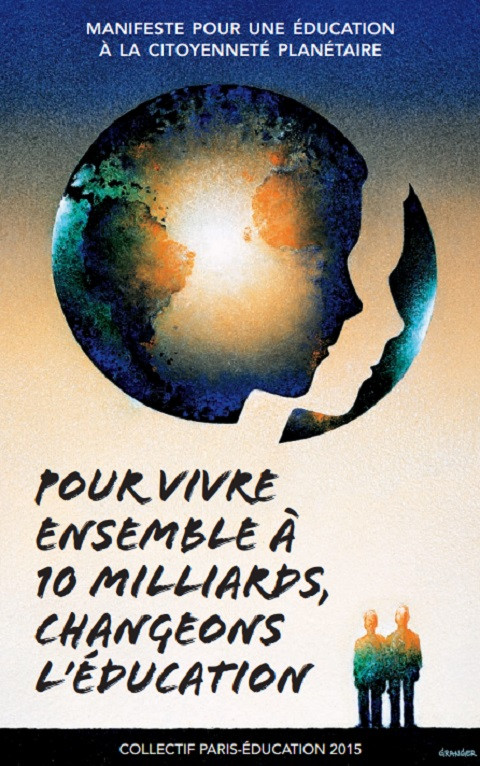 Pour vivre ensemble à 10 milliards, changeons l’éducation: Manifeste pour une éducation à la citoyenneté planétaire Организация-автор: Le collectif Paris-éducation 2015 | Les Amis de Circée 2050, c’est demain. Nos enfants et petits-enfants seront alors, sans doute, 10 milliards sur la Terre. D’ici là, quelles que soient les décisions qui seront prises par les gouvernants et les engagements de millions de citoyens dans le monde, la température du globe aura monté, comme le niveau des océans. Selon ce que notre génération aura entrepris plus ou moins résolument pour réduire nos émissions de CO2, ce sera entre 2° C ou 4° C à l’horizon 2100, voire davantage. Il faudra donc, de toute façon, vivre autrement. Face à l’ampleur, l’urgence, la diversité et la complexité des problématiques engendrées par le modèle de développement de nos sociétés contemporaines, nous sommes donc obligés, dans l’urgence, de nous pencher sur les questions d’éducation et de formation des générations futures qui devront affronter des réalités biophysiques, économiques et politiques inédites, dont nous commençons à peine à entrevoir l’ampleur. Ce qui est dès lors en jeu, avec l’avenir de l’homme et de la Terre, c’est l’humain, ce qu’il deviendra, ce qu’il sera capable de porter comme projet pour l’humanité. Quelles qualités d’humains devons-nous faire advenir pour que ces réalités inédites puissent être rencontrées demain, sans que l’humanité bascule dans la violence et le dépeçage égoïste de la planète? Quels enfants voulons-nous laisser à notre Terre?Cette urgence impose un changement d’échelle dans la transformation des systèmes éducatifs, des contenus et des méthodes d’enseignement. Malgré la volonté et la compétence de nombreux acteurs de l’école, force est de constater que les actions menées pour une éducation plus en cohérence avec les enjeux climatiques et, plus largement, sociétaux restent à la marge. Elles sont réalisées par des individus clairvoyants. Il est temps d’enclencher la vitesse supérieure.
  Intercultural Perspectives, Rights and Recognition in Montreal (Anthropologie et Sociétés; Vol. 41, No. 3) Год публикации: 2017 Автор: Francine Saillant | Joseph J. Lévy | Alfredo Ramirez-Villagra Организация-автор: Département d’anthropologie de l’Université Laval Within the debates about the way to deal with cultural diversity, new perspectives emerge which are actually discussed by the political and sociocultural instances, such as the notions of interculturalism, intercultural, interculturality, recognition, and their links to human rights. These topics are part of the discussion in Quebec, whether on the political scene, on the urban management level and in the social sciences. This article presents the European and Quebec perspectives on these issues and analyses the discourses of community leaders in Montreal who are involved and interviewed within the InterReconnaissances project. Data show that theses intercultural perspectives are not formally defined nor validated, although they often are associated with diverse practices and trainings that are designated to enhance the awareness of the actors involved in the intercultural encounter. The notions of right and recognition play a part on three levels : the struggle for the recognition of the migrant groups and of their cultures, and the recognition of the work done by community organizations. The awareness of the social diversity within these groups of migrants, who may be strongly stigmatized, bring new intercultural problematics, corroborating the importance of these notions on the field of communitarian action in Montreal. Perspectives interculturelles, droits et reconnaissance à Montréal (Anthropologie et Sociétés; Vol. 41, No. 3) Год публикации: 2017 Автор: Francine Saillant | Joseph J. Lévy | Alfredo Ramirez-Villagra Организация-автор: Département d’anthropologie de l’Université Laval Dans les débats entourant la gestion de la diversité culturelle, de nouvelles perspectives sont actuellement discutées par les instances politiques et socioculturelles, comme celles de l’interculturalisme, de l’interculturel, de l’interculturalité, de la reconnaissance et de leurs arrimages aux droits humains. Ces thèmes se retrouvent dans la réflexion québécoise sur les plans politique, de la gestion urbaine et de la recherche en sciences sociales. Cet article, après avoir situé les perspectives respectives européenne et québécoise sur ces thèmes, analyse les discours de leaders communautaires montréalais impliqués dans le domaine de l’immigration et interviewés dans le cadre du projet InterReconnaissances. Les données montrent que les perspectives interculturelles ne font pas l’objet d’une formalisation ni d’une validation poussées, mais qu’elles se retrouvent surtout associées à des pratiques diverses et à des formations visant à la sensibilisation des intervenants impliqués dans la rencontre interculturelle. Les notions de droit et de reconnaissance se déclinent sur trois plans: la lutte pour la reconnaissance à la fois des groupes immigrants, de leurs cultures et du travail réalisé par les groupes associatifs dans ce domaine. La reconnaissance de la diversité sociale des groupes fortement stigmatisés suggère aussi l’ouverture à de nouvelles problématiques interculturelles jusque-là négligées, confirmant la place importante de ces notions dans le champ de l’action communautaire montréalaise.
 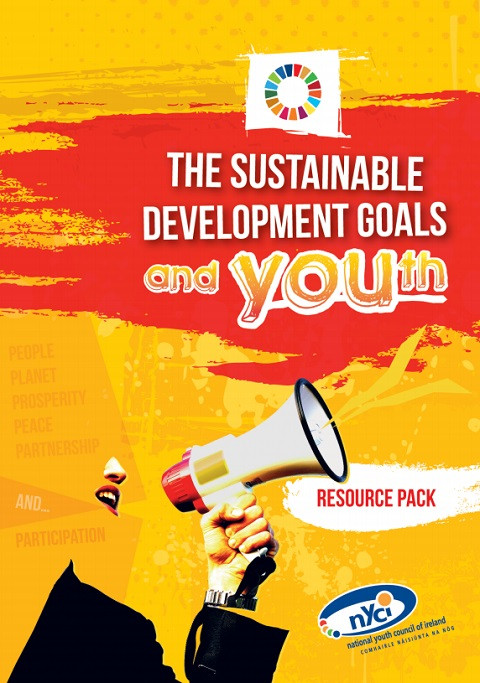 The Sustainable Development Goals and Youth: Resource Pack Год публикации: 2015 Автор: Valerie Duffy | Leo Gilmartin | Fionn Scott Организация-автор: National Youth Council of Ireland (NYCI) | Irish Aid This resource encourages young people and those who work with young people to learn about the new Sustainable Development Goals (SDGs) and think about how these Goals can be incorporated into our everyday lives. It supports the exploration of key local, national and global issues to see and understand how we are linked together.
  주요 외국의 환경교육 비교 연구 Год публикации: 2018 Автор: 김찬국 | 이선경 | 김남수 | 민경석 | 황세영 | 이은주 | 김태연 | 강진영 Организация-автор: 대한민국 환경부 | 한국환경교육학회 이 연구는 유엔 지속가능발전교육 10년(UN DESD: 2005~2014)이 종료된 시점에서 국제기구와 주요 외국의 환경교육 분야에서 최근 나타나는 변화에 대한 종합적인 이해가 필요한 상황에서 시작되었다.특히 최근 환경교육 분야의 축적된 경험과 논의를 바탕으로 각국의 환경 및 교육상황에 부합하여 환경교육 법·제도 등을 정비하려는 노력이 국제 사회에서 이루어지고 있다는 점에 주목하였다. 이 조사 연구는 아시아, 유럽, 북미와 남미에 위치한 10개국(일본, 중국, 대만, 싱가포르, 호주, 영국, 독일, 미국, 캐나다, 브라질)을 대상으로 환경교육 현황을 조사하고 비교분석과 발전방향을 제시한다. 아울러 국제기구인 UNEP와 UNESCO의 환경교육 정책과 실행 방식도 함께 살펴보았다. Part I에는 주요 외국 10개국의 환경교육 상황과 UNESCO, UNEP의 환경교육 정책을 수록하였고, Part II에서는 각국의 환경교육을 비교 분석하고 있다.
 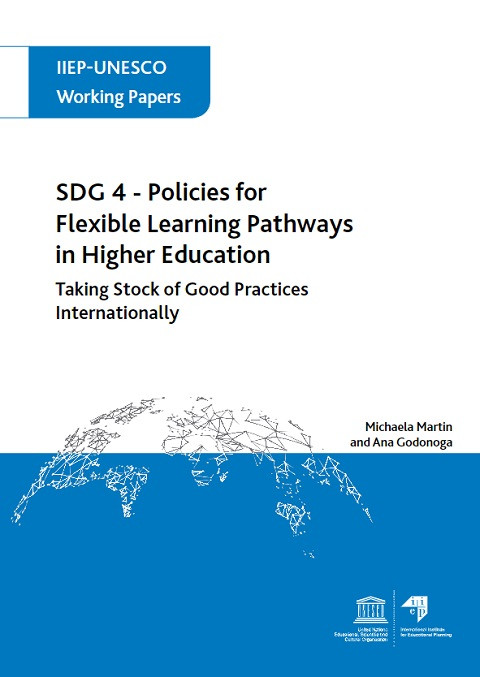 SDG 4 - Policies for flexible learning pathways in higher education: Taking stock of good practices internationally (IIEP-UNESCO Working Papers) Год публикации: 2020 Автор: Michaela Martin | Ana Godonoga Организация-автор: UNESCO International Institute for Educational Planning (IIEP) This paper draws on country examples across different UNESCO regions to illustrate policy-relevant as well as practical approaches to developing flexible learning pathways in higher education. It shows that policies can facilitate flexible learning pathways include legislative and regulatory frameworks, articulation and transfer policies, and lifelong learning policies. It also presents a number of supportive policy instruments that can serve to bridge policy and practice, such as national qualifications frameworks, quality assurance and accreditation, credit accumulation and transfer systems, and information and guidance services. Finally, apart from discussing system-wide approaches, this paper also gives examples of more decentralized, institution-led practices that contribute to flexible learning pathways. This paper concludes that well-designed policy frameworks and instruments and targeted measures can create an enabling environment for flexible learning pathways, but their effectiveness requires strong administrative capacity and coordination, as well as the involvement of all relevant stakeholders, including those who design, implement, and benefit from policies. It is also essential that policies, instruments, and practices are in alignment with one another and work towards a common objective. Therefore, a holistic approach, comprising an adequate and well-coordinated mix of policies, instruments, and targeted measures, is required, in order to translate flexible learning pathways from a national priority into an institutionalized practice that reaches its intended beneficiaries.
  다문화시대 평생교육 관점에서의 세계·민주시민교육 과제 및 실천 방향 Год публикации: 2018 Автор: 옥일남 Организация-автор: 국가교육회의 | 서원대학교 산학협력단 본 연구는 이제까지의 국내외 민주시민교육의 정책 동향을 검토하고, 다문화사회의 특수성과 평생교육의 관점에서 새롭게 요청되는 민주시민교육의 정책 방향과 주요 과제를 제시하는데 목적이 있다. 이러한 연구 목적을 달성하기 위해 현재 우리 사회가 처해있는 세계화·다문화 맥락을 이해하고, 해외의 주요 정책 사례들을 살펴보고자 한다. 그리고 거버넌스 개념을 활용하여 민주시민교육을 세계시민교육과 연계해 세계화·다문화 시대의 시민교육을 위한 정책 방향과 실천 방안을 제시할 것이다.
  Uzbekistan Expresses Concerns about School Bullying Год публикации: 2018 Автор: Дарина Солод Организация-автор: Central Asian Bureau for Analytical Reporting (CABAR) Psychologists will appear in secondary schools in Uzbekistan. The author asks if they will be able to influence the solution of this complex social problem among children.