
Ресурсы
Изучайте широкий спектр ценных ресурсов ВГГ, чтобы углубить своё понимание и повысить эффективность исследований, просветительской деятельности, преподавания и обучения.
Найдено: 1,951
 Rethinking Pedagogy: Exploring the Potential Of Digital Technology In Achieving Quality Education Год публикации: 2019 Автор: Lorena Alemán de la Garza | Alessandra Anichini | Péter Antal | Aurélie Beaune | Éric Bruillard | Diane Burke | Pedro Henrique Cacique Braga | Ruma Chakravarti | Sriya Chakravarti | Deng Chen | Lidiya Chikalova | Helen Crompton | Ilana De Almeida Souza Concilio | William Cope | Lorenz Denks | Matthew Farber | Giovanni Fonseca | Pintér Gergely | Marcela Georgina Gómez Zermeño | Russell Hazard | Laura Hosman | Mary Kalantzis | Kojanitz László | Xavier Levoin | Kristen Linzy | Arnab Mandal | Yoko Mochizuki | Ariam Mogos | Tünde-Lengyel Molnár | Matthew Montebello | Sadaqat Mulla | Sandra Gudiño Paredes | Christelle Pauty-Combemore | Boyka Parfitt | Réka Racsko | Irais Monserrat Santillán Rosas | Khitam Shraim | Jisoo Song | Avgoustos Tsinakos Организация-автор: Mahatma Gandhi Institute of Education for Peace and Sustainable Development (MGIEP) With the exponential growth of digitally mediated communication, digital media and gaming, the landscape of what we understand as learning environments is changing significantly. Today the use of digital technology in education is attracting considerable public and policy attention as
well as private investment. With a rise in discourses both heralding and cautioning against the use of digital technology in education, there is a need to pool the expertise and experience on the use of technology in education from around the world to advance public debate and evidence-informed policymaking. Based on the literature review, mapping of digital education resources in circulation, and examples of implementation of digital education initiatives from around the world, this report aims to provide insights that would help lead to the wise, innovative and ethical use of digital technology in education as a new dimension in achieving SDG 4 — inclusive and equitable quality education and lifelong learning opportunities for all. By so doing, it also attempts to contribute to a rethink of teaching and learning in the face of enormous opportunities and challenges brought about by digital technology in the times of change and turmoil.
Rethinking Pedagogy: Exploring the Potential Of Digital Technology In Achieving Quality Education Год публикации: 2019 Автор: Lorena Alemán de la Garza | Alessandra Anichini | Péter Antal | Aurélie Beaune | Éric Bruillard | Diane Burke | Pedro Henrique Cacique Braga | Ruma Chakravarti | Sriya Chakravarti | Deng Chen | Lidiya Chikalova | Helen Crompton | Ilana De Almeida Souza Concilio | William Cope | Lorenz Denks | Matthew Farber | Giovanni Fonseca | Pintér Gergely | Marcela Georgina Gómez Zermeño | Russell Hazard | Laura Hosman | Mary Kalantzis | Kojanitz László | Xavier Levoin | Kristen Linzy | Arnab Mandal | Yoko Mochizuki | Ariam Mogos | Tünde-Lengyel Molnár | Matthew Montebello | Sadaqat Mulla | Sandra Gudiño Paredes | Christelle Pauty-Combemore | Boyka Parfitt | Réka Racsko | Irais Monserrat Santillán Rosas | Khitam Shraim | Jisoo Song | Avgoustos Tsinakos Организация-автор: Mahatma Gandhi Institute of Education for Peace and Sustainable Development (MGIEP) With the exponential growth of digitally mediated communication, digital media and gaming, the landscape of what we understand as learning environments is changing significantly. Today the use of digital technology in education is attracting considerable public and policy attention as
well as private investment. With a rise in discourses both heralding and cautioning against the use of digital technology in education, there is a need to pool the expertise and experience on the use of technology in education from around the world to advance public debate and evidence-informed policymaking. Based on the literature review, mapping of digital education resources in circulation, and examples of implementation of digital education initiatives from around the world, this report aims to provide insights that would help lead to the wise, innovative and ethical use of digital technology in education as a new dimension in achieving SDG 4 — inclusive and equitable quality education and lifelong learning opportunities for all. By so doing, it also attempts to contribute to a rethink of teaching and learning in the face of enormous opportunities and challenges brought about by digital technology in the times of change and turmoil.  Adult Media Literacy in Australia: Attitudes, Experiences and Needs Год публикации: 2021 Автор: Tanya Notley | Simon Chambers | Sora Park | Michael Dezuanni Организация-автор: Western Sydney University | Queensland University of Technology | University of Canberra This report is based on a survey of 3,510 adult Australians to understand the different types of media they use, the value they place on different media activities, their confidence in their own media abilities and their access to media literacy support. The survey was designed with input from diverse voices in the media literacy field including researchers, media producers, policymakers, government agencies, educators and public cultural institutions. The findings show that most Australians use several different types of media each day, they believe a diverse range of media activities are important in their lives, but their confidence in their own media abilities is unexpectedly low. The findings demonstrate that if we accept that media is integral to all aspects of our lives, far more needs to be done to address the needs of groups who are the least confident about their media abilities and who have access to the least support. The findings also show that increasing media literacy can yield direct benefits for increasing people’s civic engagement.
 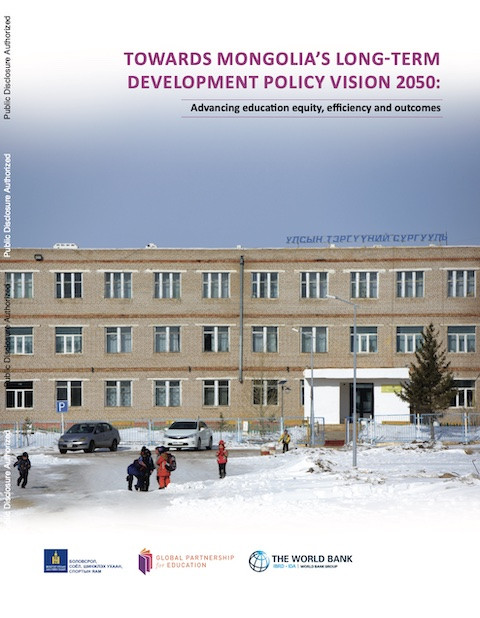 Towards Mongolia’s Long-Term Development Policy Vision 2050: Advancing Education Equity, Efficiency and Outcomes Год публикации: 2020 Организация-автор: Mongolia Ministry of Education, Culture, Science and Sports | World Bank This report seeks to synthesize and analyze education outcomes with a view of identifying the main priorities for strengthening the education sector in support of Mongolia’s Sustainable Development Vision 2050. The report highlights data and findings generated from a series of source reports (see bibliography) related to the goals and targets set out in the Vision 2050. The report is composed of six thematic chapters: Access; Equity; Internal Efficiency, Education Cost and Finance; External Efficiency; Management. Each chapter will include an overview of the current situation and recent development with a focus on, key achievements and persistent challenges. As a synthesis report, the information on each topic is not exhaustive but rather seeks to present key findings. Specific activities highlighted in the Vision 2050 have been included at the beginning of each chapter and a complete mapping by activity is annexed (Annex 1. Vision 2050 Chapter mapping). This synthesis report draws on conclusions, finding, data and surveys produced in collaboration with MECSS by the Asian Development Bank, the Global Partnership for Education and the World Bank. The synthesis also draws from key UNESCO reports. The scope, research, and focus of the source reports differ, and precise findings are, on occasions, incongruent however the overall conclusions are fundamentally compatible. Whereas most of the source reports focus on one or two key stages, the synthesis report seeks to extract cross-cutting and/or recurring challenges that have an impact, positive or negative, on equity, efficiency and outcomes which ultimately may contribute to the implementation of Vision 2050. Mongolia’s State Education Policy (2014-2024) states: ‘Education is the main key factor of each citizen’s lifelong support and guarantee of life quality, and of the State’s societal and economical, science and technological development, and guarantee of national independence and security. Mongolian State shall develop education as a leading sector in society’.
  Active citizenship and late-life learning in the community Год публикации: 2013 Автор: Carmel Borg This paper problematises dominant notions of active citizenship in later life and provides a framework for an alternative view of active citizenship. It also illustrates how adult educators can facilitate learning processes where late-life learners, reflect on the impact of the neoliberal value system and on the consequences of its hegemonic practices on personal and community life, before engaging in transformative action.
  SDG4 관점에서 한국의 COVID-19 대응 진단 및 Post COVID-19를 위한 제언 Год публикации: 2020 Автор: 장상현 | 계보경 | 김민 | 박기웅 | 백송이 | 김명량 | 김동진 | 장경숙 | 김정희 | 황정원 | 김철희 | 최현식 | 박민선 | 엄정민 Организация-автор: 한국교육학술정보원 본 연구는 UN의 지속가능개발목표(SDGs)의 네 번째인 SDG4의 관점에서 한국의 COVID-19에 대한 교육정책 분야의 대응 방안과 사례를 진단하고, COVID-19 이후에 맞이하게 될 시대의 SDG4 세부목표를 제안하기 위해 수행되었다. 모든 이를 위한 포용적이고 공평한 양질의 교육 보장과 평생학습의 증진을 위한 ‘교육2030 인천 선언(Education 2030: Incheon Declaration and Framework for Action)’이 채택된 이후, SDG4 교육목표를 달성하기 위한 범 정부와 민간 차원의 지원이 계속되었으나, COVID-19 팬데믹으로 인해 학생들 간의 학습 격차가 발생하고, 학습 기회가 약화되는 등 적극적인 대응책이 필요해지고 있는 상황이다. 이에 본 연구에서는 COVID-19 상황 하에서 한국의 교육 현황을 점검하고 포용성, 형평성, 양질의 교육을 실현할 수 있는 대응 방안을 탐색하며, 이를 바탕으로 글로벌 의제와 한국적 대응 방안을 융합한 포스트 COVID-19를 위한 SDG4 세부목표별 제언을 도출하고자 하였다. 본 저작물은 한국교육학술정보원에서 2020년 작성하여 공공누리 제 4유형으로 개방한 ‘SDG4 관점에서 한국의 COVID-19 대응 진단 및 Post COVID-19를 위한 제언(장상현 외)’을 이용하였으며 해당 저작물은 한국교육학술정보원(www.keris.or.kr)에서 무료로 다운받으실 수 있습니다.
 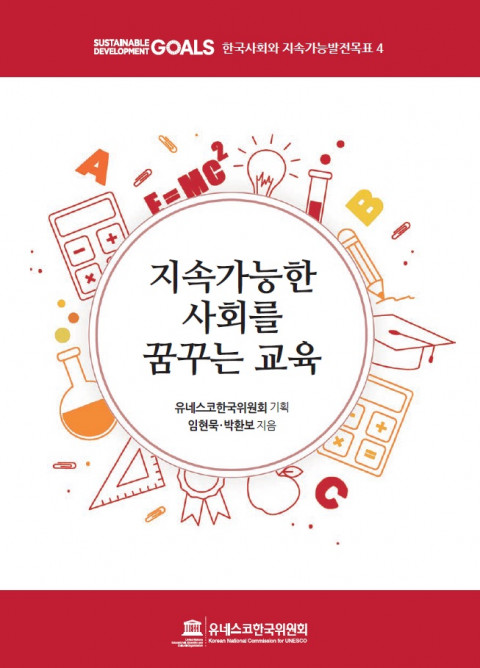 한국사회와 지속가능발전목표 4: 지속가능한 사회를 꿈꾸는 교육 Год публикации: 2018 Автор: 임현묵 | 박환보 Организация-автор: 유네스코한국위원회 지속가능발전목표에 대한 시민의 이해를 돕고자 유네스코한국위원회가 발간하는 ‘한국사회와 지속가능발전목표’ 시리즈 중 4번째로, 세계시민교육과 지속가능발전교육을 포함한 지속가능발전목표 4번을 집중적으로 다루고 있다. 유네스코한국위원회는 2017년 <<한국사회와 지속가능발전목표 7: 우리의 지속가능한 에너지>>와 <<한국사회와 지속가능발전목표 11: 우리의 지속가능한 도시>>를 펴낸 데 이어, 2018년에는 <<한국사회와 지속가능발전목표 15: 우리의 지속가능한 생물다양성>>과 이 책을 발간했다.
 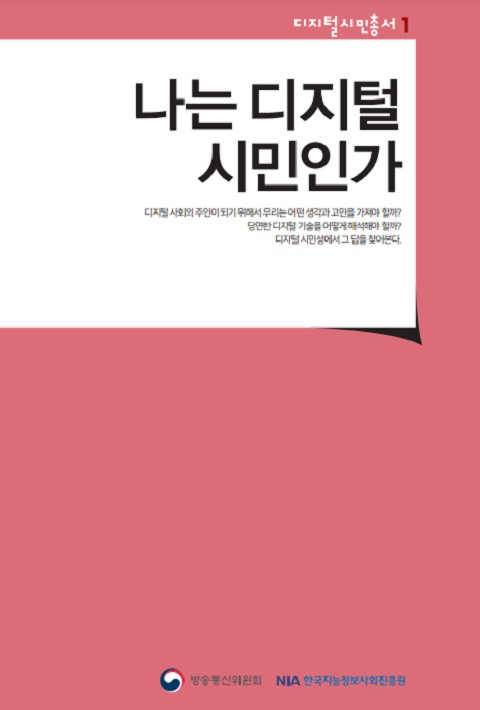 나는 디지털 시민인가 (디지털 시민총서; 1) Год публикации: 2020 Автор: 김양은 Организация-автор: 방송통신위원회 | 한국지능정보사회진흥원 본 자료는 디지털 시대가 요구하는 디지털 시민성, 그리고 디지털 시민이 알아야 할 디지털 사회의 다양한 모습을 살펴보도록 구성하였다.
  La compasión y la auto-compasión: El secreto mejor guardado en la eduación. Год публикации: 2021 Организация-автор: Campus Virtual MIMI Este webinar trata sobre las herramientas que permiten que la compasión y la auto-compasión puedan ser aplicadas en la vida diaria. Se contextualiza en la pandemia de COVID-19 un momento crítico para el mundo que merece estrategias para entenderse a si mismos y a los otros y de esta manera, contriuir al bienestar propio y de los otros. Describe el concepto de compasión y su importancia en la cotidianidad así como sus efectos de su práctica y como la auto-compasión permiten su sostenibilidad.
  Mindfulness in the Context of Education Год публикации: 2021 Организация-автор: Campus Virtual MIMI This podcast deals with the concept of mindfulness, understood as an Eastern tradition that in recent years has been adapting to Western culture from different contexts to work on its own well-being. It is also defined by the author Jon Kabat-Zinn, who has brought to the West is practical, as the possibility of paying attention in a determined way to the present moment, without judgments. It has 3 components: attention, the intention to be present and attitudes individuals. It shows to be an inherent quality of the human being, as well as a capacity and ability that is trained, a practice that helps the brain in terms of its predispositions and has scientific bases that strongly relate it to mental health, due to its intervention in the nervous system , which generate a balance in the activation of this system. Therefore, the objective of mindfulness is to generate a possibility to balance emotions and learn to regulate them. It allows thoughts to connect with the body, which impacts on affective symptoms by strengthening the immune system. The video shows the ways to use it in everyday life in the academic context. La atención plena en el contexto de la educación Год публикации: 2021 Организация-автор: Campus Virtual MIMI Este Podcast trata acerca del concepto de atención plena, entendido como una tradición oriental que en los ultimos años se ha venido adaptando a la cultura occidental desde distintos contextos para trabajar en el bienestar propio. La define también a partir de el autor Jon Kabat-Zinn, quien ha traido a occidente está practica, como la posibilidad de prestar atención de manera determinada al momento presente, sin juicios.Tiene 3 componentes la atencjón, la intención de estar presente y actitudes particulares. Evidencia ser una cualidad inherente al ser humano, así como una capacidad y habilidad que se entrena, una práctica que ayuda al cerebro en cuanto a sus predisposiciones y tiene bases científicas que la relacionan fuertemente con la salud mental, por su intervención en el sistema nervioso, que generan un equilibrio en la activación de este sistema. Por tanto el objetivo de la atención plena es generar una posibilidad de equilibrar las emociones y aprender a regularlas. Permite que los pensamientos se conecten con el cuerpo lo que impacta en los síntomas de tipo afectivo fortaleciendo el sistema inmune. El video muestra las maneras para usarlo en la vida cotidiana en el contexto académico.