
Ресурсы
Изучайте широкий спектр ценных ресурсов ВГГ, чтобы углубить своё понимание и повысить эффективность исследований, просветительской деятельности, преподавания и обучения.
Найдено: 1,951
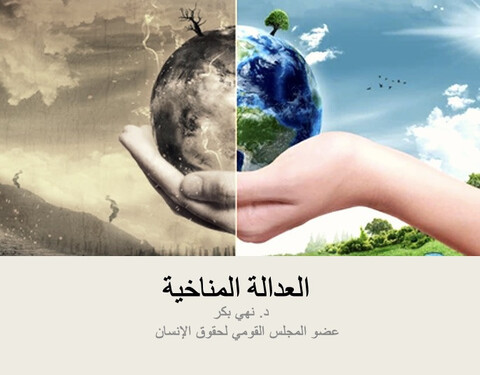 Climate Justice and Human Rights Год публикации: 2022 Автор: Noha Bakr Climate justice is linking the impacts of global warming with principles of justice, specifically environmental justice and social justice, by exploring issues resulting from global warming such as equality, human rights, collective rights, and historical responsibilities. العدالة المناخية و حقوق الأنسان Год публикации: 2022 Автор: Noha Bakr العدالة المناخية هي ربط تأثيرات الاحتباس الحراري مع مبادئ العدالة، تحديدًا العدالة البيئية والعدالة الاجتماعية، وعن طريق استكشاف بعض القضايا الناجمة عن الاحتباس الحراري مثل المساواة وحقوق الإنسان والحقوق الجماعية والمسؤوليات التاريخية.
  Quiz climat: êtes-vous chaud pour démêler le vrai du faux? Год публикации: 2023 Организация-автор: Le Monde Quelle est la source d’énergie la plus polluante au monde ? De quand date la première conférence sur le climat ? Avec ce test, Le Monde vous invite à faire le point sur le réchauffement climatique et son impact sur la planète. Vous pourrez en savoir plus sur les grands enjeux environnementaux grâce à l'application de culture générale «Mémorable», conçue par les journalistes du Monde pour développer vos savoirs et pour stimuler votre mémoire de manière agréable et efficace. Chaque leçon, consacrée à un thème donné, propose des extraits d’articles tirés de nos archives depuis 1944, des infographies ou des vidéos, suivis de questions. A vous d’y répondre, avant de profiter de corrections immédiates et personnalisées, d’articles d’approfondissement, puis de révisions. what is the world's most polluting energy source? When was the first climate conference held? With this test, Le Monde invites you to take stock of global warming and its impact on the planet. Learn more about major environmental issues with the "Mémorable" general knowledge application, designed by Le Monde's journalists to develop your knowledge and stimulate your memory in a pleasant and effective way. Each lesson, devoted to a given theme, features excerpts from articles in our archives dating back to 1944, infographics or videos, followed by questions. It's up to you to answer them, before benefiting from immediate, personalized corrections, in-depth articles and revision.
  Imagining and Practising Global Citizenship Education Год публикации: 2020 Организация-автор: UNESCO Venice This methodological guide illustrates the ways in which the International Cooperation Centre (ICC) has been promoting and practicing Global Citizenship Education in Italy for more than ten years. The training work developed by the ICC in the field of GCED, presented here in its theoretical articulation and in its practical outlining in some concrete experiences, may offer some reflections in the form of useful recommendations for continuing and strengthening the promotion of GCED.
 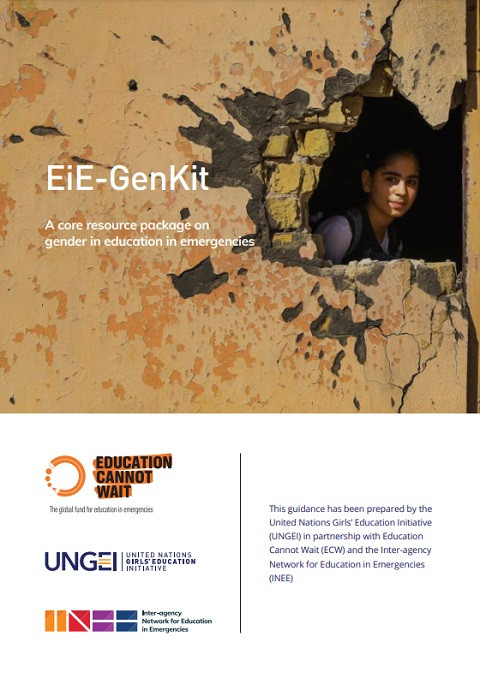 EiE-GenKit: A Core Resource Package on Gender in Education in Emergencies Год публикации: 2021 Организация-автор: Education Cannot Wait (ECW) | Inter-agency Network for Education in Emergencies (INEE) | United Nations Girls' Education Initiative (UNGEI) When gender-responsive, quality education is available to all it has the potential to transform societies and build sustainable peace. A joint initiative from the Inter-agency Network for Education in Emergencies (INEE), Education Cannot Wait (ECW) and the UN Girls’ Education Initiative (UNGEI), the EiE-GenKit is a core resource package for gender in education in emergencies. The EiE-GenKit is the first resource of its kind, providing education practitioners with practical tools to promote gender-responsive programming from crisis to peace and sustainable development.The EiE-GenKit is based on extensive research and consultation with the latest resources, evidence, new tools and good practice available in one easy-to-use package. The EiE-GenKit builds on existing humanitarian processes for a streamlined approach to gender-responsive EiE. The EiE-GenKit offers tools for practical and immediate use including checklists, tipsheets and assessment templates supporting practitioners to ensure that each phase of an EiE intervention is gender-responsive. Bridging the gap between what we know about gender-responsive EiE and the tools we need to make it happen, the EiE-GenKit aims to promote improved gender and education outcomes of learners living in crises.
 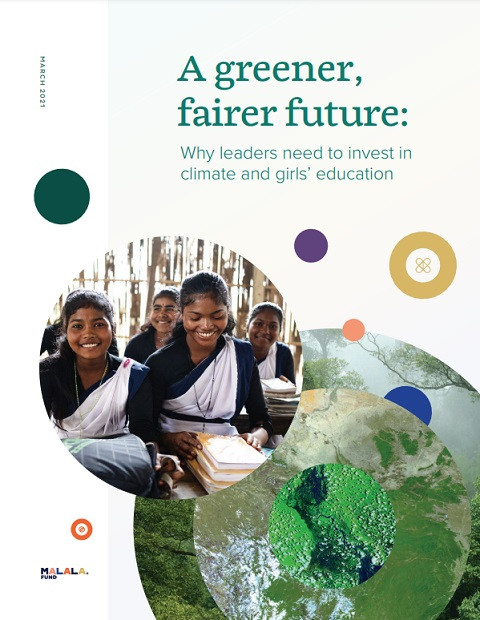 A Greener, Fairer Future: Why Leaders Need to Invest in Climate and Girls’ Education Год публикации: 2021 Автор: Lucia Fry | Philippa Lei Организация-автор: Malala Fund The world is on the brink of a climate catastrophe — and girls are disproportionately bearing the impact. Climate-related events like flooding, droughts and increased exposure to zoonotic diseases amplify the inequalities girls face and further limit their ability to access and complete their education. Malala Fund’s new report, A greener, fairer future: Why leaders need to invest in climate and girls' education, estimates that in 2021 climate-related events will prevent at least four million girls in low- and lower-middle-income countries from completing their education. If current trends continue, by 2025 climate change will be a contributing factor in preventing at least 12.5 million girls from completing their education each year.Yet evidence shows that closing gender gaps in education can help countries better adapt to the effects of climate change and decrease the rate and impact of global warming.“Girls in lower-income countries are the least responsible for the climate crisis, so it’s a travesty that it now threatens their very lifeline to a brighter future: quality education,” said Lucia Fry, Director of Research and Policy at Malala Fund. “Malala Fund wants leaders at COP26 to hear young people’s demands around education. They know that climate action helps girls stay in school, which in turn helps countries tackle the climate crisis. Young people are demanding an education that will prepare them to adapt to the effects of climate change and challenge the root causes of the crisis.”A greener, fairer future outlines the origins of the climate emergency and explains how confronting issues like the legacy of colonialism, racial discrimination and gender inequality through education is key to finding a sustainable solution to the crisis. The paper introduces the Gender-Equal Green Learning Agenda, a new framework to help leaders address the climate crisis through education.In this report, Malala Fund recommends how leaders can take urgent climate action at meetings this year, like COP26. This includes reducing carbon emissions, improving girls’ access to education, helping communities adapt to the realities of climate change and transforming education systems to provide all students with the knowledge, skills and values needed to challenge the social and economic inequalities fuelling the climate crisis.For more about the links between climate change and girls’ education, read the full paper below.
 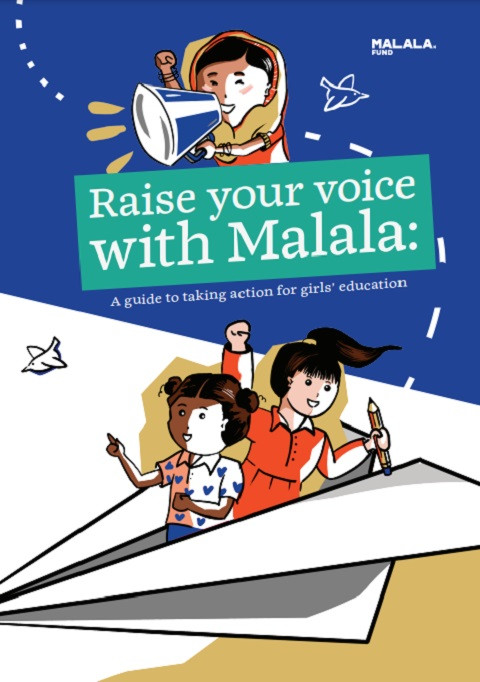 Raise Your Voice With Malala: A Guide to Taking Action for Girls’ Education Год публикации: 2018 Автор: Emily Laurie | Eleanor Gall Организация-автор: Malala Fund This guide gives young activists the tools to raise their voices and make change happen. Girls around the world are standing up in support of their out-of-school sisters and fighting to see every girl complete 12 years of free, safe, quality education. By taking action in their communities, girls can contribute to the peace and prosperity of our entire world. The guide includes real stories about girls around the world working to make sure all girls have the opportunity to go to school.
  Ten Clues for Rethinking Curriculum (In-Progress Reflection; No. 42, 2021) Год публикации: 2021 Автор: Renato Opertti Организация-автор: UNESCO International Bureau of Education (IBE) This discussion document highlights the urgency of rethinking curriculum in light of reinforcing the commitments of the Education 2030 Agenda on learning, disruptive systemic worldwide societal changes, and crucially, the profound transformation of education and education systems post Covid-19. Curriculum is always at the core of giving effect to social aspirations and ideals on the why, what, how, when, and where of teaching, learning, and assessing. We propose a series of 10 interconnected clues to deepen on the systemic and holistic understanding of curriculum as contributing to lay foundations for a better, sustainable and fair future. These clues are: understanding the new generations; combatting factors related to vulnerability; reinforcing understanding between school and families; deepening glo-local education; enhancing the focus on the person; promoting synergies among values; valuing diversity; focusing on education that enhances freedom; moving toward hybrid modes of education; and inspiring affection for educators.
 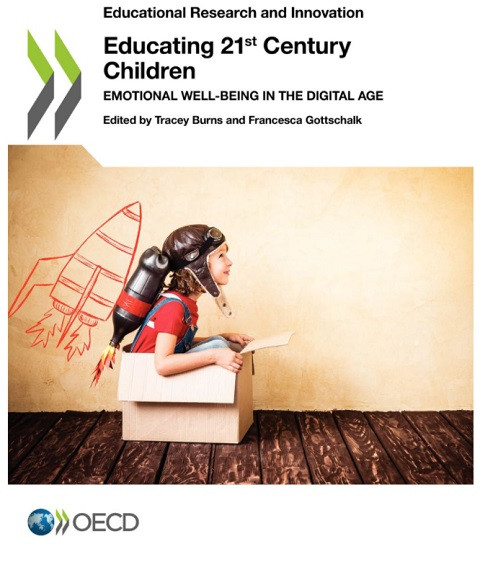 Education 21st Century Children: Emotional Well-being in the Digital Age (Educational Research and Innovation) Год публикации: 2019 Организация-автор: Organisation for Economic Co-operation and Development (OECD) This report examines modern childhood, looking specifically at the intersection between emotional well-being and new technologies. It explores how parenting and friendships have changed in the digital age. It examines children as digital citizens, and how best to take advantage of online opportunities while minimising the risks. The volume ends with a look at how to foster digital literacy and resilience, highlighting the role of partnerships, policy and protection.
 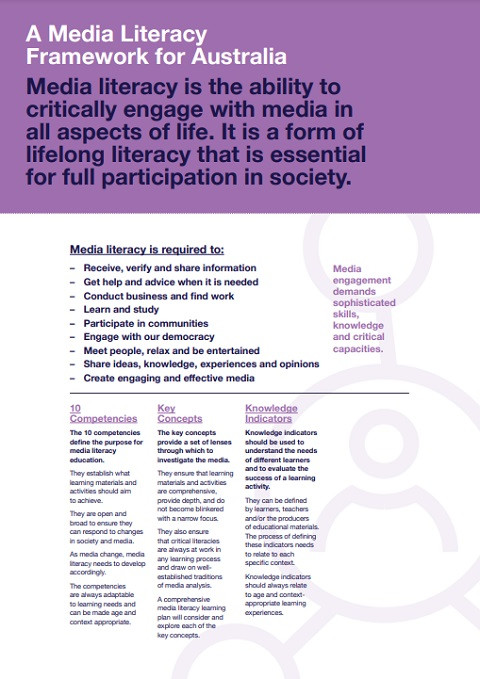 A Media Literacy Framework for Australia Год публикации: 2020 Организация-автор: Australian Media Literacy Alliance (AMLA) AMLA define media literacy as the ability to critically engage with media in all aspects of life.Media literacy complements Digital Literacy and Digital Safety – and all three are required to thrive in a digital world. Digital literacy focuses on the skills and knowledge required to access and use digital technologies. Digital Safety focuses on issues like online hate and abuse, bullying, the protection of personal information and online scams.Media Literacy encourages people to ask critical questions about the media and media technologies using a set of six key concepts. For any example of media (an advertisement, a news story, a film or television program, a YouTube video, video game or a social media post), we can ask the following questions:Institutions: who made this media and why did they make it?Audiences: who was this media made for and how are they likely to respond to it?Representations: how are people, places or ideas portrayed in this media, and what are the impacts of this?Technologies: what technology was used to produce, access and circulate this media? Does the technology gather personal data from users?Languages: how does this media communicate using image, sounds and written text?Relationships: what kind of relationships are being developed through the distribution and use of this media?These questions will have very different answers and follow-on questions depending on the media example, but the process of asking and answering these questions leads to critical understandings, and forms the basis for more successful media experiences. These questions can be asked during the process of consuming, sharing or creating media. They can be integrated as part of any Digital Literacy and Digital Safety learning program.