
Ресурсы
Изучайте широкий спектр ценных ресурсов ВГГ, чтобы углубить своё понимание и повысить эффективность исследований, просветительской деятельности, преподавания и обучения.
Найдено: 1,951
 [Vídeo] Descubre las Diez Metas del Objetivo de Desarrollo Sostenible 4... ¡con Elyx! Год публикации: 2017 Организация-автор: UNESCO La UNESCO presenta su nuevo vídeo para explicar las diez metas del Objetivo de Desarrollo 4. Junto a Elyx, la primera embajadora digital de la UNESCO, descubre como garantizar una educación inclusiva, equitativa y de calidad y promover oportunidades de aprendizaje durante toda la vida para todos. Десять задач Цели 4 в области устойчивого развития ... с Эликс! Год публикации: 2017 Организация-автор: UNESCO Обеспечение качественного образования для всехПосмотрите эту новую анимацию ЮНЕСКО, объясняющую десять задач Цели 4 в области усточивого развития. Вместе с Эликс, первым цифровым послом ООН, узнайте, как обеспечить всеохватное и качественное образование для всех и содействовать обучению. [فيديو] الغايات العشر للهدف 4 من أهداف التنمية المستدامة ... مع إليكس! Год публикации: 2017 Организация-автор: UNESCO شاهد فيديو اليونسكو الجديد الذي يشرح الغايات العشر للهدف 4 من أهداف التنمية المستدامة. واكتشف مع إليكس، أول سفير رقمي للأمم المتحدة، كيفيةضمان وصول التعليم للجميع وتعزيز فرص التعلّم المتساوية والجيدة طوال العمر. The Ten Targets of the Sustainable Development Goal 4...with Elyx Год публикации: 2017 Организация-автор: 유네스코 This new UNESCO animation explaining the ten targets of the Sustainable Development Goal 4.Together with Elyx, the UN's first digital ambassador, discover how to ensure inclusive and quality education for all and promote lifelong learning.
  UNESCO at COP23: Climate Change Education Год публикации: 2017 Организация-автор: UNESCO This brochure contains information about UNESCO's role of education in climate change through ESD(Education for Sustainable Development). Education for Sustainable Development (ESD) is increasingly recognized around the world as an effective enabler for a more sustainable future. Building climate change awareness and building capacities for adaptation and mitigation are critical dimensions of ESD. The critical role of education in climate change responses was clearly recognized at the Paris Climate Conference (COP21) in December 2015. COP22 in Marrakesh and COP23 in Bonn reiterate the importance of climate change education in achieving the global agendas.
  Survey on Privacy in Media and Information Literacy with Youth Perspectives Год публикации: 2017 Автор: Sherri Hope Culver | Alton Grizzle Организация-автор: UNESCO Media and information literate individuals are more empowered to make informed decisions about their privacy online and offline, among other things. Accordingly, governments and policy-makers who are committed to ensuring that the privacy of citizens is respected should also be committed to media and information literacy (MIL) for all. If they are not, then their efforts will be less sustainable. Equally, private and public enterprises that genuinely want to respect the privacy of citizens should purposefully contribute to MIL awareness among users qua citizens. Two research surveys are referenced in this report. The first investigated youth attitudes towards MIL and social and democratic discourses. One of the seven themes addressed in the context of social and democratic discourses was privacy. The research was carried out by UNESCO. The second survey studied privacy in MIL courses globally and was conducted for UNESCO by the UNESCO-UNAOC University Network on Media and Information Literacy and Intercultural dialogue (MILID Network), and members of the Global Alliance for Partnerships in Media and Information Literacy (GAPMIL). The report responds to UNESCO’s efforts to stimulate global research into privacy in MIL. Ultimately, this report aims to provide conceptual, development and policy recommendations to foster privacy in MIL, while enabling the critical engagement of people, including young women and men, in an environment conducive to sustainable development and to freedom of expression online and offline. It seeks to provide clarity on the complex issue of how MIL and privacy intersect.
  Repenser l'éducation: vers un bien commun mondial? Год публикации: 2015 Организация-автор: UNESCO Les changements dans le monde d'aujourd'hui sont caractérisés par de nouveaux niveaux de complexité et de contradiction. Ces changements génèrent des tensions pour lesquelles il est prévu l'éducation pour préparer les individus et les communautés en leur donnant la possibilité d'adaptation et de réponse. Cette publication contribue à repenser l'éducation et l'apprentissage dans ce contexte. Elle se fonde sur l'une des principales tâches de l'UNESCO comme un observatoire mondial de la transformation sociale dans le but de stimuler le débat sur les politiques publiques. Il est un appel au dialogue entre tous les intervenants. Il est inspiré par une vision humaniste de l'éducation et du développement, fondée sur le respect de la vie et la dignité humaine, l'égalité des droits, la justice sociale, la diversité culturelle, la solidarité internationale et la responsabilité partagée pour un avenir durable. Ce sont les fondements de notre humanité commune. Ce livre améliore la vision fournie par les deux publications de point de repère de l'UNESCO: Apprendre à être: Le monde de l'éducation aujourd'hui et demain (1972), le «Rapport Faure», et l'apprentissage: Le trésor est caché dedans (1996), le «Rapport Delors».
  Replantear la educación: ¿Hacia un bien común mundial? Год публикации: 2015 Организация-автор: UNESCO Los cambios del mundo actual se caracterizan por niveles nuevos de complejidad y contradicción. Estos cambios generan tensiones para las que la educación tiene que preparar a los individuos y las comunidades, capacitándolos para adaptarse y responder. Esta publicación contribuye a replantear la educación y el aprendizaje en este contexto. Parte de una de las tareas principales que tiene encomendada la UNESCO como observatorio mundial de las transformaciones sociales y tiene como objetivo fomentar los debates públicos sobre políticas.Es una llamada al diálogo entre todos los interesados. Se inspira en una concepción humanista de la educación y el desarrollo, basada en el respeto a la vida y a la dignidad humana, la igualdad de derechos, la justicia social, la diversidad cultural, la solidaridad internacional y la responsabilidad compartida de un futuro sostenible. Éstos son los fundamentos de nuestra humanidad común. El presente libro ahonda en la visión que presentaban dos publicaciones memorables de la UNESCO: Aprender a ser: la educación del futuro (1972), el ‘Informe Faure’; y La educación encierra un tesoro (1996), el ‘Informe Delors’.
 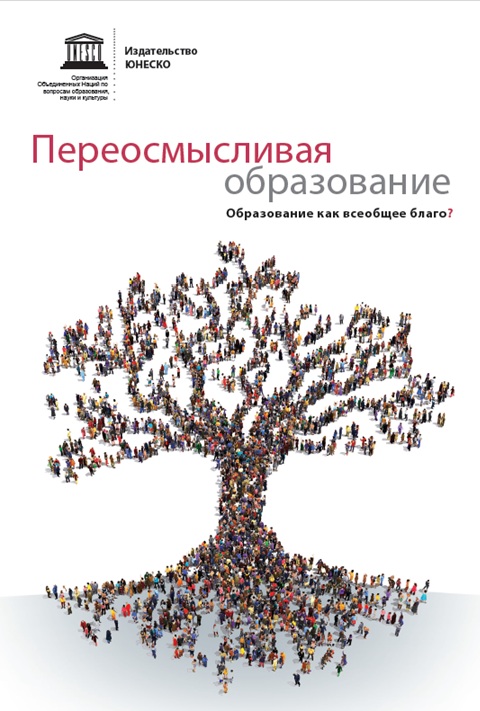 Переосмысливая образование: Образование как всеобщее благо? Год публикации: 2015 Организация-автор: UNESCO Происходящие сегодня в мире изменения характеризуются новым уровнем слож-ности и противоречивости. Предполагается, что готовить отдельного человека и сообщества в целом к тому, чтобы жить в этом меняющемся мире, полном противо-речий, должно образование через развитие у людей способности адаптироваться и реагировать на происходящее вокруг. Настоящая публикация является вкладом в усилия, направленные на переосмысление образования и обучения в данном контексте. Ее авторы ставили перед собой цель стимулировать дискуссии по вопросам государственной политики в данной области, руководствуясь одной из основных задач ЮНЕСКО в качестве глобальной обсерватории процессов социальных преобразований.Этот документ является призывом к диалогу между всеми заинтересованными сторонами. Он продиктован гуманистическими представлениями об образовании и развитии на основе принципов уважения человеческой жизни и достоинства, равенства прав, социальной справедливости, разнообразия культур, международной солидарности и коллективной ответственности за устойчивое будущее. Эти принципы являются основой существования человеческого сообщества. Данный документ развивает идеи, содержащиеся в двух важнейших публикациях ЮНЕСКО: «Учиться быть» («Доклад Фора», 1972 г.) и «Образование: сокрытое сокровище» («Доклад Делора», 1996 г.).
 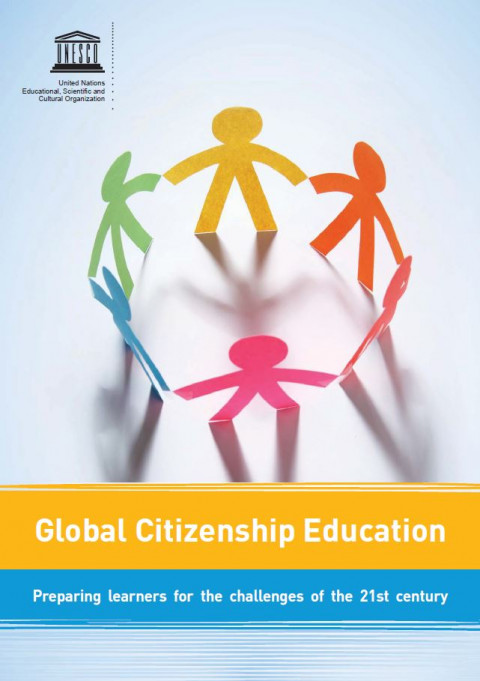 Global Citizenship Education: Preparing Learners for the Challenges of the 21st Century Год публикации: 2014 Организация-автор: UNESCO The United Nations Secretary-General’s Global Education First Initiative (GEFI) has established education as a means to ‘foster global citizenship’ – one of its three priority areas. To support this, UNESCO organized two landmark meetings on GCE in 2013. This publication aims to define the parameters of GCE by using the collective expertise, experience and wisdom of those participants who gathered at these landmark events, and to plan for future action in line with emerging thinking and other ongoing work. The review establishes that GCE has a critical role to play in equipping learners with competencies to deal with the dynamic and interdependent world of the twenty-first century. While GCE has been applied in different ways in different contexts, regions and communities, it has a number of common elements, which include fostering in learners. In formal settings, GCE can be delivered as an integral part of an existing subject (such as civic or citizenship education, social studies, environmental studies, geography or culture), or as an independent subject area. Integrated models appear to be more common. Some less traditional, but at least as effective, pathways for GCE have included the following: the use of information and communication technologies and social media, sport competitions and the use of art and music, and youth-led initiatives employing a wide variety of approaches. Both traditional and new horizons for GCE are profiled in this review. This publication also explores a number of enabling conditions for the promotion and implementation of GCE. These include: the existence of an open environment for universal values, the implementation of transformative pedagogy and support for youth-led initiatives.The review acknowledges that there are a number of ongoing tensions with the concepts of global citizenship and global citizenship education. While these tensions vary, they all point to the fundamental question of how to promote universality (e.g. common and collective identity, interest, participation, duty), while respecting singularity (e.g. individual rights, self-improvement). Some ways forward to resolve these tensions are suggested, whilst maintaining that challenges around theoretical elements of GCE should not undermine its practice. The processes documented in this publication have strengthened partnerships, built coalitions and contributed to improving the evidence base on the theory and practice of global citizenship education. While there are tasks that remain, this foundation bodes well for improving the enabling conditions and the practices highlighted in this review. By preparing learners to fulfil their potential in an increasingly globalized world, we are promoting transformed societies that are also better equipped to deal with the twenty-first century challenges and to seize twenty-first century opportunities.