
Ресурсы
Изучайте широкий спектр ценных ресурсов ВГГ, чтобы углубить своё понимание и повысить эффективность исследований, просветительской деятельности, преподавания и обучения.
Найдено: 1,951
 Предложение в отношении Глобальной программы действий по образованию в интересах устойчивого развития в качестве последующей деятельности по итогам Десятилетия образования в интересах устойчивого развития (ДОУР) Организации Объединенных Наций в период после 2014 г. Год публикации: 2013 Организация-автор: UNESCO Настоящий документ содержит предложение в отношении Гло-бальной программы действий по образованию в интересах устойчивого развития (ОУР), а также комментарии и замечания Исполнительного со-вета.
  [Video] Snapshot on Education - Global & Regional Perspectives on Progress and Current Challenges Год публикации: 2018 Организация-автор: UNESCO The video is a snapshot of the reflection on progress and challenges for education. Taking into consideration the global and regional SDG4-Education 2030 consultations throughout 2018. More at https://en.unesco.org/themes/education/globaleducationmeeting2018 Un apercu sur l’éducation Год публикации: 2018 Организация-автор: UNESCO La vidéo est un apercu de la réflexion sur les progrès et les défis de l'éducation. Prenant en considération les consultations mondiales et régionales de l’ODD4-Education 2030 tout au long de 2018. Pour en savoir plus https://fr.unesco.org/themes/education
  A Post-GAP (Global Action Programme for ESD) Position Paper Год публикации: 2018 Организация-автор: UNESCO The 5-year cycle of the GAP is due to end in 2019. To build a post-GAP position, this draft position paper has been prepared. Once revised through the consultation processes planned in 2018, the final draft will be submitted in 2019 to the Governing Bodies of UNESCO and the UN for their respective approval processes. Once the position is approved, it will be summarised into a post-GAP programme and launched in 2020 for implementation onwards to 2030. Концептуальный документ по пост-ГПД периоду (Глобальная программа действий по ОУР) Год публикации: 2018 Организация-автор: Организация Объединенных Наций по вопросам образования, науки и культуры (UNESCO) Пятилетний цикл Глобальной программы действий по ОУР (ГПД) должен завершиться в 2019 г. Настоящий проект подготовлен в целях разработки концепции деятельности после окончания ГПД. Вслед за внесением поправок в ходе запланированных на 2018 г. консультаций, окончательный вариант проекта будет представлен в 2019 г. на утверждение руководящим органам ЮНЕСКО и ООН. Положения утвержденного документа будут обобщены в программе деятельности, которая будет осуществляться в 2020-2030 гг. после окончания ГПД.
 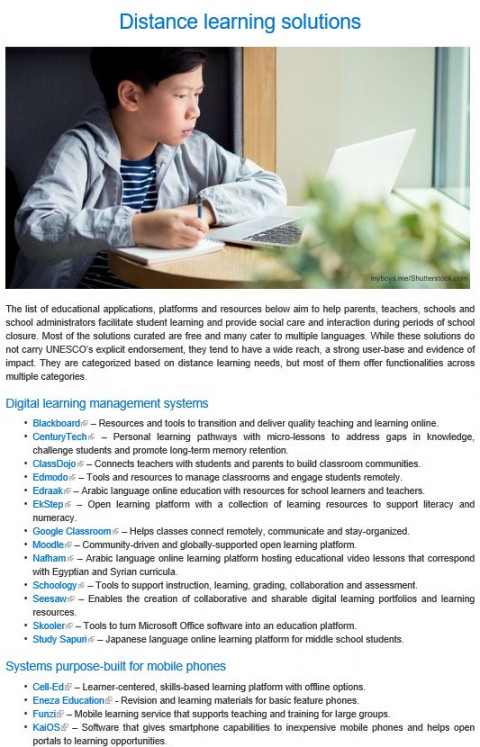 Soluciones para un aprendizaje a distancia Год публикации: 2020 Организация-автор: Organización de las Naciones Unidas para la Educación, la Ciencia y la Cultura (UNESCO) A continuación, ofrecemos una lista de aplicaciones y plataformas educativas para ayudar a los padres, docentes, centros educativos y sistemas escolares a facilitar el aprendizaje de los alumnos y garantizar las interacciones y los servicios sociales durante el periodo de cierre de las escuelas. Aunque no han sido explícitamente respaldadas por la UNESCO, estas soluciones tienen un amplio alcance, numerosos usuarios y una eficacia probada. La mayor parte de las soluciones son gratuitas y muchas se encuentran en varios idiomas.Si usted es un proveedor de servicios de aprendizaje digital y posee un producto sólido que cree merece figurar en la siguiente lista de recursos, favor envíenos un correo electrónico a la dirección: COVID19taskforce@unesco.org Инструменты дистанционного обучения Год публикации: 2020 Организация-автор: UNESCO Приведенный ниже список образовательных приложений, платформ и ресурсов призван помочь родителям, учителям, школам и школьным администраторам облегчить процесс обучения учащихся и обеспечить социальную помощь и взаимодействие в периоды закрытия школ. Большинство предложений доступны бесплатно и многие поддерживаются на нескольких языках. Хотя эти предложения не имеют непосредственной поддержки ЮНЕСКО, они, как правило, имеют широкий охват, мощную базу пользователей и подтверждения достигнутых результатов. Они распределены исходя из потребностей дистанционного обучения, но большинство из них предлагают функциональные возможности по нескольким категориям. حلول للتعلّم عن بعد Год публикации: 2020 Организация-автор: UNESCO الغرض من قائمة التطبيقات والمنصات والموارد التعليمية الواردة أدناه، مساعدة الأهل والمعلمين والمدارس ومديريها على تيسير عملية تعلّم الطلاب وتقديم الرعاية الاجتماعية والتفاعل الاجتماعي لهم في أثناء فترة إغلاق المدارس. ومعظم الحلول المختارة مجانية، ويقدم العديد منها محتوى متاحاً بعدة لغات. ولا تحظى هذه الحلول بدعم صريح من اليونسكو، بيد أنها تصل إلى عدد كبير من الأشخاص، ولها قاعدة مستخدمين واسعة، وتأثيرها مثبت. وتُصنّف هذه الحلول في فئات تبعاً لاحتياجات الدارسين، ولكن معظمها يحتوي على خصائص مأخوذة من فئات مختلفة.
  Visioning and Framing the Futures of Education: February 2020 Год публикации: 2020 Организация-автор: UNESCO This statement is the outcome from first meeting of the International Commission on the Futures of Education held in Paris, 28-29 January 2020. Established by UNESCO, the Commission is charged with looking at 2050 and beyond to issue a report in 2021 to rethink how knowledge, learning and education may address the challenges and opportunities, both those foreseen for the future and those with us in the present. Note de cadrage sur les Futurs de l'éducation: Février 2020 Год публикации: 2020 Организация-автор: UNESCO Cette note est le fruit de la première réunion de la Commission internationale sur les futurs de l’éducation qui s’est tenue à Paris les 28 et 29 janvier 2020. Etablie par l’UNESCO, la Commission est chargée de repenser lessavoirs, l’apprentissage et l’éducationface aux défis et auxopportunités, tant ceux envisagés à l’horizon2050 et au-delà, que ceux duprésent.