
Ресурсы
Изучайте широкий спектр ценных ресурсов ВГГ, чтобы углубить своё понимание и повысить эффективность исследований, просветительской деятельности, преподавания и обучения.
Найдено: 1,951
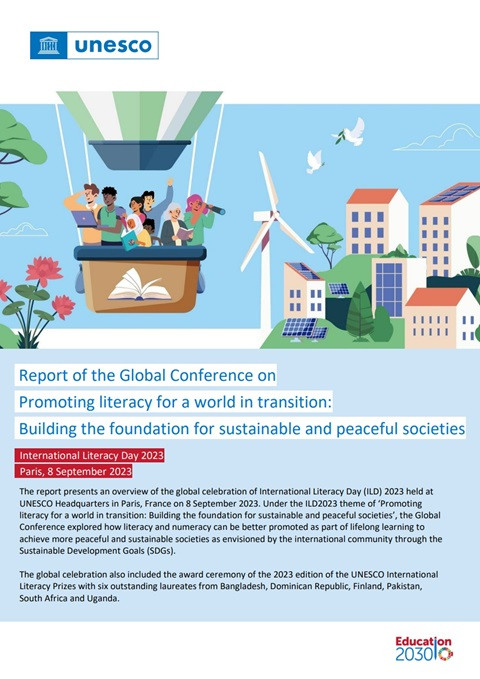 Report of the Global Conference on Promoting Literacy for a World in Transition: Building the Foundation for Sustainable and Peaceful Societies Год публикации: 2024 Организация-автор: UNESCO The report presents an overview of the global celebration of International Literacy Day (ILD) 2023 held at UNESCO Headquarters in Paris, France on 8 September 2023. Under the ILD 2023 theme of ‘Promoting literacy for a world in transition: Building the foundation for sustainable and peaceful societies’, the Global Conference explored how literacy and numeracy can be better promoted as part of lifelong learning to achieve more peaceful and sustainable societies as envisioned by the international community through the Sustainable Development Goals (SDGs). The global celebration also included the award ceremony of the 2023 edition of the UNESCO International Literacy Prizes with six outstanding laureates from Bangladesh, Dominican Republic, Finland, Pakistan, South Africa and Uganda.
 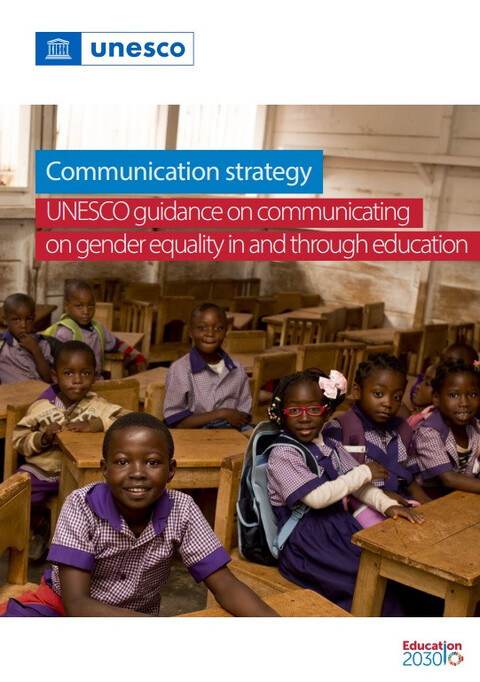 Communication Strategy: UNESCO Guidance on Communicating on Gender Equality in and through Education Год публикации: 2022 Организация-автор: UNESCO About 259 million children and youth are out of school according to the UNESCO Institute for Statistics, including 127 million girls and 132 million boys. Twothirds of the 750 million non-literate adults around the world are women. This gender disparity remains one of the persistent challenges in adult literacy and education. The COVID-19 pandemic has exacerbated existing challenges, disrupting the education of over 1.5 billion learners. UNESCO estimates that close to 24 million children and youth, including over 11 million girls and 13 million boys, may drop out of school due to the pandemic’s economic impact. A window of opportunity is now more than ever open to build back equal. This communication strategy is designed to provide strategic guidance on communicating on gender equality in and through education. While prepared for UNESCO Education Sector staff, including those at Headquarters, in Field/Regional/Cluster Offices and in Institutes as well as for implementing partners, a broader audience of gender focal points, partners, Member States and others with an interest in and commitment to gender equality in and through education may also find this strategy particularly useful. Estrategia de comunicación: Orientaciones de la UNESCO sobre la comunicación en materia de igualdad de género en y a través de la educación Год публикации: 2022 Организация-автор: UNESCO Según el Instituto de Estadística de la UNESCO, aproximadamente 259 millones de niños y jóvenes no están escolarizados, entre los cuales 127 millones de niñas y 132 millones de niños. Asimismo, dos tercios de los 750 millones de adultos analfabetos de todo el mundo son mujeres. Esta disparidad de género sigue siendo uno de los desafíos persistentes en la alfabetización de adultos y la educación. La pandemia de COVID-19 ha exacerbado los desafíos existentes, interrumpiendo la educación de más de 1 500 millones de alumnos. La UNESCO calcula que aproximadamente 24 millones de niños y jóvenes, incluyendo más de 11 millones de niñas y 13 millones de niños, pueden llegar a abandonar la escuela debido al impacto económico de la pandemia. Ahora más que nunca se abre la posibilidad de reforzar la igualdad. Esta estrategia de comunicación está diseñada para proporcionar una orientación estratégica sobre la comunicación de la igualdad de género en y a través de la educación. Aunque se ha preparado teniendo en cuenta al personal del Sector de la Educación de la UNESCO en la Sede, las oficinas fuera de la Sede, regionales y multipaís y los institutos, así como a los asociados en la ejecución, esta estrategia también puede resultar especialmente útil a un público más amplio de coordinadores en cuestiones de género, socios, Estados Miembros y otras personas interesadas y comprometidas con la igualdad de género en y a través de la educación. Stratégie de communication: Orientations de l’UNESCO pour la communication relative à l’égalité des genres dans et par l’éducation Год публикации: 2022 Организация-автор: UNESCO Selon l’Institut de statistique de l’UNESCO, 259 millions d’enfants et de jeunes ne sont pas scolarisés, dont 127 millions de filles et 132 millions de garçons. Les deux tiers des 750 millions d’adultes analphabètes à travers le monde sont des femmes. Cet écart entre les genres reste l’un des défis les plus persistants à relever en matière d’alphabétisme des adultes et d’éducation. La pandémie de la COVID-19 a exacerbé les difficultés préexistantes, perturbant l’éducation de plus de 1,5 milliard d’apprenants. L’UNESCO estime que près de 24 millions d’enfants et de jeunes, dont plus de 11 millions de filles et 13 millions de garçons, pourraient être déscolarisés en raison des répercussions économiques de la pandémie. Aujourd’hui, nous avons plus que jamais l’occasion de reconstruire l’égalité. Cette stratégie de communication est conçue pour orienter la communication relative à l’égalité des genres dans et par l’éducation. Bien que préparée avec des considérations pour le personnel du Secteur de l’éducation de l’UNESCO au siège, dans les bureaux hors siège, régionaux et multi-pays et instituts, ainsi que pour les partenaires de mise en œuvre, un public plus large de points focaux pour le genre, de partenaires, d’États membres et d’autres ayant un intérêt et un engagement pour l’égalité des genres dans et par l’éducation peuvent également trouver cette stratégie particulièrement utile.
 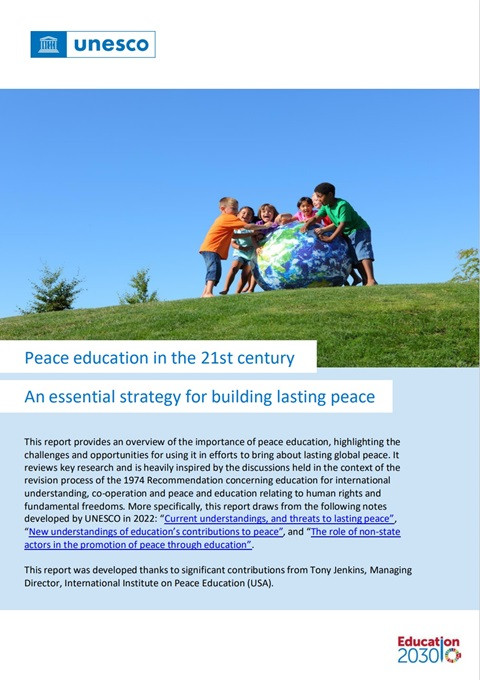 Peace Education in the 21st Century: An Essential Strategy for Building Lasting Peace Год публикации: 2024 Организация-автор: UNESCO This report provides an overview of the importance of peace education, highlighting the challenges and opportunities for using it in efforts to bring about lasting global peace. It reviews key research and is heavily inspired by the discussions held in the context of the revision process of the 1974 Recommendation concerning education for international understanding, co-operation and peace and education relating to human rights and fundamental freedoms. More specifically, this report draws from the following notes developed by UNESCO in 2022: “Current understandings, and threats to lasting peace”, “New understandings of education’s contributions to peace”, and “The role of non-state actors in the promotion of peace through education”.
  Revision Process of the 1974 Recommendation concerning Education for International Understanding, Co-operation and Peace and Education relating to Human Rights and Fundamental Freedoms: Comments from Observers to the Plenary Meetings of the International Expert Group (IEG) Год публикации: 2023 Организация-автор: UNESCO Adopted in 1974, the Recommendation concerning education for international understanding, co-operation and peace and education relating to human rights and fundamental freedoms is considered a landmark legal instrument that brings together for the first time peace, international understanding, human rights, fundamental freedoms and education. In line with the Resolution adopted at UNESCO’s General Conference at its 41st Session in November 2021 (41C/Resolution 17), UNESCO launched the revision of the Recommendation and convened an International Expert Group (IEG) to advise the Organization on the changes. The work of the IEG took place between May and June 2022. Though the meetings of the IEG were technical in nature (category VI), in order to ensure an open and transparent process, the Permanent Delegations were invited to listen-in to the deliberations of the IEG online, as observers, along with a select number of non-governmental organizations, intergovernmental organizations, and United Nations entities. At the end of each plenary meeting, observers to the IEG plenary meetings could submit written comments. This document compiles the comments received from observers during this process and submitted to the IEG members for their consideration.
 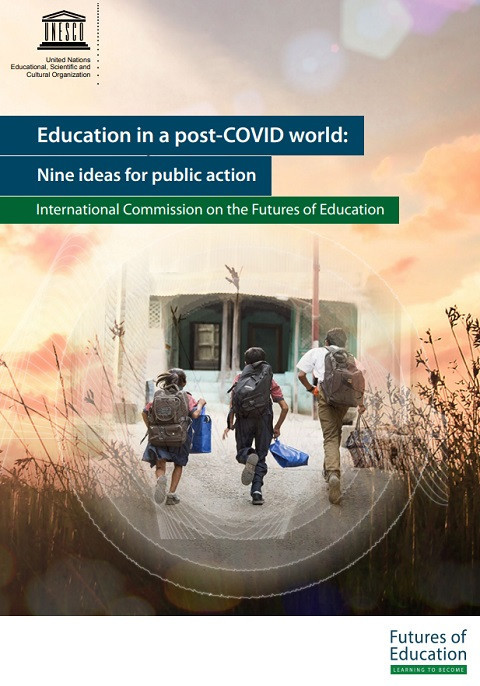 التربية والتعليم والتعلم والمعرفة في عالم ما بعد كوفيد- 19 : تسع أفكار للعمل العام Год публикации: 2020 Организация-автор: UNESCO ستكون للقرارات التي یجري اتخاذھا الآن في سیاق جائحة فیروس كورونا (كوفید-19 (عواقب طویلة الأجل على مستقبل التربیة والتعلیم. وتقدم اللجنة الدولیة المعنیة بمستقبل التربیة والتعلیم في ھذا التقریر تسع أفكار رئیسیة لمواجھة الأزمة الناجمة عن جائحة كوفید-19 وعواقبھا، مع التمسك بالمبادئ الأساسیة ومواطن القوة ُ ُظم التعلیم. ویجب إیلاء ً غیر مسبوق في الاقتصادات والمجتمعات وكذلك في ن المعروفة بینما نواجھ اضطرابا التفاعل بین البشر ورفاھھم الأولویة عند العمل على وضع تصور جدید للتربیة والتعلیم وتحدیثھما، ویجب أن ُفسح یتزامن ذلك مع الالتزام بالتضامن على الصعید العالمي ورفض استمرار أوجھ ومستویات التفاوت التي أ المجال لبروزھا في عالمنا المعاصر. Education in a Post-COVID World: Nine Ideas for Public Action Год публикации: 2020 Организация-автор: UNESCO Decisions made today in the context of the COVID-19 pandemic will have longterm consequences for the futures of education. In this report the International Commission on the Futures of Education presents nine key ideas for navigating through the COVID-19 crisis and its aftermath, contending that we must build on core principles and known strengths as we face unprecedented disruption to economies, societies and education systems. In the renewal and reimaging of education human interaction and wellbeing must be given priority. This must also be accompanied by a commitment to global solidarity that does not accept the levels of inequality that have been permitted to emerge in the contemporary world La educación en un mundo tras la COVID: Nueve ideas para la acción pública Год публикации: 2020 Организация-автор: UNESCO Las decisiones que se tomen en este momento en el contexto de la pandemia de COVID-19 tendrán consecuencias a largo plazo para los futuros de la educación. En este informe, la Comisión internacional sobre Los futuros de la educación presenta nueve ideas clave para sortear la crisis de la COVID-19 y sus secuelas, partiendo de la premisa de que debemos basarnos en los principios básicos y en los puntos fuertes con los que ya contamos al enfrentarnos a una perturbación sin precedentes de las economías, las sociedades y los sistemas de educación. En la renovación y el replanteamiento de la educación se debe otorgar prioridad a la interacción y el bienestar humanos. Esto ha de ir también acompañado de un compromiso con una solidaridad mundial que no acepte los niveles de desigualdad que se ha dejado surgir en el mundo contemporáneo. L’éducation dans un monde post-Covid: Neuf idées pour l’action publique Год публикации: 2020 Организация-автор: UNESCO Les décisions prises aujourd’hui dans le cadre de la pandémie du Covid-19 auront des conséquences à long terme sur les futurs de l’éducation. Dans ce rapport, la Commission internationale sur Les futurs de l’éducation présente neuf idées essentielles pour dépasser la crise de Covid-19 et appréhender ses répercussions. Rapport dans lequel elle affirme également que nous devons nous appuyer sur des principes fondamentaux et des atouts connus alors que nous sommes confrontés à des perturbations sans précédent des économies, des sociétés et des systèmes éducatifs. Dans le renouvellement et le réaménagement de l’éducation, la priorité doit être donnée à l’interaction humaine et au bien-être. Cela doit également s’accompagner d’un engagement en faveur d’une solidarité mondiale qui refuse les niveaux d’inégalité qui caractérisent le monde actuel.