
Ресурсы
Изучайте широкий спектр ценных ресурсов ВГГ, чтобы углубить своё понимание и повысить эффективность исследований, просветительской деятельности, преподавания и обучения.
Найдено: 1,983
 Encyclopédie sur la démocratie et la participation citoyenne Автор: Malorie Flon | Émilie Béorofei Организация-автор: Institut du Nouveau Monde (INM) Dans le cadre de son Rendez-vous stratégique Démocratie et participation citoyenne, l’INM a mis sur pied un dossier d’information en ligne, dont vous trouverez les premiers contenus dans ce site.Vaste démarche délibérative, le Rendez-vous stratégique vise à éclairer la population québécoise sur les transformations actuelles de notre démocratie: un système représentatif qui ne répond plus, seul, à l’exigence démocratique; une demande croissante de certains citoyens à participer aux décisions qui les touchent; des enjeux sociaux et des défis collectifs de plus en plus complexes, auxquels les pouvoirs publics et privés doivent s’attaquer; des institutions obligées de s’adapter rapidement et continuellement à un monde en constante transformation. Le dossier d’information s’attaque à ces questions en fournissant des notions de base sur les concepts en jeu: démocratie, participation, citoyenneté, etc. Aux questions fréquemment posées lors des débats publics, le dossier offre des pistes de réponses. Il esquisse, pour le lecteur qui voudra s’y plonger, des définitions des différents types de participation citoyenne: publique, électorale, sociale. Afin de mieux comprendre ce qui se pratique au Québec dans chacune de ces catégories, le lecteur se tournera vers Les instances de participation publique au Québec. Vous êtes praticien ou souhaitez approfondir votre connaissance de la pratique de la participation citoyenne? La Boîte à outils est là pour vous! Elle contient des références, guides, méthodes et exemples d’expériences qui vous outilleront pour mettre en œuvre, à votre tour, des pratiques participatives.
 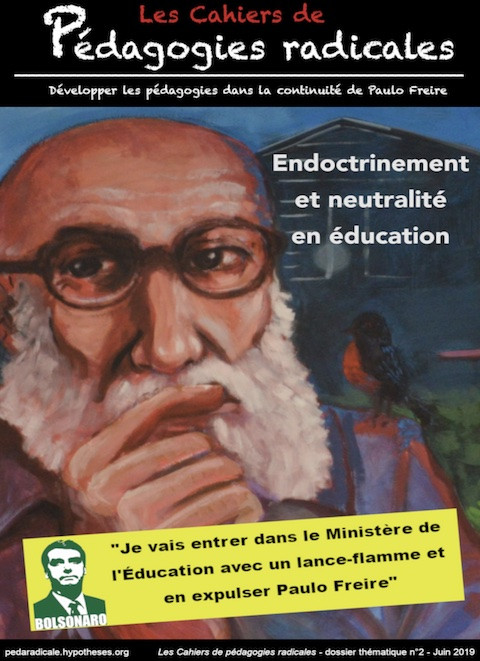 Les Cahiers de pédagogies radicales : Développer les pédagogies inspirées par l'œuvre de Paulo Freire; Endoctrinement et neutralité en éducation Год публикации: 2019 Автор: Irène Pereira | Gauthier Tolini Организация-автор: École supérieure du professorat et de l'éducation (ESPE) de Livry Garga Ce deuxième numéro des Cahiers de pédagogies radicales part dans unpremier temps de la volonté de faire connaître la situation au Brésil et lesdébats concernant le « Mouvement de l’école sans parti » qui s’attaque à laliberté pédagogique des enseignants en essayant de leur interdire d’aborderles questions de genre et et les questions économiques et sociales en classe.Pour cela, ce mouvement veut faire passer une loi sur la neutralité desenseignants qui n’existe pas au Brésil : ceux-ci étant tenu actuellementuniquement à une obligation de favoriser le pluralisme des idées. JairBolsonaro, qui est président du Brésil depuis janvier 2019, soutient cemouvement réactionnaire. Il accuse en particulier l’oeuvre de Paulo Freired’endoctrinement marxiste et veut éradiquer sa pensée de l’éducationbrésilienne.Cette situation au Brésil pose des problèmes qui sont centraux pour tous lespédagogues critiques. Quelle est la différence entre pédagogie critique etendoctrinement ? Pour Paulo Freire, c’est parce que la pédagogie critiquefavorise le pluralisme des idées et le dialogue critique qu’il n’y a pasendoctrinement. C’est d’ailleurs sans doute pourquoi l’approche de PauloFreire ne se trouve pas en contradiction avec le projet démocratique, mais aucontraire est insupportable aux régimes dictatoriaux. Mais ce qui est le plusinquiétant au Brésil, c’est qu’il semble tout simplement qu’un enseignant quidéfend dans sa classe les droits de l’homme et la lutte contre lesdiscriminations pourrait être considéré comme portant atteinte à la neutralité.
  2021 대한민국 SDG4 이행현황 보고서 Год публикации: 2022 Организация-автор: 유네스코한국위원회 본 자료는 2021년 한 해동안 대한민국의 SDG 4 이행 노력을 기록하고, SDG 4 모니터링과 이행촉진을 강화하는데 목적이 있다.
  The Right to Non-Discrimination Год публикации: 2018 Организация-автор: National Commission for Human Rights This document talks about the concept of discrimination, its origins and the concepts that this phenomenon contains: stereotypes, prejudices, systematic discrimination. It also reviews the forms as discrimination is presented and its consequences, to later refer to the right to non-discrimination and what can be done in case of being a victim. El derecho a la no discriminación Год публикации: 2018 Организация-автор: National Commission for Human Rights Documento que habla sobre el concepto de la discriminación, sus origenes y los cocepto que encierra este fenomeno, tales como: estereotipos, prejuicios y discriminación sistemática. También revisa las formas como se presenta la discriminación y sus consecuencias, para posteriormente refirse al derecho a la no discriminación y qué se puede hacer en caso de ser víctima.
  Education aux médias et à l’information: Un manuel pratique pour formateurs Год публикации: 2018 Автор: Sylvia Braesel | Thorsten Karg Организация-автор: DW Akademie Le mot anglais « literacy » désigne la capacité de lire et d’écrire. La « media and information literacy » (MIL en abrégé, alors qu’en français on utilise l’acronyme EMI, pour éducation aux médias et à l’information) est la capacité de comprendre comment les médias fonctionnent et comment ils peuvent être utilisés pour participer au débat public. L’EMI inclut les médias sociaux comme Facebook, ainsi que les médias traditionnels comme les livres, les journaux, la radio et la télévision.Education aux médias et à l’information – Un manuel pratique pour formateurs fournit aux formateurs en EMI des informations générales, ainsi que des idées, des méthodes et des feuilles de travail pour leurs formations. Le livre fournit également des exemples de plans de formation pour aider à déterminer le temps nécessaire pour aborder chaque aspect particulier de l’éducation aux médias et à l’information.
 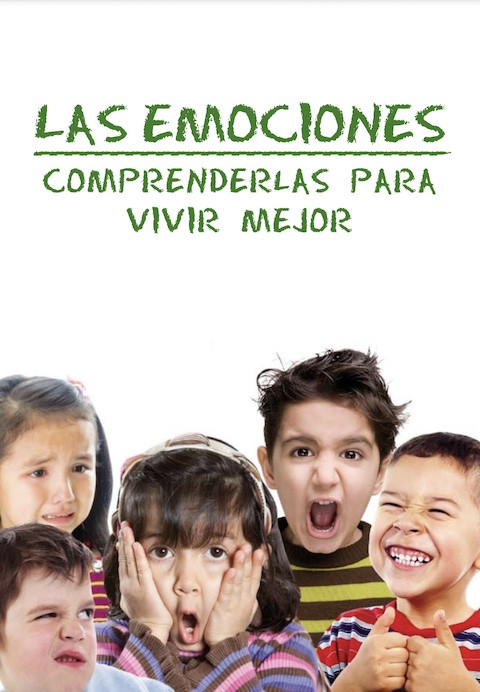 Understand Emotions to Live Better Год публикации: 2013 Организация-автор: Spanish Association Against Cancer This guide explains what emotions are, what the basic emotions are and how to manage them. Also, how to teach children to identify and control their emotions, among other things about the emotional world. Las emociones: Comprenderlas para vivir mejor Год публикации: 2013 Организация-автор: Spanish Association Against Cancer En esta guía se explica qué son las emociones, cuáles son las emociones básicas y cómo manejarlas. Además, cómo enseñar a los niños a identificar y controlar sus emociones, entre otras cosas acerca del mundo emocional.
  Environment, Climate Change and Good Living in Latin America and the Caribbean Год публикации: 2022 Автор: Tatiana Cuenca Castelblanco | Letícia Larín | Juan Manuel Delgado Estrada | Luz Carina Durán Solarte | Cindy Vanessa Quintero Ramírez | Manuel Alejandro Henao Restrepo | Sara Latorre | Andrea Bravo | Marisabel García Acelas | Robert Adrián Quintero Leguizamón | Marisela Pilquimán Vera | Stepfanie Ramírez | Clarena Rodríguez Jaramillo | Melisa Argento | Ariel Slipak | Florencia Puente | Sarah Patricia Cerna Villagra | Agustín Carrizosa | María Irene Rodríguez | Stefannia Parrado Morales Организация-автор: Latin American Council of Social Sciences (CLACSO) This book is the result of the call launched by CLACSO in February 2020 for the development of research projects on "Environment, climate change and good living in Latin America and the Caribbean". The essays presented bring together more than twenty researchers from eight Latin American countries, who approached the proposed themes from different perspectives, considering the links between the concept of "good living" and the environmental and economic phenomena that are occurring throughout the world, as the undeniable climate change, and in particular in Latin American countries, as the extractivist model of exploitation of nature. Ambiente, cambio climático y buen vivir en America Latina y el Caribe Год публикации: 2022 Автор: Tatiana Cuenca Castelblanco | Letícia Larín | Juan Manuel Delgado Estrada | Luz Carina Durán Solarte | Cindy Vanessa Quintero Ramírez | Manuel Alejandro Henao Restrepo | Sara Latorre | Andrea Bravo | Marisabel García Acelas | Robert Adrián Quintero Leguizamón | Marisela Pilquimán Vera | Stepfanie Ramírez | Clarena Rodríguez Jaramillo | Melisa Argento | Ariel Slipak | Florencia Puente | Sarah Patricia Cerna Villagra | Agustín Carrizosa | María Irene Rodríguez | Stefannia Parrado Morales Организация-автор: Latin American Council of Social Sciences (CLACSO) Este libro es el resultado de la convocatoria lanzada por CLACSO en febrero de 2020 para el desarrollo de proyectos de investigación sobre «Ambiente, cambio climático y buen vivir en América Latina y el Caribe». Los ensayos presentados reúnen a más de veinte investigadoras e investigadores de ocho países latinoamericanos, que abordaron las temáticas propuestas desde diferentes perspectivas, considerando los vínculos entre el concepto de "buen vivir" y los fenómenos ambientales y económicos que están ocurriendo en todo el mundo, como el innegable cambio climático, y en particular en los países latinoamericanos, como el modelo extractivista de explotación de la naturaleza.