
Ресурсы
Изучайте широкий спектр ценных ресурсов ВГГ, чтобы углубить своё понимание и повысить эффективность исследований, просветительской деятельности, преподавания и обучения.
Найдено: 1,983
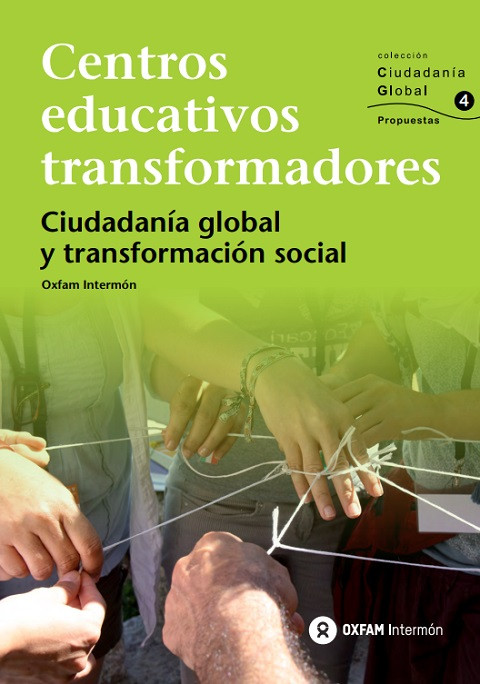 Centros educativos transformadores: Ciudadanía global y transformación social Год публикации: 2013 Автор: Rodrigo Barahona | Joan Gratacós | Gotzón Quintana Организация-автор: Oxfam Intermón | Agencia Española de Cooperación Internacional para el Desarrollo (AECID) Esta publicación de Oxfam Intermón parte de un proceso de investigación-acción participativa desarrollado en el seno de la comisión estratégica y de la Red de educadores y educadoras para una ciudadanía global. La pregunta que guía este proceso es: ¿qué prácticas debe tener un centro educativo para ser generador de transformación social en clave de ciudadanía global?
  Climate Crisis: The Need for Global Citizenship Education Год публикации: 2020 Организация-автор: Bridge 47 This video talks about the climate crisis which is also a human rights crisis, a political crisis, and an economic crisis. And it calls for the fundamental transformation of how we live our lives. To face these global challenges, it emphasizes that we need education that enables us to think critically, connect our actions with their impacts, and act as empowered active global citizens to face.
  Peace Education: Making the Case Год публикации: 2019 Автор: Darijn Dilia Zwart Организация-автор: Quaker Council for European Affairs (QCEA) This publicaiton shows how peace education has responded to difficult political contexts over the decades and demonstrates that peace education is relevant to conflict prevention and peacebuilding today. The report makes the case for a multi-layered approach to peace education which requires a cohesive, coordinated strategy for peace education as a peacebuilding and conflict prevention tool across relevant EU internal and external policies and programmes.
 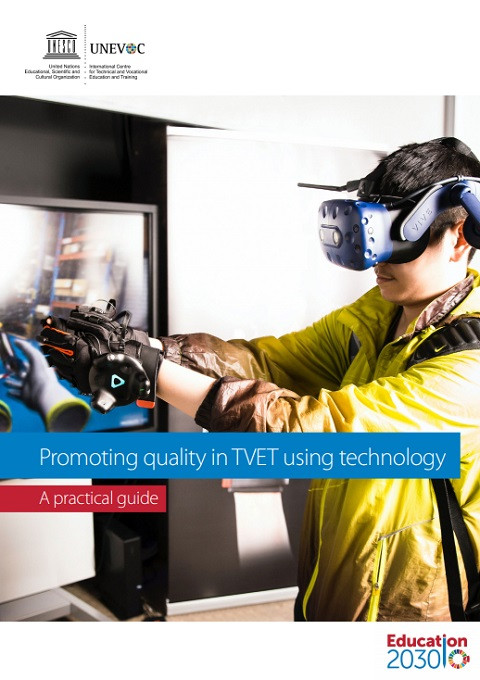 Promoting Quality in TVET Using Technology: A Practical Guide Год публикации: 2020 Организация-автор: UNESCO International Centre for Technical and Vocational Education and Training (UNEVOC) Technology has altered many aspects of life, including education and training. As a result of technological developments, technical and vocational education and training (TVET) has become more accessible to students, and the quality of education and training has improved too. Teachers and trainers can use digital tools to manage their tasks effectively and engage learners in digital rich environments. Learners can also use technology to learn new skills and to collaborate and interact with teachers and trainers. The COVID-19 pandemic has however underlined the current difficulties in effectively integrating technologies in the delivery of education and training. Institutions need to make constant assessments of their capacity and readiness to provide technology-rich environment for learning. At the same time, teachers’ and trainers’ readiness is also of particular importance to adopt appropriate pedagogic approaches with technology. This practical guide addresses institutions and teachers and trainers. It helps TVET institutions to understand the organizational plans to build up their capacity to stimulate digital learning. It also guides teachers that want to develop their competencies, improve their pedagogical strategies with use of technology, and learn from existing practice. By showing how technology is used in an integrated instruction model and providing helpful resources, this guide helps teachers and trainers to effectively plan their own tasks and delivery of instruction with the right technology tools.
  Citizenship education and coexistence: guides for citizenship and coexistence based on the collective construction of meaning and networks; unit 1; coexisting citizens and comunities Год публикации: 2022 Организация-автор: Centro de Investigación y Educación Popular (CINEP) | Secretaría de Educación del Distrito (SED) These modules and guides are directed to Facilitators Network Citizenship and Coexistence to help them through a process of training and reflection that allows them to be aware of their capabilities, and the tools we have, providing a bank of learning activities, as well as a general guide for development, according to the needs of the processes with their educational communities . Therefore, the processes of dialogue and exchange that have been developed with the same Network facilitators, and the interaction and reflection with all educational stakeholders in Bogota, have been taken into account in the conceptual, methodological and didactic guidelines of the modules and guides.
  Western Debates on Global Citizenship Education: Definition, Value and Practice (International and Comparative Education; No. 7) Год публикации: 2019 Автор: Lijian | Liu Baocun Организация-автор: Beijing Normal University In the late twentieth century, in order to deal with the opportunities and challenges came from the globalization to all the countries worldwide, the developed countries in Europe and the United States began to focus on cultivating students’ global citizenship consciousness and global citizenship practice. Since 1990s, the western debate on global civic education has been widely spread among scholars and practitioners worldwide. The global citizenship education debate focuses on global citizenship education value and practice in three aspects: the connotation of global citizenship education debate on the ability-oriented, value-oriented definition, and the comprehensive-based definition. The value debate on the global citizenship education mainly includes: patriotism and the world socialist argument, national interests and global interests, the global education debate and the civic education debate and unified culture and cultural diversity debate. The global citizenship education practice debate involves the research and development of world education and cognitive education and behavior education. 西方关于全球公民教育内涵、价值和途径的争论 (比较教育研究; No. 7) Год публикации: 2019 Автор: Lijian | Liu Baocun Организация-автор: Beijing Normal University 20世纪末期,为了应对全球化带来的挑战,欧美发达国家开始关注培养学生的全球公民意识,全球公民教育逐渐成为世界教育改革的一个热点话题。但是,关于全球公民教育的内涵、价值和途径等全球公民教育的核心问题却存在着广泛的争论。在全球公民教育的内涵上,存在能力导向和价值导向的争论 ;在全球公民教育的价值上,存在爱国主义和世界主义的争论、国家利益和全球利益的争论、全球教育和公民教育的争论、文化统一和文化多样的争论 ;在全球公民教育的途径上,存在世界研究和发展教育研究的争论、认知教学和实践教学的争论。
  L’éducation, levier majeur et point aveugle de la transition vers des sociétés durables Год публикации: 2015 Автор: Pierre Calame Организация-автор: Alliance pour des Sociétés Responsable et Durables La crise ne met pas seulement en question la gouvernance du monde, l’incapacité politique des Etats à coopérer pour gérer ces relations. Elle trouve son origine dans notre représentation du monde et de la place des sociétés humaines au sein de la biosphère. Elle interpelle notre capacité à comprendre et assumer la complexité, à penser et agir dès lors que les relations entre les êtres et entre les choses deviennent plus importantes que chacun pris séparément. C’est pourquoi l’éducation se retrouve en première ligne.
  Citoyen·ne·s, mais pas encore adultes ? Les injonctions à la responsabilité et à la citoyenneté dans les rituels d’accession à la majorité en Suisse Год публикации: 2018 Автор: Maxime Felder | Laurence Ossipow | Isabelle Csupor Организация-автор: Lien social et Politiques En Suisse, les communes ritualisent le passage à la majorité civile et civique en organisant des promotions dites civiques ou citoyennes. À l’aube de leurs 18 ans, les jeunes reçoivent une invitation des autorités communales à laquelle environ un tiers répond favorablement. Dans les six communes que nous avons étudiées durant trois ans, les autorités invitent les jeunes à participer à une séance du conseil communal, les convient à un repas ou un apéritif, leur organisent une nuit de jeux en plein air, ou encore une soirée de témoignages et de spectacles. Quelle que soit la forme que prennent ces événements, ils font place à des discours dans lesquels des élu·e·s rappellent aux jeunes majeur·e·s les nouvelles responsabilités et les choix qui les attendent à l’orée de l’âge adulte, et les enjoignent à devenir de «bonnes» et «bons» citoyen·ne·s. Ces événements offrent ainsi une opportunité d’étudier empiriquement la «fabrication» (Bénéï, 2005; Gagné et Neveu, 2009) de la citoyenneté juvénile. Dans un premier temps, nous décrirons très brièvement l’approcheméthodologique et les dispositifs mis en place par les six communes étudiées. Puis, nous ferons une analyse des discours qui, outre l’appel au vote, incitent à se battre pour des droits qui permettent à la démocratie de perdurer, mais ne s’arrêtent pas à cette définition restreinte de la citoyenneté. Enfin, nous nous concentrerons sur trois tensions que révèle le croisement de ces injonctions à la citoyenneté, avec ce qu’en disent les jeunes participant·e·s.
 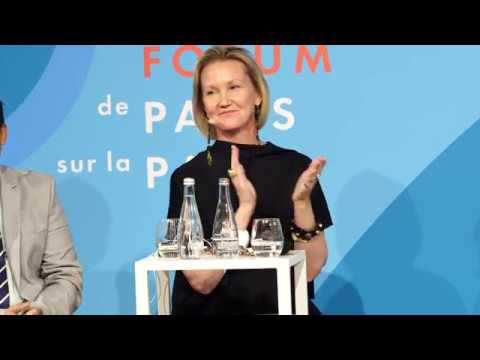 How Can Pluralism Strengthen Peace?: Global Centre for Pluralism at the 2019 Paris Peace Forum Год публикации: 2019 Автор: Meredith P. Mcghie | Aung K. Moe | Bojana Dujkovic Организация-автор: Global Pluralism Award Many of the most intractable challenges we face today − from entrenched poverty to conflict-driven migration − stem from the exclusion and resentment of groups defined as “the other”.Group-based grievances arising from inequality, exclusion and feelings of injustice increase the risk of instability and conflict. Pluralism is the choice to see diversity contribute to the common good. Making this choice is essential to building more secure, peaceful and resilient societies.Meredith Preston McGhie, the Secretary General of the Global Centre for Pluralism, was joined by two winners of the 2019 Global Pluralism Award to discuss how history education and community-based reconciliation can help strengthen pluralism, sustain peace and prevent conflict in diverse societies.