
Ресурсы
Изучайте широкий спектр ценных ресурсов ВГГ, чтобы углубить своё понимание и повысить эффективность исследований, просветительской деятельности, преподавания и обучения.
Найдено: 948
 ПЕРЕОСМЫСЛИМ НАШЕ БУДУЩЕЕ Год публикации: 2021 Организация-автор: International Commission on the Futures of Education | UNESCO Наше человечество, наша планета находятся в опасности, пандемия лишь подтвердила нашу хрупкость и взаимозависимость, чтобы изменить ход вещей и переосмыслить наше будущее, необходимы неотложные совместные действия; в этом докладе Международной комиссии по перспективам образования подтверждается способность образования к осуществлению коренных изменений. Перед нами стоит двойная задача – выполнить невыполненное обещание обеспечить право на качественное образование для каждого ребёнка, молодого человека и взрослого и полностью реализовать преобразующий потенциал образования, способного проложить путь к устойчивому коллективному будущему. Для этого нам нужен новый общественный договор в области образования, который сможет устранять проявления несправедливости, преобразуя будущее.Этот новый общественный договор должен основываться на принципах прав человека, недопущения дискриминации, социальной справедливости, уважения жизни, человеческого достоинства и культурного разнообразия. Он должен включать в себя этику заботы о людях, взаимности и солидарности. Он должен укреплять позиции образования как общественного дела и общего блага.Этот доклад, который готовился два года на основе глобального процесса консультаций с участием миллиона человек, предлагает правительствам, учреждениям, организациям и гражданам всего мира разработать новый общественный договор в области образования, который поможет нам построить мирное, справедливое и устойчивое будущее, отвечающее всеобщим интересам.Представленные здесь концепции, принципы и предложения являются лишь отправной точкой. Их воплощение в практику в конкретных условиях – это коллективная работа. Уже есть много положительных моментов, и в настоящем докладе предпринята попытка их отразить и развить. Это не инструкция и не план, а начало жизненно важного разговора.
 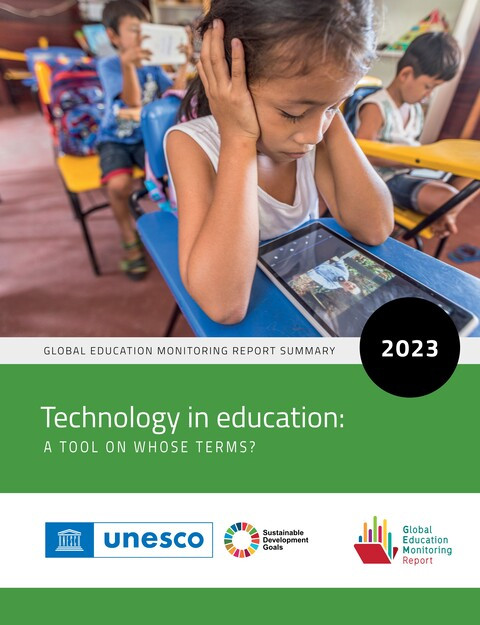 [Résumé] Résumé du rapport mondial de suivi sur l’éducation 2023 : les technologies dans l’éducation; qui est aux commandes? Год публикации: 2023 Организация-автор: UNESCO | Global Education Monitoring Report Team Le rôle de la technologie dans l’éducation suscite depuis longtemps un débat intense. Est-ce qu’elle démocratise le savoir ou menace la démocratie en permettant à quelques-uns de contrôler l’information? Offre-t-elle des opportunités sans limite ou mène-t-elle vers un avenir dépendant de la technologie sans retour en arrière possible ? Est-ce qu’elle égalise les chances ou aggrave les inégalités? Devrait-elle être utilisée pour enseigner aux jeunes enfants ou présente-t-elle des risques pour leur développement? Ce débat a été alimenté par les fermetures d’écoles dues à la COVID-19 et l’émergence de l’intelligence artificielle générative. Mais comme les développeurs sont souvent en avance sur les décideurs, la recherche sur la technologie éducative est complexe. Les preuves solides et impartiales sont rares. Les sociétés posent-elles même les bonnes questions sur l’éducation avant de se tourner vers la technologie comme solution? Reconnaissent-elles ses risques tout en cherchant ses avantages? Les technologies de l’information et de la communication ont le potentiel de favoriser l’équité et l’inclusion en permettant d’atteindre les apprenants défavorisés et de diffuser plus de connaissances dans des formats attrayants et abordables. Dans certains contextes et pour certains types d’apprentissage, elles peuvent améliorer la qualité de l’enseignement et l’apprentissage des compétences de base. De toute évidence, les compétences numériques font désormais partie des compétences de base. La technologie numérique peut également soutenir la gestion et accroître l’efficacité en aidant à traiter de plus grands volumes de données éducatives. Mais la technologie peut également exclure, être inappropriée et pesante, voire carrément nuisible. Les gouvernements doivent veiller à créer les bonnes conditions pour assurer un accès équitable à l’éducation pour tous, réguler l’utilisation de la technologie afin de protéger les apprenants de ses influences négatives, et former les enseignants. Ce rapport recommande que la technologie soit introduite dans l’éducation sur la base de preuves montrant qu’elle serait appropriée, équitable, évolutive et durable. En d’autres termes, son utilisation devrait être dans l’intérêt des apprenants et compléter l’interaction en face-à-face avec les enseignants. Elle devrait être considérée comme un outil à utiliser dans ces conditions. À mi-parcours de l’échéance, le Rapport mondial de suivi sur l'éducation 2023 évalue la distance qu’il reste à parcourir pour atteindre les objectifs éducatifs de 2030. L’éducation est la clé pour débloquer la réalisation d’autres objectifs de développement, notamment le progrès technologique.
 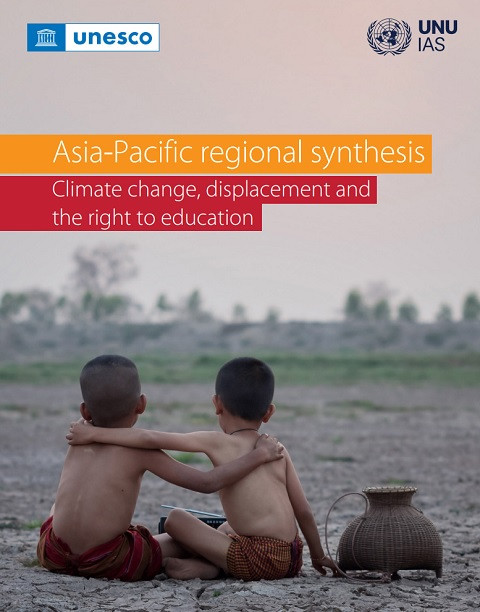 Asia-Pacific Regional Synthesis: Climate Change, Displacement and the Right to Education Год публикации: 2023 Организация-автор: UNESCO | United Nations University Institute for the Advanced Study of Sustainability (UNU-IAS) | UNESCO Bangkok In 2020, 30.7 million people were displaced by natural disasters – disasters which the scientific community acknowledges are more frequent and more intense as a result of climate change. In Asia and the Pacific alone, 21.3 million people were displaced, making it the region the most impacted by national disasters and climate change in the world. Therefore, country case studies were carried out in Bangladesh, India, Indonesia, Tuvalu, and Viet Nam to examine not only specific vulnerabilities to climate change and related mobility, but also the impacts of climate change on the right to education in Asia and the Pacific. These case studies show that climate change directly threatens education – through the destruction of schools and property – but also indirectly puts education in peril by forcing people to cross borders, ensuring neither legal residency nor the right to education. This regional synthesis report aims to guide policy-makers through providing operational policy recommendations on how to ensure education is protected in Asia and the Pacific in the face of climate change and displacement from a human rights-based approach. The report is one of four being developed and will contribute to the global initiative on climate change and displacement and the right to education – launched by UNESCO in 2020 – by informing the development of a Global Report with global policyrecommendations.How climate change impacts the right to education in Asia and the Pacific21.3million displacementstook place in Asia and the Pacific
 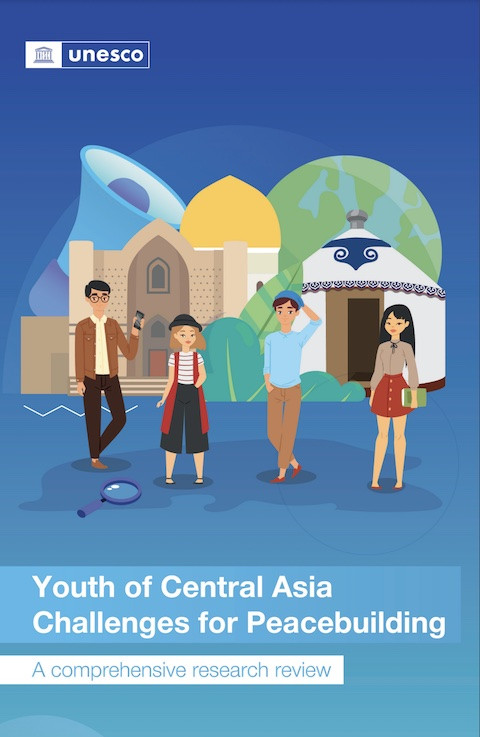 Youth of Central Asia, Challenges for Peacebuilding: A Comprehensive Research Review Год публикации: 2021 Автор: Laura Yerekesheva Организация-автор: UNESCO The estimations are that by 2030, the world will be home to 1.3 billion young people. This speaks about the importance of the youth for development in various parts of the globe, particularly in developing countries which constitute 90% of the global youth population. From comprehensive holistic perspective peace, peacebuilding and dialogue embrace all aspects and dimensions of life – inter-generational, social, economic, political, ethnic, religious, civic, ideological, cultural, and natural. The youth related issues are directly linked with the SDGs agenda. Central Asian states are also on the list of developing countries, with an increasing demographic share of the youth in the general population, meaning that the countries of the region are “young.” As of 2020, the total population of the four countries of Central Asia (Kazakhstan, Kyrgyzstan, Tajikistan and Uzbekistan) was 68.46 million, of which youth comprised 16.55 million or 24,1%. What Challenges for Peacebuilding the Youth of Central Asia Face? This highlights the urgency required for elaborating and implementing special policies on youth development. For Central Asia, the peace and peacebuilding agenda is the development agenda, and vice versa, as neither is possible without the other, and these in turn are intrinsically linked with youth-related issues. This report provides a detailed overview of the existing challenges to the youth of the 4 countries of the region – Kazakhstan, Kyrgyzstan Tajikistan, Uzbekistan – structured around three main themes of peacebuilding: (1) an education and learning environment; (2) economic and social participation; and (3) civic engagement. Governments, international organizations, professionals and policymakers in the youth, peacebuilding and development sectors, academia and NGOs are invited to join forces to accelerate the achievement of youth development for a more just, sustainable and peaceful future. Молодежь Центральной Азии, Вызовы миростроительству : Комплексный исследовательский обзор Год публикации: 2021 Автор: Laura Yerekesheva Организация-автор: Организация Объединенных Наций по вопросам образования, науки и культуры (UNESCO) По оценкам, к 2030 году в мире будут проживать 1,3 миллиарда молодых людей. Это говорит о важной роли, которую будет играть молодежь, особенно в развивающихся странах, в которых проживает 90% общего мирового населения молодежи. В рамках всеобъемлющего системного подхода, мир, миростроительство и диалог подразумевают все аспекты и измерения жизни - межпоколенческие, социальные, экономические, политические, этнические, религиозные, гражданские, идеологические, культурные и природные. Вопросы, связанные с молодежью, напрямую связаны с повесткой в области достижения Целей устойчивого развития (ЦУР). Государства Центральной Азии относятся к развивающимся странам с высокой долей молодежи в общем составе населения, что делает эти страны «молодыми». По состоянию на 2020 год общая численность населения четырех стран Централь ной Азии (Казахстана, Кыргызстана, Таджикистана и Узбекистана) - 68,46 миллиона человек, из которых молодежь составляла 16,55 миллиона человек или 24,1%.Это свидетельствует о важности разработки и реализации специальных стратегий и мер по развитию молодежи. Для Центральной Азии повестка дня в области мира и миростроительства – это, прежде всего, повестка дня в области развития, и наоборот, поскольку обе они взаимосвязаны между собой, а также с проблемами молодежи.В данном отчете представлен подробный обзор существующих вызовов, с которыми сталкивается молодежь четырех стран региона - Казахстана, Кыргызстана, Таджикистана, Узбекистана. Данные вызовы структурированы вокруг трех основных тем миростроительства: (1) образование и обучающая среда; (2) экономическое и социальное участие; и (3) гражданское участие.Правительствам, международным организациям, специалистам и политикам, работающим в сферах молодежи, миростроительства и развития, академическим кругам и неправительственным организациям предлагается объединить усилия для ускорения достижения целей развития молодежи для более справедливого, устойчивого и мирного будущего.
  Global Citizenship Education: Comoros, Djibouti, Kenya, Madagascar, Mauritius and Seychelles Год публикации: 2022 Организация-автор: Organización de las Naciones Unidas para la Educación, la Ciencia y la Cultura (UNESCO) This is a collection of papers of a research project undertaken in six countries of the Eastern Africa region, namely, Comoros, Djibouti, Kenya, Madagascar, Mauritius and Seychelles to assess the Understanding and Implementation of SDG 4.7 on Global Citizenship Education (GCED) in each of the six countries.The research findings were shared by each of the six countries in a Webinar hosted by the UNESCO Nairobi Regional Office for Eastern Africa on September 23, 2021. The Webinar Agenda is contained in this publication along with the Opening and Closing Remarks made by UNESCO and Keynote Address by an affiliate UNESCO Chair in Africa.
  From Access to Empowerment: Operational Tools to Advance Gender Equality in and Through Education Год публикации: 2021 Организация-автор: UNESCO This toolkit has been developed to strengthen individual and institutional capacity to integrate gender equality into education programmes in an effective manner. It has been prepared for all UNESCO Education Sector staff, including those at Headquarters, in Field/Regional/Cluster Offices and in Institutes as well as for implementing partners. This toolkit provides orientation and operational tools to meaningfully integrate gender into all education programmes. The first part provides a short introduction to key concepts on gender equality in and through education and an overview on how gender equality in education links to UNESCO’s vision and internationally agreed objectives. The second part provides practical guidance on how to mainstream gender equality into an education programme, how to design gender-transformative programmes and finally, how to monitor and evaluate gender results in education programmes. Del acceso al empoderamiento: Herramientas operativas para promover la igualdad de género en y a través de la educación Год публикации: 2021 Организация-автор: UNESCO Esta guía se ha desarrollado para fortalecer la capacidad individual e institucional para integrar de forma efectiva la igualdad de género en los programas de educación. Fue elaborada para todo el personal del Sector de Educación de la UNESCO, incluyendo el personal ubicado en la Sede, en las Oficinas fuera de la Sede, regionales y multipaís, y en los Institutos, así como para los asociados en la ejecución de su trabajo. Esta guía ofrece herramientas orientativas y operativas para integrar de forma significativa la cuestión de género en todos los programas de educación. La primera parte ofrece una breve introducción a los conceptos clave de la igualdad de género en y a través de la educación y un resumen general de cómo la igualdad de género en la educación se vincula con la visión de la UNESCO y sus objetivos, aprobados a nivel internacional. La segunda parte ofrece una orientación práctica de cómo integrar la igualdad de género en los programas de educación, cómo elaborar programas transformadores en materia de género y, por último, cómo realizar el seguimiento y la evaluación de los resultados en materia de género en los programas de educación.
  Global Education Monitoring Report 2021/2: Non-state Actors in Education; Who Chooses? Who Loses? Год публикации: 2021 Организация-автор: UNESCO Non-state actors’ role extends beyond provision of schooling to interventions at various education levels and influence spheres. Alongside its review of progress towards SDG 4, including emerging evidence on the COVID-19 pandemic’s impact, the 2021/2 Global Education Monitoring Report urges governments to see all institutions, students and teachers as part of a single system. Standards, information, incentives and accountability should help governments protect, respect and fulfill the right to education of all, without turning their eyes away from privilege or exploitation. Publicly funded education does not have to be publicly provided but disparity in education processes, student outcomes and teacher working conditions must be addressed. Efficiency and innovation, rather than being commercial secrets, should be diffused and practiced by all. To that end, transparency and integrity in the public education policy process need to be maintained to block vested interests. The report’s rallying call – Who chooses? Who loses? – invites policymakers to question relationships with non-state actors in terms of fundamental choices: between equity and freedom of choice; between encouraging initiative and setting standards; between groups of varying means and needs; between immediate commitments under SDG 4 and those to be progressively realized (e.g. post-secondary education); and between education and other social sectors. 全球教育监测报告摘要, 2021/2年: 教育领域的非国家行为体:谁能主动选择?谁将错失机会? Год публикации: 2021 Организация-автор: 联合国教科文组织 (UNESCO) 本文件是2021/2022年全球教育检测报告的摘要,主要聚焦教育领域的非国家行为体,包括私人办学、宗教办学等力量,并探讨了与非国家行为体对教育的影响与存在问题。