
Ресурсы
Изучайте широкий спектр ценных ресурсов ВГГ, чтобы углубить своё понимание и повысить эффективность исследований, просветительской деятельности, преподавания и обучения.
Найдено: 2,255
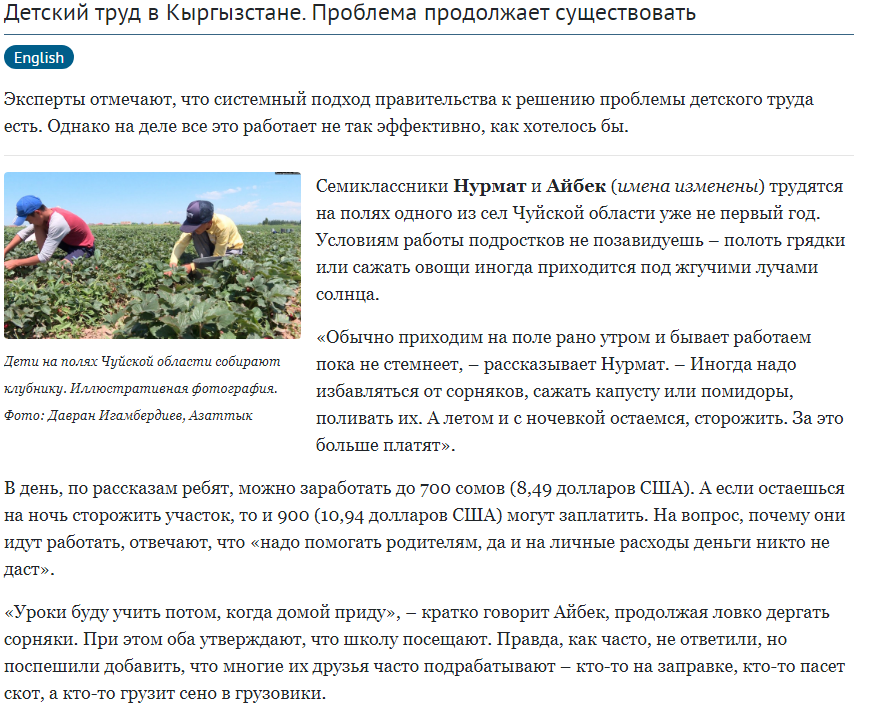 Child Labour in Kyrgyzstan: A Persisting Problem Год публикации: 2022 Организация-автор: Central Asian Bureau for Analytical Reporting (CABAR) Experts note that in the presence of a systematic approach of the Kyrgyz Government to solve the problem of child labor, a number of challenges remain in practice. This article examines some of the reasons for the involvement of children in the labor market, including economic instability, mass migration of the population, rising poverty levels, the influence of local customs and traditions. The article also provides an overview of relevant statistical data and some national initiatives aimed at eliminating child labor. Детский труд в Кыргызстане: Проблема продолжает существовать Год публикации: 2022 Организация-автор: Central Asian Bureau for Analytical Reporting (CABAR) Эксперты отмечают, что при наличии системного подхода правительства Кыргызстана к решению проблемы детского труда на практике сохраняется ряд вызовов. Данная статья рассматривает некоторые причины вовлечения детей в рынок труда, среди которых экономическая нестабильность, массовая миграция населения, рост уровня бедности, влияние местных обычаев и традиций. В статье также приведен обзор релевантных статистических данных и некоторых национальных инициатив, направленных на искоренение детского труда.
  Let's Build a Fairer and More United World, with Young People from Here and Elsewhere Год публикации: 2021 Организация-автор: Quebec Association of International Cooperation Organizations (AQOCI) Discussion panel organized as part of the Quebec Days of International Solidarity (JQSI) by the Regional Committee for Education for International Development of Lanaudière (CRÉDIL) and the Table de concertation jeunesse en solidarité Internationale (TCJSI) of AQOCI. The event took place on November 25, 2021, and presented the engagement projects of young people from here and elsewhere to highlight the importance of youth involvement for the construction of a fairer and more united world. Construisons un monde plus juste et solidaire, avec les jeunes d’ici et d’ailleurs Год публикации: 2021 Организация-автор: Association québécoise des organismes de coopération internationale (AQOCI) Panel de discussion organisé dans le cadre des Journées québécoises de la solidarité internationale (JQSI) par le Comité régional d’éducation pour le développement international de Lanaudière (CRÉDIL) et la Table de concertation jeunesse en solidarité internationale (TCJSI) de l’AQOCI. L'événement avait lieu le 25 novembre 2021 et présentait les projets d’engagement de jeunes d'ici et d'ailleurs afin de mettre en valeur l’importance de l’implication jeunesse pour la construction d’un monde plus juste et solidaire.
 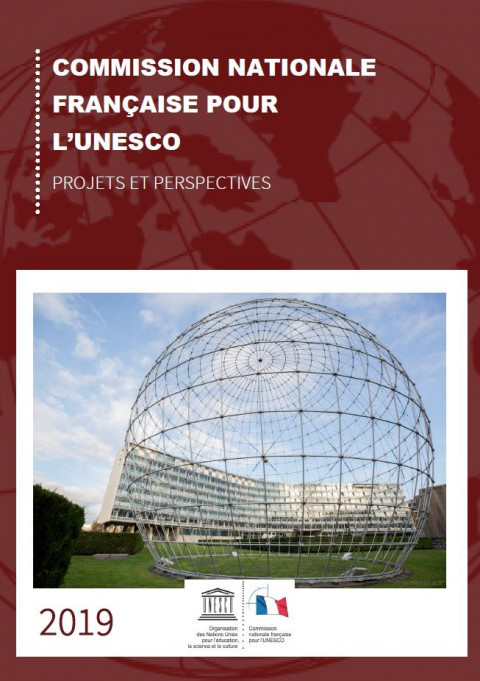 Commission nationale française pour l’unesco: Projets et perspectives Год публикации: 2019 Организация-автор: Commission nationale française pour l’UNESCO La Commission nationale française pour l’UNESCO relie les français et l’UNESCO. La Commission nationale place au cœur de sa stratégie et de ses activités, la coopération avec la société civile. Pour y parvenir, la Commission nationale française favorise la réflexion collective et l’action concertée dans les domaines de l’éducation, des sciences, de la culture, de la communication et de l’information. Les partenariats et les réseaux sont au cœur de notre mandat : nous construisons nos projets avec des partenaires gouvernementaux, de la société civile, des autres commissions nationales. Cette année encore, le développement de partenariats nous permettra d’étendre l’impact de nos projets. En plus de ces partenariats, nous utilisons Internet et les réseaux sociaux pour sensibiliser la société civile à nos actions. Au cours de la période 2018-2020 , la priorité est donnée au développement et au renforcement de la coopération avec les secteurs de l’UNESCO, les réseaux français: Ecoles associées, Clubs pour l’UNESCO, Chaires UNESCO, et les partenaires de la société civile et du secteur privé, en reconnaissance du rôle de la coopération dans le domaine de l’éducation, des sciences et de la culture pour la promotion de transformations sociales positives, de l’inclusion sociale et du dialogue interculturel. La diversification des partenaires auprès de la société civile, du secteur privé et la signature de partenariats avec des institutions scientifiques et académiques sont au cœur ces avancées afin de replacer la société civile dans l’action de la Commission française.Projet et Perspectives de la Commission nationale française pour l’UNESCO 2019
  Message from Ms Audrey Azoulay, Director-General of UNESCO, on the occasion of the International Day of Light, 16 May 2018 Год публикации: 2018 Организация-автор: UNESCO. Director-General, 2017-2025 (Azoulay, A.) This message was delivered by Audrey Azoulay, Director-General of UNESCO, on the occasion of the International Day of Light, on 16 May 2018.
 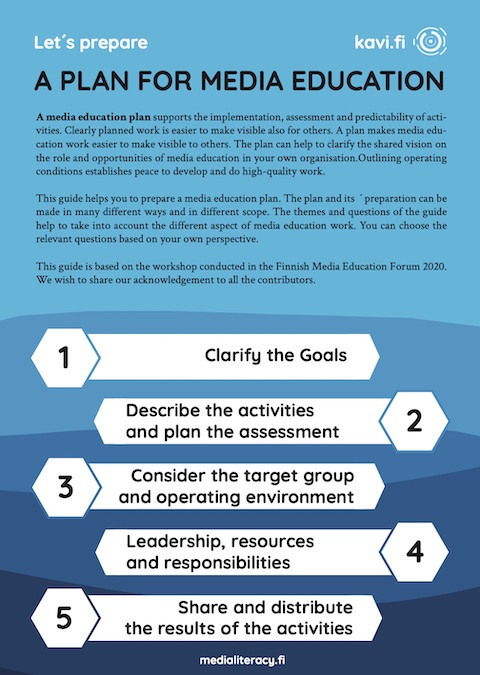 Let's Prepare: A Plan For Media Education Год публикации: 2020 Организация-автор: KAVI National Audiovisual Institute (Finland) This guide helps you to prepare a media education plan. The plan and its preparation can be made in many different ways and in different scope. The themes and questions of the guide help to take into account the different aspect of media education work. You can choose the relevant questions based on your own perspective. This guide is based on the workshop conducted in the Finnish Media Education Forum 2020.
  Rethinking Pedagogy: Exploring the Potential Of Digital Technology In Achieving Quality Education Год публикации: 2019 Автор: Lorena Alemán de la Garza | Alessandra Anichini | Péter Antal | Aurélie Beaune | Éric Bruillard | Diane Burke | Pedro Henrique Cacique Braga | Ruma Chakravarti | Sriya Chakravarti | Deng Chen | Lidiya Chikalova | Helen Crompton | Ilana De Almeida Souza Concilio | William Cope | Lorenz Denks | Matthew Farber | Giovanni Fonseca | Pintér Gergely | Marcela Georgina Gómez Zermeño | Russell Hazard | Laura Hosman | Mary Kalantzis | Kojanitz László | Xavier Levoin | Kristen Linzy | Arnab Mandal | Yoko Mochizuki | Ariam Mogos | Tünde-Lengyel Molnár | Matthew Montebello | Sadaqat Mulla | Sandra Gudiño Paredes | Christelle Pauty-Combemore | Boyka Parfitt | Réka Racsko | Irais Monserrat Santillán Rosas | Khitam Shraim | Jisoo Song | Avgoustos Tsinakos Организация-автор: Mahatma Gandhi Institute of Education for Peace and Sustainable Development (MGIEP) With the exponential growth of digitally mediated communication, digital media and gaming, the landscape of what we understand as learning environments is changing significantly. Today the use of digital technology in education is attracting considerable public and policy attention as
well as private investment. With a rise in discourses both heralding and cautioning against the use of digital technology in education, there is a need to pool the expertise and experience on the use of technology in education from around the world to advance public debate and evidence-informed policymaking. Based on the literature review, mapping of digital education resources in circulation, and examples of implementation of digital education initiatives from around the world, this report aims to provide insights that would help lead to the wise, innovative and ethical use of digital technology in education as a new dimension in achieving SDG 4 — inclusive and equitable quality education and lifelong learning opportunities for all. By so doing, it also attempts to contribute to a rethink of teaching and learning in the face of enormous opportunities and challenges brought about by digital technology in the times of change and turmoil.
Rethinking Pedagogy: Exploring the Potential Of Digital Technology In Achieving Quality Education Год публикации: 2019 Автор: Lorena Alemán de la Garza | Alessandra Anichini | Péter Antal | Aurélie Beaune | Éric Bruillard | Diane Burke | Pedro Henrique Cacique Braga | Ruma Chakravarti | Sriya Chakravarti | Deng Chen | Lidiya Chikalova | Helen Crompton | Ilana De Almeida Souza Concilio | William Cope | Lorenz Denks | Matthew Farber | Giovanni Fonseca | Pintér Gergely | Marcela Georgina Gómez Zermeño | Russell Hazard | Laura Hosman | Mary Kalantzis | Kojanitz László | Xavier Levoin | Kristen Linzy | Arnab Mandal | Yoko Mochizuki | Ariam Mogos | Tünde-Lengyel Molnár | Matthew Montebello | Sadaqat Mulla | Sandra Gudiño Paredes | Christelle Pauty-Combemore | Boyka Parfitt | Réka Racsko | Irais Monserrat Santillán Rosas | Khitam Shraim | Jisoo Song | Avgoustos Tsinakos Организация-автор: Mahatma Gandhi Institute of Education for Peace and Sustainable Development (MGIEP) With the exponential growth of digitally mediated communication, digital media and gaming, the landscape of what we understand as learning environments is changing significantly. Today the use of digital technology in education is attracting considerable public and policy attention as
well as private investment. With a rise in discourses both heralding and cautioning against the use of digital technology in education, there is a need to pool the expertise and experience on the use of technology in education from around the world to advance public debate and evidence-informed policymaking. Based on the literature review, mapping of digital education resources in circulation, and examples of implementation of digital education initiatives from around the world, this report aims to provide insights that would help lead to the wise, innovative and ethical use of digital technology in education as a new dimension in achieving SDG 4 — inclusive and equitable quality education and lifelong learning opportunities for all. By so doing, it also attempts to contribute to a rethink of teaching and learning in the face of enormous opportunities and challenges brought about by digital technology in the times of change and turmoil.  Adult Media Literacy in Australia: Attitudes, Experiences and Needs Год публикации: 2021 Автор: Tanya Notley | Simon Chambers | Sora Park | Michael Dezuanni Организация-автор: Western Sydney University | Queensland University of Technology | University of Canberra This report is based on a survey of 3,510 adult Australians to understand the different types of media they use, the value they place on different media activities, their confidence in their own media abilities and their access to media literacy support. The survey was designed with input from diverse voices in the media literacy field including researchers, media producers, policymakers, government agencies, educators and public cultural institutions. The findings show that most Australians use several different types of media each day, they believe a diverse range of media activities are important in their lives, but their confidence in their own media abilities is unexpectedly low. The findings demonstrate that if we accept that media is integral to all aspects of our lives, far more needs to be done to address the needs of groups who are the least confident about their media abilities and who have access to the least support. The findings also show that increasing media literacy can yield direct benefits for increasing people’s civic engagement.
  Hate Speech, Propaganda and Disinformation in Albanian Media Год публикации: 2020 Автор: Ilda Londo Организация-автор: South East European Network for Professionalization of Media (SEENPM) | Peace Institute | Albanian Media Institute This publication aims to highlight the main models and elements that media in Albania manifest regarding hate speech, propaganda and disinformation and also to identify ways of countering these narratives. According to this research, even though the media is rarely active in fighting hate speech in the country, it cannot be said that it is a source of hate speech or that it is actively promoting it. Politicians often push hate speech narratives, which the media publishes or reflects, provoking protest from some human rights organizations. On the other hand, there is a visible problem with ethics and lack of moderation in User Generated Content, more specifically in users’ comments sections of online media.In addition, contrary to hate speech narratives, which are rarely present, attempts to misinform and spread propaganda are a constant trend in the Albanian media. While the furthering of foreign propaganda is confined to a limited number of media, the use of conspiracy theories and sensationalism to further media popularity, unfortunately, is not. Few online media outlets have escaped the trend of publishing conspiracy theories, which turned into a frenzy especially with the emergence of the coronavirus. Even television stations, which are supposed to have more filters and be more responsible about their content, have intensified this kind of coverage. Proponents of conspiracy theories are readily present in a few television stations in their main current affairs programmes, amplifying these theories and information, which leads to an increasingly greater influence on the public, especially given the lack of programmes or education on media literacy.