
Ресурсы
Изучайте широкий спектр ценных ресурсов ВГГ, чтобы углубить своё понимание и повысить эффективность исследований, просветительской деятельности, преподавания и обучения.
Найдено: 2,255
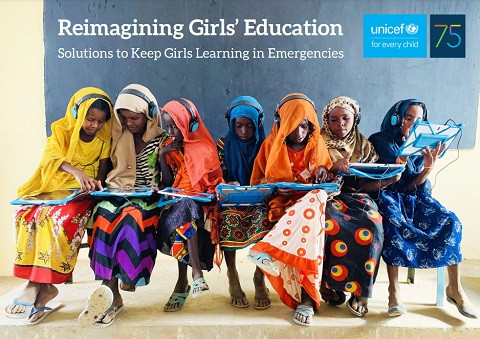 Reimagining Girls’ Education: Solutions to Keep Girls Learning in Emergencies Год публикации: 2021 Организация-автор: United Nations Children's Fund (UNICEF) Reimagining Girls’ Education: Solutions to Keep Girls Learning in Emergencies presents an empirical overview of what works to support learning outcomes for girls in emergencies. Research shows that girls in emergencies are disadvantaged at all stages of education and are more likely to be out-of-school than in non-emergency settings. Girls are also struggling to learn.This solutions book seeks to highlight promising evidence-based actions in education for decision makers who are designing and implementing interventions to support girls’ education in low and middle-income country humanitarian settings and settings where education has been interrupted by the COVID‑19 pandemic. It documents practical examples of approaches that have been or are being tested, and from which lessons can be drawn.The overarching aim is that this evidence be used to inform programming in crises and support diverse stakeholders in mitigating the impact of emergencies on girls’ education.
 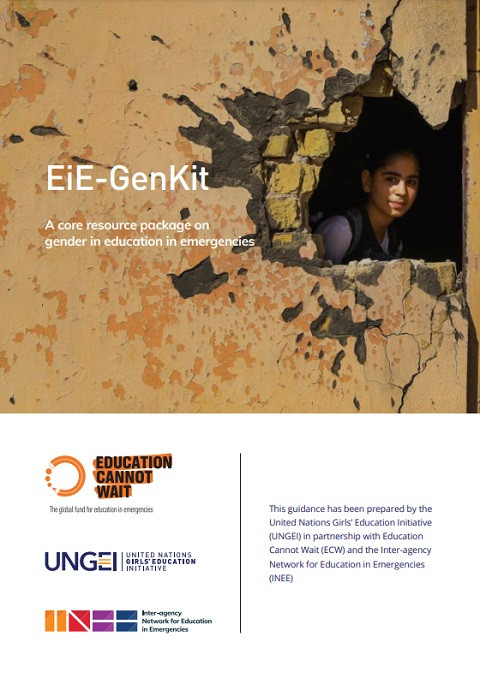 EiE-GenKit: A Core Resource Package on Gender in Education in Emergencies Год публикации: 2021 Организация-автор: Education Cannot Wait (ECW) | Inter-agency Network for Education in Emergencies (INEE) | United Nations Girls' Education Initiative (UNGEI) When gender-responsive, quality education is available to all it has the potential to transform societies and build sustainable peace. A joint initiative from the Inter-agency Network for Education in Emergencies (INEE), Education Cannot Wait (ECW) and the UN Girls’ Education Initiative (UNGEI), the EiE-GenKit is a core resource package for gender in education in emergencies. The EiE-GenKit is the first resource of its kind, providing education practitioners with practical tools to promote gender-responsive programming from crisis to peace and sustainable development.The EiE-GenKit is based on extensive research and consultation with the latest resources, evidence, new tools and good practice available in one easy-to-use package. The EiE-GenKit builds on existing humanitarian processes for a streamlined approach to gender-responsive EiE. The EiE-GenKit offers tools for practical and immediate use including checklists, tipsheets and assessment templates supporting practitioners to ensure that each phase of an EiE intervention is gender-responsive. Bridging the gap between what we know about gender-responsive EiE and the tools we need to make it happen, the EiE-GenKit aims to promote improved gender and education outcomes of learners living in crises.
 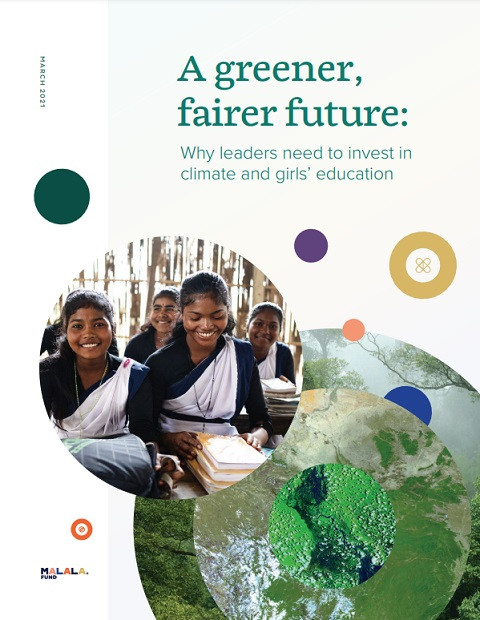 A Greener, Fairer Future: Why Leaders Need to Invest in Climate and Girls’ Education Год публикации: 2021 Автор: Lucia Fry | Philippa Lei Организация-автор: Malala Fund The world is on the brink of a climate catastrophe — and girls are disproportionately bearing the impact. Climate-related events like flooding, droughts and increased exposure to zoonotic diseases amplify the inequalities girls face and further limit their ability to access and complete their education. Malala Fund’s new report, A greener, fairer future: Why leaders need to invest in climate and girls' education, estimates that in 2021 climate-related events will prevent at least four million girls in low- and lower-middle-income countries from completing their education. If current trends continue, by 2025 climate change will be a contributing factor in preventing at least 12.5 million girls from completing their education each year.Yet evidence shows that closing gender gaps in education can help countries better adapt to the effects of climate change and decrease the rate and impact of global warming.“Girls in lower-income countries are the least responsible for the climate crisis, so it’s a travesty that it now threatens their very lifeline to a brighter future: quality education,” said Lucia Fry, Director of Research and Policy at Malala Fund. “Malala Fund wants leaders at COP26 to hear young people’s demands around education. They know that climate action helps girls stay in school, which in turn helps countries tackle the climate crisis. Young people are demanding an education that will prepare them to adapt to the effects of climate change and challenge the root causes of the crisis.”A greener, fairer future outlines the origins of the climate emergency and explains how confronting issues like the legacy of colonialism, racial discrimination and gender inequality through education is key to finding a sustainable solution to the crisis. The paper introduces the Gender-Equal Green Learning Agenda, a new framework to help leaders address the climate crisis through education.In this report, Malala Fund recommends how leaders can take urgent climate action at meetings this year, like COP26. This includes reducing carbon emissions, improving girls’ access to education, helping communities adapt to the realities of climate change and transforming education systems to provide all students with the knowledge, skills and values needed to challenge the social and economic inequalities fuelling the climate crisis.For more about the links between climate change and girls’ education, read the full paper below.
 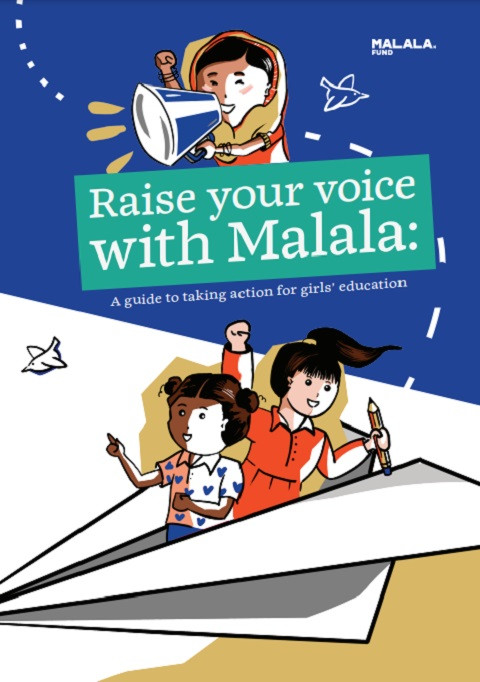 Raise Your Voice With Malala: A Guide to Taking Action for Girls’ Education Год публикации: 2018 Автор: Emily Laurie | Eleanor Gall Организация-автор: Malala Fund This guide gives young activists the tools to raise their voices and make change happen. Girls around the world are standing up in support of their out-of-school sisters and fighting to see every girl complete 12 years of free, safe, quality education. By taking action in their communities, girls can contribute to the peace and prosperity of our entire world. The guide includes real stories about girls around the world working to make sure all girls have the opportunity to go to school.
  Regional handbook on life skills programmes for non-formal education Год публикации: 2012 Организация-автор: UNESCO Bangkok The Regional Handbook on Life Skills Programme for Non-formal Education (NFE) was developed for education policy makers, experts in curriculum development, materials development and trainers of personnel in the field of NFE, NFE practitioners such as Community Learning Centres (CLCs) personnel, teachers and facilitators, and researchers. It aims to provide information about life skills programmes and to serve as a practical guide to implement educational programmes to enhance life skills. It is expected to help NFE personnel with adopting, adapting and integrating life skills programmes in NFE. This Handbook consists of two parts as follows: Part one- overview of Life Skills Programme for Non-formal Education (NFE), Part Two- Practical Guide on Integrating Life Skills Programme in NFE. Part One provides answers to various questions related to life skills and life skills progrmmes. Part Two intends to provide practical information about the systematic planning and implementation of life skills programmes for NFE. It offers suggested steps for curriculum development, development of teaching and learning materials, delivery of life skills programmes and monitoring and evaluation strategies. Details of this process are elaborated for NFE practitioners at various levels, but in particular at the community level. This Handbook was developed based on the project outputs of UNESCO Bangkok's 'Life Skills Learning through Non-formal Education" carried out in Asia and the Pacific region from 2003-2006 within the framework of Asia-Pacific Programme of Education for All (APPEAL). The project consisted of country studies, regional meetings, pilot projects and action research in selected countries in the region. A group of experts from the region consolidated the main outputs of the project and developed this Handbook through a series of workshops in 2006-2007 in coordination with UNESCO Bangkok and the office of Non-formal and Informal Education (ONIE) of Thailand Ministry of Education. In addition, resource materials of various organizations including United Nations agencies, government institutions, universities and NGOs were also collected and used for developing this Handbook. Manuel régional sur les programmes de compétences de vie pour l'éducation non formelle Год публикации: 2012 Организация-автор: UNESCO Bangkok Le manuel régional sur le programme des compétences de vie pour l'éducation non-formelle (ENF) a été développé pour les décideurs politiques de l'éducation, des experts dans l'élaboration des programmes, le développement des matériaux et formateurs de personnel dans le domaine de l'ENF, les praticiens ENF tels que les centres d'apprentissage communautaires (CJC) personnel , les enseignants et les animateurs et les chercheurs. Il vise à fournir des informations sur les programmes de compétences de vie et de servir comme un guide pratique pour mettre en œuvre des programmes éducatifs pour améliorer les compétences de la vie. Il est prévu pour aider le personnel de l'ENF à l'adoption, l'adaptation et l'intégration des programmes de compétences de vie en ENF. Ce manuel se compose de deux parties: Partie de un aperçu le programme des compétences de vie pour l'éducation non formelle (ENF), en deux parties Guide pratique sur le programme des compétences de vie de l’Intégration dans ENF. La première partie fournit des réponses aux diverses questions liées aux compétences de vie et les compétences de la vie programmes. La deuxième partie a l'intention de fournir des informations pratiques sur la planification et la mise en œuvre des programmes de compétences de vie pour ENF systématique. Il propose des étapes suggérées pour l'élaboration des programmes, le développement de matériel pédagogique et d'apprentissage, la prestation de compétences pour la vie des programmes et des stratégies de Suivi et d'évaluation. Les détails de ce processus sont élaborés pour les praticiens ENF à différents niveaux, mais en particulier au niveau de la communauté. Ce manuel a été élaboré sur la base des résultats du projet de «Life Skills de l'UNESCO Bangkok L'apprentissage par l'éducation non formelle» réalisée en Asie et dans la région du Pacifique 2003-2006 dans le cadre du Programme Asie-Pacifique d'éducation pour tous (APPEAL). le projet consistait en études de pays, des réunions régionales, des projets pilotes et la recherche-action dans certains pays de la région. un groupe d'experts de la région a regroupé les principaux résultats du projet et a développé ce manuel à travers une série d'ateliers en 2006-2007 coordination avec l'UNESCO Bangkok et le bureau de l'éducation non formelle et informelle (ONIE) de la Thaïlande Ministère de l'éducation. En outre, des ressources documentaires de diverses organisations, y compris les organismes des Nations Unies, les institutions gouvernementales, les universités et les ONG ont également été recueillies et utilisées pour le développement de cette Manuel.
  Ten Clues for Rethinking Curriculum (In-Progress Reflection; No. 42, 2021) Год публикации: 2021 Автор: Renato Opertti Организация-автор: UNESCO International Bureau of Education (IBE) This discussion document highlights the urgency of rethinking curriculum in light of reinforcing the commitments of the Education 2030 Agenda on learning, disruptive systemic worldwide societal changes, and crucially, the profound transformation of education and education systems post Covid-19. Curriculum is always at the core of giving effect to social aspirations and ideals on the why, what, how, when, and where of teaching, learning, and assessing. We propose a series of 10 interconnected clues to deepen on the systemic and holistic understanding of curriculum as contributing to lay foundations for a better, sustainable and fair future. These clues are: understanding the new generations; combatting factors related to vulnerability; reinforcing understanding between school and families; deepening glo-local education; enhancing the focus on the person; promoting synergies among values; valuing diversity; focusing on education that enhances freedom; moving toward hybrid modes of education; and inspiring affection for educators.
  Education 21st Century Children: Emotional Well-being in the Digital Age (Educational Research and Innovation) Год публикации: 2019 Организация-автор: Organisation for Economic Co-operation and Development (OECD) This report examines modern childhood, looking specifically at the intersection between emotional well-being and new technologies. It explores how parenting and friendships have changed in the digital age. It examines children as digital citizens, and how best to take advantage of online opportunities while minimising the risks. The volume ends with a look at how to foster digital literacy and resilience, highlighting the role of partnerships, policy and protection.
  디지털 리터러시 교육 1부: 정보를 읽는 능력을 키워라! #1 Год публикации: 2020 Организация-автор: 한국교육방송공사 급변하는 매체환경, 범람하는 가짜뉴스 속에서 진짜 정보와 가짜 정보를 구분하는 능력인 디지털리터러시가 중요하게 여겨지고 있는 상황. 우리 학생들이 미래를 바꿀 수 있는 역량을 갖도록 하기 위해 시대의 흐름에 맞는 교육의 변화 또한 필요하다. 이번 <미래교육 플러스>에서는 변화한 흐름에 맞는 디지털리터러시 교육에 대해서 논의 한다. 디지털 리터러시 교육 1부 ‘정보를 읽는 능력을 키워라!’에서는 디지털 리터러시의 중요성과 디지털 리터러시 교육의 현주소를 점검해 본다.
 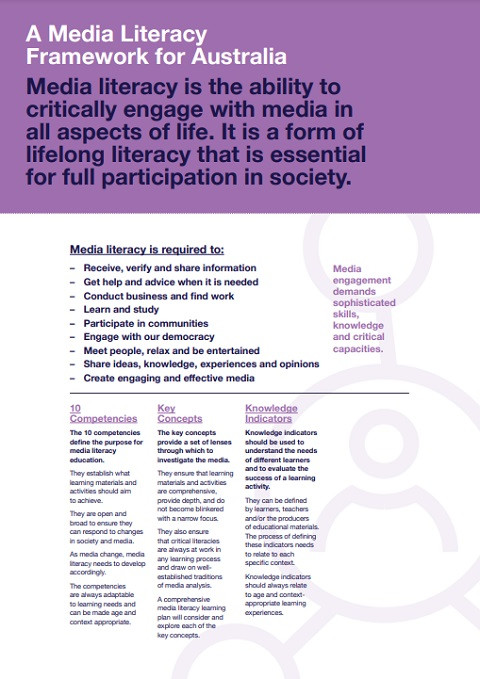 A Media Literacy Framework for Australia Год публикации: 2020 Организация-автор: Australian Media Literacy Alliance (AMLA) AMLA define media literacy as the ability to critically engage with media in all aspects of life.Media literacy complements Digital Literacy and Digital Safety – and all three are required to thrive in a digital world. Digital literacy focuses on the skills and knowledge required to access and use digital technologies. Digital Safety focuses on issues like online hate and abuse, bullying, the protection of personal information and online scams.Media Literacy encourages people to ask critical questions about the media and media technologies using a set of six key concepts. For any example of media (an advertisement, a news story, a film or television program, a YouTube video, video game or a social media post), we can ask the following questions:Institutions: who made this media and why did they make it?Audiences: who was this media made for and how are they likely to respond to it?Representations: how are people, places or ideas portrayed in this media, and what are the impacts of this?Technologies: what technology was used to produce, access and circulate this media? Does the technology gather personal data from users?Languages: how does this media communicate using image, sounds and written text?Relationships: what kind of relationships are being developed through the distribution and use of this media?These questions will have very different answers and follow-on questions depending on the media example, but the process of asking and answering these questions leads to critical understandings, and forms the basis for more successful media experiences. These questions can be asked during the process of consuming, sharing or creating media. They can be integrated as part of any Digital Literacy and Digital Safety learning program.