
Ресурсы
Изучайте широкий спектр ценных ресурсов ВГГ, чтобы углубить своё понимание и повысить эффективность исследований, просветительской деятельности, преподавания и обучения.
Найдено: 2,255
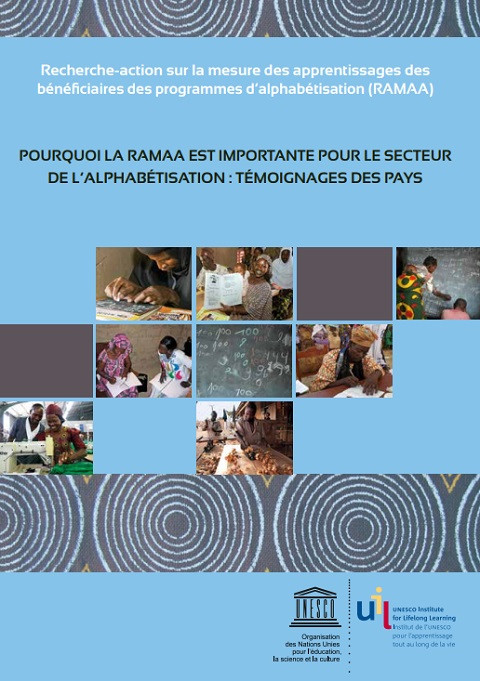 Why RAMAA Is Important for Literacy: Testimonies From Participating Countries; Action Research on Measuring Literacy Programme Participants’ Learning Outcomes (RAMAA) Год публикации: 2016 Организация-автор: UNESCO Institute for Lifelong Learning (UIL) The RAMAA action research, launched at the initiative of the UNESCO Institute for Lifelong Learning (UIL), and piloted in partnership with local UNESCO offices, responds to this vital need to assess the quality of literacy programmes by taking the learning effectively acquired by the beneficiaries at the end of their training as an objective variable.The first phase of RAMAA involved five countries, now twelve countries are participating in the second phase of RAMAA – Benin, Burkina Faso, Cameroon, Côte d'Ivoire, Central African Republic, Democratic Republic of Congo, Morocco, Mali, Niger, Senegal, Chad and Togo. The countries’ commitment throughout the implementation of the second phase of RAMAA and the integration of the results into the national systems are key to the project. Pourquoi la RAMAA est importante pour le secteur de l'alphabétisation: Témoignages des pays; Recherche-action sur la mesure des apprentissages des bénéficiaires des programmes d'alphabétisation (RAMAA) Год публикации: 2016 Организация-автор: UNESCO Institute for Lifelong Learning (UIL) La Recherche-action RAMAA, lancée à l’initiative de l’Institut de l’UNESCO pour l’apprentissage tout au long de la vie (UIL), et pilotée en partenariat avec les bureaux UNESCO répond à ce besoin vital d’évaluer la qualité des programmes d’alphabétisation en prenant comme variable objective les apprentissages réellement acquis par les bénéficiaires à la sortie de leur formation.La première phase de la RAMAA comptait cinq pays, douze pays sont désormais engagés dans la deuxième phase de la RAMAA - Bénin, Burkina Faso, Cameroun, Côte d’Ivoire, République centrafricaine, République démocratique du Congo, Maroc, Mali, Niger, Sénégal, Tchad et Togo. L’engagement des pays tout au long de la mise en œuvre de la deuxième phase de la RAMAA et l’intégration des résultats dans les dispositifs nationaux deviennent impératifs.
 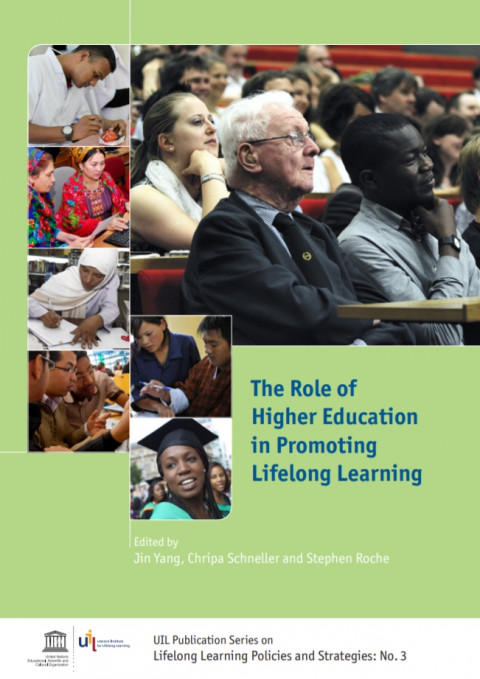 The Role of Higher Education in Promoting Lifelong Learning Год публикации: 2015 Автор: Yang Jin, Schneller.Chripa, Roche.Stephen Организация-автор: UNESCO Institute for Lifelong Learning (UIL) UNESCO’s vision of lifelong learning encompasses all contexts (formal, non-formal and informal) and ages (‘from cradle to grave’) of learning. The UNESCO Institute for Lifelong Learning and its predecessor, the UNESCO Institute for Education, have promoted policy and practice in this field for more than four decades. The decision to produce this volume was prompted by an observation that lifelong learning – both as a concept and in its many practical manifestations – is becoming a staple of education policy discourse around the globe. At the same time, we noted that understandings of lifelong learning differ widely, not only between countries, but also across the sub-sectors of education systems.This book, which emerged from a seminar held in 2012 to mark the 60th anniversary of the UNESCO Institute for Lifelong Learning, addresses various ways that higher education can promote lifelong learning, paying due consideration to regional disparities and specificities. These include responses to the learning needs of senior citizens in China, the challenge of implementing recurrent education in Japan, European efforts to develop a common approach to life-long learning at university, and how a lifelong learning approach is put into practice in higher education in Australia. It is hoped that this book will help the reader gain a better understanding of the theoretical frameworks and practical implementation of lifelong learning in higher education, both within their own region and globally.
  CONFINTEA VI Mid-Term Review 2017: The Status of Adult Learning and Education in Sub-Saharan Africa; Regional Report Год публикации: 2017 Автор: John Aitchison Организация-автор: UNESCO Institute for Lifelong Learning (UIL) The Sustainable Development Goals include educational targets which are entirely congruent with the existing focuses of ALE in African countries – to ‘ensure that all youth and a substantial proportion of adults, both men and women, achieve literacy and numeracy’ (4.6), to ‘substantially increase the number of youth and adults who have relevant skills, including technical and vocational skills, for employment, decent jobs and entrepreneurship’ (4.4) and to ‘ensure that all learners acquire the knowledge and skills needed to promote sustainable development, including, among others, through education for sustainable development and sustainable lifestyles, human rights, gender equality, promotion of a culture of peace and non-violence, global citizenship and appreciation of cultural diversity and of culture’s contribution to sustainable development’ (4.7). National targets and the criteria for success in reaching those targets will need to be developed. Undoubtedly, international cooperation and international support can help this gearing-up process.
 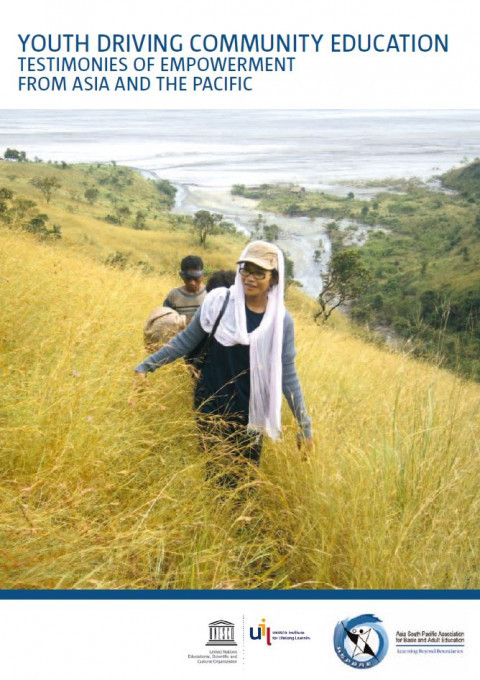 Youth Driving Community Education: Testimonies of Empowerment from Asia and the Pacific Год публикации: 2014 Организация-автор: UNESCO Institute for Lifelong Learning (UIL) | Asia South Pacific Association for Basic and Adult Education (ASPBAE) This publication presents a collection of testimonies from young women and men from vulnerable backgrounds who have transformed their lives through community education and development activities. Their testimonies describe the challenges they faced in pursuing an education, how they benefited from community education programmes, and the active roles they now play in community education and development.The publication will meet its objectives if it inspires young people and their partners to take action to:> Improve educational and learning environments for young men and women;> Improve the participation of young women in community building and democratic processes; and> Engage young men and women as active citizens working towards peace, democracy and sustainable development.
 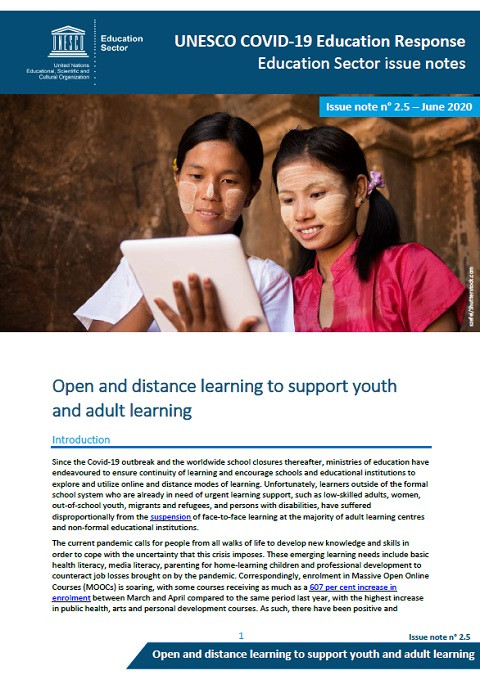 UNESCO COVID-19 Education Response: Open and Distance Learning to Support Youth and Adult Learning (Education Sector Issue Note; No. 2.5 – June 2020) Год публикации: 2020 Организация-автор: UNESCO Institute for Lifelong Learning (UIL) A new UNESCO issue note, produced by the UNESCO Institute for Lifelong Learning (UIL), aims to support education policy-makers and planners in ensuring open and distance learning to support youth and adult learning in the context of the current pandemic, now and in its aftermath.Since the COVID-19 outbreak and the worldwide school closures that followed, ministries of education have endeavoured to ensure continuity of learning and encourage schools and educational institutions to explore and utilize online and distance modes of learning. Unfortunately, learners outside of the formal school system who are already in need of urgent learning support, such as low-skilled adults, women, out-of-school youth, migrants and refugees, and persons with disabilities, have suffered disproportionally from the suspension of face-to-face learning at the majority of adult learning centres and non-formal educational institutions.The current pandemic calls for people from people from all socio-economic backgrounds, wherever they live in the world, to develop new knowledge and skills in order to cope with the uncertainty that this crisis imposes. These learning needs include basic health literacy, media literacy, parenting for home-schooling children and professional development to counteract job losses brought on by the pandemic. Correspondingly, enrolment in massive open online courses (MOOCs) is soaring. As such, there have been positive and demand-driven trends in exploring alternative options, such as open and distance learning (ODL), to ensure the continuity and expansion of non-formal education and adult learning.This issue note takes stock of opportunities and challenges in using ODL, both online and offline as defined in the UNESCO Issue Note on Distance Learning Strategies, for youth and adult learners outside the formal education system. After examining key issues and illustrating promising cases from public and private sectors, it provides key messages for policy interventions to support inclusive lifelong learning for youth and adults during and after the current pandemic.UNESCO Education Sector’s issue notes cover key topics related to the COVID-19 education response.
 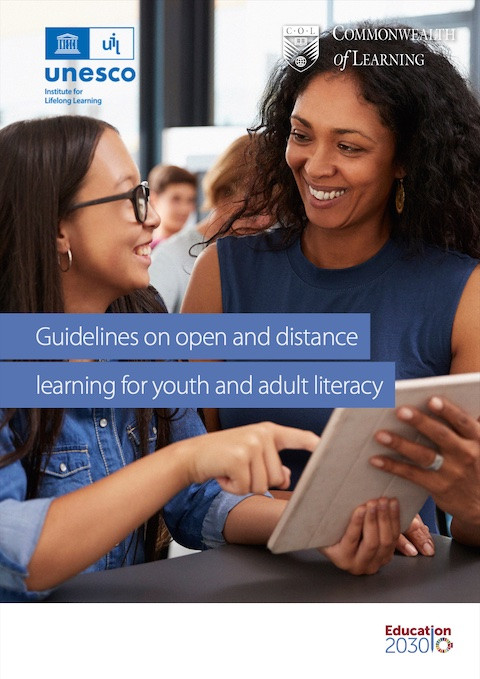 Guidelines on Open and Distance Learning for Youth and Adult Literacy Год публикации: 2022 Организация-автор: UNESCO Institute for Lifelong Learning (UIL) | Commonwealth of Learning Guidelines on open and distance learning for youth and adult literacy addresses a gap in literacy provision by presenting open and distance learning (ODL) principles and practices to illustrate how learning and education can be delivered at a distance.This publication is divided into two main parts. Part 1 presents practical guidance in four areas—planning, development, implementation, and monitoring and evaluation—and part 2 considers the various technologies that are used for ODL programmes and could support youth and adult literacy learning.Policy-makers, literacy providers and educators will benefit from understanding and applying the concept and principles of ODL in designing and delivering effective, inclusive and sustainable literacy programmes and learning opportunities— strengthening the resilience of their literacy programmes and expanding outreach and participation in the process. Apprentissage libre et à distance pour l’alphabétisation des jeunes et des adultes: lignes directrices Год публикации: 2022 Организация-автор: Institut de l’UNESCO pour l’apprentissage tout au long de la vie (UIL) | Commonwealth of Learning Les lignes directrices sur l'apprentissage ouvert et à distance pour l'alphabétisation des jeunes et des adultes comblent une lacune dans l'offre d'alphabétisation en présentant des principes et des pratiques d'apprentissage ouvert et à distance (ODL) pour illustrer comment l'apprentissage et l'éducation peuvent être dispensés à distance. Cette publication est divisée en deux parties principales. La partie 1 présente des conseils pratiques dans quatre domaines—la planification, le développement, la mise en œuvre et le suivi et l'évaluation—et la partie 2 examine les diverses technologies qui sont utilisées pour les programmes ODL et qui pourraient soutenir l'apprentissage de l'alphabétisation des jeunes et des adultes. Les décideurs politiques, les prestataires d'alphabétisation et les éducateurs bénéficieront de la compréhension et de l'application du concept et des principes de l'ODL dans la conception et la prestation de programmes d'alphabétisation et d'opportunités d'apprentissage efficaces, inclusifs et durables - renforçant la résilience de leurs programmes d'alphabétisation et élargissant la portée et la participation au processus. المبادئ اﻟﺘﻮﺟﯿﮭﯿﺔ ﻟﻠﺘﻌﻠﻢ اﻟﻤﻔﺘﻮح واﻟﺘﻌﻠﻢ ﻋﻦ ﺑﻌﺪ ﻟﻤﺤﻮ أﻣﯿﺔ اﻟﺸﺒﺎب واﻟﻜﺒﺎر Год публикации: 2022 Организация-автор: UNESCO Institute for Lifelong Learning (UIL) | Commonwealth of Learning تعالج المبادئ التوجيهية بشأن التعلم المفتوح والتعلم عن بعد للشباب والكبار فجوة في توفير محو الأمية من خلال تقديم مبادئ وممارسات التعلم المفتوح والتعلم عن بعد (ODL) لتوضيح كيف يمكن تقديم التعلم والتعليم عن بعد. ينقسم هذا المنشور إلى قسمين رئيسيين. يقدم الجزء الأول إرشادات عملية في أربعة مجالات - التخطيط ، والتطوير ، والتنفيذ ، والرصد والتقييم - وينظر الجزء الثاني في التقنيات المختلفة المستخدمة لبرامج ODL ويمكن أن تدعم تعلم القراءة والكتابة للشباب والكبار. سيستفيد صانعو السياسات ومقدمو محو الأمية والمعلمون من فهم وتطبيق مفهوم ومبادئ ODL في تصميم وتقديم برامج محو الأمية الفعالة والشاملة والمستدامة وفرص التعلم - تعزيز مرونة برامج محو الأمية وتوسيع نطاق التوعية والمشاركة في العملية .
 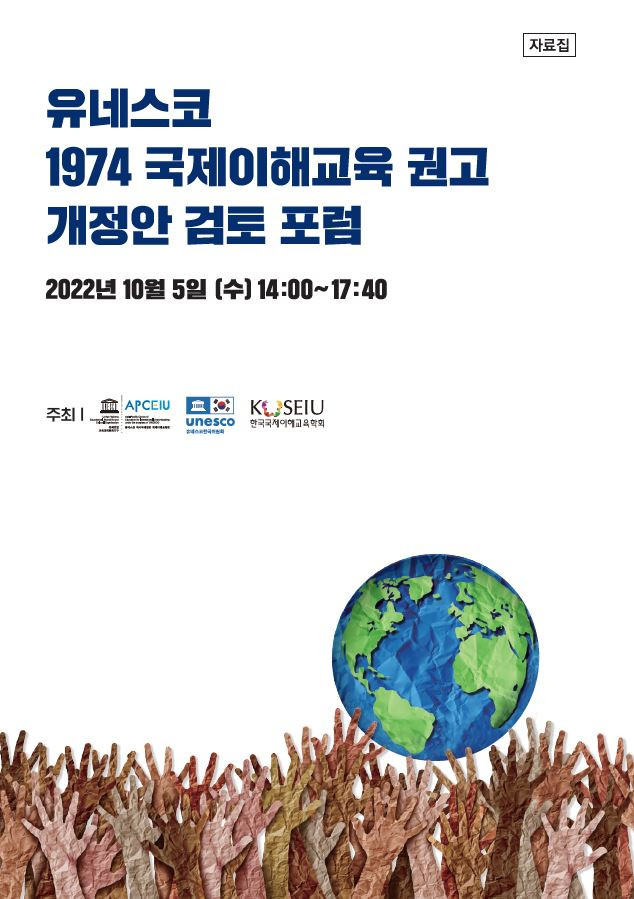 유네스코 1974 국제이해교육 권고 개정안 검토 포럼 자료집 Год публикации: 2022 Организация-автор: 한국국제이해교육학회 | 유네스코 아시아태평양 국제이해교육원 | 유네스코한국위원회 2022년 10월 5일 유네스코 아태교육원과 유네스코한국위원회, 한국국제이해교육학회가 공동으로 개최한 <유네스코 1974 국제이해교육 권고 개정안 검토 포럼> 자료집 입니다. 본 포럼은 유네스코의 「국제이해, 협력, 평화를 위한 교육과 인권, 기본 자유에 관한 교육 권고( 1974 국제이해교육 권고)」가 오늘날 변화된 시대 상황과 지구촌의 새로운 과제 등을 반영할 수 있도록 개정안 초안에 대한 전문적 검토 요지 발표와 토론을 실시한 후, 참가자들의 의견을 수렴하였습니다. <목차> I. 인사말 한경구 (유네스코한국위원회 사무총장) 임현묵 (유네스코 아시아태평양 국제이해교육원장) 박순용 (한국국제이해교육학회장) II. [1부] 1974 국제이해교육 권고 개정 배경 및 현황 1974 국제이해교육 권고 개요와 개정 추진 현황 - 유네스코 아시아태평양 국제이해교육원 / 유네스코한국위원회 국제전문가그룹의 주요 활동 및 1974 국제이해교육 권고 개정안 초안의 주요 내용 / 강순원 (한신대학교 교수) III. [2부] 1974 국제이해교육 권고 개정안 초안 검토 조대훈 (성신여자대학교 교수) 김병연 (양재고등학교 교사) 권혁장 (국가인권위원회 인권교육기획과장) 이선경 (청주교육대학교 교수) 변순용 (서울교육대학교 교수) 이동연 (한국예술종합학교 교수) 손동빈/장경희 (서울시교육청 민주시민생활교육과 과장/장학사) 부록 Recommendation concerning Education for International Understanding, Co-operation and Peace and Education relating to Human Rights and Fundamental Freedoms 국제이해, 협력, 평화를 위한 교육과 인권, 기본 자유에 관한 교육 권고 REVISED RECOMMENDATION CONCERNING EDUCATION FOR INTERNATIONAL UNDERSTANDING, CO-OPERATION AND PEACE AND EDUCATION RELATING TO HUMAN RIGHTS AND FUNDAMENTAL FREEDOMS (‘1974 RECOMMENDATION’)